- Beyond the Dictionary: What Does Rewilding Mean in Today’s Ecology?
- The Core Definition of Rewilding and Its Origins
- The Anatomy of a Rewilder: Who is Leading the Movement?
- Key Responsibilities of Modern Rewilders
- From Theory to Soil: What Does it Mean to Rewild a Landscape?
- Three Pillars of a Successful Rewilding Project
- Debunking Myths: Fact vs. Fiction in Ecological Restoration
- Common Misunderstandings About Reintroducing Predators
- The Human Element: Rewilding the Self
- Daily Habits to Reconnect with Your Inner Wild
- Expert Perspective: The Ethics of Non-Intervention
- Frequently Asked Questions
Beyond the Dictionary: What Does Rewilding Mean in Today’s Ecology?
Rewilding represents a radical departure from the last century of conservation biology. While traditional methods often focus on preserving a specific status quo or protecting a single endangered species, rewilding asks what happens when we step back and let natural processes take the driver’s seat. It is less about “managing” a landscape and more about restoring its innate ability to manage itself.
The Core Definition of Rewilding and Its Origins
To define rewild in a modern context, we must look back to the early 1990s. The term was popularized by conservationists Michael Soulé and Reed Noss, who envisioned a strategy based on “cores, corridors, and carnivores.” They argued that for nature to be truly resilient, it needs vast, connected spaces where top-tier predators can regulate the ecosystem. This was a shift away from “fortress conservation,” where humans fenced off small pockets of land and tried to keep them frozen in time.
The linguistic evolution of the term is equally interesting. Many people ask, is rewilded a word? From a grammatical standpoint, yes; it is the past participle of the verb “rewild.” In the Oxford English Dictionary, what is the definition of rewilding? It is described as the practice of helping areas of land to return to their natural state, specifically by reintroducing animal species that have been driven out. However, for a modern ecologist, the definition is more functional: restoring the trophic levels and natural disturbances—like floods or fires—that keep an environment healthy and biodiverse.
The Anatomy of a Rewilder: Who is Leading the Movement?
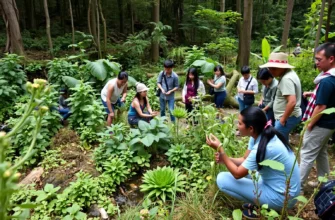
The role of a rewilder has evolved from that of a traditional park ranger into something more akin to a biological facilitator. These individuals are not looking to “fix” nature with a hammer and nails; instead, they seek to remove the obstacles that prevent nature from fixing itself. Whether they are professional biologists or community activists, their goal is to catalyze a self-sustaining system.
Key Responsibilities of Modern Rewilders
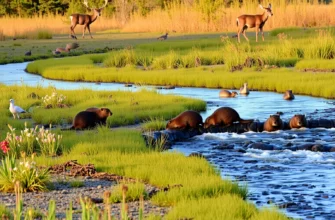
A rewilder focuses on the big picture of ecosystem health. One of the most high-profile tasks is the reintroduction of keystone species. These are animals whose presence has a disproportionately large impact on their environment. For example, when a rewilder reintroduces beavers to a river system, they aren’t just adding an animal; they are adding a hydrological engineer that creates wetlands, filters water, and provides habitats for hundreds of other species.
Beyond reintroductions, much of the rewild info available today emphasizes the removal of man-made constraints. This involves “de-engineering” the landscape. Rewilders work to pull down redundant fences that block wildlife corridors and dismantle obsolete dams that prevent fish migration and natural sediment flow. By doing so, they allow the land to breathe again. Success in this field is measured not by how much work you do, but by how little work you eventually need to do as the ecosystem regains its autonomy.
From Theory to Soil: What Does it Mean to Rewild a Landscape?
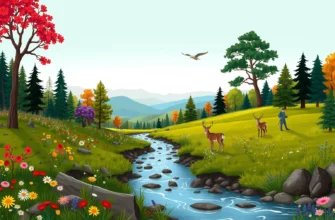
Understanding what does it mean to rewild requires looking at the scale of the intervention. It is a spectrum that ranges from a massive national park to a small urban garden. At its heart, the process involves shifting from active management to passive observation. The goal is to reach a tipping point where the land no longer requires human subsidies, such as artificial feeding or weed control, to maintain its biodiversity.
- Landscape Assessment: Identify the missing functional components, such as apex predators, large herbivores, or natural water cycles.
- Connectivity Planning: Establish wildlife corridors that allow species to move freely between isolated pockets of habitat, ensuring genetic diversity.
- Barrier Removal: Physically remove human infrastructure like dams, walls, and roads that segment the landscape.
- Species Reintroduction: Carefully release “ecosystem engineers” like bison, wolves, or wild boar to kickstart natural cycles.
- Transition to Passive Management: Gradually reduce human interference until the ecosystem becomes self-regulating.
Three Pillars of a Successful Rewilding Project
When we ask what is rewild in a practical sense, it usually rests on three foundational pillars. The first is core wilderness areas. These are large, protected zones where nature is the primary priority. Without these “anchors,” there is no safe haven for sensitive species to breed and expand. The second pillar involves biological corridors. In our modern, fragmented world, isolated habitats act like islands where species eventually go extinct. Corridors act as bridges, allowing animals to follow seasonal food sources or migrate in response to climate change.
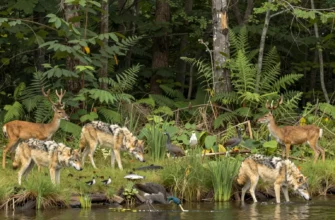
The third pillar—and often the most controversial—is the reintroduction of apex predators. This is essential for creating what ecologists call a “trophic cascade.” For example, the presence of wolves doesn’t just reduce deer populations; it changes the behavior of the deer. By keeping deer on the move, wolves prevent them from overgrazing sensitive riverbanks. This allows vegetation to return, which in turn supports songbirds, insects, and beavers. This ripple effect is the ultimate goal of any project aiming to rewild a landscape.
Debunking Myths: Fact vs. Fiction in Ecological Restoration
As rewilding gains popularity, it has also faced significant pushback. Many of these concerns stem from a misunderstanding of what is rewilding mean in a modern, populated world. Critics often fear that rewilding is an attempt to “evict” humans from the land or that it poses a direct threat to livestock and rural livelihoods. Building a sustainable future requires addressing these myths with hard data and transparent communication.
Myth: Rewilding is just “abandoning” land and letting it become a mess of weeds.
Fact: Rewilding is an intentional ecological strategy. While it looks “messy” compared to a manicured farm, that structural complexity is exactly what supports high biodiversity and carbon sequestration.Myth: Reintroducing predators like wolves or lynx is dangerous for local communities.
Fact: Statistical evidence shows that the risk of predator attacks on humans is infinitesimally low. Furthermore, many rewilding projects include compensation schemes and preventative measures for farmers to protect their livestock.Myth: Rewilding hurts the economy by taking land out of production.
Fact: Rewilding creates new economic opportunities through nature-based tourism, flood mitigation (which saves millions in damages), and enhanced ecosystem services like pollination and water purification.
Common Misunderstandings About Reintroducing Predators
The fear of the “big bad wolf” is deeply embedded in human culture, which makes discussing rewild info regarding predators difficult. However, we must look at the ecological reality. In many parts of Europe and North America, the absence of top predators has led to an explosion of herbivore populations. This results in forests that cannot regenerate because every sapling is eaten before it can grow.
Another common misconception is that rewilding is anti-farmer. In reality, many rewilders argue that the best land for these projects is “marginal land”—areas where farming is already economically unviable without heavy government subsidies. By rewilding these areas, we can improve the soil health and water quality for the productive farmland surrounding them. It is about finding a balance where wild nature and human agriculture can coexist in a functional mosaic.
The Human Element: Rewilding the Self
While most of the focus is on the environment, there is a growing movement centered on what does rewild mean for the human animal. We have spent the last few centuries distancing ourselves from natural rhythms, living in temperature-controlled boxes and eating highly processed foods. Personal rewilding is the process of reclaiming our biological heritage and reconnecting with the wild world we evolved to inhabit.
- Circadian Alignment: Prioritize natural light exposure in the morning and reduce artificial blue light at night to reset your internal biological clock.
- Sensory Immersion: Practice “forest bathing” or mindful nature walks to lower cortisol levels and improve cognitive function.
- Functional Movement: Incorporate natural movements like climbing, crawling, and balancing into your routine rather than just using gym machines.
- Foraged Nutrition: Learn to identify and consume local, wild edible plants to diversify your gut microbiome with autochthonous species.
- Thermal Stress: Safely expose your body to natural temperature variations, such as cold water swimming, to boost metabolic health.
Daily Habits to Reconnect with Your Inner Wild
If you want to define rewild in your own life, start with your relationship to your environment. Modern life often leaves us “domesticated,” leading to physical and mental health issues. Simple changes, such as spending thirty minutes a day in a green space, have been scientifically proven to reduce blood pressure and improve immune system function. It’s not about moving into a cave; it’s about integrating wild elements into your modern existence.
Another powerful tool for personal rewilding is seasonal eating. By focusing on local, wild-harvested, or seasonal foods, we align our bodies with the natural cycles of the earth. This practice not only supports local biodiversity but also breaks the cycle of industrial food dependence. When we rewild our habits, we stop seeing nature as a “resource” to be used and start seeing it as a community to which we belong.
Expert Perspective: The Ethics of Non-Intervention
In my professional experience working on landscape-scale conservation, I have found that the hardest part of rewilding isn’t the science—it’s the human ego. As experts, we are trained to intervene, to manage, and to “fix.” However, true rewilding requires an act of radical humility. I always advise my colleagues that nature possesses a complexity we are only beginning to understand. When we step back and allow a river to find its own path or a forest to grow from its own seed bank, the results are almost always more resilient and biodiverse than anything a human engineer could design. Our role is simply to set the stage and then get out of the way.
Frequently Asked Questions
Rewilding is a conservation strategy focused on restoring natural processes and reducing human control, allowing ecosystems to become self-sustaining and biodiverse.
Is rewilding the same as reforestation?
No. Reforestation is specifically about planting trees, whereas rewilding aims to restore the entire functional ecosystem, including the animals and natural disturbances like fire or flooding.
Can I rewild my own small garden?
Yes. You can practice “micro-rewilding” by replacing lawns with native wildflowers, creating “beetle banks,” and eliminating chemical pesticides to support local pollinators and birds.
Why are wolves often mentioned in rewilding discussions?
Wolves are keystone species that trigger “trophic cascades,” meaning their presence indirectly benefits hundreds of other species by regulating herbivore populations and behaviors.
Is rewilding dangerous for people living nearby?
Most projects focus on landscape connectivity and involve extensive community consultation to ensure that human safety and rural livelihoods are prioritized alongside ecological goals.
How does rewilding help with climate change?
Wild ecosystems like peatlands, salt marshes, and old-growth forests are highly efficient carbon sinks, capturing and storing significantly more CO2 than degraded or commercially managed lands.