- Why Rewilding France is the Heart of the European Ecological Movement
- From the Vercors to the Pyrenees: Restoring the French Wilderness
- The Nordic Model: Lessons from Denmark, Norway, and Sweden
- The Molslaboratoriet Experiment: Denmarks Wildest Laboratory
- Lowlands and Islands: Innovation in Holland, Belgium, and Iceland
- Pioneering the Dutch Way: Living with Water and Wildness
- The Alpine and Central European Shift: Austria, Germany, and Switzerland
- Connecting the Alps: Wildlife Corridors Across Borders
- Mediterranean and Beyond: Restoration in Greece and the Middle East
- Greening the Desert: The Rise of Middle Eastern Rewilding
- Navigating the Policy: What is the Agenda 21 Rewilding Map?
- Frequently Asked Questions
Why Rewilding France is the Heart of the European Ecological Movement
France sits at a unique crossroads of European ecology, serving as a bridge between the Mediterranean south and the temperate north. For decades, French landscapes were defined by rigid management, but a new era is seeing these spaces return to their natural state.
The movement to rewild France is less about erasing human history and more about restoring the biological functions that have been dormant for centuries. By stepping back, conservationists are allowing nature to take the lead in repairing broken ecosystems.
From the Vercors to the Pyrenees: Restoring the French Wilderness
The return of the wolf to the French Alps in the early 1990s marked a turning point for wildlife recovery. Moving naturally across the border from Italy, these apex predators have begun to reshape the landscape by naturally regulating deer and chamois populations, which prevents overgrazing and allows young forests to regenerate.
In the Vercors massif, large-scale efforts focus on creating “zones of free evolution.” Unlike traditional parks, these areas have no logging or commercial hunting, allowing the forest to age and create essential habitats for specialized species like the black woodpecker and the Tengmalm’s owl.
The Pyrenees serve as a critical wildlife corridor, yet they remain fragmented by roads and human infrastructure. To bridge these gaps, ecological engineers are designing green bridges and tunnels that allow bears and mountain goats to migrate safely without the risk of vehicle collisions. This connectivity is vital for maintaining genetic diversity among isolated animal populations.
The Nordic Model: Lessons from Denmark, Norway, and Sweden
Scandinavia and Denmark offer a fascinating contrast in how to manage “the wild.” While Norway and Sweden possess vast, sparsely populated territories, Denmark must innovate within a much tighter geographic footprint.
The Nordic approach often centers on the idea of “passive rewilding” in the north, where nature is simply left alone, and “active intervention” in the south, where large herbivores are reintroduced to mimic ancient grazing patterns.
| Region | Key Species | Methodology | Public Access |
|---|---|---|---|
| Denmark | Exmoor Ponies, Tauros Cattle | Controlled natural grazing in fenced reserves. | High; focus on education and research. |
| Norway | Wild Reindeer, Muskox, Lynx | Protection of vast, existing mountain plateaus. | Right to Roam (Allemannsretten) applies. |
| Sweden/Finland | European Bison, Moose, Brown Bear | Large-scale forest restoration and corridor creation. | Extensive access with seasonal restrictions. |
The Molslaboratoriet Experiment: Denmarks Wildest Laboratory
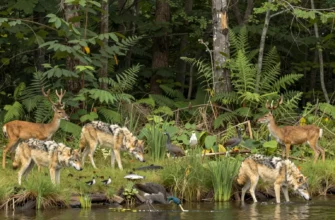
Rewilding Danmark has found its most debated and successful example at Molslaboratoriet. This 120-hectare site uses year-round natural grazing to maintain a mosaic of open meadows and dense scrubland, which dramatically increases the diversity of insects and wild flora compared to mowed fields.
The project has sparked intense public debate regarding animal welfare during harsh winters. Proponents argue that natural selection and minimal human intervention are necessary for a truly wild ecosystem, while critics call for supplemental feeding. This tension highlights the cultural shift required when moving from farming to functional ecology.
Lowlands and Islands: Innovation in Holland, Belgium, and Iceland
In high-density regions like the Netherlands and Belgium, rewilding is often a tool for both biodiversity and climate resilience. These countries demonstrate that even the most engineered landscapes can be returned to a state of wildness through clever hydrological management.
Further north, Iceland faces a different challenge; The island was once heavily forested, but centuries of grazing and volcanic activity left it a desert of basalt and dust. Today, the focus is on restoring the soil’s ability to hold life rather than simply reintroducing animals.
Pioneering the Dutch Way: Living with Water and Wildness
Rewilding Nederland gained international fame through the Oostvaardersplassen project. This man-made polder was left to its own devices, eventually becoming a mecca for birdlife and large herds of Konik horses. It proved that nature can reclaim land with incredible speed if given the chance.
Beyond isolated reserves, the Dutch are integrating wetland restoration into their national flood defense systems. By allowing rivers like the Waal to break their banks into designated floodplains, they create dynamic habitats for beavers and storks while simultaneously protecting cities from rising water levels. This synergy between safety and biology is a model for the rest of Europe.
In Belgium, the focus has shifted toward the “High Fens” and the Ardennes. Here, the return of the wildcat and the black stork signals that fragmented European forests are becoming healthy enough to support sensitive species once again.
The Alpine and Central European Shift: Austria, Germany, and Switzerland
The Alps represent the “water tower” of Europe, and their health is vital for the entire continent. Rewilding Switzerland and Austria focuses on the protection of steep mountain slopes and the re-establishment of the lynx as a key predator to manage deer populations in fragile high-altitude forests.
In Germany, the “Green Belt” project has transformed the former Iron Curtain into a 1,393-kilometer wildlife corridor. This strip of land, once a site of human division, is now a sanctuary for over 1,200 endangered species that thrive in the absence of intensive agriculture.
- Check the local regulations: Always verify if a rewilding zone allows hiking or if it is a “core zone” restricted to research.
- Practice “Leave No Trace”: Ensure all waste is carried out, as these ecosystems are highly sensitive to nutrient imbalances.
- Keep a safe distance: Large herbivores like the European Bison or Tauros cattle are not pets; maintain at least 25 to 50 meters of distance at all times.
- Use official entry points: Avoid trampling through undergrowth in reforestation areas to protect young saplings and ground-nesting birds.
- Support local economies: Stay in “Gateway Towns” that benefit from wildlife tourism, as this encourages local communities to support conservation.
Connecting the Alps: Wildlife Corridors Across Borders
Alpine biodiversity depends on the ability of species to move vertically and horizontally. Projects in the Swiss National Park have shown that eliminating hunting and logging for over a century leads to a more resilient forest structure, capable of surviving climate-driven pest outbreaks.
The reintroduction of the bearded vulture across the Alpine arc is a crowning achievement of cross-border cooperation. By sharing GPS tracking data and coordinating release sites, Switzerland, Austria, and France have ensured that this magnificent scavenger once again patrols the mountain peaks.
Mediterranean and Beyond: Restoration in Greece and the Middle East
In the heat of the Mediterranean, rewilding Greece focuses on the lifeblood of the region: its wetlands and coastal lagoons. The protection of the Dalmatian Pelican has seen populations rebound in Lake Kerkini, proving that targeted habitat management can pull a species back from the brink of extinction.
The movement is also gaining traction in the Middle East, where the goal is often arid land restoration. In these regions, rewilding is a strategic defense against desertification, using native vegetation to stabilize soil and capture rare rainfall.
Greening the Desert: The Rise of Middle Eastern Rewilding
The reintroduction of the Arabian Oryx in Saudi Arabia and the UAE is one of the world’s most successful species recovery stories. Once extinct in the wild, these antelopes now roam in protected reserves that use minimal-intervention water management to sustain native grasses.
By removing non-native livestock and allowing the land to rest, these desert ecosystems show a surprising capacity for recovery. Native acacia trees provide essential shade and micro-climates for smaller mammals and reptiles, creating a “nursing” effect that allows the desert to bloom after decades of overgrazing;
Navigating the Policy: What is the Agenda 21 Rewilding Map?
The intersection of international policy and local land use often leads to confusion. The term “Agenda 21” frequently appears in discussions about land management, but it is important to distinguish between sustainable development goals and the actual implementation of conservation projects.
Myth: Agenda 21 is a legally binding plan to force people out of rural areas into “megacities” to make room for rewilding;
Fact: Agenda 21 is a non-binding, voluntary action plan from the 1992 UN Earth Summit focused on sustainable development. It encourages local communities to protect biodiversity but has no legal authority to seize land or mandate relocations.
The so-called “rewilding map” often cited in online circles is usually a theoretical visualization of habitat connectivity rather than a government blueprint for land seizure; In reality, most rewilding in Europe happens through voluntary land sales, long-term leases, or the natural abandonment of marginal farmland by owners moving to urban centers.
In my professional experience working across various European biomes, I have found that the most successful rewilding projects are those that prioritize ecological function over aesthetic beauty. I always advise stakeholders that France and Denmark represent two sides of the same coin: France shows us how to handle vast, rugged wilderness return, while Denmark teaches us how to maximize biodiversity in small, high-pressure areas. The critical takeaway is that rewilding is not an anti-human movement; it is a management strategy that uses natural processes to provide us with cleaner water, carbon sequestration, and a psychological refuge from the modern world.
Frequently Asked Questions
The Vercors and the Southern Alps are prime examples, where the natural return of wolves and the reintroduction of vultures have restored the “scavenger loop” and balanced herbivore populations.
Is rewilding Denmark different from other European countries?
Yes, due to its small size, Denmark focuses on intensive natural grazing in fenced “wildlabs” like Molslaboratoriet to maintain open-habitat biodiversity that would otherwise disappear under dense forest canopy.
How does the Agenda 21 document relate to rewilding?
Agenda 21 is a broad framework for sustainable living; while it encourages the protection of nature, it does not contain specific mandates for rewilding or forced land-use changes.
Can I visit rewilding sites in Switzerland and Austria?
Absolutely. Most sites are integrated with world-class hiking networks. Visitors are encouraged to use these trails to minimize their footprint on the recovering soil and vegetation.
Why is the Middle East starting to focus on rewilding?
It is a vital tool for combating desertification and restoring cultural heritage. Bringing back species like the Arabian Oryx helps stabilize fragile desert ecosystems and promotes eco-tourism.
What is the role of the Molslaboratoriet in Denmark?
It serves as a critical research hub to study how minimal human interference and year-round grazing impact biodiversity in temperate, nutrient-poor landscapes.