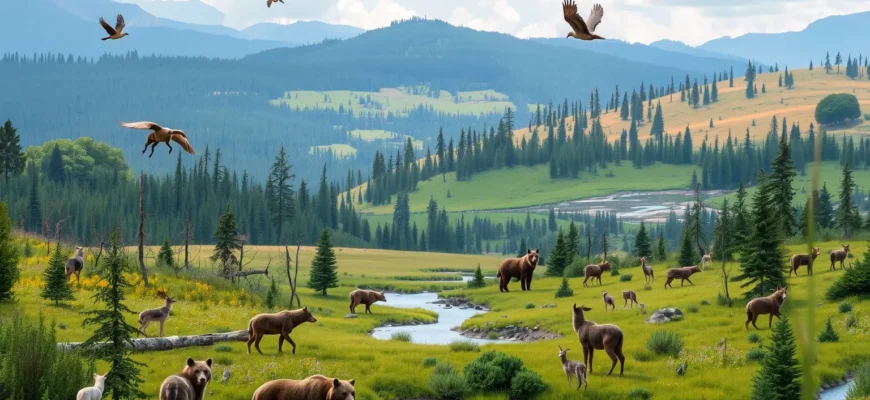
- The Core Philosophy: Using Rewilding as an Escape from Extinction
- Moving Beyond Protection to Active Restoration
- A Legacy of Wildness: Dave Foreman and the History of Rewilding
- The North American Vision: Cores and Corridors
- Comparing Approaches: Diverse Types of Rewilding for a Changing World
- From Trophic Cascades to Feral Landscapes
- The Apex Effect: Reintroducing Predators and Large Fauna
- Why Target Species Matter for Ecosystem Health
- The Dutch Rewilding Experiment: A Cautionary and Inspiring Tale
- Lessons from the Oostvaardersplassen
- Navigating the Controversy: Biodiversity Leakage and Unknown Risks
- The Ethical Dilemma of Unintended Consequences
- The Human Element: Principles for Personal and Global Change
- How to Rewild Your Own Life
- Scaling Up: From Local Plots to Continent Rewilding
- Expert Perspective: Modernizing the Three Cs
- Frequently Asked Questions
The Core Philosophy: Using Rewilding as an Escape from Extinction
Rewilding is far more than a simple conservation strategy; it is a fundamental shift in how we perceive our relationship with the natural world. Instead of merely trying to protect what remains, rewilding seeks to restart the biological engines of the planet by allowing natural processes to take the lead once again.
This proactive approach acknowledges that many ecosystems are currently on “life support,” requiring constant human intervention to survive. By reintroducing key species and removing man-made barriers, we enable nature to become self-sustaining. The goal is to reach a point where human management is no longer necessary for the ecosystem to thrive and resist collapse.
Moving Beyond Protection to Active Restoration
Traditional conservation often focuses on “freezing” a landscape in a specific historical state, which can lead to ecological stagnation. Rewilding breaks this mold by prioritizing dynamic ecological functions over static preservation. It is not about returning to a specific date in the past, but about building a resilient future where nature has the autonomy to evolve.
In the initial phase of rewilding, human intervention is often intense, involving the removal of dams, the replanting of native flora, or the physical relocation of animals. However, the ultimate success of these projects is measured by how quickly the human “manager” can step back. Successful rewilding examples, such as the regeneration of the Scottish Highlands, show that once trophic complexity is restored, the land manages itself better than any government agency could.
A Legacy of Wildness: Dave Foreman and the History of Rewilding
The modern rewilding movement owes much of its philosophical and strategic foundation to the late Dave Foreman. His 2004 work redefined the scope of conservation, moving it from small, isolated pockets of green to continental-scale restoration efforts. Foreman understood that for nature to truly “escape” the threat of extinction, it needed space, connectivity, and its most powerful players.
Foreman’s vision was built on the “Three Cs”: Cores, Corridors, and Carnivores. This framework argues that large core wilderness areas must be connected by wildlife corridors to allow for genetic exchange and climate-driven migration. Without these connections, even the largest national parks become “islands of extinction” where species slowly blink out due to inbreeding and environmental shifts.
The North American Vision: Cores and Corridors
In North America, the history of rewilding is deeply tied to the idea of the “Wildlands Network.” This strategy aims to link the Yukon to Yellowstone and beyond, creating a continuous spine of wild habitat across the continent. Foreman (2004) argued that rewilding North America was the only way to reverse the damage done during the European expansion.
By focusing on large-scale connectivity, this vision moves beyond local park boundaries. It challenges us to think about how a grizzly bear or a wolf might move from the Canadian Rockies down into the American Southwest. This landscape-level thinking ensures that species have the “room to roam” necessary to maintain healthy population densities and fulfill their ecological roles.
Comparing Approaches: Diverse Types of Rewilding for a Changing World
Rewilding is not a monolithic practice; it adapts to the specific needs of the landscape and the socio-political climate of the region. From the restoration of extinct megafauna proxies to the simple abandonment of industrial farmland, the methods vary significantly in their intensity and goals.
Understanding these distinctions is vital for policymakers and ecologists. While some projects focus on the “taxonomic” replacement of lost species, others prioritize the “trophic” roles that those species once played. Both have the same ultimate aim: restoring the functionality of the food web to prevent total ecosystem collapse.
| Rewilding Type | Primary Focus | Key Characteristic |
|---|---|---|
| Taxonomic Rewilding | Species Substitution | Using “proxy” species to replace extinct ones (e.g., using Asian elephants to replace mammoths). |
| Trophic Rewilding | Food Web Dynamics | Restoring top-down control by reintroducing apex predators to manage herbivore populations. |
| Pleistocene Rewilding | Deep History | Attempting to recreate the ecological conditions of the pre-human era. |
| Passive Rewilding | Natural Succession | Allowing nature to reclaim abandoned agricultural land without direct human interference. |
From Trophic Cascades to Feral Landscapes
Trophic rewilding is perhaps the most famous iteration, focusing heavily on how energy moves through a food chain. When a top predator is missing, herbivores often overbrowse the vegetation, leading to a “simplified” landscape with low biodiversity. By reintroducing the predator, we trigger a trophic cascade that benefits everything from songbirds to soil microbes.
Feral rewilding offers a different perspective, often involving species that have escaped domesticity and successfully integrated into the wild. While controversial, a feral rewilding review often reveals that these “domestic” animals can fill ecological niches left vacant by extinct wild ancestors. In some parts of Europe, escaped horses and cattle are now essential tools for maintaining the open grasslands that rare insects and birds depend on.
The Apex Effect: Reintroducing Predators and Large Fauna
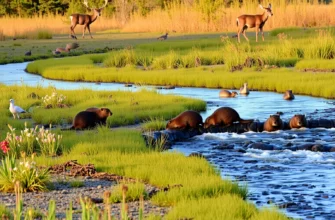
The reintroduction of fauna, particularly carnivores, is the most high-stakes aspect of the rewilding movement. Apex predators are ecosystem engineers that do more than just hunt; they redistribute nutrients, provide carrion for scavengers, and even change the physical shape of rivers by altering herbivore behavior.
When we talk about an “escape from extinction,” we are often talking about the return of the wolf, the lynx, or the beaver. These target species carry a disproportionate amount of ecological weight. Their presence creates a landscape of fear, which sounds negative but is actually a vital component of a healthy ecosystem, as it prevents herbivores from over-grazing sensitive riparian zones.
Myth: Predators will decimate local livestock populations and threaten human safety.
Fact: Statistics consistently show that predation accounts for less than 1% of annual livestock losses in managed rewilding areas, and wild predators naturally avoid human settlements when sufficient wild prey is available.
Why Target Species Matter for Ecosystem Health
Selecting the right target species is a scientific endeavor that requires deep knowledge of the local habitat. It isn’t just about bringing back “cool” animals; it’s about identifying keystone species whose presence unlocks the potential for hundreds of other species to thrive. For instance, carnivore rewilding in parts of Europe has led to a natural reduction in wild boar numbers, which in turn protects forest floors from excessive rooting.
The reintroduction of large fauna also serves as a “nature-based solution” to climate change. Large herbivores, like bison, help sequester carbon in grasslands by trampling organic matter into the soil. By focusing on these high-impact species, rewilding projects achieve a massive return on investment for the health of the entire planet.
The Dutch Rewilding Experiment: A Cautionary and Inspiring Tale
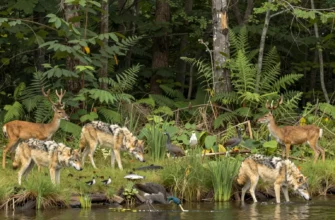
The Oostvaardersplassen in the Netherlands stands as one of the most famous and debated examples of rewilding in the world. Created on a reclaimed polder, this project attempted to simulate a Paleolithic landscape by introducing Heck cattle, Konik ponies, and red deer. For decades, it was hailed as a triumph of “hands-off” management, but it eventually faced a severe public relations crisis.
The controversy centered on the lack of apex predators. Without wolves or lynx to control the herds, the population of herbivores exploded, leading to mass starvation during harsh winters. This created a profound ethical dilemma: should humans intervene to feed “wild” animals, or let nature take its course in a closed system?
Lessons from the Oostvaardersplassen
The Dutch rewilding experiment taught the world that scale and connectivity are non-negotiable. Because the Oostvaardersplassen was a fenced-in “island,” the animals could not migrate to find food when resources became scarce. This lack of landscape connectivity meant that the “natural” process of starvation felt like animal cruelty to the public.
Today, the project has shifted toward a more active management style, including culling and better welfare monitoring. The primary lesson for future projects is that rewilding in fragmented landscapes requires a safety net. We cannot simply release animals into a cage and call it “wild”; we must ensure they have the space to move or the predators to keep their numbers in check.
Navigating the Controversy: Biodiversity Leakage and Unknown Risks
As rewilding gains traction, so does the scientific and social pushback. One of the primary concerns is “biodiversity leakage,” a phenomenon where successful restoration in one zone causes ecological degradation elsewhere. For example, if a rewilding project displaces local agriculture, that food production might move to a more sensitive tropical region, resulting in a net loss for global biodiversity.
There are also the unknown repercussions of reintroducing species into environments that have changed fundamentally over the last few centuries. Soil chemistry, climate patterns, and even the surrounding flora may no longer be compatible with the reintroduced fauna. Ecological unpredictability is a feature of rewilding, but it is one that many stakeholders find difficult to accept.
- Ignoring Human Communities: Failing to involve local farmers and residents leads to “social leakage” and active sabotage of rewilding efforts.
- Over-Focusing on Megafauna: Neglecting soil health and insect populations can cause a rewilding project to fail from the bottom up.
- Inadequate Monitoring: Without rigorous data collection, we cannot know if a species reintroduction is actually benefiting the ecosystem or just surviving.
The Ethical Dilemma of Unintended Consequences
Every rewilding project is a gamble with a complex system. When we reintroduce a species, we are not just adding a single variable; we are triggering a chain reaction that we cannot fully predict. If a reintroduced predator begins to hunt an endangered ground-nesting bird, we are forced to make a “triage” decision about which species is more valuable.
Managing human-wildlife conflict is the frontline of this controversy. For rewilding to be successful, it must be socially sustainable. This means providing compensation for livestock losses and creating “wildlife-friendly” economies that provide more value to locals than traditional farming or logging.
The Human Element: Principles for Personal and Global Change
Rewilding is not just something we do to the land; it is something we can do for ourselves. Human rewilding is a growing movement that encourages people to break free from the “extinction of experience”—the phenomenon where we lose our connection to the natural world and, consequently, our desire to protect it.
By applying human rewilding principles, individuals can improve their psychological and physical health. This involves realigning our lives with natural rhythms, such as ancestral movement patterns, seasonal eating, and spending significant time in “unmanaged” green spaces. It is a psychological escape from the sterile, technological cages we have built for ourselves.
How to Rewild Your Own Life
Integrating nature into our daily lives doesn’t require moving to a cabin in the woods. It can start with urban rewilding—advocating for “wild” parks in cities rather than manicured lawns. These micro-wildernesses provide essential habitat for pollinators and offer city dwellers a much-needed connection to the wild.
On a personal level, rewilding involves fostering ecological literacy. When we learn to identify the plants and animals in our immediate vicinity, we become more invested in their survival. This personal connection is the bedrock of the global movement; we will not save a planet that we do not feel a part of;
Rewilding represents our best hope for restoring the Earth’s life-support systems at a continental scale. While the risks and controversies are real, the alternative—continued ecological decline—is far worse. By embracing the Three Cs and learning from the mistakes of the past, we can create a future where nature and humanity both flourish.
The transition from local plots to global rewilding requires radical international cooperation. We must view the planet not as a collection of separate nations, but as a single, interconnected web of life that requires “room to breathe” across every border.
- Prioritize Connectivity: Focus on “least-cost paths” to link existing wild areas with minimal financial and social disruption.
- Empower Local Stakeholders: Ensure that rewilding creates economic opportunities for those living closest to the wild.
- Embrace Complexity: Accept that rewilding is an ongoing process of learning, not a project with a fixed end-date.
- Scale Up: Move from small-scale experiments to trans-boundary wildlife corridors that span entire continents.
Scaling Up: From Local Plots to Continent Rewilding
The future of the movement lies in its ability to scale. We are seeing the beginnings of this with the European Green Belt and the American Prairie Reserve. These projects demonstrate that nature can recover with incredible speed if we simply give it the opportunity.
Global rewilding is not just about animals; it is about securing our own future. Resilient, wild ecosystems are our best defense against climate change, providing natural flood defense, carbon sequestration, and pandemic prevention. By letting the wild back in, we aren’t just saving species; we are saving ourselves.
Expert Perspective: Modernizing the Three Cs
In my professional experience, I have found that the most successful rewilding projects are those that treat Dave Foreman’s Three Cs as a living framework rather than a rigid set of rules. While “Cores, Corridors, and Carnivores” remains the gold standard, in the 21st century, we must add a fourth “C”: Community. Without local buy-in, even the most scientifically sound project will fail. I always advise practitioners to treat rewilding as an adaptive management process. You must be prepared for the “unpredictable wild” and have the patience to allow ecosystems to find their own equilibrium. Remember, rewilding is an escape from extinction, but it requires us to surrender the illusion of absolute control.
Frequently Asked Questions
The goal is to restore self-regulating ecosystems that possess the complexity and resilience to thrive without permanent human management or intervention.
Who was Dave Foreman and how did he influence rewilding in 2004?
Dave Foreman was a pioneering conservationist who advocated for large-scale wilderness restoration through the “Three Cs” (Cores, Corridors, and Carnivores), shifting the movement toward continental-scale strategies.
What happened during the Dutch rewilding experiment at Oostvaardersplassen?
The project successfully restored a Paleolithic-style landscape but faced intense controversy when a lack of predators led to overpopulation and mass animal starvation during winter.
What are the biggest risks or unknown repercussions of rewilding?
Key risks include biodiversity leakage (negative impacts elsewhere), human-wildlife conflict, and unforeseen ecological shifts caused by reintroducing species into modern, altered environments.
Can rewilding be done on a small budget or on the least amount of land?
Yes, through passive rewilding—allowing nature to reclaim land naturally—and by using “least-cost paths” to create corridors that maximize connectivity with minimal land acquisition.
What are the core principles of human rewilding?
Human rewilding involves reconnecting with natural rhythms, practicing ancestral movement and nutrition, and reducing technological dependence to restore psychological and physical health.