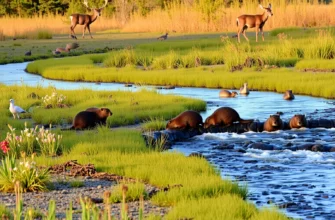
- Breaking Down the Initial Cost of Rewilding Land
- Land Acquisition vs. Management: Where the Money Goes
- Estimated Cost to Rewild America and the UK
- Regional Price Benchmarks for Global Restoration
- Can Nature Pay for Itself? How to Make a Profit from Rewilding
- Monetizing Natural Capital and Biodiversity Credits
- Navigating the Funding Landscape for Large-Scale Projects
- Public Grants vs. Private Philanthropy
- Rewilding as a Corporate Asset: Industry Classification and Business Structure
- The Business of Environmental Restoration
- Common Financial Mistakes in New Rewilding Ventures
- Avoiding the Money Pit: Why Over-Management Kills ROI
- Expert Perspective: Economics of Wild Landscapes
- Frequently Asked Questions
Breaking Down the Initial Cost of Rewilding Land
Estimating the financial requirements for a rewilding project requires a shift from traditional agricultural accounting to a long-term natural capital model. While the upfront investment can be significant‚ the transition aims to move a property from a high-maintenance‚ subsidized state to a self-sustaining ecosystem that generates value through biological growth rather than mechanical intervention.
Land Acquisition vs. Management: Where the Money Goes
The primary hurdle in any restoration project is the acquisition of the land itself‚ which remains the most volatile variable in the financial equation. In the United States‚ marginal grazing land or degraded timberland can often be acquired for $1‚500 to $3‚500 per acre‚ whereas in the United Kingdom‚ specifically in the Scottish Highlands‚ prices have surged due to the “green laird” phenomenon‚ where wealthy individuals buy estates specifically for carbon sequestration and prestige. When evaluating how much it cost to rewild land‚ the purchase price is often just the baseline; the true economic weight lies in the transition period where the land produces no traditional yield but requires high levels of initial oversight.
Ecological baseline monitoring is a non-negotiable expense that many newcomers overlook. To qualify for future carbon or biodiversity credits‚ you must prove the starting state of the land using LiDAR mapping‚ eDNA soil testing‚ and professional botanical surveys. These surveys typically cost between $5‚000 and $25‚000 depending on the acreage. Without this data‚ the land’s “additionality”—its ability to prove it has improved—is legally void‚ rendering it nearly impossible to monetize ecosystem services later. Furthermore‚ the average costs of rewilding are heavily front-loaded into removing “grey infrastructure.” This includes the demolition of redundant farm buildings‚ the removal of thousands of meters of internal fencing to allow wildlife corridors‚ and the decommissioning of drainage systems that were originally installed to dry out wetlands.
Invasive species management represents a recurring cost to rewild land during the first five to ten years. If a site is overrun with Rhododendron ponticum in the UK or Kudzu in the US South‚ the manual and chemical labor required to clear the land can reach $2‚000 per hectare. This is not a “one-and-done” expense; follow-up treatments are required to ensure the native seed bank can successfully germinate without being choked out by aggressive non-native competitors. Failure to budget for this results in a “stalled” ecosystem where biodiversity remains low despite the absence of farming.
Estimated Cost to Rewild America and the UK
The financial scale of rewilding varies drastically between the vast‚ often federally-owned expanses of the United States and the highly fragmented‚ privately-owned landscapes of the United Kingdom. While the goals remain similar‚ the logistical machinery and land values create two very different balance sheets for restoration professionals.
| Metric | United States (Large Scale) | Scotland / UK (Estate Scale) |
|---|---|---|
| Average Land Cost (Per Acre) | $800 ౼ $4‚000 (Varies by State) | £1‚500 ー £8‚000 (High demand) |
| Primary Intervention Cost | $200 ー $1‚200 (Seeding/Hydrology) | £500 ౼ £3‚000 (Fencing/Planting) |
| Labor Rates | Moderate (Contracted crews) | High (Specialist ecological contractors) |
| Government Support | USDA / Farm Bill Programs | ELMS / Scottish Forestry Grants |
| Key Economic Driver | Federal Tax Credits / Philanthropy | Carbon Credits / BNG Units |
Regional Price Benchmarks for Global Restoration
In the American West‚ the estimated cost to rewild America focuses heavily on “landscape-scale” connectivity. Projects often involve the removal of thousands of miles of barbed wire fencing to facilitate the migration of pronghorn and mule deer‚ which costs approximately $2‚500 to $5‚000 per mile for professional removal. When we look at the rewilding costs estimated for US projects like the American Prairie Reserve‚ the budget isn’t just for land but for the “social license” to operate‚ which includes compensating neighboring ranchers for potential livestock conflicts. This “community buffer” fund is a critical line item in any US-based restoration budget.
In the Scottish Highlands‚ the financial landscape is dominated by the need for deer management. Because natural predators are absent‚ landowners must invest heavily in professional stalking or expensive deer-proof fencing to allow natural regeneration of the Caledonian forest. A single kilometer of deer fencing can cost £15‚000 to £20‚000‚ a massive capital outlay that is often subsidized by government forestry grants but requires significant upfront cash flow. When analyzing how much has been spent on rewilding in the UK‚ the figures are often skewed by high-profile buyers who prioritize long-term ecological health over immediate profit‚ effectively pricing out smaller community-led initiatives that cannot compete with these high entry costs.
Can Nature Pay for Itself? How to Make a Profit from Rewilding
The transition from a cost-center to a profit-center is the most debated aspect of the economics of rewilding. To make a project viable for private investors‚ the land must generate “stackable” revenue streams that go beyond traditional timber or meat production‚ focusing instead on the burgeoning market for natural capital.
| Revenue Strategy | Pros | Cons |
|---|---|---|
| Carbon Credits | High long-term value; scalable; globally recognized. | High verification costs; 20-100 year commitments. |
| Biodiversity Net Gain (BNG) | Legal requirement for UK developers; high per-unit price. | Complex legal frameworks; local market dependency. |
| Eco-Tourism / Glamping | Immediate cash flow; high margins; builds brand. | High operational overhead; requires staff/infrastructure. |
| Wild-Range Meat | Premium product pricing; manages herd health. | Requires slaughterhouse access and marketing. |
Monetizing Natural Capital and Biodiversity Credits
The question of how do you make a profit from rewilding is increasingly answered through “stacking” ecosystem services. Carbon sequestration is the most mature market; however‚ it is no longer enough to simply plant trees. Modern buyers want “high-integrity” credits that prove biodiversity is also increasing. In the UK‚ the Biodiversity Net Gain (BNG) market allows landowners to sell “units” to developers who are legally required to offset their environmental impact. A single BNG unit can fetch between £15‚000 and £30‚000‚ and a well-managed rewilding site can generate several units per hectare over a 30-year period.
Secondary income streams like high-end eco-tourism and glamping provide the liquidity needed to cover annual operational expenses. By shifting from a “production” mindset to an “experience” mindset‚ landowners can charge a premium for “wilderness immersion.” Many successful projects in Europe have found that 10% of the land dedicated to tourism can subsidize the restoration of the remaining 90%. Additionally‚ funding for rewilding projects is increasingly coming from corporate social responsibility (CSR) budgets of major firms looking to secure their supply chains against climate-related risks‚ creating a new class of “Nature-as-a-Service” contracts.
Navigating the Funding Landscape for Large-Scale Projects
Securing the capital for these ventures requires navigating a complex web of public subsidies‚ private philanthropic “patient capital‚” and emerging green finance instruments. Understanding the distinction between these sources is essential for maintaining a balanced budget over the project’s multi-decade lifespan.
- Public Grants: In the UK‚ the Environmental Land Management scheme (ELMS) is replacing traditional agricultural subsidies‚ paying farmers for “public goods” like clean water and carbon storage.
- Private Equity: Institutional investors are beginning to view land as a hedge against inflation‚ specifically seeking degraded land that has the highest potential for value appreciation through restoration.
- Philanthropic Foundations: Large-scale US projects often rely on high-net-worth individuals who provide “first-loss” capital‚ allowing the project to reach a scale where it can eventually become self-sustaining.
- Crowdfunding: Community-led rewilding is gaining traction‚ where local residents buy “shares” in a land trust to prevent development and ensure local access to nature.
Public Grants vs. Private Philanthropy
While public funding for rewilding remains the backbone of many projects‚ it often comes with “red tape” that can limit ecological flexibility. For instance‚ many government grants require specific tree-planting densities that may contradict the “natural regeneration” ethos of true rewilding. In contrast‚ private philanthropy allows for more experimental approaches‚ such as the reintroduction of “keystone species” like beavers or bison‚ which public funds are often too risk-averse to support. When asking how much money has the united states spent on rewilding‚ the answer is in the billions if you include the Great American Outdoors Act‚ which allocates $1.9 billion annually for conservation and backlogged maintenance on federal lands.
However‚ the trend is shifting toward private-sector involvement. Green bonds and “nature-linked” loans are emerging‚ where the interest rate on a loan decreases as the borrower hits specific biodiversity targets. This aligns the financial incentives of the lender with the ecological goals of the rewilder. Is rewilding expensive? Yes‚ in terms of initial capital‚ but it is increasingly viewed as a low-risk‚ long-term asset class by those who understand that a degraded landscape is a liability‚ while a functional one is a resilient source of wealth.
Rewilding as a Corporate Asset: Industry Classification and Business Structure
As rewilding moves from a niche environmental movement to a legitimate industrial sector‚ the way these businesses are classified and taxed is evolving. For corporate entities‚ rewilding is no longer just “charity”; it is a strategic land management decision that affects the corporate balance sheet and ESG (Environmental‚ Social‚ and Governance) ratings.
The Business of Environmental Restoration
The rewilding companies industry classification usually falls under SIC Code 02400 (Support activities to forestry) or 91040 (Nature reserves activities) in the UK. In the US‚ it may fall under “Land Improvement” or “Environmental Consulting.” This classification is vital for tax purposes‚ as it dictates whether the landowner can claim capital allowances on equipment like specialized seeding drones or heavy-duty mowers used for initial scrub management. The rise of specialized consultancies means that landowners no longer have to be ecologists themselves; they can outsource the entire restoration process to firms that guarantee specific biodiversity outcomes.
How expensive is rewilding at a corporate level? The “all-in” costs‚ including consultancy‚ legal fees for conservation covenants‚ and physical labor‚ often range from $500 to $1‚500 per acre beyond the land purchase price. However‚ this investment often leads to a significant increase in land value. “Wilded” land is increasingly fetching a premium on the open market‚ not for its agricultural yield‚ but for its “offset potential.” Professional investors now calculate how much would rewilding cost against the potential 50-year yield of carbon and biodiversity units‚ often finding that it outperforms traditional sheep farming or commercial spruce plantations in terms of net present value.
Common Financial Mistakes in New Rewilding Ventures
The most common way landowners lose money in rewilding is through “over-intervention.” There is a temptation to treat rewilding like a gardening project‚ spending vast sums on nursery-grown trees and intensive landscaping when the most cost-effective tool is often simply “stepping back” and letting natural processes take over.
- The “Neatness Trap”: Spending money to tidy up “messy” areas like deadwood or scrub. Deadwood is a free biological asset that provides habitat; removing it is literally paying to decrease your land’s value.
- Inadequate Fencing Strategy: Investing in cheap fencing that fails within five years. Always invest in high-tensile‚ long-life fencing to avoid the recurring labor costs of constant repairs.
- Ignoring Community Engagement: Failing to budget for local PR. If the local community feels excluded‚ the risk of arson‚ poaching‚ or legal challenges increases‚ which are unhedged financial risks.
- Poor Baseline Data: Attempting to save $10‚000 on initial surveys. Without a verified baseline‚ you cannot sell carbon credits later‚ potentially losing hundreds of thousands in future revenue.
Avoiding the Money Pit: Why Over-Management Kills ROI
When people ask is rewilding expensive‚ the answer often depends on how much they try to control the outcome. Active restoration—where you plant every tree and dig every pond—is incredibly capital-intensive. Passive restoration‚ which relies on natural seed dispersal and the “pulsing” of natural water levels‚ is significantly cheaper. In my experience‚ natural regeneration is up to 80% cheaper than manual tree planting and results in a more resilient forest because the trees that survive are those best adapted to the specific micro-climate of the site.
How much does rewilding cost when it’s done wrong? It can become a bottomless pit of “management” where the landowner is constantly fighting against nature rather than working with it. The goal is to reach a “tipping point” where the ecosystem begins to manage itself. Once the keystone species are in place and the hydrology is restored‚ the Operational Expenditure (OPEX) drops to nearly zero‚ whereas traditional farming requires a constant‚ never-ending cycle of inputs like fertilizer‚ diesel‚ and pesticides. The financial brilliance of rewilding lies in this long-term reduction of maintenance costs.
Expert Perspective: Economics of Wild Landscapes
In my professional experience as a land economist‚ the biggest hurdle for investors is shifting from a 1-year crop cycle to a 50-year ecosystem cycle. I always advise clients to look at rewilding as a massive reduction in long-term Operational Expenditure (OPEX). While traditional agriculture requires annual inputs of fertilizer‚ machinery‚ and labor that inflate with the cost of oil‚ a rewilded landscape uses natural processes to perform that labor for free. Over a 30-year horizon‚ the cost-to-value ratio of a rewilded estate often outperforms marginal farming because you have effectively outsourced your management to the ecosystem itself. The real wealth is found in the appreciation of “natural capital” assets which are becoming increasingly scarce and‚ therefore‚ more valuable in the global marketplace.
Frequently Asked Questions
Initially‚ yes‚ due to high setup costs like surveys and fencing. However‚ over time it is significantly cheaper as it eliminates the need for expensive fertilizers‚ pesticides‚ and heavy machinery maintenance.
How much does it cost to rewild one acre of land?
Costs typically range from $500 to $5‚000 per acre‚ depending on whether you use passive natural regeneration or active restoration like tree planting and wetland creation.
Can I get government funding for rewilding my property?
Yes‚ programs like the ELM scheme in the UK or the USDA Conservation Reserve Program in the US offer financial incentives for converting land into wildlife habitats.
What is the typical ROI (Return on Investment) for a rewilding project?
ROI is long-term‚ often 15-30 years‚ driven by carbon credit sales‚ biodiversity units‚ and the appreciation of the land as a high-value green asset.
How much has the US government spent on rewilding initiatives?
Billions of dollars are allocated through acts like the Great American Outdoors Act‚ which provides nearly $2 billion annually for land conservation and restoration.
Are there specific companies that handle rewilding as a service?
Yes‚ a new industry of ecological restoration firms and natural capital consultancies has emerged to help landowners design‚ implement‚ and monetize rewilding projects.