- Unpacking the Friction: Why is Rewilding Bad for Local Communities?
- The Displacement of Traditional Farming Cultures
- The Economic Fallout: Arguments Against Rewilding in Food-Producing Regions
- Impact on Food Security and Global Supply Chains
- Ecological Unintended Consequences: Why Rewilding is a Bad Idea for Balanced Ecosystems
- The Rise of Invasive Species and Disease Vectors
- Analyzing the Conflict: Is Rewilding Good or Bad for Biodiversity?
- Theoretical Gains vs. Practical Risks
- The Safety Factor: Why Rewilding is Controversial Near Human Settlements
- Human-Wildlife Conflict and Public Safety
- Strategic Failures: Reasons Why Rewilding is Bad When Poorly Executed
- A Better Path Forward: Why We Should Not Rewild Without Strict Oversight
- Integrating Humans and Nature Safely
- Expert Perspective: Landscape Management
- Frequently Asked Questions
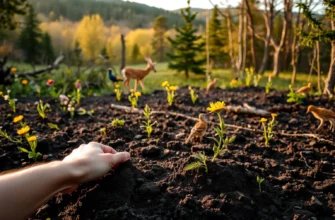
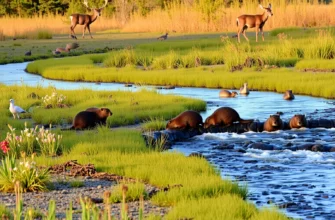
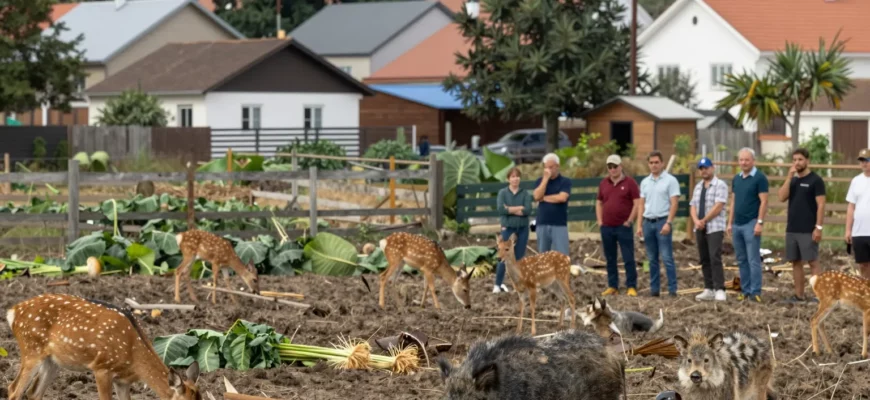
Unpacking the Friction: Why is Rewilding Bad for Local Communities?
The concept of returning land to its wild state often sounds like a romantic recovery of lost Eden‚ but for those living on the front lines‚ the reality is frequently disruptive to both livelihoods and social cohesion. While urban-based conservationists view abandoned fields as opportunities for nature‚ rural residents see the death of a working landscape that has supported human life for millennia. This friction arises because rewilding projects often bypass the democratic consent of the people whose families have inhabited these regions for generations.
When we talk about land management‚ we cannot separate the soil from the soul of the community. Large-scale rewilding initiatives often treat human presence as a temporary intrusion rather than a foundational element of the ecosystem. This perspective creates a sharp divide between top-down environmental policy and bottom-up local reality‚ leading to a sense of alienation among those who feel their heritage is being sacrificed for a middle-class aesthetic of “wilderness.”
The Displacement of Traditional Farming Cultures
The push for rewilding often results in the erasure of agricultural identity that has been meticulously built over centuries. Farming is not merely an industry; it is a repository of multi-generational knowledge regarding soil health‚ weather patterns‚ and local ecology. When land is “set aside” to go wild‚ this living library of rural heritage is effectively burned.
In many parts of Europe and the Americas‚ the transition from active farming to unmanaged scrubland leads to rural displacement. As farms close‚ the secondary economy—vets‚ mechanics‚ local shops‚ and schools—collapses. To prevent the total dissolution of these communities‚ policymakers must recognize that a landscape without people is a landscape without a history‚ often leading to a sterilized version of nature that lacks the cultural depth of a managed countryside.
The Economic Fallout: Arguments Against Rewilding in Food-Producing Regions
Removing land from the agricultural cycle is a high-stakes gamble with food security. In an era of volatile global markets and climate instability‚ the decision to stop producing food on viable land is increasingly viewed as a strategic error. Critics argue that rewilding prioritizes leisure and carbon credits over the fundamental human need for affordable‚ locally sourced nutrition.
The economic argument against rewilding is rooted in the concept of “leakage.” When a country reduces its own food production capacity to meet domestic environmental targets‚ it does not reduce its consumption. Instead‚ it increases its import reliance‚ often sourcing food from nations with significantly lower environmental and animal welfare standards. This effectively exports the environmental footprint to more vulnerable regions while hollowing out the domestic rural economy.
Impact on Food Security and Global Supply Chains
The conversion of productive land into unmanaged scrubland directly reduces the calories available to the global market. In regions where high-yield farming is replaced by “wilding‚” the loss of food production can lead to higher shelf prices for consumers. This is particularly problematic in a landscape where arable land is a finite and shrinking resource.
Furthermore‚ the irony of rewilding is that it often relies on importing food from thousands of miles away. This logistics chain has a massive carbon cost that often outweighs the sequestration benefits of the new “wild” forest. If a nation cannot feed itself because it has prioritized aesthetic rewilding over sustainable agriculture‚ it remains geopolitically fragile and environmentally hypocritical.
Ecological Unintended Consequences: Why Rewilding is a Bad Idea for Balanced Ecosystems
The assumption that “nature knows best” is a dangerous oversimplification in a world where ecosystems are already heavily modified. Without human intervention‚ many landscapes do not return to a biodiverse paradise; instead‚ they fall victim to ecological degradation. In many cases‚ the absence of traditional management leads to a “climax community” of dense‚ low-diversity scrub that chokes out the very species conservationists hope to protect.
Modern landscapes are often fragmented‚ meaning natural processes like migration and wildfire cannot function as they did 10‚000 years ago. In this context‚ abandoning land management leads to a loss of niche habitats. For example‚ many rare butterflies and orchids depend on the specific conditions created by traditional low-intensity grazing; without the farmer’s sheep or cows‚ these species face local extinction as their habitat is overgrown by aggressive grasses and shrubs.
The Rise of Invasive Species and Disease Vectors
Unmanaged land quickly becomes a breeding ground for invasive plants like Japanese Knotweed or Rhododendron‚ which can rapidly outcompete native flora. These monocultures offer very little to local wildlife and are notoriously difficult and expensive to eradicate once they take hold. Landowners must realize that “doing nothing” is a management choice that often carries the highest long-term ecological cost.
Beyond plant life‚ the lack of management can lead to an explosion in pest populations. For instance‚ unmanaged deer populations or a rise in tick-bearing scrub can increase the prevalence of zoonotic diseases like Lyme disease. In these scenarios‚ the “wild” landscape becomes a public health risk rather than a public asset‚ proving that human stewardship is essential for maintaining a healthy biological balance.
Analyzing the Conflict: Is Rewilding Good or Bad for Biodiversity?
The debate over rewilding is often framed as a binary choice‚ but the reality involves complex conservation trade-offs. To understand why rewilding is controversial‚ one must compare the theoretical benefits touted by advocates against the practical risks observed by land managers and ecologists.
| Feature | Theoretical Rewilding Goal | Practical Risk / Criticism |
|---|---|---|
| Carbon Sequestration | New forests and peatlands lock away CO2. | Unmanaged scrub is often less efficient at carbon storage than managed permanent pasture or regenerative farms; |
| Species Diversity | Reintroducing “lost” species restores the food web. | Focusing on “charismatic” species can lead to the neglect of smaller‚ rare species that require specific managed habitats. |
| Land Use | Creation of vast‚ connected wilderness corridors. | Directly threatens local food production and leads to increased food miles and higher prices. |
| Ecosystem Health | Nature heals itself through “self-willed” processes. | Lack of management often results in invasive species dominance and increased wildfire fuel loads. |
Theoretical Gains vs. Practical Risks
While the idea of a self-sustaining ecosystem is appealing‚ it rarely accounts for the human-wildlife conflict that arises when wild spaces border urban or agricultural ones. The reintroduction of species without a clear management plan often results in economic damage to farmers and a loss of public support for conservation as a whole. Successful conservation requires a pragmatic approach that balances biological goals with the socio-economic needs of the people living on the land.
The Safety Factor: Why Rewilding is Controversial Near Human Settlements
One of the most contentious aspects of the rewilding movement is the predator reintroduction of species like wolves‚ lynx‚ and bears. In densely populated regions‚ the return of apex predators is not just an ecological shift; it is a significant safety and economic concern. For rural residents‚ the presence of large carnivores can transform a peaceful landscape into a zone of constant vigilance and financial loss.
The threat to livestock is the most immediate concern. Even with compensation schemes‚ the psychological and financial toll of losing animals to predation is immense. Furthermore‚ the infrastructure required for livestock protection—such as high-voltage fencing and livestock guardian dogs—is expensive‚ unsightly‚ and can restrict the movement of other‚ non-target wildlife‚ creating a “fortress” effect in the countryside.
Human-Wildlife Conflict and Public Safety
Public safety is a legitimate concern that is often dismissed by urban advocates as “irrational fear.” However‚ for parents in rural villages or farmers working alone at night‚ the risks posed by large predators are tangible. When rewilding projects prioritize the presence of a wolf over the safety of a community‚ they foster a deep-seated resentment that can set back conservation efforts by decades.
The psychological impact of living in a predator zone cannot be ignored. The erosion of the “sense of safety” in rural areas can lead to a decline in outdoor activities‚ tourism‚ and local well-being. To be successful‚ any reintroduction program must have unanimous local consent and a robust management plan that includes the right to remove “problem” animals that threaten human safety or livelihoods.
Strategic Failures: Reasons Why Rewilding is Bad When Poorly Executed
Rewilding projects frequently fail because they are treated as “set and forget” initiatives. In reality‚ successful nature restoration requires more management‚ not less. When projects are launched without long-term funding or a clear understanding of the local soil and climate‚ they often devolve into ecological graveyards or invasive-species hotspots.
One of the most common errors is the lack of stakeholder engagement. When urban organizations impose their vision on rural communities without consultation‚ the project is doomed to fail. Local people have the most to lose and the most to offer; ignoring their expertise leads to poor project management and community backlash.
- Ignoring Local Knowledge: Failing to consult farmers about drainage‚ soil history‚ and micro-climates.
- Insufficient Funding: Starting a project without a 20-year plan for invasive species control and fence maintenance.
- Top-Down Policy: Forcing rewilding through government mandates rather than voluntary community participation.
- Poor Species Choice: Reintroducing animals that are not genetically suited to the specific modern environment.
- Lack of Monitoring: Failing to track how the land changes‚ leading to unforeseen ecological collapses.
A Better Path Forward: Why We Should Not Rewild Without Strict Oversight
The future of land management should not be a choice between industrial monocultures and total abandonment. Instead‚ we should advocate for sustainable land use that integrates high-nature-value farming with targeted restoration. This “middle way” respects the agricultural heritage of the land while enhancing its biological resilience.
By focusing on community-led conservation‚ we can ensure that nature restoration projects actually benefit the people who live alongside them. This involves supporting farmers to transition to regenerative practices rather than forcing them off the land. True ecological health is found in managed diversity‚ where humans and nature coexist in a functional‚ productive partnership.
Integrating Humans and Nature Safely
The goal should be managed restoration rather than “wilding.” This means keeping the human steward in the picture—using cattle to mimic ancient grazers‚ managing woodlands for timber and habitat‚ and ensuring that food production remains a primary goal of land use. When we stop seeing humans as the enemy of nature‚ we can create landscapes that are both biodiverse and economically viable.
Ultimately‚ the most successful environmental projects are those where local communities lead the conversation. By prioritizing transparency‚ safety‚ and food security‚ we can move away from the controversial “all-or-nothing” rewilding model and toward a future of resilient‚ working landscapes that serve both the planet and its people.
Expert Perspective: Landscape Management
In my professional experience as a land management specialist‚ I have seen that the most “natural” looking landscapes are often the ones that require the most careful human stewardship. The idea of a self-regulating wilderness is largely a romanticized myth in our modern‚ fragmented world. I always advise my clients that abandoning land management is not an act of conservation; it is an act of neglect. To maintain the high levels of biodiversity we currently enjoy in our meadows and heathlands‚ we must continue the centuries-old practices of grazing and mowing. Without the farmer’s intervention‚ we don’t get “wildness”—we get a simplified‚ high-fuel-load scrubland that is prone to wildfire and ecological stagnation. True sustainability requires the hand of a skilled steward who understands that humans are an integral part of the ecosystem‚ not an outside observer.
Frequently Asked Questions
No‚ but it can be harmful if it leads to monocultures of scrub or the loss of specific “human-made” habitats like hay meadows that support rare‚ protected species.
How does rewilding affect local farmers?
It often leads to the loss of grazing land‚ increased predator attacks on livestock‚ and the economic decline of rural communities as farming infrastructure disappears.
Can rewilding increase the risk of wildfires?
Yes. Unmanaged vegetation and “scrubbing up” create a massive fuel load‚ making wildfires much more intense and harder to control compared to grazed or managed land.
Why do conservationists argue against some rewilding projects?
Many experts prefer targeted management because it protects specific rare species that would be outcompeted and lost in a completely unmanaged “wild” landscape.
What is the biggest mistake in rewilding?
The top mistake is a top-down approach where urban policies are forced onto rural stakeholders without consultation‚ leading to project failure and social conflict.