- Why It Is Time to Rewild Your Campus and Reconnect with the Earth
- The Benefits of Biodiversity in Educational Spaces
- Rewilding the American Child: Transforming Schools into Living Landscapes
- Moving Beyond Asphalt: Rewilding Playgrounds for Better Growth
- The Art of Returning to Nature: How to Rewild Yourself and Your Lifestyle
- Rewild Your Feet: The Importance of Natural Movement
- Developing a Rewilding Spirituality in the Modern World
- Actionable Steps: A Checklist for a Greener Campus Lifestyle
- Unlearning and Rewilding: Understanding the Deep Ecology Philosophy
- The Philosophy of Primitivism and Ecological Integrity
- Common Misconceptions About Rewilding Your Life
- Expert Perspective: Institutional Rewilding
- Frequently Asked Questions
Why It Is Time to Rewild Your Campus and Reconnect with the Earth
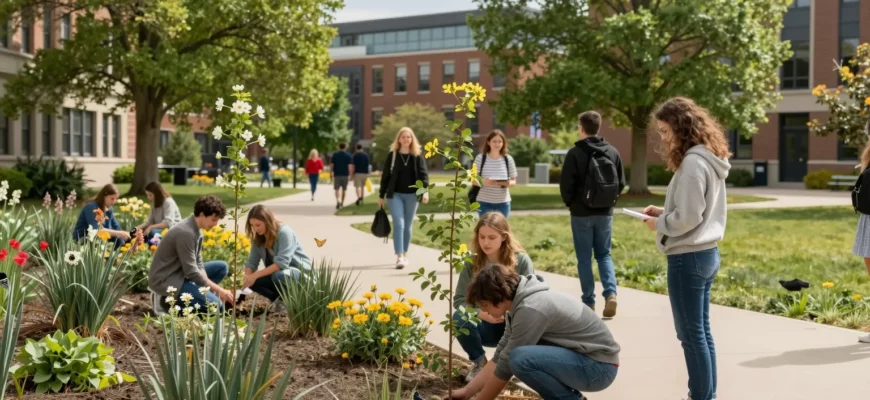
The traditional modern campus often resembles a sterile industrial complex more than a place of growth, defined by vast expanses of manicured turf and heat-absorbing asphalt. Moving toward institutional greening requires a fundamental shift in how we perceive educational space, moving from “landscaping as decoration” to “landscaping as a living ecosystem.”
By choosing to rewild your campus, you are not merely planting trees; you are restoring the biological heritage of the land while creating a functional outdoor laboratory. This transition from gray to green infrastructure mitigates the urban heat island effect and provides a necessary sanctuary for both local wildlife and the human spirit.
The Benefits of Biodiversity in Educational Spaces
Integrating diverse plant life and complex ecosystems directly into school grounds serves as a powerful catalyst for student mental health. Research into environmental psychology suggests that access to biodiverse “wild” patches significantly reduces cortisol levels and improves cognitive focus compared to time spent in traditional, highly manicured parks;
Beyond the psychological impact, these rewilded zones function as critical carbon sinks and stormwater management systems. By replacing non-native grass with deep-rooted native perennials and shrubs, schools can sequester significantly more atmospheric carbon while preventing soil erosion during heavy rainfall. This creates a tangible example of nature-based learning where students can observe ecological restoration in real-time, turning a static environment into a dynamic, teaching landscape.
Rewilding the American Child: Transforming Schools into Living Landscapes
The concept of rewilding the child is a direct response to the increasing confinement of youth within digital and concrete boundaries. When we strip the natural world of its complexity, we deprive children of the sensory inputs required for healthy neurological and physical development.
Transforming schoolyards into living landscapes allows children to interact with “loose parts” like sticks, stones, and water, fostering a level of creativity that fixed plastic playground equipment cannot match. It is about restoring the evolutionary link between a child’s development and the unpredictable textures of the natural world.
| Feature | Traditional Sterile Playground | Rewilded Nature Play Space |
|---|---|---|
| Surface Material | Asphalt, poured rubber, or wood chips. | Living soil, tall grass, boulders, and mulch. |
| Risk Profile | Low physical risk, high boredom, low resilience. | Managed “beneficial risk” through climbing and uneven terrain. |
| Sensory Input | Uniform, hard, and predictable. | Variable temperatures, textures, and biological scents. |
| Engagement Level | Short-term physical exertion. | Deep, imaginative play and ecological curiosity. |
| Biodiversity | Near zero; often treated with pesticides. | High; supports pollinators, birds, and soil microbes. |
Moving Beyond Asphalt: Rewilding Playgrounds for Better Growth
Replacing asphalt with natural terrain is not just an aesthetic choice; it is a developmental necessity that addresses the growing concern of nature deficit disorder. When children navigate uneven ground, climb varied branch structures, or balance on fallen logs, they are developing superior proprioception and vestibular balance that flat surfaces simply cannot provide.
Rewilding childhood through sensory play encourages a healthy relationship with risk. Unlike the static safety of a plastic slide, a natural landscape requires a child to assess their own capabilities and make decisions. This builds a foundation of physical resilience and self-reliance that carries over into academic and social challenges, proving that a “wilder” environment is often a safer place for long-term character development.
The Art of Returning to Nature: How to Rewild Yourself and Your Lifestyle
Rewilding is not a practice reserved for the wilderness; it is a radical shift in how we inhabit our own bodies and daily routines. It involves stripping away the layers of domestication that have left us sedentary and disconnected from our biological roots.
Adopting a rewilding lifestyle means making conscious choices to reintegrate ancestral habits into a high-tech world. Inspired by thinkers like Nick Baker, this “art of returning” focuses on reclaiming our sensory awareness and recognizing ourselves as an integral part of the local ecology rather than mere observers of it.
Rewild Your Feet: The Importance of Natural Movement
The human foot is a masterpiece of engineering, containing 26 bones and over 200,000 nerve endings, yet modern footwear often treats it like a rigid block. To rewild your feet is to restore the natural biomechanics of your gait by transitioning to minimalist footwear or spending time barefoot on variable surfaces.
Walking on natural terrain provides essential sensory feedback that signals the brain to adjust posture and muscle engagement. Grounding yourself on the earth’s surface has been shown to improve sleep quality and reduce inflammation, while the act of navigating rocks and roots strengthens the intrinsic muscles of the foot that are typically dormant in cushioned shoes. This is the foundation of natural movement: a body that is responsive, strong, and deeply connected to the ground it walks upon.
Developing a Rewilding Spirituality in the Modern World
Rewilding spirituality is less about dogmatic belief and more about an embodied connection to the Earth’s seasonal cycles. It is the practice of aligning your internal rhythm with the rise and fall of the sun, the changing of the leaves, and the migration of local wildlife.
In a world of artificial light and climate-controlled rooms, rediscovering this nature connection offers a profound sense of inner peace. By observing the “deep time” of the landscape, we move away from the frantic pace of digital consumerism and toward a meaningful participation in the ongoing story of our local ecosystem. This spiritual shift fosters an ethics of care, where protecting the environment becomes an act of protecting one’s own extended self.
Actionable Steps: A Checklist for a Greener Campus Lifestyle
Systemic change on campus begins with individual and small-group initiatives that demonstrate the viability of rewilding. Use the following checklist to transition your immediate environment from a sterile space to a thriving, biodiverse habitat.
- Identify “Dead Zones”: Locate areas of underutilized lawn or concrete that can be converted into native wildflower meadows or “pocket forests.”
- Audit Local Flora: Research native species that support local pollinators and replace invasive ornamental plants with varieties that provide food and shelter for indigenous birds.
- Implement “No-Mow” Zones: Advocate for reduced mowing schedules to allow natural succession to occur, which drastically reduces the campus carbon footprint and promotes insect biodiversity.
- Create Outdoor “Sit Spots”: Designate quiet, natural areas for students and faculty to engage in observation or meditation, fostering a culture of nature-based learning.
- Install Bird and Bat Boxes: Provide immediate habitat for local fauna to encourage them to return to the campus ecosystem.
- Remove Barriers to Movement: If possible, advocate for the removal of unnecessary fences or barriers that prevent wildlife from moving through the campus corridor.
- Practice Foraging Awareness: Learn to identify (but not necessarily harvest) the wild “weeds” on campus, shifting your perspective from seeing them as pests to seeing them as valuable ecological players.
Unlearning and Rewilding: Understanding the Deep Ecology Philosophy
At its core, the rewilding movement is about unlearning the habits of industrial civilization that demand the exploitation of the natural world. This philosophy, championed by voices like Derrick Jensen, suggests that our current crises are not just technical failures but a fundamental disconnect from our biological reality.
Deep ecology challenges us to move beyond “sustainability”—which often seeks to sustain the current industrial system—and toward “regeneration.” This involves critiquing the industrial-educational complex and asking how we can return to a state of ecological integrity where human activity enhances rather than diminishes the health of the planet.
The Philosophy of Primitivism and Ecological Integrity
Rewilding primitivism is an exploration of ancestral wisdom and the skills that allowed humans to live in balance for millennia. In the context of modern education, this means integrating ancestral skills like tracking, friction fire-making, and plant identification into the curriculum to ground abstract knowledge in physical reality.
This approach critiques the hyper-specialization of modern life, suggesting that true ecological integrity requires individuals who understand how to provide for their basic needs through a direct relationship with the land. By unlearning the dependency on global supply chains for every aspect of life, we begin to value the local landscape not as a resource, but as a living community of which we are a member.
Common Misconceptions About Rewilding Your Life
Because the term “rewilding” can sound radical, it is often misunderstood as a call to abandon all technology or return to a “primitive” state of suffering. In reality, rewilding is about integration and the intelligent application of ecological principles to modern living.
Myth: Rewilding means we have to give up all modern medicine and technology.
Fact: Rewilding is about optimizing your biology by using nature as a blueprint. It means using technology where it serves us, but not letting it replace our fundamental need for movement, sunlight, and natural food.
Myth: A rewilded campus will look messy, neglected, and overgrown.
Fact: Ecological restoration is an intentional process. A rewilded space is managed for maximum biodiversity and health, which often results in a lush, vibrant, and aesthetically complex landscape that far surpasses a flat lawn in beauty.
Myth: Walking barefoot or playing in “wild” spaces is inherently dangerous.
Fact: While nature involves risk, sterile environments create “fragile” humans who are more prone to injury. Managed exposure to natural elements builds the strength, balance, and immune resilience necessary for long-term health.
Expert Perspective: Institutional Rewilding
In my professional experience as a landscape architect specializing in biophilic design, the biggest hurdle to a successful rewilded campus isn’t the ecology—it’s the bureaucracy of safety regulations. I always advise institutions to frame rewilding as a “risk-benefit” analysis rather than a “risk-avoidance” strategy. For example, replacing a flat playground with a “scramble” of boulders and logs may seem like a liability, but the data shows that children in these environments develop better motor skills and are actually less likely to suffer severe fractures than those on asphalt. When I design these spaces, I focus on creating ‘edge habitats’ where the wildness is contained by clear, intentional pathways, allowing the administration to feel a sense of order while the ecosystem is allowed to function with true ecological autonomy.
Frequently Asked Questions
It is the process of restoring native biodiversity and ecological functions to school grounds while using the landscape as an active tool for student education and mental well-being.
How can I start rewilding myself in a city?
Begin by practicing “urban tracking” to observe local wildlife, spending time barefoot in parks to restore foot health, and eating seasonal, locally-foraged or grown foods.
Is rewilding playgrounds safe for children?
Yes; natural playgrounds encourage “beneficial risk,” which helps children develop better coordination and judgment, ultimately reducing the frequency of serious injuries seen on traditional equipment.
What is the core message of Nick Baker’s Rewild?
The book emphasizes reclaiming our lost sensory connection to nature, arguing that we must re-engage our sight, smell, and touch to truly understand our place in the world.
How does rewilding spirituality differ from traditional religion?
It focuses on a direct, lived relationship with the Earth’s natural cycles and ecological systems rather than adhering to a set of dogmatic texts or centralized institutions.
Who is Derrick Jensen and how does he relate to rewilding?
Jensen is a philosopher who argues for “unlearning” the destructive habits of industrial civilization to protect the living planet and return to a more ecologically integrated way of life.