- Understanding Tiger Rewilding: Can We Restore Apex Predators to the Wild?
- The Science of Restoring Big Cats to Their Ancestral Ranges
- The UK Frontier: Why Rewilding Beavers is Changing the British Landscape
- How Rewilding Britain Beavers Manage Flood Risks Naturally
- The Wolf Debate: Is Rewilding Britain’s Wolves a Realistic Goal?
- Restoring Balance: The Case for Wolf Rewilding in the UK Highlands
- Lessons from the Screen: What the Kernwood Documentary Taught Us About Restoration
- Beyond the Science: The Human Story of the Kernwood Rewilding Project
- From Aurochs to Wild Boar: Bringing Back Europe’s Ancient Herbivores
- The Return of the Aurochs and Wild Boar to British Woodlands
- Rewilding the Sea: Charles Clover’s Vision for Marine Recovery
- Blue Rewilding: Protecting the UK’s Underwater Wilderness
- The Ethical Landscape: Is Rewilding a Good Idea for the Modern World?
- Evaluating the Impact: Safety, Farming, and Ecological Necessity
- Expert Perspective: Large-Scale Restoration
- Frequently Asked Questions
Understanding Tiger Rewilding: Can We Restore Apex Predators to the Wild?
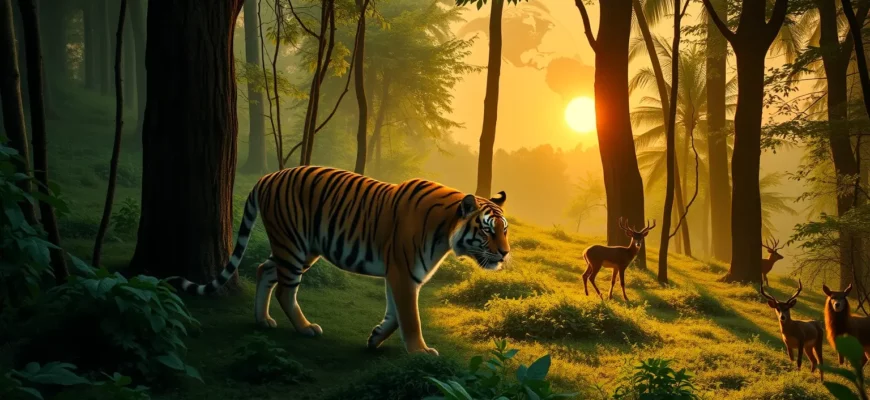
Tiger rewilding represents one of the most ambitious conservation strategies of the modern era. It moves beyond simple protection in zoos, focusing instead on returning these magnificent felids to landscapes where they have been extinct for decades.
The success of these programs relies on more than just releasing animals into the forest. It requires a foundational shift in how we manage vast territories and ensure the survival of the species that tigers rely on for food.
The Science of Restoring Big Cats to Their Ancestral Ranges
Restoring tigers to the wild is a complex puzzle involving genetics, geography, and social science. Conservationists prioritize the Rewild Most Wanted list, identifying specific regions where the ecological niche of an apex predator remains dangerously vacant.
One of the primary hurdles is ensuring sufficient genetic diversity to prevent the deleterious effects of inbreeding depression in isolated populations. This often involves the translocation of individuals across vast distances to mimic natural dispersal patterns that human development has blocked.
Furthermore, the density of prey species like sambar deer and wild boar must be high enough to support a breeding population of big cats. Without a robust herbivore base, reintroduced tigers will inevitably wander into human settlements, leading to fatal conflicts that undermine public support for conservation.
When tiger rewilding succeeds, it triggers a “trophic cascade” that benefits the entire ecosystem. By controlling herbivore numbers, tigers prevent overgrazing, which allows forests to regenerate and provides habitat for birds, insects, and smaller mammals.
The UK Frontier: Why Rewilding Beavers is Changing the British Landscape
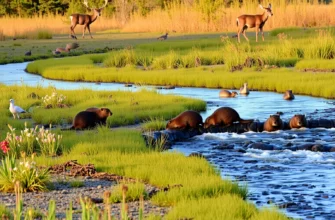
The return of the Eurasian beaver to British waterways is often cited as the most successful example of modern rewilding in the United Kingdom. These industrious rodents are not just inhabitants of the river; they are active architects of the environment.
Alistair Driver, a leading figure at Rewilding Britain, has long championed the beaver as a cost-effective solution to some of the UK’s most pressing environmental issues. Their transition from small-scale pilot projects to a recognized national strategy marks a turning point in British land management.
| Pros of Beaver Reintroduction | Cons and Management Challenges |
|---|---|
| Natural flood mitigation by slowing the flow of water during heavy rainfall. | Potential localized flooding of high-value agricultural land. |
| Significant increases in biodiversity, particularly for amphibians and dragonflies. | Damage to commercial timber and ornamental trees near riverbanks. |
| Natural filtration of pollutants and silt, leading to cleaner downstream water. | Concerns from the fishing community regarding fish migration barriers. |
How Rewilding Britain Beavers Manage Flood Risks Naturally
The hydrological impact of beavers is profound. By building dams, they create “leaky” barriers that hold water back in the headwaters of a catchment, significantly reducing the peak flow that reaches downstream towns during storms.
These beaver-created wetlands act as giant sponges. During periods of drought, the stored water is slowly released, maintaining base flows in rivers that would otherwise run dry and providing a lifeline for aquatic life.
Research into rewilding beavers in the UK shows that their ponds become hotspots for insect life. This abundance of invertebrates supports larger populations of trout and salmon, debunking the myth that beaver dams are a net negative for fish health.
The Wolf Debate: Is Rewilding Britain’s Wolves a Realistic Goal?
The prospect of wolves returning to the UK is perhaps the most polarising topic in conservation today. While the ecological case is strong, the social and cultural barriers remain significant hurdles for policymakers.
Proponents point to the success of wolf reintroduction in Europe and North America as a blueprint for the British Isles. They argue that the UK’s ecosystems are currently “broken” due to the absence of a top-tier predator to regulate deer populations.
Restoring Balance: The Case for Wolf Rewilding in the UK Highlands
In the Scottish Highlands, the Caledonian forest is struggling to regenerate. Tens of thousands of red deer browse on young saplings, preventing the natural expansion of ancient woodland and keeping the landscape in a state of “wet desert” sterility.
Wolf rewilding in the UK would introduce a “landscape of fear.” This doesn’t mean wolves eat every deer, but rather that deer change their behavior to avoid certain areas, allowing vegetation in those valleys to recover for the first time in centuries.
Critics, primarily from the farming community, worry about livestock predation. However, data from European wolf rewilding programs suggests that with proper guarding dogs and fencing, livestock losses can be kept to a minimum, often accounting for less than 1% of total mortality.
The Caledonian forest rewilding efforts are currently limited by the lack of these natural controls. Until a predator is reintroduced, human culling remains the only—and far less efficient—tool available to manage deer numbers and protect biodiversity.
Lessons from the Screen: What the Kernwood Documentary Taught Us About Restoration
The Kernwood documentary, featured on platforms like PBS and the BBC, provided a rare and intimate look at the realities of large-scale land restoration. It moved the conversation away from abstract science and into the living rooms of the general public.
The film chronicles the emotional and financial journey of a family attempting to turn managed farmland back into a wild state. It highlights the “messiness” of nature—a stark contrast to the tidy, manicured countryside many people are used to seeing.
Beyond the Science: The Human Story of the Kernwood Rewilding Project
One of the most striking aspects of the Kernwood story is the shift in public perception. Viewers saw that rewilding isn’t just about animals; it’s about relinquishing human control and allowing natural processes to take the lead.
The documentary also sparked significant personal interest in the family involved. A common question from viewers is: what happened to their son? In the years following the filming, the family has remained committed to the project, and their son has grown up with a unique, firsthand understanding of ecological stewardship, continuing to support the estate’s transition.
The Kernwood project proves that restoration is as much a psychological challenge as it is a biological one. It requires neighbors and local communities to accept a landscape that looks “unkept” but is actually teeming with life and ecological function.
From Aurochs to Wild Boar: Bringing Back Europe’s Ancient Herbivores
While wolves and tigers grab the headlines, the restoration of ancient herbivores is equally vital for soil health and forest structure. These animals act as “living rotovators,” disturbing the ground and creating niches for rare plants.
Fiona Price’s work in Wales has highlighted how these animals can be integrated into modern landscapes. Her projects demonstrate that even small-scale reintroductions can have a disproportionately large impact on local biodiversity recovery.
| Species | Ecological Role | Status in UK Rewilding |
|---|---|---|
| Aurochs (Tauros) | Large-scale grazing and nutrient cycling through dung; | Experimental back-breeding projects; not yet wild in the UK. |
| Wild Boar | Soil disturbance (rooting) which helps seed germination. | Established populations in the Forest of Dean and Kent. |
| Exmoor Pony | Selective grazing that prevents dominant grasses from choking out wildflowers. | Widely used in conservation grazing across the UK. |
The Return of the Aurochs and Wild Boar to British Woodlands
The Aurochs was the wild ancestor of modern cattle, a massive beast that once roamed all of Europe. Modern rewilding efforts use “back-breeding” to create the Tauros, an animal that possesses the physical traits and hardy instincts of its extinct ancestor.
Wild boar rewilding is more controversial but arguably more advanced in the UK. Their habit of “rooting” the soil creates perfect seedbeds for pioneer plant species that otherwise struggle to compete with established turf.
In Wales, Fiona Price has shown that managing these animals requires a delicate balance of freedom and supervision. They are not pets, but they are also not entirely “wild” in a landscape as fragmented as Britain, requiring corridors to move between foraging grounds.
Rewilding the Sea: Charles Clover’s Vision for Marine Recovery
For too long, the rewilding conversation stopped at the coastline. Charles Clover, author of “Rewilding the Sea,” has been instrumental in turning our gaze toward the 70% of the planet covered by water.
Marine ecosystems are capable of recovering with incredible speed if we simply stop the most destructive human activities. This “blue rewilding” is essential for carbon sequestration and the long-term health of our fisheries.
Blue Rewilding: Protecting the UK’s Underwater Wilderness
The primary threat to marine biodiversity is bottom trawling, a practice that scrapes the seabed clean of life. Charles Clover argues that creating “No Take Zones” allows habitats like kelp forests and oyster beds to return, which in turn act as nurseries for commercial fish stocks.
Kelp forests are particularly important because they are more efficient at sequestering carbon than terrestrial rainforests. Protecting these underwater jungles is a key tool in the fight against climate change, providing a natural “blue carbon” sink.
Rewilding animals in the UK must include marine giants as well. By restoring the food chain from the bottom up—starting with plankton and forage fish—we create the conditions necessary for the return of larger predators like bluefin tuna and even whales to our coastal waters.
The Ethical Landscape: Is Rewilding a Good Idea for the Modern World?
As the movement grows, so does the scrutiny. Is it ethical to bring back large, potentially dangerous animals to a crowded island? Is it fair to ask farmers to change their way of life for the sake of an ecological experiment?
These questions are not easily answered, but they are essential for building a sustainable movement. Addressing skepticism head-on is the only way to move from fringe projects to mainstream policy.
Myth: Rewilding means abandoning land and letting it go to waste.
Fact: Rewilding is an active choice to restore ecological productivity, creating new economic opportunities through eco-tourism and carbon credits.
Myth: Large carnivores like bears and wolves will hunt humans.
Fact: Modern tracking and management techniques, combined with the naturally shy behavior of these animals, make the risk to human safety statistically negligible.
Evaluating the Impact: Safety, Farming, and Ecological Necessity
The idea of rewilding bears in the UK is often met with immediate fear. However, in many parts of Europe, brown bears live in close proximity to human settlements with very few incidents. Education and proper waste management are the keys to coexistence.
For those looking for a “rewilding a good idea questions sheet,” the answer often depends on the scale. On marginal land where traditional farming is no longer profitable, nature restoration offers a viable alternative that pays farmers for “public goods” like clean water and carbon storage.
Ultimately, rewilding Britain’s bears or wolves is a choice about what kind of world we want to live in. It is a transition from a landscape that is “quiet” because it is empty, to one that is noisy, messy, and vibrantly alive.
Expert Perspective: Large-Scale Restoration
In my professional experience as a conservation biologist, I have found that the greatest obstacle to rewilding is not the biology—it is the human imagination. We have become so accustomed to “shifted baseline syndrome” that we perceive a degraded, treeless moorland as “natural.” I always advise stakeholders to view rewilding not as an attempt to recreate the Pleistocene, but as a way to reboot the natural processes that allow an ecosystem to manage itself. A self-sustaining forest is far more resilient to climate-induced pests and fires than a monoculture plantation. We must trust nature to do the heavy lifting; our job is simply to remove the barriers we have placed in its way.
Frequently Asked Questions
Yes. Success stories in Russia’s Far East and India’s Panna National Park demonstrate that if you provide sufficient habitat, protect prey species, and mitigate human conflict, tiger populations can and do recover in their ancestral ranges.
Which animals are currently being rewilded in the UK?
Beavers are the most prominent, but other projects include the reintroduction of European bison in Kent, white storks in Sussex, and pine martens in the Forest of Dean and Wales.
What happened to the son in the Kernwood rewilding documentary?
The son, who featured prominently in the documentary, has continued to be involved in the family’s ecological mission. He has pursued a life deeply connected to the land, embodying the long-term generational shift required for successful rewilding.
Why are beavers considered essential for UK rewilding?
Beavers are “keystone species” that create complex wetland habitats. These environments provide homes for hundreds of other species, filter water pollutants, and significantly reduce the risk of downstream flooding by slowing river flow.
Is rewilding a threat to British farming?
It is often viewed as a threat, but the most successful models focus on “marginal land” where farming is less productive. New government subsidies are increasingly rewarding farmers for nature-based solutions rather than just food production.
Where can I find high-quality rewilding Europe photos and resources?
The best resources for visual and educational materials are the official websites of Rewilding Europe and Rewilding Britain, both of which offer extensive galleries and case studies on active projects.