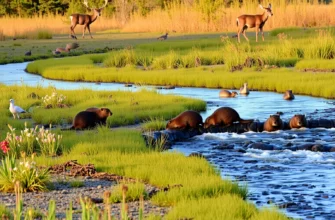
- Why Choosing a Rewilding Charity is the Most Effective Way to Heal the Planet
- The Difference Between Planting Trees and True Rewilding
- From the Amazon to the Zambezi: High-Impact Global Rewilding Projects
- Protecting the Lungs of the Earth: Project Rewild Amazon
- The Zambezi Corridor: Connecting Fragmented Landscapes
- Corporate and Grassroots Partnerships: Patagonia and Beyond
- Patagonia Partnering with Rewilding Chile Foundation: A Model for Success
- Urban Rewilding: Bringing Nature Back to London and Bristol
- The Rewild London Fund: Creating Green Arteries in the City
- How to Get Involved: From Volunteering in Argentina to Local Donations
- Volunteering for the Wild: Opportunities in Argentina and Europe
- Specific Species and Localized Success Stories
- Apex Predator Recovery: Jaguars in Tucson
- Key Takeaways for Future Conservationists
- Expert Perspective: The Future of Ecological Restoration
- Frequently Asked Questions
Why Choosing a Rewilding Charity is the Most Effective Way to Heal the Planet
Traditional conservation often focuses on protecting what remains, but rewilding takes a proactive stance by repairing what has been broken. By supporting a rewilding charity, you are investing in a strategy that allows nature to take the driver’s seat once again.
This approach moves away from the expensive and often futile effort of micromanaging individual species. Instead, it focuses on restarting the biological engines that keep our planet habitable, such as nutrient cycling and natural succession.
When ecosystems are functional, they become massive carbon sinks and resilient buffers against extreme weather. A rewilding charity ensures that your contribution goes toward long-term systemic health rather than short-term cosmetic fixes.
The Difference Between Planting Trees and True Rewilding
Many people confuse rewilding with simple afforestation, but the two are fundamentally different in their ecological impact. While planting a monoculture of saplings might increase tree cover, it often fails to create a living, breathing forest capable of supporting diverse life.
True rewilding focuses on restoring ecosystem functions by allowing natural processes to dictate the landscape’s evolution. This often involves the reintroduction of keystone species, such as the Eurasian beaver in Europe, which engineers wetlands that prevent flooding and filter groundwater.
By bringing back apex predators like wolves or large herbivores like bison, charities help trigger trophic cascades. These cascades are powerful biological chain reactions that balance prey populations and allow vegetation to recover, eventually leading to a self-sustaining environment that requires zero human interference.
From the Amazon to the Zambezi: High-Impact Global Rewilding Projects
Global rewilding efforts are currently operating at a scale that was unimaginable a few decades ago. These projects are not just about saving a single forest; they are about stitching together fragmented landscapes across entire continents.
From the dense tropical canopies of South America to the vast floodplains of Africa, these initiatives prove that nature can bounce back if given the space. The focus is shifting toward protecting existing old-growth cores while simultaneously restoring the degraded lands that surround them.
- Amazon Basin: Prioritizing the legal recognition of indigenous territories to prevent illegal logging and mining.
- Zambezi River: Establishing wildlife corridors that allow elephants and lions to move safely between national parks in different countries.
- Peruvian Rainforest: Implementing sustainable agroecology to create “buffer zones” where humans and wildlife can coexist profitably.
Protecting the Lungs of the Earth: Project Rewild Amazon
The Amazon rainforest is more than just a collection of trees; it is a complex climate regulator that influences rainfall patterns as far away as the United States. Project Rewild Amazon focuses on restoring degraded cattle pastures back into high-biodiversity jungle.
A central pillar of this work involves indigenous-led conservation, recognizing that native communities are the most effective guardians of tropical biodiversity. By providing these groups with the legal and financial tools to defend their land, charities ensure the rainforest remains standing.
In the Peruvian rainforest, restoration efforts are targeting “gold mining scars”—areas where the earth has been stripped bare. By using native nitrogen-fixing plants to stabilize the soil, conservationists are successfully bringing back the primary rainforest canopy within decades rather than centuries.
The Zambezi Corridor: Connecting Fragmented Landscapes
In Africa, the Zambezi River serves as a lifeline for some of the world’s most iconic megafauna. However, human settlements and infrastructure often block traditional migration routes, leading to dangerous human-wildlife conflicts and genetic isolation.
Charities working on the Zambezi Corridor are focused on habitat connectivity, ensuring that animals like elephants have “safe passage” through human-dominated landscapes. This involves leasing land from local communities to create protected corridors that link isolated patches of wilderness.
These community-led models are proving that conservation can be a source of income. By integrating ecotourism and sustainable land stewardship, local residents become the primary beneficiaries of a restored and wild Zambezi, ensuring the project’s longevity.
Corporate and Grassroots Partnerships: Patagonia and Beyond
The scale of the ecological crisis requires a “all hands on deck” approach, blending massive corporate philanthropy with local grassroots grit. These partnerships provide the capital necessary for large-scale land acquisition while maintaining the local knowledge needed for successful restoration.
Large brands are increasingly adopting a “protect and rewild” ethos, moving beyond simple carbon offsets toward tangible land-based investments. This shift is creating a new blueprint for how the private sector can participate in ecological recovery without “greenwashing.”
| Feature | Corporate Philanthropy (e.g., Patagonia) | Grassroots Rewilding (e.g., Teruel Project) |
|---|---|---|
| Primary Funding | Large-scale grants and brand profits. | Crowdfunding and local government subsidies. |
| Land Strategy | Purchasing millions of acres for national parks. | Restoring abandoned farmland and village commons. |
| Main Objective | Creating massive, permanent wilderness reserves. | Revitalizing rural economies through nature restoration. |
| Community Role | Partnering with national governments. | Direct involvement of local farmers and residents. |
Patagonia Partnering with Rewilding Chile Foundation: A Model for Success
The work of the Rewilding Chile Foundation, sparked by the legacy of Doug and Kris Tompkins, represents the gold standard of philanthropic conservation. By donating over 2 million acres of private land to the Chilean government, they helped create a massive network of national parks.
This model goes beyond simple land preservation; it includes the active reintroduction of missing species like the Andean condor and the Darwin’s rhea. Their success proves that private wealth can be transformed into a permanent public good when managed with ecological integrity.
The “Route of Parks” in Patagonia now stands as a 1,700-mile trail connecting 17 national parks. This initiative sequesters massive amounts of carbon while providing a sanctuary for species that were once on the brink of extinction, demonstrating the power of visionary land donation.
Urban Rewilding: Bringing Nature Back to London and Bristol
Rewilding is not a concept reserved for distant mountains or rainforests; it is increasingly being applied to the “gray jungles” of our cities. Urban rewilding aims to break up the concrete and allow natural life to permeate the places where most humans live.
In cities like London and Bristol, these initiatives are creating “green arteries” that allow wildlife to move through the urban core. This not only boosts city biodiversity but also significantly improves the mental health and well-being of residents by providing access to wild spaces.
Local efforts like Project Rewild Hastings show that even small coastal towns can participate. By reducing the mowing of verges and planting native scrub, these projects create vital stepping stones for migratory birds and rare insects.
The Rewild London Fund: Creating Green Arteries in the City
The Rewild London Fund is a strategic initiative designed to make the capital more resilient to climate change. By funding the creation of pocket parks and the restoration of lost rivers, the project helps mitigate the “urban heat island” effect.
A major focus of urban rewilding is the support of pollinators. By linking fragmented gardens and public parks into a continuous “B-Line,” charities ensure that bees and butterflies can find food and nesting sites throughout the city.
These projects often involve “daylighting” old streams that were buried in pipes decades ago. Bringing these waterways back to the surface restores natural drainage and provides a habitat for water voles and kingfishers right in the heart of the city.
How to Get Involved: From Volunteering in Argentina to Local Donations
The global rewilding movement thrives on participation. Whether you have ten dollars to donate or ten weeks to spend in the field, there is a pathway for you to contribute to the restoration of the natural world.
Many organizations now offer “hands-on” opportunities that go beyond typical tourism. For instance, the Rewilding Argentina volunteer programs allow participants to assist in the monitoring of reintroduced jaguars and giant otters in the Iberá Wetlands.
- Direct Donations: Support the Sarasota Celery Fields drive to expand 400 acres of vital wetland habitat.
- Field Work: Apply for conservation volunteering positions in Europe to help with fence removal or native tree planting.
- Sustainable Finance: Invest in the Agroecology Fund to support farmers who are transitioning from chemical-heavy agriculture to nature-friendly farming.
- Local Advocacy: Join a “Rewild Our Planet” initiative in your own city to lobby for more green space and less pesticide use.
Volunteering for the Wild: Opportunities in Argentina and Europe
If you are looking for a deep dive into conservation, Argentina offers some of the most rigorous field work opportunities in the world. Volunteers often work alongside biologists to track radio-collared predators and manage invasive species that threaten local balance.
In Europe, rewilding volunteering often takes the form of “working holidays.” These projects might involve restoring ancient stone walls to provide lizard habitats or helping to manage herds of wild horses that act as natural lawnmowers for the landscape.
Beyond the physical labor, these opportunities serve as a form of ecotourism that funds the very conservation work being performed. By choosing to spend your time and money on these projects, you are directly financing the recovery of some of the world’s most vulnerable ecosystems.
Specific Species and Localized Success Stories
While the “big picture” of rewilding is about entire landscapes, success is often measured by the return of specific, iconic species. These localized stories provide tangible evidence that ecological recovery is possible even in highly developed areas.
From the arid deserts of Arizona to the lush hills of Southern India, specific interventions are bringing life back to the brink. These projects often rely on highly specialized knowledge of animal behavior and local botany to succeed.
To see a landscape truly heal, one must look for the return of the “shapers”—the animals whose daily lives physically alter their environment for the benefit of all other species.
Apex Predator Recovery: Jaguars in Tucson
In the borderlands of Tucson, Arizona, the “Northern Jaguar Project” is working to ensure that this magnificent feline can return to its historic range in the United States. Jaguars are essential for controlling populations of deer and javelina, which prevents overgrazing of sensitive desert plants.
This project focuses on cross-border wildlife movements, recognizing that nature does not acknowledge political boundaries. By working with ranchers in Mexico to create “jaguar-friendly” cattle management, charities are opening up the path for the cats to move north.
The return of the jaguar is a sign of a healthy, connected ecosystem. Their presence forces prey species to move more frequently, which prevents the destruction of riparian vegetation along desert streams, ultimately protecting water sources for all life.
In other parts of the world, similar localized efforts are making waves. In India, the Rewild Doddaballapur project is restoring ancient “Kalyanis” (water tanks) to recharge groundwater and provide a sanctuary for native birds amidst a rapidly expanding urban sprawl.
Key Takeaways for Future Conservationists
The rewilding movement is a shift from a “management” mindset to a “partnership” mindset with the natural world. It requires patience, a willingness to relinquish control, and a focus on long-term ecological health over short-term gains.
Every action, no matter how small, contributes to the larger goal of global restoration. By supporting a nature restoration non-profit, you are helping to weave back the complex web of life that supports us all.
- Prioritize Function over Form: Focus on restoring what a landscape does rather than just how it looks.
- Support Keystone Species: Reintroducing one “engineer” species can have the same impact as thousands of hours of human labor.
- Think Regionally: Small, isolated reserves are rarely enough; habitat connectivity is the key to long-term survival.
- Empower Local Communities: Conservation only lasts if the people living on the land have a stake in its success.
Expert Perspective: The Future of Ecological Restoration
In my professional experience, the most common mistake we make in conservation is trying to micromanage nature into a static state. I have found that the most successful projects are those where humans have the humility to step back. Rewilding isn’t about gardening the wilderness; it’s about repairing the biological machinery—the soil, the predators, the water cycles—and then letting the land heal itself. As we move forward, I always advise donors to look for projects that integrate sustainable agroecology. We cannot separate human food systems from wild spaces; the future of conservation lies in creating “working landscapes” where biodiversity and community-led models thrive together. If we want a wilder planet, we must first learn to be less intrusive neighbors.
Frequently Asked Questions
The primary goal is to restore natural processes and biodiversity so that ecosystems can eventually sustain themselves without ongoing human intervention.
How can I volunteer for rewilding projects in Argentina?
You can connect with foundations like Rewilding Argentina, which offer structured programs for habitat restoration, species monitoring, and ecological field work.
Does the Rewild London Fund support private gardens?
No, the fund primarily targets public spaces and community-led projects to create large-scale, connected green corridors across the urban landscape.
What is the relationship between agroecology and rewilding?
Agroecology uses farming practices that mimic nature, reducing chemical use and creating buffer zones that allow wildlife to thrive alongside food production.
Are there rewilding initiatives in India like Doddaballapur?
Yes, localized efforts in India focus on natural regeneration of native flora and protecting vital water catchment areas to combat urban water scarcity.
How does George Monbiot influence rewilding charities?
As a leading advocate, Monbiot popularized the concept of trophic cascades, shifting the public focus toward large-scale wilderness recovery and predator reintroduction.