- The Science of Staying Chill: Finding a Cooling Weighted Blanket for Summer
- Why Traditional Weighted Blankets Trap Heat
- Material Matters: Comparing Bamboo, Cotton, and CoolMax Fabrics
- Bamboo vs. Cotton: Which Breathes Better?
- CoolMax and Performance Fabrics for Extreme Heat
- Knit vs. Quilted: Why Construction Changes Everything
- The Rise of the Open-Knit Cooling Blanket
- Selecting Your Specs: Weight, Size, and Fill Type
- The 10% Rule for Summer Comfort
- Glass Beads vs. Cool Gel: What Stays Coldest?
- Essential Checklist for Buying a Summer Weighted Blanket
- Avoiding Common Mistakes: When Cooling Isnt Actually Cool
- The Trap of Non-Weighted Cooling Blankets
- Frequently Asked Questions
The Science of Staying Chill: Finding a Cooling Weighted Blanket for Summer
The idea of wrapping yourself in a heavy, 15-pound shroud during a July heatwave sounds like a recipe for a sleepless night. Most people associate weight with warmth, thanks to decades of heavy wool duvets and thick polyester comforters. However, the therapeutic benefits of deep pressure stimulation—the “hug” feeling that reduces cortisol and boosts serotonin—don’t have to be sacrificed just because the temperature rises.
True cooling technology in bedding is not about adding ice packs; it is about managing the three pillars of thermal comfort: moisture-wicking, air permeability, and heat conduction. A summer-ready weighted blanket must actively move heat away from your skin while allowing your body’s natural perspiration to evaporate instantly. If the blanket traps a layer of stagnant, humid air against your limbs, you will wake up in a sweat regardless of how many fans are running in the room;
Choosing the right blanket requires looking past marketing buzzwords and investigating the actual mechanical design of the product. Whether it is the material of the shell or the specific type of beads used for weight, every component plays a role in your local microclimate. When these elements are aligned, a breathable summer weighted blanket can actually feel colder than a standard thin sheet because of how it conducts heat away from the body.
Why Traditional Weighted Blankets Trap Heat
The primary reason most weighted blankets feel like ovens is the use of polyester “minky” fabrics. While soft and comforting in December, polyester is a synthetic plastic derivative with zero breathability. It creates a moisture barrier that traps humidity, leading to the dreaded “swamp cooling” effect where your own sweat becomes a layer of hot insulation. If your blanket features a fuzzy or plush cover, it is likely designed for heat retention, not dissipation.
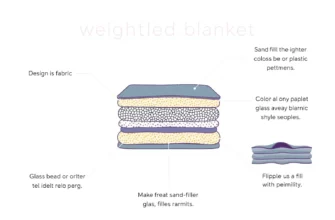
Beyond the cover, the internal “fill” is often the hidden culprit. Many budget-friendly heavy blankets for sleeping use layers of polyester batting to cushion the weight of the beads. This batting acts exactly like the insulation in your attic, trapping your body heat inside the blanket. Even if the outer shell is advertised as “cooling,” a thick inner layer of poly-fill will negate any temperature-regulating benefits, turning the blanket into a thermal trap.
Material Matters: Comparing Bamboo, Cotton, and CoolMax Fabrics
The fabric touching your skin is your first line of defense against overheating. Natural fibers and engineered synthetics behave very differently when they encounter body heat and moisture. To find the best cooling weighted blanket for summer, you must prioritize materials that have high thermal conductivity and excellent moisture management. Below is a breakdown of how the most common summer fabrics perform under pressure.
| Material Type | Cooling Mechanism | Best For | Durability |
|---|---|---|---|
| Bamboo Viscose | High moisture absorption and cool-to-the-touch feel. | Hot sleepers who struggle with night sweats. | Moderate; requires delicate washing. |
| 100% Percale Cotton | Classic airflow and crisp, matte texture. | Users who prefer a traditional, crisp bedsheet feel. | High; improves with every wash. |
| CoolMax / Performance | Engineered cross-section fibers pull sweat to the surface. | Extreme heat and athletes needing rapid recovery. | Very High; designed for heavy use. |
| Eucalyptus (Tencel) | Naturally hypoallergenic and exceptionally smooth. | Sensitive skin and eco-conscious shoppers. | High; resistant to shrinking. |
Bamboo vs. Cotton: Which Breathes Better?
Bamboo viscose has become the gold standard for chilled bamboo weighted blankets because of its naturally high moisture-wicking capacity. Bamboo fibers are more absorbent than cotton, meaning they can pull more sweat away from your skin before the fabric starts to feel damp. Furthermore, bamboo has a lower thermal resistance, which is why it feels “cold” the moment you touch it. In high-humidity environments, bamboo is almost always the superior choice for maintaining a lower skin temperature.
Cotton, specifically in a percale weave, remains a formidable contender for a summer weighted blanket breathable cotton experience. While it may not feel as instantly cold as bamboo, cotton excels at air circulation. A high-quality cotton shell allows heat to escape through the weave rather than reflecting it back at the sleeper. For those who prefer a crisp, structured feel rather than the “silky” drape of bamboo, a 100% cotton weighted blanket is the reliable, low-maintenance workhorse of summer bedding.
CoolMax and Performance Fabrics for Extreme Heat
For individuals dealing with clinical night sweats or living in climates where the ambient temperature rarely drops, performance fabrics like CoolMax offer a technical solution. CoolMax is a polyester blend, but unlike standard polyester, the fibers are engineered with a non-round cross-section. This creates a capillary effect that transports moisture to the outer layer of the blanket at a rate much faster than natural fibers. This is the same technology found in high-end marathon gear.
Brands like Degrees of Comfort have pioneered the use of these performance fabrics in the weighted blanket space. By combining a comforting weighting coolmax blanket with a dual-sided design, they allow users to flip the blanket based on the season. If you choose a coolmax weighted blanket polypropylene mix, you are getting a product designed for maximum evaporation, which is the most effective way to lower body temperature through the night.
Knit vs. Quilted: Why Construction Changes Everything
The way a blanket is put together is just as important as the fabric itself. Most people are familiar with the quilted style, where glass beads are sewn into small square pockets. However, the rise of “open-knit” designs has revolutionized the industry by removing the need for fillers and beads entirely, relying on the weight of the yarn itself to provide pressure.
| Feature | Quilted (Traditional) | Open-Knit (Hand-Woven) |
|---|---|---|
| Airflow | Restricted by fabric layers and fill. | Maximum; air moves through the loops. |
| Weight Distribution | Precise, held in pockets. | Uniform, follows body contours. | Washability | Often requires a duvet cover. | Usually machine washable and dryable. |
| Heat Retention | Moderate to High. | Very Low. |
The Rise of the Open-Knit Cooling Blanket
The Nuzzie knit weighted blanket represents a paradigm shift in sleep technology. Instead of using glass beads sandwiched between layers of fabric, these blankets are hand-knitted from heavy, fabric-filled yarn. The large gaps between the knits act as natural vents, allowing heat to escape vertically. Because there is no internal polyester batting to hold the beads, there is nothing to trap the heat. This makes the open-loop design the most lightweight summer weighted blanket breathable option on the market today.
Another advantage of the knit construction is the lack of “bead bunching.” In quilted blankets, beads can sometimes shift to the corners of the pockets, creating uneven pressure and potential hot spots. A knitted blanket provides a completely uniform weight distribution that moves with you. If you are a restless sleeper who tosses and turns, the open-weave design ensures that you stay cool regardless of your sleeping position, as the “holes” in the blanket provide constant ventilation.
Selecting Your Specs: Weight, Size, and Fill Type
When shopping for a summer-specific blanket, you may need to adjust your usual preferences. A blanket that feels perfect in the winter might feel suffocating in the summer simply due to its physical mass. Understanding the relationship between surface area and heat retention is key to making an informed purchase, especially when dealing with larger bed sizes.
Pro Tip: When choosing a blanket for summer, always opt for glass beads over plastic poly-pellets. Glass is denser, meaning the blanket can be thinner while maintaining the same weight, and glass does not retain heat like plastic does.
The 10% Rule for Summer Comfort
The standard recommendation for a weighted blanket is 10% of your body weight. However, for summer use, many experts suggest erring on the lighter side. A 10lb weighted blanket cool enough for an adult can still provide significant sensory benefits without the bulk of a 20lb version. The less physical material covering your body, the less heat will be insulated. If you are between weights, summer is the time to go down rather than up.
Size also matters. A queen size weighted blanket cool enough for two people (typically 60×80 or 80×87 inches) has a much larger surface area to trap heat. If you sleep alone in a queen bed, consider buying a “Personal” or “Throw” size instead of a full bed-sized blanket. By only covering your body and not the entire mattress, you allow heat to escape from the sides of the bed, significantly improving the overall airflow in your sleep environment.
Glass Beads vs. Cool Gel: What Stays Coldest?
The fill material is the “engine” of the blanket. Most high-quality cooling blankets use micro-glass beads because they are thermally neutral and extremely small, feeling more like sand than pebbles. This allows the blanket to drape closely to your body without creating air pockets that can trap warmth. Brands like Yescool weighted blanket and Rocabi often emphasize the use of high-density glass to keep the profile of the blanket as slim as possible.
Some innovative designs now incorporate a cool gel weighted blanket approach. These blankets use beads coated in a heat-conducting gel or specialized memory foam infused with cooling particles. While these feel incredibly cold for the first 20 minutes, be aware of their “heat saturation” point. Once the gel absorbs your body heat, it needs a way to release it. Gel blankets work best when paired with a fan or air conditioning that can help the blanket reset its temperature throughout the night.
Essential Checklist for Buying a Summer Weighted Blanket
Before you click “buy,” run through this checklist to ensure the blanket is truly built for heat. Marketing can be deceptive, and many “all-season” blankets are simply too warm for a genuine summer climate.
- Verify the Shell Material: Ensure it is 100% Bamboo, Eucalyptus (Tencel), or a specialized performance blend. Avoid “Minky” or “Microfiber.”
- Check for “No-Fill” Construction: Look for blankets that don’t use polyester batting to cushion the beads.
- Confirm Glass Bead Use: Avoid plastic poly-pellets, which act as tiny heat insulators.
- Assess the Weave: For maximum cooling, choose an open-knit or a low-thread-count percale weave.
- Look for Removable Covers: A cooling cover is useless if the inner blanket is a polyester sweatbox. Ensure the inner weighted core is also breathable.
- Weight Check: If you are a very hot sleeper, consider dropping 2-5 lbs from your winter blanket weight.
Avoiding Common Mistakes: When Cooling Isnt Actually Cool
The most common mistake consumers make is buying a “cooling” cover for a standard weighted blanket. If the weighted insert itself is made of polyester and filled with poly-fill, a bamboo cover will only do so much. The heat will still build up in the core of the blanket and eventually radiate back to you. You must evaluate the entire “stack” of the blanket from the core to the cover.
Another pitfall is the confusion between a cooling blanket not weighted and a true weighted solution. Many “chilly” blankets on the market are just thin pieces of performance fabric. While they are great for heat, they offer zero deep pressure stimulation. If you need the weight for anxiety or insomnia, a lightweight cooling weighted blanket is a specific technical product—not just a heavy comforter. Don’t sacrifice the weight for the cooling; look for the engineering that allows both to coexist.
The Trap of Non-Weighted Cooling Blankets
Some shoppers, frustrated by the heat, give up on weight entirely and buy a “cooling blanket” that is essentially a high-tech sheet. While these are excellent for temperature, they fail to provide the sensory processing benefits that weighted blankets offer. If you suffer from RLS (Restless Leg Syndrome) or high cortisol, a non-weighted blanket won’t help your sleep quality.
The key is to find the balance. A high-quality summer weighted blanket uses mechanical ventilation (like the Nuzzie knit) or active heat conduction (like glass beads in bamboo) to provide the weight you need without the thermal cost. If a blanket feels “puffy,” it is likely a trap. A summer blanket should feel dense, slim, and instantly cool to the touch.
In my professional experience working with chronic insomniacs, the “summer slump” in sleep quality is almost always tied to the body’s inability to drop its core temperature by the required 1-2 degrees for deep sleep. I always advise my patients that Deep Pressure Stimulation (DPS) is a powerful tool for down-regulating the nervous system, but it becomes counterproductive if it triggers a sweat response. I have found that open-weave knitted blankets are the superior clinical choice for patients with sensory processing disorders during heatwaves. By removing the insulating middle layers found in traditional quilted blankets, you allow the skin to maintain its natural thermoregulation process while still receiving the proprioceptive input needed to calm the brain. If you must use a quilted version, ensure the glass beads are not padded with polyester batting, as this is the single most common failure point in “cooling” blanket design.
Frequently Asked Questions
Yes, but you must avoid polyester. Opt for bamboo viscose or an open-knit design that allows moisture to evaporate quickly and prevents heat from being trapped against your body.
Is a 10lb weighted blanket heavy enough for an adult in summer?
A 10lb blanket is often a perfect summer compromise. While it may be lighter than the standard 10% rule, it still provides enough pressure to lower cortisol levels without adding excessive bulk and heat.
What is the coolest material for a weighted blanket?
Bamboo viscose and Tencel (Eucalyptus) are the coolest natural materials due to their moisture-wicking properties. For extreme heat, specialized performance fabrics like CoolMax are even more effective at moving sweat.
Do glass beads stay cooler than plastic pellets?
Absolutely. Glass beads have a much higher thermal conductivity, meaning they don’t hold onto heat. Plastic poly-pellets are insulators and will eventually warm up to your body temperature, making the blanket feel hotter over time.
How do I wash a cooling weighted blanket without ruining the fabric?
Always use cold water on a gentle cycle and avoid fabric softeners, which can clog the breathable pores of cooling fabrics. Air drying is best to maintain the integrity of the cooling fibers.