- The Core Safety Question: Are Weighted Blankets Safe for Kids and Toddlers?
- At What Age Are Weighted Blankets Truly Safe to Use?
- The Critical Danger Zone: Why Babies and Infants Should Never Use Weighted Blankets
- Can a 1-Year-Old Use a Weighted Blanket? Understanding the Risks
- The Toddler Transition: Safety Rules for 2, 3, and 4-Year-Olds
- Is a Weighted Blanket Safe for a 2-Year-Old?
- The 10% Rule: Calculating the Safe Weight for Children and Teens
- Are Weighted Blankets Safe to Sleep With Overnight?
- Are Weighted Blankets Considered a Restraint in Clinical or Home Settings?
- Therapeutic Tool vs; Physical Restraint: Where is the Line?
- Safety for the Elderly: When Are Weighted Blankets Safe for Seniors?
- Are Weighted Blankets Safe for Seniors with Limited Mobility?
- Maintenance Safety: How to Clean and Dry Your Weighted Blanket
- Is it Safe to Dry a Weighted Blanket in a Machine?
- Frequently Asked Questions
The Core Safety Question: Are Weighted Blankets Safe for Kids and Toddlers?
The surge in popularity of sensory integration tools has led many parents to wonder if the calming effects of deep pressure stimulation are appropriate for their little ones; While these heavy blankets are celebrated for reducing cortisol and boosting serotonin in adults, the transition to pediatric use requires a rigorous understanding of safety protocols. For a child, a weighted blanket is not just a piece of bedding; it is a therapeutic intervention that exerts significant physical pressure on a developing body.
The primary safety concern stems from the risk of entrapment and respiratory suppression. Unlike a standard duvet, a weighted blanket can become a physical barrier that a small child may not have the motor skills to overcome. Before introducing one into a bedroom, parents must evaluate whether the child has reached the necessary developmental milestones to use the tool without supervision.
At What Age Are Weighted Blankets Truly Safe to Use?
Medical professionals and occupational therapists generally agree on a strict age floor: weighted blankets should never be used for children under the age of 3, or those weighing less than 50 pounds. This threshold is not arbitrary; it is based on the average physical strength and respiratory capacity of a developing child. A toddler’s chest wall is much more compliant than an adult’s, meaning even a small amount of external pressure can significantly increase the work of breathing, leading to fatigue and potential respiratory distress.
Safety is determined by the child’s ability to remove the blanket independently. If a child becomes overheated, feels trapped, or finds their breathing restricted, they must possess the gross motor skills to throw the blanket off in a single, fluid motion. If a child lacks the strength to lift the blanket off their chest and face, the product becomes a lethal suffocation hazard. Always prioritize physical milestones over chronological age when making this decision.
The Critical Danger Zone: Why Babies and Infants Should Never Use Weighted Blankets
The risks associated with infants and weighted bedding cannot be overstated. In the first year of life, the risk of Sudden Infant Death Syndrome (SIDS) and accidental suffocation is at its peak. Introducing any weighted element into a crib environment violates every established safe-sleep protocol. For an infant, a weighted blanket is not a “soothing tool”; it is a significant threat to their life.
Physiologically, babies have narrow airways and a ribcage that is mostly cartilage. The weight of even a “lightweight” therapeutic blanket can compress the chest enough to prevent the lungs from expanding fully. This can lead to a slow drop in oxygen levels that a sleeping infant may not wake up from. The American Academy of Pediatrics (AAP) explicitly forbids the use of weighted blankets, swaddles, or sleep sacks for infants due to these catastrophic risks.
Myth: A lightly weighted sleep sack helps a fussy 6-month-old sleep through the night by mimicking a parent’s touch.
Fact: Weighted products for infants can cause lethal chest compression and prevent the baby from rolling back over if they turn onto their stomach, significantly increasing the risk of SIDS.
Can a 1-Year-Old Use a Weighted Blanket? Understanding the Risks
Parents of 12-to-18-month-olds often struggle with sleep regressions and may look for a weighted solution. However, a 1-year-old is still at extreme risk for suffocation. At this age, children are active sleepers, frequently tossing and turning. A weighted blanket can easily become bunched up or wrapped around a toddler’s neck or face. Because of their relatively small size, they can become pinned under the weight in a position that compromises their airway.
Furthermore, the risk of overheating is substantial. Infants and young toddlers cannot regulate their body temperature as efficiently as older children. The dense materials used to provide weight, such as glass beads or plastic pellets, often trap heat. Hyperthermia is a known contributing factor to sleep-related infant deaths, making these blankets a dual-threat of suffocation and overheating for any child under the age of 2.
The Toddler Transition: Safety Rules for 2, 3, and 4-Year-Olds
The period between age 2 and 4 is a developmental gray area where many parents feel tempted to experiment with sensory tools. However, the safety of a weighted blanket during this transition depends entirely on the individual child’s weight-to-body-ratio and their cognitive ability to follow safety instructions. While some manufacturers market products for toddlers, many pediatricians suggest waiting until at least age 4 or 5 to ensure the child has the necessary strength and awareness.
If you are considering a blanket for a 3-year-old with sensory processing disorder, it should only be used during supervised “quiet time” rather than for overnight sleep. Supervised use allows a parent to monitor for signs of distress, such as shallow breathing or flushed skin. If the child shows any resistance to the blanket, it should be removed immediately. Forcing a child to stay under a weighted blanket can lead to a negative sensory experience and potentially dangerous levels of anxiety.
- DO: Consult with a licensed Occupational Therapist (OT) before purchasing a blanket for a child under 5.
- DO: Ensure the child can unassistedly remove the blanket from their body in under 3 seconds.
- DON’T: Use a weighted blanket if the child has underlying respiratory or cardiac issues.
- DON’T: Tuck the edges of the weighted blanket under the mattress, as this creates a “restraint” scenario.
- DO: Check the blanket regularly for any leaking beads or pellets, which pose a significant choking hazard.
Is a Weighted Blanket Safe for a 2-Year-Old?
Technically, most safety guidelines exclude 2-year-olds entirely. Even if a 2-year-old is physically large for their age, their neurological development may not be advanced enough to react appropriately if they become trapped or overheated during the night. The lack of impulse control and motor coordination makes a 2-year-old particularly vulnerable to entrapment between the blanket and the crib rails or wall.
If a 2-year-old is struggling with sleep, it is safer to look into other sensory alternatives. Weighted lap pads (used only while awake and sitting up) or compression sheets (which provide pressure without the heavy mass of beads) are often better stepping stones. Never prioritize a few extra hours of sleep over the fundamental safety of your child’s breathing environment.
The 10% Rule: Calculating the Safe Weight for Children and Teens
The industry standard for safety is the 10% rule: a weighted blanket should weigh approximately 10% of the user’s total body weight, plus or minus one to two pounds. For a child, this rule is a non-negotiable safety ceiling. A blanket that exceeds this ratio can cause physical fatigue and make it difficult for the child to adjust their position during deep sleep, which is when the body is most relaxed and vulnerable.
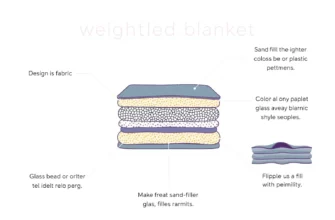
Material choice also plays a role in safety. Glass beads are typically preferred over plastic pellets because they are denser, requiring less bulk to achieve the desired weight. This leads to a thinner, more breathable blanket. For children with sensitive skin or allergies, ensure the outer cover is 100% cotton or bamboo to facilitate airflow. Avoid synthetic “minky” fabrics for overnight use, as they are notorious for causing overheating in children.
| Child’s Body Weight | Recommended Blanket Weight | Safety Classification |
|---|---|---|
| 20 ⸺ 30 lbs | NOT RECOMMENDED | High Risk of Suffocation |
| 40 lbs | 4 lbs | Borderline (Consult Pediatrician) |
| 50 ⎯ 60 lbs | 5 ⎯ 7 lbs | Generally Safe (Supervised) |
| 80 lbs | 8 ⸺ 10 lbs | Safe for Independent Use |
| 100+ lbs | 10 ⎯ 12 lbs | Safe for Overnight Use |
Are Weighted Blankets Safe to Sleep With Overnight?
Overnight use is the most common goal for parents, but it introduces the most risk. During REM sleep, muscle tone decreases, making it harder for a child to move a heavy object. There is also the risk of “afterdrop” or temperature fluctuations. If a child becomes too hot under a heavy blanket, their heart rate may increase, leading to a restless and poor-quality sleep—the exact opposite of the intended effect.
To ensure overnight safety, the blanket must never cover the child’s head or neck. It should only reach the shoulders. If your child is a “burrower” who likes to hide under covers, a weighted blanket is likely too dangerous for them. Furthermore, nighttime supervision is impossible for a sleeping parent, so you must be 100% confident in your child’s ability to manipulate the weight before allowing them to sleep with it through the night.
Are Weighted Blankets Considered a Restraint in Clinical or Home Settings?
In the world of occupational therapy and nursing, the definition of a “restraint” is any device or garment that interferes with a person’s free movement and cannot be easily removed by the individual. If a weighted blanket is so heavy that a child cannot get out from under it, it is legally and ethically classified as a physical restraint. Using a weighted blanket to “keep a child in bed” or to force them to stay still is a violation of safety standards and can be traumatic.
The goal of a weighted blanket is to provide proprioceptive input—the “feel-good” sensation of knowing where your body is in space. It should be an invitation to relax, not a cage. In clinical settings, the use of weighted tools is strictly regulated to prevent mobility restriction. At home, parents must ensure that the blanket is a choice the child can opt out of at any second. If they feel pinned down, the sympathetic nervous system may trigger a “fight or flight” response, increasing cortisol and defeating the purpose of the tool.
Therapeutic Tool vs; Physical Restraint: Where is the Line?
The line is drawn at the child’s autonomy. An occupational therapist will often use “heavy work” activities—like pushing a weighted cart or wearing a weighted vest—to help a child regulate their sensory system. These are safe because the child can stop the activity whenever they choose. A weighted blanket becomes a restraint the moment the child’s ability to change their posture or exit the bed is compromised.
To maintain the therapeutic benefit without crossing into restraint territory, always choose the lightest weight that still provides a calming effect. More weight does not equal more calm. In many cases, a blanket that is only 5% to 7% of body weight is sufficient to trigger the release of neurotransmitters without posing any risk to the child’s mobility or safety.
Safety for the Elderly: When Are Weighted Blankets Safe for Seniors?
While often discussed in the context of pediatrics, weighted blankets are frequently used for seniors dealing with dementia, Alzheimer’s, or chronic anxiety. However, the elderly demographic faces a different set of safety challenges. As we age, our skin becomes thinner and more prone to tearing, and our respiratory and circulatory systems may not be as robust. For a senior with limited mobility, a weighted blanket can lead to pressure sores or skin breakdown if left in one position for too long.
Seniors with cardiovascular issues or chronic obstructive pulmonary disease (COPD) must be extremely cautious. The added pressure on the chest can make it difficult to maintain adequate oxygen saturation levels. Before providing a weighted blanket to an elderly loved one, a consultation with a doctor is necessary to rule out contraindications like peripheral neuropathy, circulation disorders, or sleep apnea.
- Respiratory Health: Avoid use for those with COPD, asthma, or sleep apnea due to chest compression risks.
- Skin Integrity: Check for redness or bruising; fragile skin can be damaged by the friction of heavy beads.
- Circulation: Ensure the blanket does not restrict blood flow, especially in the legs where edema may be present.
- Cognitive Awareness: The user must be able to communicate discomfort and have the strength to remove the blanket.
Are Weighted Blankets Safe for Seniors with Limited Mobility?
For seniors who spend much of their time in a bed or wheelchair, the risk of “entrapment” is high. If a senior cannot reposition themselves, the weight of the blanket is constantly pressing on the same bony prominences (like the hips or heels), which accelerates the development of stage 1 and 2 pressure ulcers. In these cases, a weighted lap pad or a smaller “shoulder wrap” is often a much safer way to provide sensory comfort without the systemic risks of a full-sized blanket.
Maintenance Safety: How to Clean and Dry Your Weighted Blanket
The physical integrity of the blanket is a safety factor that is often overlooked. Weighted blankets are filled with thousands of tiny beads or pellets. If the stitching fails, these beads can leak out, creating a massive choking hazard for children and pets. Regularly inspect the seams of the blanket for any signs of thinning or loose threads. A “leak” isn’t just a mess; it’s a safety failure of the product’s containment system.
Washing and drying also require specific care. Most weighted blankets are too heavy for standard home washing machines and can damage the drum or the motor. Furthermore, high heat in a dryer can melt plastic pellets, causing them to clump together and create uneven, dangerous weight distribution. This clumping can create “hot spots” of pressure that could cause bruising or discomfort for the user.
Is it Safe to Dry a Weighted Blanket in a Machine?
It depends entirely on the filler material. If the blanket uses plastic poly-pellets, high heat can cause the pellets to melt and fuse to the fabric, ruining the blanket and potentially creating a fire hazard in your dryer. Glass beads are heat-resistant, but the sheer weight of the blanket when wet can cause the internal baffles (the squares that hold the beads) to tear during the tumble cycle. The safest method is to air dry the blanket flat to maintain its structural integrity and ensure the weight remains evenly distributed.
In my professional experience as an Occupational Therapist, I have seen weighted blankets work wonders for children with ADHD and Autism, but I have also seen them used dangerously. I always tell parents to follow the 2-Second Rule: If your child cannot throw that blanket off their chest and clear their body in 2 seconds flat, it is a hazard, not a help. I’ve encountered many parents who think “heavier is better” for a restless child, but that is a dangerous fallacy. Safety in sensory integration is about the minimum effective dose. If a 5-pound blanket works, don’t buy a 7-pound one. Furthermore, never use these blankets as a way to “force” a child to stay in bed. The moment a child feels they cannot move, their stress levels spike, which causes the body to release adrenaline—completely counteracting the calming effect you’re trying to achieve.
Frequently Asked Questions
They are most effective for children with diagnosed sensory processing disorders, ADHD, or Autism. If your child is simply a restless sleeper, consult a pediatrician first to rule out sleep apnea or restless leg syndrome before using a weighted tool.
Can a weighted blanket smother a child?
Yes. For infants and toddlers under 3, the weight can suppress the chest wall and prevent breathing, or the child can become entangled and unable to clear their airway. Never use them for children under the 50lb/3-year-old threshold.
Are weighted blankets safe for 5-year-olds with sensory issues?
Generally yes, provided the blanket follows the 10% body weight rule and the child has the motor skills to move it. Always monitor the child during the first few uses to ensure they don’t get overheated.
What happens if a child swallows the beads from a weighted blanket?
Leaking beads are a severe choking hazard and can cause intestinal blockages if ingested. If you notice any beads escaping the fabric, remove the blanket from the home immediately and contact the manufacturer.
Are weighted blankets safe for adults with respiratory issues?
Adults with asthma, sleep apnea, or COPD should avoid weighted blankets unless cleared by a doctor. The extra pressure on the thoracic cavity can make breathing significantly more difficult during deep sleep.
Can I use a weighted blanket for a fussy baby to help them sleep?
Absolutely not. Weighted products are linked to SIDS and fatal suffocation in infants. There is no “safe” weight for a baby; their bodies are simply not strong enough to handle the pressure.