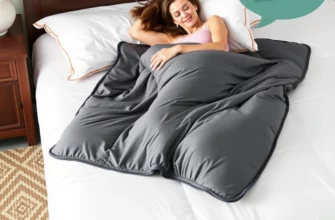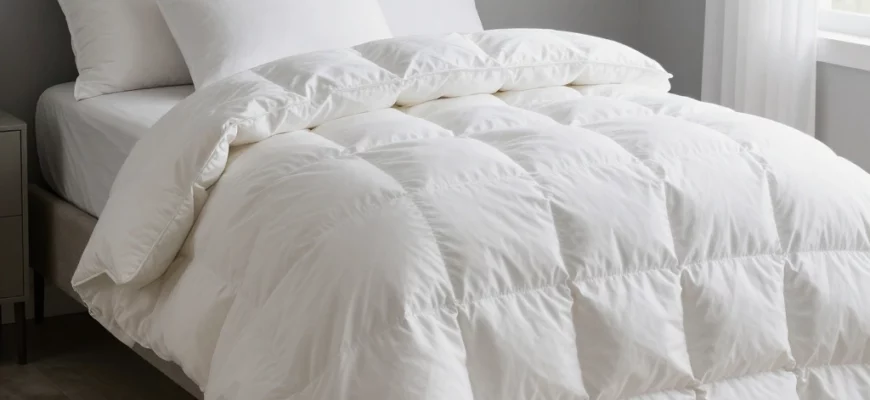
- Why the Heaviest Weighted Blanket on the Market Isnt for Everyone
- Understanding the 10% Rule and When to Break It
- Quick Reference: Weight Limits and Safety Thresholds
- The Hunt for the Heaviest King Size Weighted Blanket and Massive Dimensions
- Why the Longest Weighted Blanket Might Be Your Best Bet
- Material Matters: What Makes the Most Expensive Weighted Blanket Worth the Price?
- Crucial Safety: Common Mistakes to Avoid with High-Weight Bedding
- When is a Blanket Too Heavy?
- Expert Perspective: High-Mass Sleep Therapy
- Frequently Asked Questions
Why the Heaviest Weighted Blanket on the Market Isnt for Everyone
The consumer market for sleep aids has exploded, pushing the boundaries of what was once a niche therapeutic tool. While most retail outlets cap their inventory at 15 or 20 pounds, a growing demographic of sleepers is hunting for options that reach 35, 40, or even 50 pounds. These heavy-duty options are designed to provide intense sensory input, but they require a deeper understanding of physics and physiology than your standard bedding.
Finding the right weight is not merely a matter of “more is better.” For individuals with high body mass or specific sensory processing needs, a standard 20-pound blanket may feel like nothing more than a thick quilt. However, jumping into the ultra-heavy category without assessing your physical capacity to move under that weight can lead to a restless night rather than a restorative one.
Understanding the 10% Rule and When to Break It
The gold standard for weighted bedding has long been the 10% rule, which suggests your blanket should weigh approximately 10% of your total body weight plus one or two pounds. For a 150-pound adult, a 15-pound blanket is the clinical starting point. This ratio is designed to provide enough therapeutic pressure to stimulate the parasympathetic nervous system without causing physical fatigue or restricting natural movement during sleep.
However, many veteran users and those seeking specific therapeutic outcomes find that 10% is insufficient. Some individuals prefer a 15% or even 20% body weight ratio to achieve the desired “grounding” effect. If you are considering breaking the standard rule, always test the weight in short increments of 15 to 20 minutes before committing to a full night of sleep to ensure your joints and respiratory system are not being overtaxed.
Consulting with an occupational therapist is highly recommended when venturing into the 30-pound-plus range. These professionals can help determine if your preference for extreme weight is meeting a genuine sensory need or if you are simply trying to compensate for a blanket with poor weight distribution. Never exceed 20% of your body weight unless under direct medical supervision, as the risks to circulation and bone density increase significantly at these levels.
Quick Reference: Weight Limits and Safety Thresholds
Navigating the transition from standard to heavy-duty blankets requires a clear understanding of safety margins. Use the following data to determine where your needs fall on the spectrum of safety and comfort.
| User Body Weight | Standard Target (10%) | Heaviest Safe Limit (15%) | The “Danger Zone” |
|---|---|---|---|
| 150 lbs | 15 lbs | 22 lbs | 30+ lbs (Risk of respiratory strain) |
| 200 lbs | 20 lbs | 30 lbs | 40+ lbs (Potential joint compression) |
| 250 lbs | 25 lbs | 37 lbs | 50+ lbs (Limited mobility risk) |
| 300+ lbs | 30 lbs | 45 lbs | 60+ lbs (Requires specialized engineering) |
The Hunt for the Heaviest King Size Weighted Blanket and Massive Dimensions
When searching for the heaviest options, the physical dimensions of the blanket are just as important as the number on the scale. A 30-pound blanket designed for a Twin bed will feel significantly heavier than a 30-pound King-size blanket. This is due to the pounds-per-square-inch distribution; in a King-size model, the weight is spread over a much larger surface area, often resulting in a “lighter” feel on the actual body.
For couples sharing a bed, the heaviest king-size weighted blankets often reach 40 or 50 pounds. This weight is intended to be shared, providing roughly 20 to 25 pounds of pressure per person. If you are a solo sleeper using an oversized blanket, be aware that much of the weight may hang off the sides of the mattress. This creates a gravitational pull that can cause the blanket to slide onto the floor in the middle of the night, potentially straining your muscles as you subconsciously try to pull it back up.
Why the Longest Weighted Blanket Might Be Your Best Bet
Tall individuals often struggle with standard weighted blankets that leave their feet or shoulders exposed, breaking the sensory seal required for deep touch pressure. Investing in an oversized or extra-long blanket allows the weight to be distributed evenly from the neck down to the toes. For those over six feet tall, a blanket measuring at least 80 inches in length is necessary to maintain consistent pressure throughout the night.
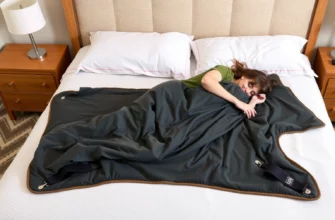
Managing weight distribution across a larger surface area requires advanced internal construction. To prevent the “blanket slide,” look for models with at least 12 to 16 internal tie loops that secure the heavy inner layer to a duvet cover. Without these anchors, the glass beads or pellets will inevitably bunch in the corners, leading to uneven pressure that can cause localized bruising or discomfort on prominent joints like the hips and knees.
If you find that a massive King-size blanket is too difficult to manage, consider using two separate Twin-size weighted blankets on a single King bed. This allows each partner to choose their ideal weight and eliminates the “tug-of-war” effect that often occurs when one person moves under a single 50-pound slab of fabric.
Material Matters: What Makes the Most Expensive Weighted Blanket Worth the Price?
The materials used to achieve high mass determine the blanket’s longevity, breathability, and noise level. Cheap fillers often result in a bulky, “lumpy” blanket that traps heat, whereas premium materials allow for a high-density feel in a surprisingly thin profile.
| Material Type | Density Profile | Durability | Heat Management |
|---|---|---|---|
| Micro-Glass Beads | Very High | Excellent | Cool (Does not retain heat) |
| Steel Shot Beads | Ultra High | Industrial Grade | Neutral to Cool |
| Plastic HDPE Pellets | Medium | Moderate | Warm (Can trap body heat) |
| Layered Cotton/Clay | Low to Medium | Lower (Can degrade over time) | Very Warm |
High-density glass beads are the industry standard for the heaviest weighted blankets because they take up less space than plastic pellets. This allows the blanket to remain thin and breathable, which is essential when you are layering 30+ pounds of material over your body. Furthermore, premium blankets utilize double-stitched reinforced seams and smaller quilted pockets (usually 4×4 inches) to ensure the beads do not shift and create “dead zones” where no pressure is felt.
The cost of these blankets is often driven by the shipping logistics and the specialized machinery required to sew through heavy fabrics and dense fillers. When you pay a premium, you are essentially paying for structural integrity; a 40-pound blanket that leaks beads is not just a mess, it is a significant financial loss. Look for “gridded” stitching patterns that lock the weight into individual cells, ensuring the blanket maintains its shape for years of use.
Crucial Safety: Common Mistakes to Avoid with High-Weight Bedding
Using an ultra-heavy blanket is not without risk. The primary concern with high-mass bedding is the potential for positional asphyxiation or restricted circulation. If a blanket is so heavy that the user cannot easily lift it off their chest or move their limbs freely, it poses a genuine safety hazard, especially during deep sleep when reaction times are slowed.
- Never use a heavy blanket on someone who cannot remove it themselves: This includes infants, small children, or individuals with physical disabilities that limit upper body strength.
- Avoid covering your face or head: The weight can easily compress the soft tissues of the airway, leading to reduced oxygen intake.
- Watch for “pins and needles”: If you wake up with numb limbs, the blanket is likely too heavy or the weight is concentrating on specific nerve pathways.
- Check for respiratory conditions: People with asthma, sleep apnea, or COPD should consult a doctor, as the added chest pressure can exacerbate breathing difficulties.
When is a Blanket Too Heavy?
A blanket has crossed the line from therapeutic to dangerous when it impedes your ability to change positions naturally during the night. While the goal is to reduce tossing and turning, you must still be able to shift your weight to prevent bedsores and maintain healthy blood flow. If you find yourself “pinned” to the mattress, you are likely using a weight that exceeds your muscular capacity.
Signs of poor circulation include cold extremities, bluish tint to the fingernails, or a lingering dull ache in the joints upon waking. Furthermore, children should never be given an adult-weight blanket. Their smaller lung capacity and weaker ribcages make them highly susceptible to respiratory distress under heavy loads. For pediatric use, the 10% rule is a strict limit, not a suggestion.
Ultimately, the most important metric is your ability to lift the blanket independently. In an emergency—such as a fire or a medical event—you must be able to exit the bed without being hampered by your bedding. If you cannot bench press or toss your blanket aside with one hand, it is too heavy for safe daily use.
Expert Perspective: High-Mass Sleep Therapy
In my professional experience working with sensory integration, I have found that users often chase higher weights because they are looking for a “quick fix” for chronic insomnia or anxiety. However, I always advise my clients that more mass does not linearly correlate with more serotonin. There is a physiological “sweet spot” where Deep Touch Pressure (DTP) effectively signals the brain to lower cortisol, but exceeding that point often triggers a “fight or flight” response because the body feels trapped. I have seen patients develop joint inflammation from 40-pound blankets that were simply too heavy for their skeletal structure. My recommendation is always to prioritize the quality of the weight distribution over the total poundage. A well-constructed 20-pound blanket with 2-inch quilted squares often provides more effective therapeutic input than a poorly made 40-pound blanket where the weight constantly shifts away from the body’s pressure points.
Frequently Asked Questions
Most commercial manufacturers offer King-size options up to 35 or 40 pounds, though specialized therapeutic brands produce custom blankets reaching 50 pounds for shared use.
Are there 50lb weighted blankets available on the market?
Yes, 50lb blankets exist, but they are typically oversized King models meant for couples or industrial-grade therapeutic tools that are extremely difficult to wash and transport.
Can a weighted blanket be too heavy for a person?
Absolutely. If a blanket exceeds 15-20% of a user’s body weight, it can restrict breathing, compress joints, and limit essential mobility during sleep.
Why are the heaviest weighted blankets so expensive?
The cost reflects the high volume of premium glass beads, the need for reinforced triple-stitching to prevent leaks, and the significant shipping fees associated with high-mass items.
How do you wash the heaviest weighted blankets?
Most home washing machines have a 20lb limit; for heavier blankets, you must use a commercial-grade laundromat machine or utilize a removable duvet cover to minimize the need for full-blanket washing.
Is the heaviest weighted blanket in the world suitable for daily use?
Ultra-heavy blankets (40lbs+) are often better suited for short-term grounding sessions of 20-30 minutes rather than an entire night’s sleep, as they can cause significant physical fatigue over eight hours.