- Why Rewilding Indiana is the Blueprint for Midwestern Ecological Recovery
- Connecting the Corridors: From the Dunes to the Ohio River
- Urban Rebirth: How Detroit and Flint are Leading the Way in City Rewilding
- The Flint Michigan Rewilding Movement: Healing Soil and Community
- From Fallow Fields to Vibrant Forests: Rewilding Farmland in Ohio and Iowa
- Economic Incentives for Returning Farmland to the Wild
- Species Reintroduction: The Return of Elk to Missouri and Beyond
- The Impact of Large Herbivores on Missouri’s Grasslands
- Protecting the Storied Wilderness of the Apostle Islands and the Great Lakes
- Rewilding the North Woods: Wisconsin and Minnesota’s Boreal Shift
- The Eastern Corridor: Rewilding Efforts from Pennsylvania to Maine
- Connecting the Appalachian Trail: Massachusetts and Vermont Restoration
- Cross-Border Conservation: The Ontario Connection
- Managing Shared Waters and Migratory Paths
- Practical Steps: How to Rewild Your Own Property Today
- Replacing Lawns with Life: The First Phase of Restoration
- Expert Perspective: Midwestern Ecosystem Resilience
- Frequently Asked Questions
Why Rewilding Indiana is the Blueprint for Midwestern Ecological Recovery
Indiana stands at a critical crossroads where the legacy of the “Great Black Swamp” and the vast tallgrass prairies meet the modern demands of the “Corn Belt.” For over a century, the state’s landscape was defined by its productivity, but this efficiency came at the cost of nearly 85% of its original wetlands and 99% of its native prairies. Today, a new philosophy is taking hold: rewilding is no longer seen as a fringe movement but as a strategic necessity for flood control, soil health, and regional identity.
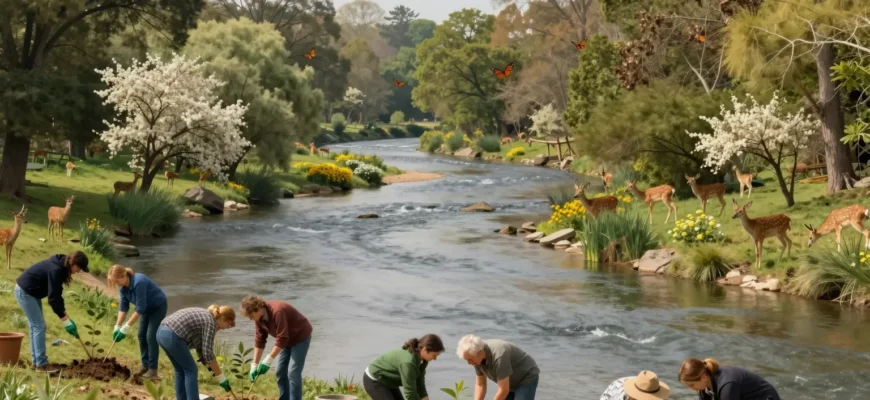
Unlike traditional conservation, which often seeks to “freeze” a landscape in a specific historical state, rewilding in Indiana focuses on restoring natural processes. This means allowing rivers to meander, reintroducing fire as a management tool, and creating the conditions where nature can once again manage itself. By shifting from a defensive posture to a proactive restoration model, Indiana is proving that even the most heavily managed agricultural landscapes can find a wild pulse once more.
Connecting the Corridors: From the Dunes to the Ohio River
The ecological backbone of Indiana is its north-south connectivity. In the north, the Indiana Dunes represent one of the most biodiverse regions in North America per acre, serving as a critical refuge for rare orchids and migratory birds. However, these “islands” of diversity cannot survive in isolation; they require robust wildlife corridors that allow species to migrate in response to changing climate patterns.
Moving south, the focus shifts to the heavily forested hills of the Hoosier National Forest. Here, the challenge is habitat fragmentation caused by roads and private development. By restoring Indiana wildlife through targeted land acquisitions and conservation easements, organizations are stitching together a tapestry of oak-hickory forests. Planting native prairie grass in the transition zones between these forests and active farms creates “soft edges” that support everything from the endangered Mitchell’s Satyr butterfly to the resurgent bobcat populations.
Urban Rebirth: How Detroit and Flint are Leading the Way in City Rewilding
The Rust Belt is witnessing a phenomenon that was once unthinkable: the return of the wild to the heart of the city. In places like Detroit and Flint, decades of industrial decline and population loss have left behind thousands of acres of vacant land. While these “urban voids” were once seen as symbols of decay, they are now being recognized as the frontier of urban rewilding, offering a unique opportunity to build a new kind of “green” city from the ground up.
Urban rewilding differs from its rural counterpart because it must balance ecological restoration with the needs of human residents. In these cities, the goal is to create a “functional wilderness” that provides ecosystem services like stormwater management and heat island mitigation. By allowing nature to reclaim post-industrial sites, Detroit and Flint are becoming labs for studying how ecosystems recover from heavy metal contamination and extreme soil compaction.
The Flint Michigan Rewilding Movement: Healing Soil and Community
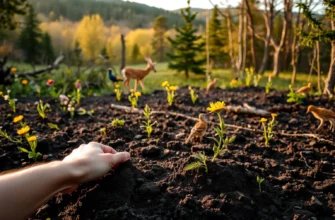
In Flint, the rewilding movement is deeply tied to the concept of phytoremediation—using specific plants to “vacuum” toxins out of the soil. This isn’t just about aesthetics; it is a public health imperative. By planting deep-rooted native species and industrial hemp, community leaders are cleaning the earth while simultaneously creating an urban forest canopy that lowers neighborhood temperatures by as much as 10 degrees during the summer months.
These Detroit rewilding projects are also addressing “nature deprivation” in underserved areas. When a vacant lot is transformed into a pocket prairie or a dense thicket of serviceberry and elderberry, it does more than sequester carbon; it provides a sanctuary for local pollinators and a space for residents to reconnect with the seasonal rhythms of the Great Lakes landscape. The result is a city that feels less like a concrete jungle and more like a living, breathing ecosystem.
From Fallow Fields to Vibrant Forests: Rewilding Farmland in Ohio and Iowa
The transition of marginal farmland back into wild habitat is perhaps the most significant ecological shift occurring in the Midwest today. In states like Ohio and Iowa, where the vast majority of land is privately owned, the success of rewilding depends on economic viability and landowner cooperation. Farmers are increasingly realizing that “farming the best and rewilding the rest” is a strategy that protects their bottom line by reducing inputs on low-yield, flood-prone acreage.
| Feature | Ohio Rewilding Strategy | Iowa Rewilding Strategy |
|---|---|---|
| Primary Target | Hardwood forest expansion & riparian buffers. | Tallgrass prairie & “Prairie Pothole” restoration. |
| Key Species | White Oak, Sugar Maple, American Sycamore. | Big Bluestem, Pale Purple Coneflower, Compass Plant. |
| Ecological Goal | Erosion control in the Appalachian foothills. | Nitrate reduction and migratory bird stopovers. |
| Economic Driver | Carbon sequestration credits and timber value. | Water quality incentives and pheasant hunting. |
Economic Incentives for Returning Farmland to the Wild
The rewilding Iowa benefits are often measured in gallons of filtered water. By taking land out of corn production and restoring it to prairie, landowners can significantly reduce the amount of nitrogen and phosphorus runoff entering the Mississippi River watershed. Federal programs like the Conservation Reserve Program (CRP) provide the financial cushion necessary for this transition, paying farmers to plant species that anchor the soil and provide nesting cover for wildlife.
In Ohio, the movement is gaining steam through the rewilding Ohio farmland initiatives, which focus on creating “green ribbons” along waterways. These riparian buffers act as biological filters and provide essential travel lanes for species like the North American river otter. For many families, rewilding a portion of their acreage is also a way to secure long-term land health, ensuring that the soil remains productive and resilient for future generations, even if it isn’t being actively cropped.
Species Reintroduction: The Return of Elk to Missouri and Beyond
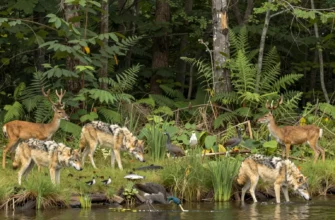
The most visible and inspiring aspect of rewilding is the return of “charismatic megafauna”—large animals that once shaped the landscape but were driven out by overhunting and habitat loss. Missouri has become a national leader in this arena through its successful elk restoration program. This effort isn’t just about bringing back a majestic animal; it’s about restoring a “keystone species” whose presence alters the environment in ways that benefit hundreds of other organisms.
Elk are “ecosystem engineers.” Their grazing habits, wallowing behavior, and even the way they move through the brush create a heterogeneous landscape that supports higher levels of biodiversity. By reintroduced these large herbivores, Missouri is effectively “hiring” nature to do the work of land management, reducing the need for mechanical mowing or intensive human intervention in certain conservation areas.
The Impact of Large Herbivores on Missouri’s Grasslands
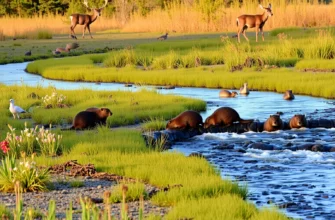
In the Peck Ranch Conservation Area, the effects of rewilding elk in Missouri are clearly visible. Their preference for certain grasses and forbs prevents any single plant species from dominating the landscape, which in turn allows rare wildflowers and insects to flourish. This “grazing pressure” creates a mosaic of short and tall vegetation, providing diverse nesting sites for ground-nesting birds like the Northern Bobwhite.
The success of these Missouri conservation efforts has also debunked the myth that large wildlife and humans cannot coexist in the modern Midwest. Through careful spatial planning and community engagement, the state has managed to minimize crop damage and human-wildlife conflict. The return of the elk has even sparked a “nature tourism” boom in the Ozarks, proving that a wilder landscape can be a powerful engine for rural economic development.
Protecting the Storied Wilderness of the Apostle Islands and the Great Lakes
The Great Lakes represent the largest system of fresh surface water on Earth, and their islands are the crown jewels of Midwestern wilderness. The Apostle Islands in Wisconsin offer a masterclass in island biogeography and the challenges of maintaining ecological integrity in isolated systems. Here, rewilding is less about planting and more about protection and the removal of stressors, such as invasive species that threaten the delicate balance of the boreal forest transition zone.
As we look north into the “North Woods” of Wisconsin and Minnesota, the scale of rewilding expands. This is a landscape of interconnected lakes, peatlands, and old-growth remnants. The goal here is to maintain large-scale connectivity that allows for the natural movement of apex predators like the gray wolf. These predators play a vital role in “trophic cascades,” keeping deer populations in check and allowing the forest understory to regenerate.
Rewilding the North Woods: Wisconsin and Minnesota’s Boreal Shift
In the face of a warming climate, rewilding Minnesota and Wisconsin requires a focus on forest resilience. This involves protecting “climate refugia”—areas that stay cooler and wetter—and encouraging the growth of a diverse mix of tree species. By moving away from mono-culture timber stands and toward a multi-aged, multi-species forest, conservationists are helping the North Woods adapt to a changing world while maintaining its wild character.
Efforts to rewild Wisconsin forests also include the restoration of “wild rice” (Manoomin) beds, which are culturally significant to the Ojibwe people and ecologically vital for waterfowl. This biocultural restoration recognizes that humans have been part of the Great Lakes ecosystem for millennia. Rewilding here isn’t about removing people; it’s about restoring the reciprocal relationships between human communities and the natural world.
The Eastern Corridor: Rewilding Efforts from Pennsylvania to Maine
While the Midwest is characterized by its vast plains and Great Lakes, the Northeast offers a rugged landscape of ancient mountains and coastal estuaries. Rewilding in the Eastern Corridor is a race against urban sprawl and forest fragmentation. From the rolling hills of Pennsylvania to the granite peaks of Maine, the focus is on creating a continuous “green spine” along the Appalachian range that allows species to move freely across state lines.
The terrain in the Northeast is often steeper and more acidic than the Midwest, requiring different restoration techniques. Here, the emphasis is on protecting headwater streams and restoring the connectivity of river systems by removing obsolete dams. This allows migratory fish like Atlantic salmon and brook trout to return to their ancestral spawning grounds, bringing vital nutrients from the ocean back into the heart of the forest.
- Identify Native Keystone Species: Focus on planting Oaks (Quercus) and Cherries (Prunus) which support hundreds of caterpillar species.
- Remove Invasive “Thugs”: Prioritize the removal of Japanese Barberry, Oriental Bittersweet, and Garlic Mustard.
- Create “Soft Landings”: Leave leaf mulch and fallen logs under trees to provide overwintering habitat for beneficial insects.
- Manage Water On-Site: Install rain gardens or bioswales using native sedges to filter runoff before it leaves your property.
- Reduce Nighttime Light: Use motion sensors or warm-spectrum bulbs to protect the circadian rhythms of nocturnal wildlife.
- Map Your Corridor: Look at satellite imagery to see how your land connects to nearby parks or woodlots and plant accordingly.
Connecting the Appalachian Trail: Massachusetts and Vermont Restoration
In states like Vermont and Massachusetts, rewilding is often a community-led effort to protect the “working landscape” while leaving room for the wild. The rewilding Vermont movement has been particularly successful in promoting “forever wild” easements, where private landowners agree to let their forests mature without commercial logging. These old-growth-in-the-making forests are critical for carbon storage and for providing habitat for interior-forest birds.
Meanwhile, rewilding Maine landscapes involves managing the transition of former industrial timberlands. By decommissioning old logging roads and restoring natural drainage patterns, conservationists are helping the “Great North Woods” heal. In coastal Massachusetts, the focus shifts to salt marsh restoration, which acts as a natural buffer against rising sea levels and provides essential nursery grounds for marine life. In all these cases, the goal is ecosystem resilience—the ability of the land to withstand and recover from external shocks.
Cross-Border Conservation: The Ontario Connection
Nature does not recognize the border between the United States and Canada. The Great Lakes basin is a single, unified ecosystem, and rewilding Ontario is just as critical to the health of Indiana as restoring the dunes. The Algonquin-to-Adirondacks (A2A) initiative is a prime example of this transboundary thinking, aiming to link the massive Algonquin Provincial Park in Ontario with the Adirondack Park in New York.
This “A2A” corridor is one of the most important migratory paths in North America. It provides a biological bridge for species like moose, bears, and even cougars to move between the northern boreal forests and the southern Appalachian mountains. By coordinating restoration efforts across the border, we ensure that the Great Lakes remain a vibrant, living heart for the entire continent.
Managing Shared Waters and Migratory Paths
The shared waters of the Great Lakes require international cooperation to manage invasive species like the sea lamprey and the zebra mussel. Ontario rewilding initiatives often focus on the “Golden Horseshoe” region, where intense development threatens some of Canada’s most productive agricultural and natural land. By creating a “Greenbelt” that circles the western end of Lake Ontario, the province is setting a global standard for containing urban sprawl.
Furthermore, the Great Lakes are a migratory highway for millions of birds. Rewilding efforts on both sides of the border focus on protecting “stopover habitats”—the small patches of forest and wetland where birds can rest and refuel during their long journeys. This transboundary conservation approach reminds us that we are all part of a single, interconnected watershed, and our restoration efforts must be as expansive as the ecosystems we seek to save.
Practical Steps: How to Rewild Your Own Property Today
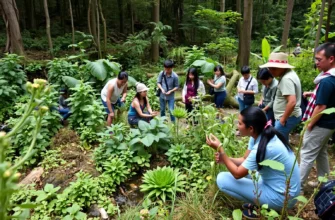
You don’t need a thousand acres to participate in the rewilding movement. In fact, the most important work often happens in backyards and community gardens. Micro-rewilding is the practice of restoring ecological function to small plots of land, creating a network of “habitat stepping stones” that allow wildlife to navigate through developed areas. The shift from a manicured lawn to a living landscape is the single most impactful thing an individual landowner can do.
The goal is to move away from “ornamental” landscaping, which often uses exotic species that provide zero food for local insects, and toward functional landscaping; Every native plant you put in the ground is a productive member of the ecosystem, supporting a complex web of life that has evolved over thousands of years.
- Conduct a Site Audit: Observe your land during a heavy rain to see where water flows and identify which areas get the most sun and shade.
- Kill the Grass (Safely): Use cardboard and mulch (sheet mulching) to smother your lawn without the use of harsh herbicides.
- Source Local Genotypes: Buy seeds and plants from nurseries that specialize in local ecotypes, as these plants are best adapted to your specific climate.
- Plant in “Guilds”: Instead of isolated plants, create communities. Plant a canopy tree, a shrub layer, and a groundcover to mimic a natural forest edge.
- Embrace “Messiness”: Leave the stems of perennial flowers standing through the winter; they are the “apartment complexes” for solitary bees and beneficial insects.
- Monitor and Adapt: Watch which plants thrive and which struggle. Rewilding is a conversation with the land, not a one-time project.
Replacing Lawns with Life: The First Phase of Restoration
The “American Lawn” is essentially an ecological desert, requiring vast amounts of water, fertilizer, and gasoline to maintain. By replacing even a small portion of your lawn with native prairie or a “mini-forest,” you are significantly reducing your environmental footprint. The key is to start with native seed sourcing that focuses on “keystone” species—those that support the widest variety of life.
In the Midwest, this might mean planting Milkweed for Monarch butterflies or Blue Indigo for native bumblebees. In the Northeast, it might mean focusing on native blueberries and viburnums. These changes don’t just benefit the birds and the bees; they create sensory-rich environments for humans as well. A rewilded yard is full of movement, color, and sound, offering a daily reminder of the beauty and resilience of the natural world.
Expert Perspective: Midwestern Ecosystem Resilience
In my professional experience working across the Wabash River basin, I’ve found that connectivity is far more important than raw acreage. You can have a 500-acre forest, but if it’s surrounded by a “dead zone” of chemically treated turf and asphalt, its long-term genetic health is at risk. I always advise landowners to look at their property as a bridge, not an island. Even in highly developed states like Illinois and Indiana, “micro-rewilding” in a suburban backyard can provide a vital life-line for migratory songbirds. The most successful projects I’ve seen are those that prioritize soil biology first; once you stop the cycle of compaction and chemical inputs, the “seed bank” already present in the earth often surprises us with its own desire to return to the wild.
Frequently Asked Questions
Conservation focuses on protecting and managing existing natural areas to prevent further loss, while rewilding is a more hands-off approach that focuses on restoring natural processes and allowing the landscape to eventually manage itself.
How can I start rewilding my land in Pennsylvania if it’s currently a lawn?
The fastest way is a three-step process: First, stop mowing a designated area to see what emerges; second, actively remove invasive species like multiflora rose; and third, plant keystone native trees like White Oak or Black Cherry that support the local food web.
Are there specific grants for rewilding farmland in Ohio?
Yes, farmers can access the Conservation Reserve Program (CRP) and various H2Ohio incentives that provide financial assistance for establishing riparian buffers and wetlands to improve water quality.
Why were elk reintroduced to Missouri, and is it working?
Elk were reintroduced to restore the ecological role of a large grazer and to boost local tourism; the project is widely considered a success, with the population in the Peck Ranch area growing steadily and attracting thousands of visitors.
What are the best native plants for rewilding a garden in Michigan?
High-impact choices include Common Milkweed for Monarchs, Joe Pye Weed for late-season pollinators, and Serviceberry trees which provide critical early-season nectar and summer berries for birds.
Is rewilding possible in urban areas like Detroit or Flint?
Absolutely; urban rewilding helps reduce the heat island effect, manages heavy rainfall through natural infiltration, and creates essential “stopover” habitats for birds migrating across the Great Lakes.