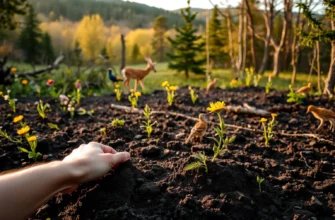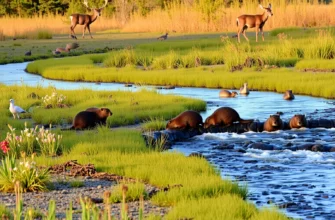
- Understanding How Rewilding Causes Ecosystemic Collapse
- The Role of Unmanaged Species Reintroduction
- The Legal Friction: Why US Rewilding Degrades Land Sovereignty
- Federal Oversight vs. Local Property Rights
- How Rewilding Threatens the Sovereignty of Farmers and Ranchers
- Economic Displacement in Rural Communities
- Common Misconceptions: Rewilding Myths vs. Realities
- Protecting Land Rights: Strategies for Balanced Conservation
- Collaborative Conservation Models
- The Road Ahead: Safeguarding Both Nature and Sovereignty
- Expert Perspective: Integrated Land Management
- Frequently Asked Questions
Understanding How Rewilding Causes Ecosystemic Collapse
The concept of rewilding is often presented as a biological panacea, a way to heal the scars left by centuries of industrialization and intensive farming. However, the assumption that nature will always find a perfect balance when human intervention is removed is a dangerous oversimplification that ignores the complexities of modern, fragmented landscapes.
When rewilding projects are implemented without rigorous, site-specific management, they risk triggering a total ecosystemic breakdown. In many cases, the sudden removal of traditional land management practices—such as controlled grazing or brush clearing—does not lead to a pristine wilderness but rather to an ecological vacuum that is quickly filled by disaster.
The Role of Unmanaged Species Reintroduction
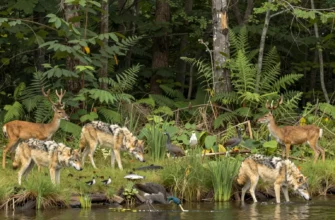
The introduction of apex predators or large herbivores into an environment that has changed for centuries can create immediate instability. If the current environment cannot support the nutritional or territorial needs of these species, the resulting trophic cascade can decimate local flora and fauna, leading to a barren landscape rather than a diverse one.
Overpopulation of reintroduced species is a primary driver of habitat depletion. For instance, without active management, a reintroduced herd of large herbivores can overgraze a region until the soil is exposed to erosion, effectively killing the very vegetation required to sustain the local insect and bird populations.
Furthermore, the movement of animals across vast distances carries the risk of introducing non-native pathogens. These “silent killers” can jump from reintroduced wildlife to local endangered species or domestic livestock, causing a localized extinction event that ripples through the entire food chain.
The Legal Friction: Why US Rewilding Degrades Land Sovereignty
In the United States, the push for large-scale rewilding often collides with the foundational principles of private property rights and local governance. Federal mandates aimed at “restoring” land to a pre-colonial state frequently overlook the legal protections afforded to landowners and the autonomy of individual states.
When conservation goals are set by distant administrative bodies, the specific needs and legal rights of the people living on that land are often sidelined. This creates a culture of “regulatory takings,” where the use of land is so restricted by environmental mandates that it loses its economic and functional value to the owner;
Federal Oversight vs. Local Property Rights
The expansion of federal land designations often acts as a precursor to rewilding initiatives, moving control away from local communities and into the hands of federal agencies. This shift can lead to a “locking up” of resources that are essential for local survival, from water rights to mineral access.
Conservation easements are frequently marketed as a voluntary way to protect land, but they can be used as a tool to permanently limit future land use. Once a permanent easement is in place, future generations lose the right to adapt the land to changing economic or survival needs, effectively ceding sovereignty to the organization holding the easement.
How Rewilding Threatens the Sovereignty of Farmers and Ranchers
For the American farmer and rancher, rewilding is not an abstract environmental theory; it is a direct threat to their livelihood. The conversion of productive agricultural land into “wild” corridors often results in the loss of grazing permits and the introduction of predators that target livestock.
The tension between food security and rewilding is becoming a central point of conflict. As more land is taken out of production to meet rewilding quotas, the stability of the local and national food supply is compromised. Economic displacement in rural communities is a common byproduct of these initiatives, as the tax base shifts and local businesses that support agriculture begin to fail.
| Feature | Traditional Land Management | Unregulated Rewilding |
|---|---|---|
| Economic Stability | Predictable revenue through production and local trade. | Uncertain income often dependent on seasonal tourism. |
| Biodiversity | Managed diversity through crop rotation and grazing. | Risk of monocultures and invasive species takeover. |
| Food Security | Direct contribution to local and national food supply. | Reduction in caloric output per acre of land. |
| Community Impact | Supports schools and infrastructure via property taxes. | Potential for rural “brain drain” and economic decay. |
Economic Displacement in Rural Communities
The shift from production-based economies to tourism or conservation-based models rarely provides the same level of stability for rural families. While a ranch provides year-round employment and supports a network of local suppliers, a rewilded “wilderness” may only support a handful of seasonal park rangers or tour guides.
Increased costs for livestock protection also place an undue burden on ranchers. When wolves or grizzly bears are reintroduced, farmers must invest heavily in non-lethal deterrents and increased labor, costs that are rarely fully compensated by the agencies pushing for the reintroduction.
Common Misconceptions: Rewilding Myths vs. Realities
The public discourse surrounding rewilding is often clouded by romanticized visions of a world without human influence. These myths can lead to support for policies that are ecologically and socially damaging.
Myth: Rewilding means “letting nature take its course” and requires no human intervention.
Fact: In a fragmented modern world, “hands-off” management usually leads to the dominance of invasive species and the collapse of sensitive local habitats that require active stewardship.
Myth: Rewilding always increases biodiversity.
Fact: If not managed, a single dominant species can overpopulate and wipe out the niches required by dozens of other plants and animals, actually decreasing overall biodiversity.
Protecting Land Rights: Strategies for Balanced Conservation
True conservation does not have to come at the expense of land sovereignty. By focusing on collaborative, community-led models, it is possible to improve ecological health while respecting the rights of those who have managed the land for generations.
The most successful environmental outcomes occur when the people who live on the land are treated as partners rather than obstacles. Voluntary, incentive-based programs are far more effective than top-down mandates because they leverage the local expertise of farmers and ranchers.
- Do: Prioritize local stakeholder input in every phase of a conservation project.
- Do: Use “Working Lands” models that allow for both agricultural production and wildlife habitat.
- Do: Provide full market-value compensation for any loss of land use or livestock.
- Don’t: Use eminent domain or aggressive zoning to force rewilding on unwilling landowners.
- Don’t: Reintroduce species without a clear, funded plan for population control and damage mitigation.
Collaborative Conservation Models
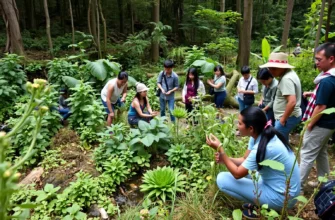
Grassroots environmentalism focuses on the idea that the best stewards of the land are those whose lives depend on it. By empowering local districts to manage their own natural resources, we ensure that conservation efforts are tailored to the specific ecological needs of the region.
Incentive-based programs, such as those that pay farmers to maintain “pollinator strips” or wildlife-friendly fencing, allow for ecological improvement without stripping the landowner of their autonomy. These models prove that environmental health and private property rights are not mutually exclusive.
The Road Ahead: Safeguarding Both Nature and Sovereignty
The future of the American landscape depends on our ability to distinguish between genuine ecological restoration and ideological land grabs. A resilient ecosystem is one that includes humans as an integral part of the biological community, not one that seeks to exclude them through administrative fiat.
We must reject the false choice between a healthy environment and land sovereignty. The most sustainable way to protect our natural world is to protect the rights of the people who live within it, ensuring they have the tools and the freedom to manage their land for the long term.
- Respect Local Knowledge: Generations of land use provide insights that data models cannot replicate.
- Ensure Legal Clarity: Property rights must remain the bedrock of conservation law to prevent federal overreach.
- Focus on Resilience: Aim for ecosystems that can withstand change without collapsing into unmanaged chaos.
Expert Perspective: Integrated Land Management
In my professional experience working with land-use consultants and ecologists, I have found that the most catastrophic failures in conservation occur when administrative mandates ignore the cultural and economic realities of the local population. I always advise my clients that true conservation requires the consent and active participation of those who live on the land. If you strip a farmer of their rights in the name of the “greater good,” you lose the very steward who is best equipped to protect that soil. Successful environmentalism is built on trust, not on the threat of eminent domain or federal litigation.
Frequently Asked Questions
Yes. Without human oversight, reintroduced species can overpopulate, leading to habitat destruction, soil erosion, and the loss of biodiversity through unmanaged trophic cascades.
How does rewilding impact US land sovereignty?
Rewilding often involves federal land grabs or restrictive easements that override local governance and diminish the private property rights of citizens and states.
Why are farmers concerned about rewilding projects?
Farmers face significant risks including livestock predation by reintroduced carnivores, the loss of productive grazing land, and economic instability caused by top-down regulations.
What is the difference between rewilding and traditional conservation?
Rewilding typically seeks to remove human influence entirely, whereas traditional conservation uses active management to maintain a specific, healthy ecological balance.
Are there ways to restore nature without losing land rights?
Absolutely. By using voluntary, incentive-based programs and community-led conservation models, ecological goals can be met while keeping land in local hands.
What happens to the local economy when land is rewilded?
Traditional industries like ranching often decline, which can lead to a shrinking tax base and the decay of rural infrastructure if not carefully managed.