- How Chernobyl Rewilding is Turning a Disaster Zone into a Wildlife Laboratory
- The Chernobyl Paradox: Why Wildlife Thrives in the Exclusion Zone
- Resurrecting the Aurochs: The Strategic Impact of Tauros Rewilding in Ukraine
- Ecosystem Engineers: How Tauros Grazing Shapes the Ukrainian Landscape
- The Stealthy Return: Eurasian Lynx Rewilding and the Zoo-to-Wild Pipeline
- Survival Instincts: Challenges for Zoo-Bred Lynx in the Wild
- From the Tundra to the Exclusion Zone: Lessons from Siberian Rewilding
- The Mammoth Steppe Hypothesis in Modern Ukraine
- Global Ecosystem Blueprints: Why Guanaco Rewilding Offers a Surprising Parallel
- High-Altitude Engineers: Comparing Guanacos to European Megafauna
- The Future of the Exclusion Zone: A Roadmap for Continued Ecological Recovery
- Expert Perspective: Radioactive Rewilding
- Frequently Asked Questions
How Chernobyl Rewilding is Turning a Disaster Zone into a Wildlife Laboratory
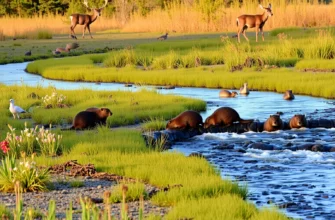
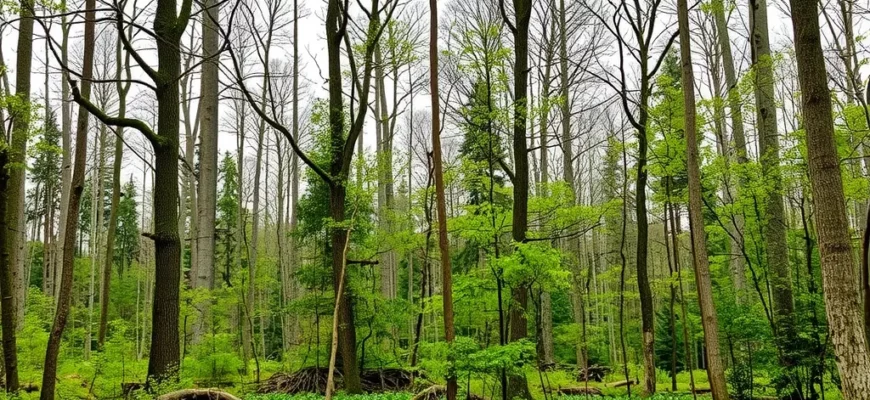
The 1986 disaster at the Chernobyl Nuclear Power Plant created a 2,600-square-kilometer exclusion zone that, for decades, was viewed solely through the lens of catastrophe. However, the total absence of human activity has triggered a massive, unintended ecological experiment where nature is reclaiming Chernobyl with a speed and vigor that has surprised the global scientific community. This area has shifted from a site of industrial failure to a premier wildlife laboratory, demonstrating that nature can often recover from radiological contamination more easily than it can from the persistent presence of human industry and agriculture.
The Chernobyl Paradox: Why Wildlife Thrives in the Exclusion Zone
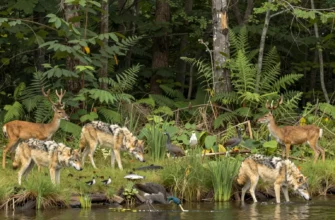
The “Chernobyl Paradox” refers to the phenomenon where, despite measurable radiological damage at a cellular level, wildlife populations are booming. While individual animals may suffer from higher rates of cataracts, tumors, or shorter lifespans, these pressures are insignificant compared to the benefits of removing humans; In the exclusion zone, wolf populations are roughly seven times higher than in nearby non-contaminated nature reserves, primarily because there are no hunters or vehicles to cull their numbers or disrupt their packs.
Large herbivores like elk, wild boar, and roe deer have seen their populations stabilize and grow, filling the vacuum left by the thousands of residents who once farmed and settled this land. The lack of noise pollution, habitat fragmentation, and chemical runoff from modern farming has created a de facto sanctuary where natural selection operates without anthropogenic interference. This resilience highlights a harsh reality for conservationists: for many species, a radioactive forest is safer than a human-managed one.
Resurrecting the Aurochs: The Strategic Impact of Tauros Rewilding in Ukraine
One of the most ambitious components of rewilding Ukraine involves the introduction of the Tauros, a breed of cattle designed to fill the ecological void left by the extinct Aurochs. The Aurochs was a massive wild bovine that roamed Europe for millennia before going extinct in 1627. Scientists are now using back-breeding to select primitive traits from existing cattle lineages—such as the Sayaguesa and Maremmana—to recreate a grazer that behaves and functions like its wild ancestor.
- Project Objective: Reintroduce a keystone grazer to maintain the structural integrity of the Ukrainian steppe and forest-steppe.
- The Species: Tauros (a proxy for Bos primigenius), selected for hardiness, long horns, and athletic build.
- Ecological Role: Creating a mosaic landscape through “heavy-duty” grazing, which prevents dominant grass species from choking out biodiversity.
- Current Status: Small herds have been released in the Danube Delta and are being considered for the Chernobyl Exclusion Zone to manage overgrown meadows.
- Environmental Benefit: Tauros can survive year-round without human fodder, unlike domestic cattle, making them perfect for autonomous landscape management.
Ecosystem Engineers: How Tauros Grazing Shapes the Ukrainian Landscape
The Tauros is far more than a visual replacement for the Aurochs; it is a functional “ecosystem engineer.” By grazing on tough grasses and shrubs that other herbivores avoid, these animals prevent the encroachment of dense scrubland, which would otherwise lead to a loss of grassland biodiversity. This grazing pattern creates a varied landscape of short grass, tall herbs, and trampled earth, providing niche habitats for ground-nesting birds, rare insects, and unique flora like the Stipa pennata (feather grass).
When comparing Tauros to modern domestic cattle, the differences in behavior are stark. Modern breeds have lost the instinct to defend themselves against predators or to forage in deep snow. In contrast, Tauros exhibit strong herd-defense mechanisms against wolves and possess the metabolic flexibility to thrive on low-quality forage during harsh Ukrainian winters. This makes them a critical tool for restoring the steppe, as they provide the natural disturbance necessary for a healthy, self-sustaining ecosystem.
The Stealthy Return: Eurasian Lynx Rewilding and the Zoo-to-Wild Pipeline
The Eurasian lynx, a ghost-like apex predator, is slowly reclaiming its ancestral territory across Eastern Europe. In the exclusion zone and the surrounding Polesia region, the return of the lynx is a vital indicator of ecosystem health. However, the process of reintroducing big cats to Europe often relies on a complex “zoo-to-wild” pipeline, where captive-bred individuals are prepared for a life of total independence in some of the continent’s most unforgiving environments.
| Factor | Soft-Release Method | Hard-Release Method |
|---|---|---|
| Preparation | Months in large, naturalistic enclosures with minimal human contact. | Direct release from transport crates into the wild. |
| Hunting Skills | Trained using live prey to ensure they can kill and cache food. | Relies on innate instincts (often results in lower survival). |
| Success Rate | Significantly higher, as animals acclimate to local climate and sounds. | Lower; animals often wander into human settlements looking for food. |
| Best Use Case | Zoo-bred individuals with no wild experience. | Wild-to-wild translocations (moving animals between forests). |
Survival Instincts: Challenges for Zoo-Bred Lynx in the Wild
Helping captive lynx survive the transition to the wild is an immense technical challenge. A lynx born in a zoo has never had to track a roe deer through 30 centimeters of snow or defend its kill from a pack of wolves. To bridge this gap, conservationists use pre-release training facilities where the cats must prove they can hunt before they are granted full freedom. This process ensures that the “stealth-kill” instincts, which are often dormant in captivity, are fully activated.
Genetic diversity is another hurdle for the lynx in radioactive zones. While the population in Chernobyl is growing, it remains somewhat isolated. Scientists are focusing on establishing wildlife corridors that connect the exclusion zone to larger forest tracts in Belarus and Poland. By ensuring that zoo-bred lynx can interbreed with wild populations, researchers can bolster the genetic resilience of the species, helping them better withstand both radiological stress and the challenges of climate change.
From the Tundra to the Exclusion Zone: Lessons from Siberian Rewilding
The concepts driving rewilding in Ukraine are deeply influenced by the “Pleistocene Park” experiment in Siberia, led by the Zimov family. The core theory is that restoring the “Mammoth Steppe”—a highly productive grassland ecosystem that existed during the last Ice Age—can serve as a powerful tool for climate mitigation. Even in the temperate regions of Chernobyl, large herbivores can transform the landscape into a more effective carbon sink by shifting the dominant vegetation from slow-growing trees to fast-growing, carbon-dense grasses.
The Mammoth Steppe Hypothesis in Modern Ukraine
The Mammoth Steppe hypothesis suggests that the loss of megafauna (mammoths, woolly rhinos, and bison) led to the conversion of productive grasslands into unproductive mossy tundras and dense forests. In the context of Ukraine, reintroducing grazers like the Przewalski’s horse and the Tauros mimics this ancient dynamic. Large animals trample the snow during winter, which strips away the insulating layer and allows the extreme cold to penetrate deep into the soil.
This “trampling effect” has significant climate benefits. In Siberia, it prevents permafrost from melting, while in the Ukrainian context, it helps manage soil temperatures and promotes the growth of deep-rooted grasses that store carbon more securely than forest biomass. By focusing on restoring the mammoth steppe dynamics, conservationists are not just looking backward at history; they are using ancient ecological mechanisms to build a more resilient future against global warming.
Global Ecosystem Blueprints: Why Guanaco Rewilding Offers a Surprising Parallel
While the focus remains on European species, the restoration of wild camelids in South America provides a fascinating parallel to the efforts in Ukraine. Guanacos, the wild ancestors of llamas, were once the dominant herbivores of the Patagonian steppe. Their reintroduction to regions where they were locally extinct mirrors the return of the Tauros and bison to the European landscape. Both projects emphasize that large-bodied herbivores are the primary architects of healthy grassland biomes.
Myth: Rewilding is only about bringing back predators like wolves or bears.
Fact: Herbivore-led restoration is often more critical for ecosystem stability. Without grazers to manage vegetation, the entire food web—from insects to apex predators—begins to collapse due to habitat homogenization.
High-Altitude Engineers: Comparing Guanacos to European Megafauna
Guanacos manage arid grasslands through a combination of grazing and “low-impact” movement. Unlike domestic sheep, which have sharp hooves that can cause soil erosion, guanacos have soft pads that protect the soil crust. This is strikingly similar to the role of European bison and Tauros, whose varied grazing styles prevent soil compaction and promote nutrient cycling.
By studying global rewilding success stories, Ukrainian ecologists can apply universal principles of herbivore-led restoration. Whether it is a guanaco in the Andes or a Tauros in the exclusion zone, the goal is the same: to re-establish the “landscape of fear” and the “landscape of forage” that allows an ecosystem to function without human subsidies. These wild camelids serve as a reminder that the restoration of megafauna is a global necessity for biodiversity.
The Future of the Exclusion Zone: A Roadmap for Continued Ecological Recovery
The long-term viability of Chernobyl as a protected wilderness depends on a shift in how we perceive the zone. It is no longer just a site of a nuclear accident; it is a core biodiversity hub for the entire European continent. As we look toward the future, the roadmap for ecological recovery must include legal protections that prevent the zone from being re-developed for intensive industry, ensuring it remains a permanent sanctuary for the species that have claimed it.
- Habitat Connectivity: Building “green bridges” and corridors to connect Chernobyl with the wider Polesian wilderness.
- Conflict Resolution: Developing strategies to manage the return of large predators as they migrate out of the zone and into human-dominated landscapes.
- Scientific Monitoring: Using the zone as a long-term study site for transgenerational radiation effects and natural adaptation.
- Eco-Tourism: Transitioning from “dark tourism” to ecological tourism that funds conservation and supports local communities.
- Policy Integration: Ensuring that rewilding Ukraine remains a priority in post-conflict reconstruction efforts to promote “green” recovery.
Expert Perspective: Radioactive Rewilding
In my professional experience working within the intersection of ecology and conservation biology, I have found that the public’s fear of radiation often obscures the most important lesson of Chernobyl: the sheer tenacity of life when human pressure is removed. I always advise my colleagues that Chernobyl should not be viewed as a dead zone, but rather as a “control group” for a planet without us. The success of the Tauros and the Eurasian lynx in this region proves that habitat connectivity and the restoration of trophic levels are far more influential on population health than background radiation levels. To ensure the long-term success of these programs, we must prioritize the creation of transboundary corridors that allow these animals to move freely across political borders, as nature does not recognize the fences of an exclusion zone.
Frequently Asked Questions
Yes, many animals carry radioactive isotopes like Cesium-137 in their tissues, but these levels generally do not prevent them from thriving, reproducing, or maintaining healthy population densities at a species level.
What makes Tauros different from regular cows?
Tauros are the result of “back-breeding” primitive cattle to recreate the physical traits and ecological niche of the extinct Aurochs, allowing them to live wild without human care.
Can zoo-bred lynx actually hunt after being released?
Yes, provided they undergo a “soft-release” process in large enclosures where they are required to hunt live prey and avoid human contact before their final release into the wild.
Why is rewilding important for Ukraine’s future?
Rewilding promotes biodiversity, provides natural flood and fire management, and creates opportunities for eco-tourism and sustainable land use in a post-conflict “green” economy.
How does Siberian rewilding help the environment?
By reintroducing large herbivores that trample snow and promote grasslands, Siberian rewilding helps keep the ground frozen and sequesters carbon more effectively than the mossy tundra it replaces.
Is guanaco rewilding happening in Europe?
No, guanaco rewilding is specific to South America, but it serves as a global model for how to restore large herbivores to manage vast, open landscapes successfully.