- Recognizing the Signs: Can a Weighted Blanket Be Too Heavy for Your Body?
- Physical Red Flags: From Morning Soreness to Restricted Movement
- The Safety Reality Check: Can You Suffocate Under a Weighted Blanket?
- Who Is at Risk? Respiratory and Mobility Considerations
- Pediatric Hazards: Why Weight Limits Are Non-Negotiable for Children
- The 10% Rule for Kids: Finding the Safe Zone
- Finding Your Goldilocks Zone: Does the Weight of a Weighted Blanket Matter?
- The Problems with a Blanket That Is Too Light
- The Cons of Overusing Heavy Pressure Night After Night
- Circulation and Nerve Compression Risks
- Smart Selection Checklist: How to Avoid Buying Too Heavy
- Trialing Your Blanket: The First 48 Hours
- Frequently Asked Questions
Recognizing the Signs: Can a Weighted Blanket Be Too Heavy for Your Body?
The therapeutic promise of a weighted blanket relies on a specific physiological trigger known as deep pressure stimulation. When the weight is distributed correctly, it mimics the sensation of a firm hug, signaling the nervous system to shift from a state of “fight or flight” to “rest and digest.” However, there is a fine line between a comforting embrace and a restrictive burden that hinders your natural sleep cycle.
If you find yourself waking up feeling exhausted rather than refreshed, the weight of your bedding might be the culprit. A blanket that exceeds your physical capacity can lead to a paradoxical increase in stress hormones as your body struggles to maintain its natural alignment and breathing patterns during the night. The goal is always gentle grounding, never physical entrapment.
Physical Red Flags: From Morning Soreness to Restricted Movement
One of the most immediate indicators that your blanket is too heavy is the presence of morning joint pain or muscle aches. While some people expect a “breaking-in” period, you should never wake up feeling like you have performed a strenuous workout. If your hips, knees, or shoulders feel bruised or stiff, the blanket is likely compressing your joints beyond their healthy range of motion. Joint compression should feel supportive, not like a crushing force that flattens your natural spinal curves.
Difficulty shifting positions is another critical warning sign. During a healthy sleep cycle, the body naturally moves and rolls to prevent pressure sores and maintain circulation. If you find yourself “stuck” in one position or if rolling over requires significant conscious effort and physical straining, the blanket is too heavy. Any bedding that prevents you from moving freely during sleep poses a risk to your circulatory health and sleep quality.
Furthermore, pay close attention to your psychological response. For some, excessive weight triggers a sense of panic or claustrophobia. If you feel a “heavy chest” sensation that causes you to take shallow breaths or if you feel a sudden urge to cast the blanket off to “escape,” your nervous system is interpreting the weight as a threat rather than a comfort; Listen to your body’s immediate visceral reaction; if the pressure feels overwhelming, it is objectively too heavy.
The Safety Reality Check: Can You Suffocate Under a Weighted Blanket?
While weighted blankets are generally safe for the average healthy adult, the question of suffocation is a serious one that requires a transparent answer. The danger is not typically from the fabric itself, but from the mechanical restriction of the chest and the inability of the user to remove the weight if they experience respiratory distress. Safety hinges entirely on the user’s mobility and respiratory strength.
Myth: Weighted blankets are dangerous for everyone because they crush the lungs.
Fact: For healthy adults, the ribcage is strong enough to handle 10-15% of body weight without issue. The danger arises only for infants, the elderly, or those with specific underlying medical conditions that weaken the respiratory muscles.
Suffocation or respiratory compromise occurs when the external load on the chest cavity exceeds the internal force the body can generate to expand the lungs. This is known as positional asphyxia or chest wall restriction. For a person with full mobility, this risk is mitigated by the ability to simply move the blanket. However, for those who are physically weak or incapacitated, a heavy blanket can become a life-threatening obstacle. Absolute safety requires that the user must be able to independently lift and remove the blanket at all times.
Who Is at Risk? Respiratory and Mobility Considerations
Individuals with chronic respiratory conditions must approach weighted therapy with extreme caution. If you suffer from severe asthma, COPD, or sleep apnea, your respiratory system is already working harder than average to maintain oxygen levels. Adding an external weight to the chest can further impede the diaphragm’s movement, leading to a drop in blood oxygen saturation during deep sleep. Consulting a pulmonologist is mandatory before using weighted bedding if you have a history of breathing difficulties.
Mobility issues also play a primary role in safety. This includes individuals with advanced Parkinson’s, muscular dystrophy, or those recovering from major surgery. If a person cannot easily toss the blanket aside, they are at risk of becoming trapped in a position that compromises their airway. The “golden rule” of weighted blankets is that if you cannot move it with ease while lying down, you should not be sleeping under it.
Finally, consider the factor of cognitive awareness. Individuals under the influence of heavy sedatives, alcohol, or those with severe cognitive impairments may not recognize the signs of respiratory distress or may lack the coordination to adjust the blanket. In these scenarios, the risk of accidental suffocation increases significantly. Never use a weighted blanket on someone who cannot communicate discomfort or physically react to a restricted airway.
Pediatric Hazards: Why Weight Limits Are Non-Negotiable for Children
The use of weighted blankets for children has grown in popularity for managing sensory processing disorders and ADHD. However, the safety margins for children are much narrower than those for adults. A child’s skeletal system is still developing, and their ribcage is more flexible and less protective than an adult’s. Excessive pressure on a child’s torso can lead to rapid respiratory fatigue and physical injury.
When a blanket is too heavy for a child, they may not have the vocabulary to explain that they feel “squished” or “trapped.” Instead, they may become unusually restless, or conversely, lethargic. Because children have a higher surface-area-to-mass ratio, they also overheat more quickly under heavy insulation, which can exacerbate the physical stress of the weight. Parents must prioritize safety over the potential calming effects when selecting a weight.
The 10% Rule for Kids: Finding the Safe Zone
The standard pediatric guideline is that a weighted blanket should never exceed 10% of the child’s total body weight plus one or two pounds. For a 40-pound child, this means a 5-pound blanket is the absolute maximum. Adult-sized blankets, which often start at 12 or 15 pounds, are lethally heavy for toddlers and young children and should never be shared or used in a child’s bed. Using an adult weighted blanket on a child is an extreme safety hazard that can lead to SIDS-like conditions or fatal entrapment.
Age recommendations are equally strict. Most experts and manufacturers agree that children under the age of 2 or 3—or any child who weighs less than 30 pounds—should never use a weighted blanket. At this age, they lack the strength and motor skills to navigate a heavy cover if it accidentally covers their face. The risk of suffocation is highest in the toddler years when the child is mobile enough to get under the blanket but not strong enough to get out.
Always supervise the initial use of a weighted blanket with a child. Observe their breathing patterns and ensure they can easily pull the blanket down to their waist. If the child seems to struggle to move their legs or if they appear to be breathing faster than usual, the blanket must be removed immediately. Safety for younger sleepers is not about the “perfect” weight for sleep; it is about the “safest” weight for survival.
Finding Your Goldilocks Zone: Does the Weight of a Weighted Blanket Matter?
Choosing a weighted blanket is not a “more is better” scenario. There is a “Goldilocks Zone” where the weight is sufficient to trigger the release of serotonin and melatonin without causing physical strain. If you choose a blanket that is too heavy, you risk the safety issues mentioned above. If it is too light, you simply won’t feel the benefits, making the purchase a waste of money. The efficacy of the blanket is entirely dependent on hitting the precise weight-to-mass ratio.
| User Weight | Recommended Blanket Weight | Sensation Profile |
|---|---|---|
| 100 ⎯ 130 lbs | 10 ⎯ 12 lbs | Gentle, grounding pressure; easy to shift. |
| 140 ⎯ 170 lbs | 15 lbs | Standard therapeutic hug; ideal for anxiety. |
| 180 ⎯ 220 lbs | 20 lbs | Deep pressure for larger frames; requires more effort to move. |
| 230+ lbs | 25 ー 30 lbs | Max pressure; should only be used by those with high mobility. |
As seen in the table, the 10% rule is the industry standard for a reason. It provides enough load to engage the proprioceptive system without overwhelming the musculoskeletal system. Deviating more than 5 pounds from this recommendation usually results in a poor user experience.
The Problems with a Blanket That Is Too Light
While this article focuses on the risks of excess weight, a blanket that is too light is equally problematic for therapeutic purposes. If the blanket doesn’t provide enough proprioceptive input, your brain won’t receive the signal to lower cortisol levels. Proprioceptive input is the “hidden sense” that tells your brain where your body is in space; without enough weight, this sense remains unfulfilled.
Lightweight blankets also suffer from “shifting” issues. If the filler (usually glass beads or plastic pellets) is too sparse, it will pool in the corners of the fabric pockets, creating uneven pressure. This can be distracting and may actually increase restlessness as you constantly try to readjust the blanket. A 20-pound blanket might feel too heavy for a 120-pound person, but a 5-pound blanket will feel like nothing more than a thick duvet. Finding the middle ground is the only way to trigger the parasympathetic nervous system effectively.
The Cons of Overusing Heavy Pressure Night After Night
Even if you have the “perfect” weight, there is a risk of sensory habituation. The human brain is remarkably efficient at filtering out constant stimuli. Just as you stop noticing the smell of your own home, your nervous system can become desensitized to the pressure of a weighted blanket if used 24/7. To maintain the therapeutic effectiveness, the pressure should be a “special” signal to the brain, not a constant background noise.
Overuse can also lead to physical dependency. Some users report that after months of nightly use, they find it impossible to sleep without the weight, even in hot weather or while traveling. This can create a “sleep crutch” that makes you less resilient to different sleeping environments. The body should retain its ability to fall asleep under standard bedding.
- Do: Use the blanket for the first 20-30 minutes of sleep to help you drift off.
- Don’t: Use the blanket all day while sitting on the couch, as this leads to faster habituation.
- Do: Take “blanket breaks” for a few nights every month to reset your sensory threshold.
- Don’t: Force yourself to stay under the blanket if you wake up feeling hot or claustrophobic.
- Do: Ensure the weight is evenly distributed across your body, not just bunched over your chest.
Circulation and Nerve Compression Risks
Excessive weight over long periods can interfere with peripheral circulation. If the blanket is too heavy, it can put pressure on the small capillaries in your skin and the superficial nerves in your limbs. If you wake up with “pins and needles” or numbness in your hands or feet, the blanket is likely compressing a nerve or restricting blood flow. This is especially common if you tend to sleep on your side, as the weight is concentrated on a smaller surface area.
Furthermore, chronic pressure on the same points night after night can lead to skin irritation or, in extreme cases, pressure sores for those with sensitive skin or poor circulation. Regularly inspecting your skin for redness that doesn’t go away quickly is a smart habit for heavy blanket users. If you notice persistent marks, it is time to switch to a lighter weight or a blanket with more breathable, padded construction.
Smart Selection Checklist: How to Avoid Buying Too Heavy
Before you commit to a purchase, you need a strategy to ensure the blanket fits your specific physiology. Most people make the mistake of choosing a weight based on what they think they want (e.g., “I want to feel really pinned down”) rather than what their body can safely handle. The 10% rule is a ceiling, not a floor.
- Check the Math: Calculate 10% of your body weight. If you are between sizes, always round down for your first blanket.
- Test Your Strength: Can you easily lift a weight of that size over your head? If not, you may struggle to adjust it in your sleep.
- Evaluate Your Mattress: A very soft memory foam mattress will allow you to sink deeper under a weighted blanket, increasing the “trapped” feeling.
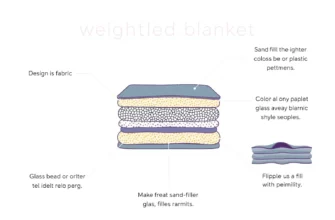
- Consider the Fill: Glass beads are denser and thinner, while plastic pellets are bulkier. Glass usually offers a more even, less “heavy” feeling distribution.
- Check the Return Policy: Many high-quality brands offer a 30-night trial. Use this time to monitor your morning energy levels and joint health.
Trialing Your Blanket: The First 48 Hours
The first two nights are critical for assessment. During this period, pay close attention to your body’s temperature. Weighted blankets are notorious for heat retention. If you are sweating excessively, your heart rate will rise, negating the calming effects of the pressure. A “hot” sleep is a stressed sleep. Look for blankets with “cooling” covers made of bamboo or eucalyptus if you are a hot sleeper.
Monitor your ease of movement. Try to roll over several times while fully conscious. If it feels like a chore, it will be even harder when you are in a deep sleep state. Movement should be slightly resisted, but never blocked. Finally, check for morning stiffness. If you wake up with a sore lower back or neck, the weight may be pulling your body out of alignment as you sink into the mattress. Adjusting the weight or the way you position the blanket (e.g., keeping it off your feet) can often resolve these initial “break-in” pains.
In my professional experience working with sensory processing disorders, I always advise clients that a weighted blanket should feel like a firm, reassuring hug—never a restraint. One of the most common mistakes I see is the “more weight equals more calm” fallacy. In reality, the nervous system has a saturation point. Once you reach the optimal level of deep pressure touch, adding more weight doesn’t increase the benefit; it only increases the physical strain and safety risk. I always tell my patients: if you cannot easily remove the blanket with one hand while lying on your back, it is objectively too heavy for your current strength level. Safety is the foundation of therapy; you cannot achieve a “rest and digest” state if your body is unconsciously fighting for air or struggling to move.
Frequently Asked Questions
For individuals with congestive heart failure or chronic circulatory issues, the extra pressure can theoretically increase the workload on the heart. Always consult a doctor if you have a pre-existing heart condition before adding external weight to your chest.
What happens if I sleep with a 20lb blanket and I only weigh 120lbs?
This exceeds the 10% rule significantly (nearly 17% of body weight). You will likely experience restricted breathing, joint soreness, and extreme difficulty moving, which can lead to poor sleep quality and physical exhaustion.
Is it normal to feel sore after using a weighted blanket for the first time?
Mild adjustment soreness is common as your muscles adapt to the new load, but sharp pain or joint stiffness is a red flag. If soreness persists beyond three nights, the blanket is likely too heavy for your frame.
Can a weighted blanket cause bruising?
While rare, a blanket with poor weight distribution or an excessively heavy load can cause pressure-point bruising, especially in individuals with thin skin, low body fat, or those taking blood-thinning medications.
How do I know if my childs weighted blanket is too heavy?
Perform the “independent removal” test: If your child cannot easily pull the blanket off their own chest or if you notice they are breathing rapidly or sweating profusely, the blanket is unsafe.
Is it okay to use a weighted blanket every single night?
Yes, but to prevent sensory habituation, many experts recommend using it for the first few hours of sleep or taking periodic “breaks” to ensure your brain continues to respond to the pressure stimulus.