- Lessons from the Field: Analyzing Real-World Examples of Rewilding Failing
- Defining Success and Failure in Modern Conservation
- The Ghost of Oostvaardersplassen: A Case of Rewilding Gone Wrong
- When Carrying Capacity is Ignored
- The Human Cost: Why Failed Rewilding Projects Often Ignore Local Communities
- Stakeholder Resistance in the Scottish Highlands
- Unintended Consequences: When Species Reintroduction Backfires
- The Risk of Invasive Generalists
- Designing for Resilience: How to Avoid Future Rewilding Failures
- Integrating Adaptive Management into Wilding Strategies
- Expert Perspective: Ecological Humility
- Frequently Asked Questions
Lessons from the Field: Analyzing Real-World Examples of Rewilding Failing
Rewilding is often presented as a visionary solution to the global biodiversity crisis, promising to restore self-sustaining ecosystems by reintroducing keystone species and removing human interference. However, the transition from ecological theory to ground-level reality is fraught with unpredictable variables that can lead to high-profile setbacks. Understanding the nuances of why these projects falter is not an indictment of the movement, but a necessary step in evolving our conservation strategies.
Failure in these contexts is rarely a binary outcome; it is often a complex mixture of biological unintended consequences and a breakdown in social permission. When we examine examples of rewilding failing, we find that the most significant hurdles are not always the animals themselves, but the invisible boundaries of carrying capacity, habitat fragmentation, and the deep-seated fears of local human populations. Without a rigorous framework, even the most well-intentioned project can devolve into an ecological or public relations disaster.
Defining Success and Failure in Modern Conservation
The definition of a failed rewilding project often depends on the perspective of the observer. Biologists might define failure as the inability of a reintroduced population to reach a self-sustaining state or a measurable decline in local biodiversity. Conversely, a social failure occurs when a project loses its “social license” to operate, resulting in legal challenges, protests, or the active removal of species by disillusioned community members.
Passive rewilding, the act of simply letting land “go wild” without active management, is particularly susceptible to these failures. In landscapes heavily modified by centuries of human activity, the absence of apex predators or natural disturbance regimes (like fire or flooding) can lead to a monoculture of dominant species. Effective ecosystem management requires acknowledging that most modern habitats are too small and fragmented to function autonomously without an initial phase of high-intensity intervention and ongoing monitoring.
The Ghost of Oostvaardersplassen: A Case of Rewilding Gone Wrong
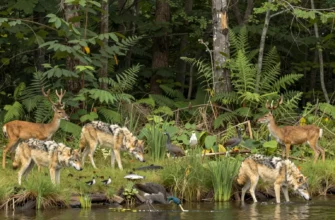
Perhaps the most poignant example of rewilding gone wrong is the Oostvaardersplassen nature reserve in the Netherlands. Created on reclaimed polder land, the project aimed to recreate a prehistoric European landscape using Heck cattle, Konik horses, and red deer as proxies for extinct megafauna. While the project initially saw a massive surge in bird populations, the lack of natural predators and the restricted movement of the herbivores led to a catastrophic outcome during harsh winters.
By 2018, the experiment became a focal point of international controversy as thousands of animals faced mass starvation. The project highlighted a critical flaw in “closed-system” rewilding: when animals are confined by fences and lack predators to regulate their numbers, their populations can quickly exceed the land’s carrying capacity. The resulting images of emaciated animals prompted a massive public outcry, forcing the government to intervene and cull the herds, effectively ending the experiment’s “hands-off” philosophy.
| Project Component | The “Pros” (Initial Intent) | The “Cons” (Observed Failure) |
|---|---|---|
| Mimic natural grazing patterns to maintain open grasslands. | Unregulated population growth led to overgrazing and habitat degradation. | |
| Passive Management | Allowing natural selection to determine survival without human interference. | Mass starvation of over 3,000 animals in a single winter caused public trauma. |
| Closed Ecosystem | Creating a “wilderness” within a densely populated European nation. | Fences prevented natural migration, making the site a biological trap during food shortages. |
When Carrying Capacity is Ignored
The tragedy at Oostvaardersplassen serves as a stark warning about the ethics of animal welfare in rewilding. Critics argue that the project ignored the fundamental biological principle of trophic cascade failure; Without wolves or other apex predators to keep herbivore numbers in check, the “top-down” regulation of the ecosystem was nonexistent. This resulted in a boom-and-bust cycle that was both ecologically unstable and socially unacceptable.
The public perception of the project shifted from admiration of a “new wilderness” to horror at what many perceived as state-sponsored animal cruelty. To avoid starvation in rewilding initiatives, practitioners must ensure that large-scale herbivore introductions are paired with predator presence or rigorous human-led population control. The lesson is clear: in a landscape where nature cannot move freely, humans cannot simply walk away and expect a balance to emerge.
The Human Cost: Why Failed Rewilding Projects Often Ignore Local Communities
Ecological restoration does not happen in a vacuum; it occurs on land that often holds deep cultural, historical, and economic significance for local people. Many failed rewilding projects share a common thread: a top-down approach that treats human residents as obstacles rather than partners. When conservationists prioritize “wildness” over the livelihoods of those who have managed the land for generations, the resulting friction often leads to the project’s demise.
In the Scottish Highlands, for example, ambitious plans to reintroduce wolves or lynx frequently hit a wall of local resistance. For sheep farmers, the prospect of an apex predator is not an abstract ecological benefit but a direct threat to their economic survival. When these communities feel their concerns are being dismissed by urban-based environmentalists, the project faces a backlash that can stall progress for decades. Success requires more than just biological feasibility; it requires a shared vision for the landscape.
Stakeholder Resistance in the Scottish Highlands
The conflict in the Highlands is a classic example of human-wildlife conflict fueled by a lack of trust. Rural workers often view rewilding as a modern form of the “Highland Clearances,” where people are pushed off the land to make way for a romanticized version of nature. This social friction is exacerbated when economic displacement occurs without adequate compensation or alternative income streams, such as eco-tourism, being established first.
To prevent local community backlash, rewilding advocates must move beyond simple consultation and toward genuine co-management. Financial incentives for “wildlife-friendly” farming and robust insurance schemes for livestock losses are essential tools for bridging the gap between conservation goals and rural realities. Without these safety nets, the social cost of rewilding becomes too high, leading to the eventual rejection of even the most scientifically sound proposals.
Unintended Consequences: When Species Reintroduction Backfires
Sometimes, the failure of a rewilding project isn’t about what is missing, but what is introduced. Reintroducing a species into an environment that has changed significantly in its absence can lead to unintended species interactions that threaten existing biodiversity. In some cases, proxy species—used to fill the niche of an extinct ancestor—can become invasive generalists, outcompeting local endemics and disrupting the very ecosystem services they were meant to restore.
In various parts of the world, fast-tracking biodiversity targets has led to the release of species that are not perfectly suited to the modern environment. For instance, introducing large herbivores into areas with sensitive native flora can lead to the rapid decline of rare plants that haven’t evolved to survive heavy grazing pressure. These missteps highlight the danger of “ecological nostalgia”—the desire to return to a specific point in the past without accounting for how the environment has shifted in the intervening centuries.
- Over-reliance on Proxy Species: Using domestic or semi-wild breeds (like certain cattle) can lead to different grazing behaviors than the extinct wild species they replace.
- Genetic Pollution: Reintroducing species from distant geographic populations can dilute the unique genetic makeup of small, surviving local remnants.
- Pathogen Spread: Moving animals across borders for rewilding risks the introduction of new diseases to vulnerable native wildlife.
- Inadequate Habitat Size: Reintroducing wide-ranging predators into small “islands” of habitat often results in them wandering into human-dominated areas, leading to conflict;
The Risk of Invasive Generalists
The risk of biodiversity loss increases when we prioritize “functional” rewilding over site-specific ecological integrity. When a generalist species is introduced, it may thrive at the expense of specialists that occupy narrow ecological niches. For example, the introduction of certain large herbivores into restricted forest blocks can lead to the total loss of the understory, removing the nesting sites for migratory birds and the habitat for rare insects.
These unintended species interactions underscore the need for “ecological humility.” We must recognize that our understanding of food webs is often incomplete. Before any reintroduction, extensive pilot studies and modeling are required to predict how the new arrival will interact with every level of the existing ecosystem. If the risks to native endemics are too high, the project should be reconsidered or significantly modified.
Designing for Resilience: How to Avoid Future Rewilding Failures
The path forward for rewilding lies in moving away from the “set it and forget it” mentality and toward a model of adaptive management. The traditional “Three Cs”—Cores, Corridors, and Carnivores—remain the foundation of large-scale conservation, but they are insufficient on their own. We must integrate a “Fourth C”: Community. Resilience in rewilding is as much about social durability as it is about biological diversity.
Transforming past failures into learning opportunities involves a shift in how we fund and monitor these projects. Long-term success is rarely achieved in the first five years; it requires decades of observation and the flexibility to change course when data suggests the ecosystem is moving in an undesirable direction. This means being prepared to intervene—whether through supplemental feeding, population management, or habitat restoration—whenever the natural processes we’ve initiated begin to falter.
- Prioritize Habitat Connectivity: Ensure that “cores” are linked by corridors that allow animals to move in response to seasonal changes or food shortages.
- Invest in Local Education: Build a sense of ownership among local residents by involving them in the monitoring and management of reintroduced species.
- Establish Clear Exit Strategies: Define what “failure” looks like before the project begins, including triggers for when animals should be removed or populations culled.
- Focus on Ecosystem Function, Not Just Species: Sometimes restoring a natural process (like a flood regime) is more effective than reintroducing a high-profile animal.
Integrating Adaptive Management into Wilding Strategies
Sustainable rewilding requires a commitment to ongoing science. Monitoring is often the first budget item to be cut, yet it is the most critical for preventing disaster. By tracking vegetation changes, animal health, and local economic impacts in real-time, managers can make small adjustments that prevent small issues from ballooning into systemic failures. The goal of rewilding should be the restoration of dynamic, resilient systems that can withstand the pressures of the 21st century, including climate change and urban expansion.
Creating buffers for human-wildlife coexistence is also vital. This might include technological solutions like GPS collars for predators that alert farmers to their presence or the creation of “soft” boundaries where land use is transitioned gradually from agricultural to wild; When we design for the needs of both the lynx and the landowner, we create a conservation model that is built to last.
Expert Perspective: Ecological Humility
In my professional experience, the most successful rewilding projects are those that start with a heavy dose of humility. I always advise practitioners that rewilding is not a “set it and forget it” solution, but an ongoing negotiation between human culture and biological systems. We often fall into the trap of using generic ecological models that ignore the specific history of a site. To succeed, you must spend as much time talking to local farmers and historians as you do analyzing satellite imagery and DNA samples. True restoration isn’t about erasing the human footprint; it’s about finding a way for our species to fit back into the puzzle without breaking the pieces that are already there.
Frequently Asked Questions
The Oostvaardersplassen in the Netherlands is the most cited failure, where a lack of predators and restricted migration led to the mass starvation of thousands of horses, cattle, and deer.
Can rewilding cause more harm than good?
Yes, if poorly planned, it can lead to animal welfare crises, the loss of rare native species due to overgrazing, and severe economic hardship for local rural communities.
Why do local communities often oppose rewilding?
Opposition usually stems from fears regarding livestock predation, loss of traditional land-use rights, and the feeling that conservation decisions are being made by outsiders without local input.
How do scientists define a failed rewilding project?
Metrics include the failure to establish a breeding population, a net loss in local biodiversity, or the total collapse of public and political support for the initiative.
Is the Yellowstone wolf reintroduction considered a failure?
No, it is largely a success, but it is often oversimplified; some localized failures occurred where elk and bison behavior didn’t shift as predicted, leading to ongoing management challenges.
How can we prevent rewilding projects from going wrong in the future?
Success requires deep stakeholder engagement, rigorous ecological modeling, and long-term funding to support adaptive management and continuous monitoring of the ecosystem.