- Beyond Words: Why We Need the Language of Trees in a Changing Landscape
- The Intersection of Art, Ecology, and Typography
- Decoding the Tree Alphabet: How Katie Holten Turns Leaves into Letters
- Translating Great Thinkers into Arboreal Scripts
- A Comparison of Perspectives: Traditional Nature Writing vs. Rewilded Literature
- The Voices of the Forest: Key Contributors and Their Environmental Insights
- From Indigenous Wisdom to Modern Activism
- Actionable Lessons: How to Rewild Your Own Relationship with Nature
- The Lasting Impact of The Language of Trees on Landscape Conservation
- Why This Book is a Tool for Future Generations
- Key Takeaways: The Language of Trees in Summary
- Expert Perspective: On Ecological Art and Literature
- Frequently Asked Questions
Beyond Words: Why We Need the Language of Trees in a Changing Landscape
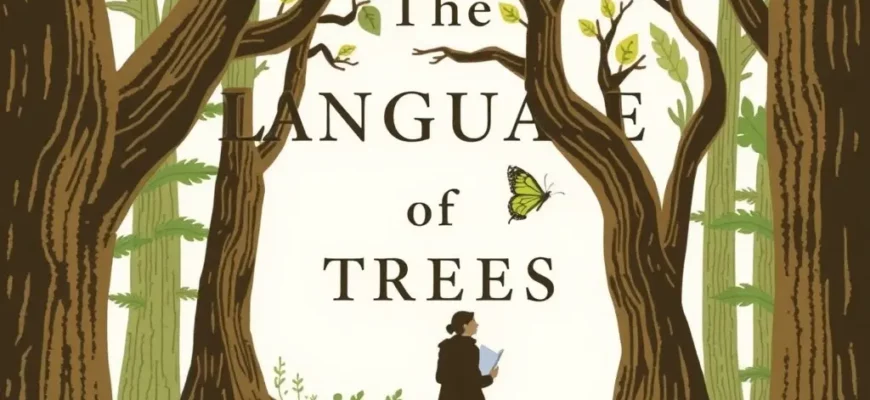
The climate crisis is not merely a failure of policy or technology; it is a fundamental failure of communication. We have lost the ability to speak with the living world, viewing the environment as a backdrop rather than a protagonist. Katie Holten’s The Language of Trees: A Rewilding of Literature and Landscape emerges as a vital correction to this drift, offering a bridge between human syntax and botanical reality.
By translating the written word into a visual forest, Holten challenges us to reconsider the weight of our messages. This work suggests that if we are to survive the current ecological shift, we must first learn to read the signals the earth has been sending for millennia. It is a call to move beyond the limits of human-centric speech and embrace a more inclusive, planetary vocabulary.
The Intersection of Art, Ecology, and Typography
At the heart of this project is a radical typographic experiment where the Roman alphabet is replaced by a series of tree drawings. This transition from abstract characters to biological forms forces the reader to slow down and engage in a form of visual storytelling that mirrors the patience required for forest growth. It turns the act of reading into a meditative process of recognition and ecological consciousness.
When a sentence is rendered in this arboreal font, it becomes a literal landscape. This shift in medium suggests that language itself should be a living thing, capable of sequestering carbon and providing shade. By integrating typography with ecology, Holten removes the barrier between the intellectual act of reading and the physical reality of the natural world.
Decoding the Tree Alphabet: How Katie Holten Turns Leaves into Letters
The Tree Alphabet is more than a creative flourish; it is a functional cipher designed to re-sensitize our eyes to the diversity of the forest. Each letter of the alphabet corresponds to a specific tree species, selected for its botanical significance or its symbolic resonance. Reading a page of this “rewilded” text feels like walking through an ancient woodland where every branch and leaf carries a specific, encoded meaning.
To understand the depth of this system, consider the structural choices made for the typeface:
- The choice of species: Each drawing reflects the unique silhouette of a tree, from the reaching limbs of an Oak to the delicate needles of a Pine.
- The aesthetic of density: As words become longer and sentences more complex, the “text” becomes more crowded, mimicking the layered canopy of a healthy ecosystem.
- The subversion of speed: You cannot skim a forest; you must learn the unique patterns of each species to extract the underlying message, effectively breaking the habit of rapid, shallow consumption.
Translating Great Thinkers into Arboreal Scripts
The book functions as an anthology, featuring the insights of ecological giants like Robin Wall Kimmerer and Robert Macfarlane. When their prose is translated into Holten’s tree font, the intellectual rigor of their work is grounded in a physical, arboreal language. Seeing a scientific observation or a poetic verse rendered as a thicket of trees changes the way the brain processes information.
This method of rewilding the mind encourages a deeper empathy for the organisms that sustain us. It suggests that the most profound truths about our existence are already written in the bark and roots of the world around us. By looking at these scripts, we are reminded that human knowledge is a subset of nature, not an alternative to it.
A Comparison of Perspectives: Traditional Nature Writing vs. Rewilded Literature
To appreciate Holten’s contribution, it is helpful to look at how this book departs from standard environmental prose. Traditional nature writing often treats the outdoors as a scene to be observed, whereas rewilded literature demands that the reader become a participant in the ecosystem of the page.
| Feature | Traditional Nature Writing | Rewilded Literature (The Language of Trees) |
|---|---|---|
| Narrative Focus | Human-centric; the author’s internal journey in nature. | Eco-centric; the agency and voice of the trees themselves. |
| Reader Interaction | Passive; consuming descriptions of the landscape. | Interactive; decoding visual symbols to find meaning. |
| Linguistic Approach | Descriptive and analytical prose. | Transformative; language as a physical, biological extension. |
| Goal | To document or reflect on the natural world. | To foster a direct cognitive connection between the reader and the organism. |
The Voices of the Forest: Key Contributors and Their Environmental Insights
The anthology serves as a multifaceted ecosystem of thought, gathering voices from across disciplines to advocate for a new relationship with the earth. By including diverse perspectives, Holten ensures that the book is not a monologue but a vibrant, living conversation. Each contributor adds a unique “species” of thought to the collective forest of the book.
Legendary writers like Ursula K. Le Guin provide a foundational sense of wonder, while modern activists like Aja Barber connect ecological health to social justice. Even figures from the world of music, such as Philip Selway of Radiohead, contribute to this chorus. This diversity is essential because a monoculture of ideas is just as fragile as a monoculture of trees; we need a broad spectrum of voices to build a resilient future.
From Indigenous Wisdom to Modern Activism
The inclusion of Indigenous perspectives is perhaps the most critical element of this environmental anthology. These sections remind us that for many cultures, the “language of trees” was never lost; it was simply suppressed by industrial expansion. These narratives provide a roadmap for moving from a model of extraction to one of reciprocity.
Poetry and prose function as tools for advocacy, creating climate crisis narratives that are grounded in beauty rather than just fear. By focusing on the intrinsic value of the botanical world, the book suggests that conservation is not a chore but an act of love and cultural preservation. It positions art as a necessary component of the activist’s toolkit.
Actionable Lessons: How to Rewild Your Own Relationship with Nature
Moving from the theory of the book to the practice of living requires a shift in daily habits. Holten’s work inspires a more active engagement with the local landscape. Use the following checklist to begin your own process of rewilding your perspective and your environment:
- Identify five local tree species: Start with the trees you see every day on your street or in your local park to ground your ecological knowledge in your immediate surroundings.
- Practice deep listening: Spend ten minutes in a wooded area without devices, focusing entirely on the sounds of the canopy and the movement of the air.
- Support local reforestation projects: Move beyond reading by contributing to organizations that plant native species to restore local biodiversity.
- Keep a seasonal journal: Document the subtle changes in the trees near your home, noting when they bud, flower, and drop their leaves to synchronize your internal clock with the forest.
- Advocate for urban canopies: Use your voice to support city policies that prioritize tree planting and the protection of old-growth areas in your community.
The Lasting Impact of The Language of Trees on Landscape Conservation
The legacy of this book lies in its ability to change the very way we perceive a forest. It is no longer a collection of timber or a generic “green space”; it is a library of ancient wisdom. By teaching us to “read” the trees, Holten ensures that the next time we walk through a woodland, we see a complex network of communication and history.
Furthermore, the book emphasizes the physical act of restoration. It mentions reforestation efforts as a tangible extension of the literary project. This reminds us that while books can change minds, the survival of our species depends on the physical act of putting roots into the soil. The future of human-nature communication depends on our ability to listen as much as our ability to speak.
Why This Book is a Tool for Future Generations
For students and artists, this work provides a framework for how to respond to the climate crisis without succumbing to despair. It demonstrates that beauty and creativity are powerful drivers of nature conservation. By merging botanical art with literary analysis, it creates an educational resource that appeals to both the heart and the mind.
The educational value of the Tree Alphabet cannot be overstated. It provides a way for younger generations to engage with environmental science through the lens of art. When a child learns to associate a letter with a living organism, they are less likely to view that organism as a disposable resource later in life.
Key Takeaways: The Language of Trees in Summary
The following points encapsulate the core mission and impact of Katie Holten’s work, providing a quick reference for its most significant contributions to modern ecological thought.
- The Tree Alphabet: A unique typeface that replaces letters with tree species, turning text into a visual forest to slow down our consumption of information.
- Anthology Diversity: A collection of voices ranging from Robin Wall Kimmerer to Aja Barber, creating a “biodiverse” literary ecosystem.
- Cognitive Shift: The book forces a re-evaluation of language, suggesting that our communication should be as rooted and sustainable as the trees themselves.
- Call to Action: It bridges the gap between art and activism, encouraging readers to participate in reforestation and local ecological stewardship.
Expert Perspective: On Ecological Art and Literature
In my professional experience as a strategist in the environmental humanities, I have found that the greatest hurdle to conservation is the abstraction of nature. We treat “The Environment” as a concept rather than a neighbor. Holten’s work is brilliant because it collapses this distance. I always advise that the most effective way to change behavior is to change perception; when you begin to see a letter as a living Ash or Oak, the landscape is no longer “out there”—it is part of your very ability to think and communicate. This is a living text that demands we stop being observers and start being participants in the forest’s ongoing story.
Frequently Asked Questions
The book was created and edited by Katie Holten, an artist and activist who developed the Tree Alphabet and curated the anthology’s diverse contributions.
What is the Tree Alphabet used in the book?
It is a unique font where each Roman letter is replaced by a specific tree drawing, allowing any text to be “planted” visually as a forest on the page.
Which authors are featured in the anthology?
The book includes a wide array of thinkers, including Robin Wall Kimmerer, Robert Macfarlane, Ursula K. Le Guin, and Aja Barber.
What does rewilding literature actually mean?
It refers to a movement that shifts storytelling away from human-centric perspectives toward narratives that recognize the agency, intelligence, and vital importance of the natural world.
Is The Language of Trees an art book or a nature guide?
It is a hybrid work that functions as an art book, a literary anthology, and an environmental manifesto, blending aesthetics with ecological urgency.
How does the book address the climate crisis?
It tackles the crisis by fostering deep empathy and connection with nature, using beauty and visual storytelling as a form of non-traditional activism to inspire conservation.