- What is the Global Rewilding Alliance and Why Does it Matter?
- The Evolution of Rewilding: Who Invented the Concept?
- Rewilding Europe News: From the Netherlands to the Oder Delta
- Major European Restoration Hubs
- The Sovereignty Conflict: Why US Rewilding Faces Resistance
- George Monbiot and the Yellowstone Model
- Scotland: The Worlds First Rewilded Nation?
- Beaver Reintroduction and the Scottish Debate
- Species Spotlights: What Animals are Being Rewilded?
- Criteria for Panda and Megafauna Reintroduction
- Economic Reality: Impact on Rural Communities and Landowners
- Can an Old Farm Be Rewilded Successfully?
- The Future of Rewilding: Careers, GIS, and Global Investment
- Professional Paths: Degrees and GIS Mapping
- Frequently Asked Questions
What is the Global Rewilding Alliance and Why Does it Matter?
The Global Rewilding Alliance functions as a massive, decentralized network of over 150 organizations working across 70 countries to restore the functional integrity of our planet’s wild spaces. Unlike traditional conservation, which often focuses on protecting a specific “snapshot” of a landscape or a single endangered species, the Alliance advocates for a process-led approach where nature is given the autonomy to manage itself. By unifying local grassroots projects with international policy frameworks, the Alliance provides a cohesive voice for landscape-scale recovery that transcends national borders.
The movement is grounded in the belief that restoring trophic complexity is the most effective way to stabilize the climate and halt the sixth mass extinction. Through initiatives like the Western Rewilding Network and various corridor-building projects, the Alliance seeks to connect fragmented habitats, allowing wildlife to migrate and adapt to a changing environment. This systemic shift from “managing nature” to “letting nature lead” represents a fundamental evolution in how humans interact with the biosphere.
The Evolution of Rewilding: Who Invented the Concept?
While the practice of letting land go wild is ancient, the scientific framework of rewilding emerged in the late 20th century. The term was officially coined by Michael Soulé and Reed Noss in 1998, though the conceptual roots trace back to the early 1990s through the work of Dave Foreman and the Wildlands Project. They proposed a model known as the “3 Cs”: Cores, Corridors, and Carnivores. This model argued that large, strictly protected core areas must be connected by ecological corridors, and that large carnivores are essential for regulating the health of the entire ecosystem.
When rewilding started to gain traction in the mainstream, it moved away from being a niche academic theory and into a global strategy for climate resilience. Today, the movement has shifted from a North American wilderness-centric model to a more flexible, European-style approach that incorporates human-modified landscapes. This evolution has allowed the concept to scale, leading to the formation of the Global Rewilding Alliance as a way to standardize best practices while respecting regional ecological differences.
Rewilding Europe News: From the Netherlands to the Oder Delta
Europe has become a primary laboratory for large-scale ecological restoration, shifting away from the intensive land use that characterized the 20th century. Current news from the continent highlights a move toward “natural grazing” models where hardy herbivores replace the role of extinct megafauna. The focus is no longer just on planting trees, but on restarting the biological engines that drive soil health, water purification, and biodiversity.
The influence of global financial bodies, including the World Economic Forum, has also brought rewilding into the conversation of “natural capital.” By framing restoration as an economic asset, European projects are increasingly attracting private investment. This shift is visible in major transboundary projects that aim to prove that wilder landscapes can be more profitable and resilient than traditional, subsidy-dependent agriculture.
| Region/Project | Primary Species Focus | Main Restoration Goal |
|---|---|---|
| Oder Delta (Germany/Poland) | Bison, Grey Wolves, Atlantic Sturgeon | Restoring natural river dynamics and transboundary wildlife corridors. |
| Oostvaardersplassen (Netherlands) | Konik Horses, Heck Cattle, Red Deer | Testing the “natural grazing” hypothesis in man-made polder landscapes. |
| Affric Highlands (Scotland) | Scottish Wildcat, Pine Marten | Connecting fragmented Caledonian forest remnants across 500,000 acres. |
| Velebit Mountains (Croatia) | Balkan Chamois, Lynx | Restoring predator-prey balance in abandoned high-altitude pastures. |
Major European Restoration Hubs
The Oder Delta rewilding zone, spanning the border of Germany and Poland, stands as a premier example of transboundary cooperation. Here, the focus is on the “rewilding of the waters,” allowing the Oder River to flood naturally and creating vast wetlands that support migratory birds and spawning fish. By removing dams and artificial barriers, the project has seen a massive return of sturgeon and white-tailed eagles, proving that removing human constraints is often more effective than active intervention.
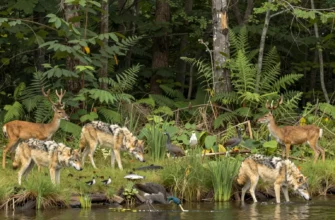
In the Netherlands, the Oostvaardersplassen project has provided both inspiration and cautionary tales. Initially designed to showcase how large herbivores like Heck cattle and Konik horses could shape a landscape without human interference, the project faced public scrutiny regarding animal welfare during harsh winters. These lessons have refined modern rewilding strategies, emphasizing that in small, fenced areas, some level of “soft” management is necessary to mimic the migration patterns that would occur in a truly vast wilderness. Heck cattle, bred to resemble the extinct aurochs, remain central to these efforts, acting as “ecosystem engineers” that create a mosaic of habitats through their grazing and trampling.
The Sovereignty Conflict: Why US Rewilding Faces Resistance
In the United States, the rewilding movement often hits a wall of political and social resistance, primarily rooted in the concept of sovereignty. For many rural communities and private landowners, federal restoration initiatives are viewed as “government overreach” that threatens property rights and traditional livelihoods. The tension is particularly high in the American West, where the memory of land seizures for national parks remains a sensitive topic.
The “US rewilding against sovereignty” sentiment is fueled by fears that large-scale conservation will lead to the permanent removal of grazing rights and the closure of public lands to motorized access. To bridge this gap, proponents must move beyond top-down mandates and focus on collaborative conservation models that empower local stakeholders rather than sidelining them.
Myth: Rewilding means kicking all people off the land and letting it become a dangerous wasteland.
Fact: Modern rewilding focuses on “nature-based solutions” where humans coexist with wilder systems, often creating new economic streams like eco-tourism and carbon sequestration credits.
Myth: Introducing predators like wolves will decimate the local livestock industry.
Fact: Data from Yellowstone shows that while some predation occurs, the ecological benefits—such as healthier elk herds and improved river health—provide a net positive for the regional environment, and compensation programs help offset rancher losses.
George Monbiot and the Yellowstone Model
George Monbiot’s work, particularly his book “Feral,” popularized the “Yellowstone Model” of trophic cascades globally. He argued that the reintroduction of wolves to Yellowstone National Park in 1995 didn’t just reduce elk numbers; it changed elk behavior, allowing overgrazed willow and aspen groves to recover. This, in turn, brought back songbirds, beavers, and even stabilized riverbanks. Monbiot’s advocacy has been a double-edged sword: while it inspired millions, critics argue that applying a “wilderness model” from a 2-million-acre American park to the densely populated landscapes of Europe or the UK is ecologically and socially impractical.
The critique of the Yellowstone model often centers on the “people-free” nature of the American wilderness concept. In many parts of the world, landscapes have been shaped by human activity for millennia. Attempting to “reset” these areas to a pre-human state can alienate the very people needed to maintain them. Therefore, the future of the movement depends on adapting these principles to cultural landscapes where sustainable farming and wild nature can exist in a complementary mosaic.
Scotland: The Worlds First Rewilded Nation?
Scotland is currently at the center of a radical ecological experiment. The Scottish Rewilding Alliance has pioneered a vision for Scotland to become the world’s first “rewilded nation,” a title that refers to a systemic commitment to nature recovery across 30% of its landmass. This isn’t about turning the entire country into a forest; it’s about restoring the peatlands, the Caledonian pinewoods, and the marine ecosystems that have been degraded by centuries of overgrazing and industrial forestry.
The debate in Scotland is particularly fierce because of the country’s unique land ownership structure, where a small number of individuals own vast tracts of the Highlands. This has led to a push for “community-led rewilding,” ensuring that restoration projects provide jobs and housing for local people, rather than becoming “green laird” vanity projects.
Beaver Reintroduction and the Scottish Debate
The return of the beaver to Scotland has been one of the most successful, yet controversial, rewilding stories in recent history. After an absence of over 400 years, beavers were illegally released in the Tay catchment and later officially reintroduced in Knapdale. While ecologists celebrate their ability to create “leaky dams” that prevent downstream flooding and filter water, farmers in the lowlands are concerned about the flooding of productive agricultural land and damage to drainage systems.
This conflict highlights the central challenge of the movement: balancing the undeniable ecological benefits of keystone species with the practical needs of those who work the land. The Scottish government’s decision to grant beavers “protected status” while allowing for managed translocation shows a maturing of policy. It acknowledges that wildlife can be a partner in climate resilience, but only if there is a robust framework for managing human-wildlife conflict.
Species Spotlights: What Animals are Being Rewilded?
Rewilding isn’t just about wolves and bears; it’s about any species that plays a critical role in maintaining the health of an ecosystem. From the “ecosystem engineers” like beavers to the “apex predators” that keep herbivore populations in check, the goal is to restore functional diversity. In Britain, the focus has shifted toward species like the European bison, which were recently reintroduced to Kent to help manage woodland through their unique grazing and “dust bathing” habits.
The criteria for selecting these species are rigorous. It isn’t enough for an animal to be “charismatic”; it must fill a vacant ecological niche. For instance, the reintroduction of the white stork to southern England was chosen because these birds act as indicators of wetland health and help control insect and amphibian populations, restoring a link in the food chain that had been broken for centuries.
Criteria for Panda and Megafauna Reintroduction
When we look at high-profile species like the Giant Panda, the rewilding process is incredibly complex. Unlike herbivores that can simply be released into a forest, pandas raised in captivity must undergo a multi-stage “training” program. There are three specific criteria a panda must meet before being considered for release into the wild: first, they must demonstrate the ability to forage for various bamboo species independently; second, they must show a natural fear of predators and the ability to find shelter; and third, they must possess the genetic diversity required to strengthen the existing wild population without introducing domestic diseases.
For extinct megafauna, the strategy involves using “proxies.” Since we cannot bring back the woolly mammoth or the aurochs, organizations like Rewilding Europe use hardy descendants or similar species. The goal is to restore the “function” of the extinct animal—such as the heavy grazing of an aurochs or the browsing of a wild horse—rather than the exact genetic replica. This pragmatic approach allows for the restoration of “trophic cascades” even when the original players are long gone.
| Species | Rewilding Location | Ecological Role |
|---|---|---|
| European Bison | Kent, UK & Carpathian Mountains | Woodland thinning and seed dispersal through fur and dung. |
| Giant Panda | Sichuan Province, China | Bamboo forest management and umbrella species protection. |
| Beavers | Scotland & Devon, UK | Hydrological engineering, flood prevention, and wetland creation. |
| Grey Wolves | Yellowstone, USA & Germany | Apex predation and regulation of ungulate behavior. |
Economic Reality: Impact on Rural Communities and Landowners
A common misconception is that rewilding is an “anti-economic” movement. In reality, the economic impact on rural communities can be profoundly positive, provided the transition is managed correctly. Traditional upland sheep farming in many parts of the world is only viable through heavy government subsidies. Rewilding offers an alternative land-use model where income is generated through wildlife tourism, carbon sequestration payments, and high-value, nature-friendly food production.
For a local community, a rewilded landscape can transform a “dying” village into a destination. In areas like the Ennerdale Valley in the UK, the shift toward a wilder landscape has led to increased tourism spending, which supports local cafes, B&Bs, and guiding services. However, this transition must be inclusive; if the profits of rewilding only flow to wealthy landowners while rural workers lose their jobs, the movement will never gain the necessary social license to operate.
| Pros of Rewilding Economics | Cons of Rewilding Economics |
|---|---|
| Diversified income through eco-tourism and photography. | Potential loss of traditional agricultural jobs in the short term. |
| Reduced costs for flood defense and water purification. | High initial costs for fencing and species reintroduction. |
| Access to emerging “Green Finance” and carbon markets. | Market volatility in carbon credits and tourism trends. |
| Increased resilience to climate-related crop/livestock failure. | Conflict with traditional land-use subsidies and tax codes. |
Can an Old Farm Be Rewilded Successfully?
The question of whether an old farm can be rewilded is increasingly relevant as many farmers look for an “exit strategy” from intensive agriculture. The most famous example is the Knepp Estate in England. Once a struggling dairy and arable farm on heavy clay soil, the owners decided to stop intensive farming and introduce a mix of free-roaming cattle, ponies, pigs, and deer. Within a decade, the land transformed into a biodiversity hotspot, becoming home to rare species like the purple emperor butterfly and turtle doves.
The success of a farm-to-wild transition depends on moving away from the “tidy” mindset of traditional agriculture. This means allowing scrub to grow, leaving deadwood on the ground, and permitting rivers to meander. For landowners, the financial viability often comes from a “stacking” of benefits: selling high-quality “wild-range” meat, hosting educational retreats, and receiving “public money for public goods” via government restoration grants.
The Future of Rewilding: Careers, GIS, and Global Investment
As the Global Rewilding Alliance continues to expand, the field is professionalizing. We are seeing a move away from “amateur” restoration toward a data-driven discipline that requires a mix of ecology, sociology, and technology. For the next generation of conservationists, the opportunities are no longer limited to field biology; they include roles in policy advocacy, green finance, and spatial data analysis.
Investment in rewilding is also becoming more accessible to the general public. Through platforms that allow individuals to “buy an acre” or invest in “nature-backed tokens,” the movement is tapping into a global desire to take direct action against climate change. This democratisation of conservation funding is essential for scaling projects to the continental level.
Professional Paths: Degrees and GIS Mapping
For those looking to build a career in this field, specialized academic programs are emerging. Universities now offer MSc degrees in Rewilding or Restoration Ecology, focusing on the complex science of ecosystem assembly. These programs teach students how to navigate the social hurdles of reintroduction while providing the technical skills needed to manage large landscapes.
A critical tool in this professional toolkit is GIS (Geographic Information Systems). GIS rewilding maps are used to identify “wildness potential” and to plan ecological corridors that allow wildlife to move between protected areas. By analyzing layers of data—from soil types and road density to historical species ranges—GIS specialists can predict where a wolf pack is likely to travel or where a new forest corridor will have the greatest impact on carbon storage. This high-tech approach ensures that every dollar invested in restoration is used where it will provide the maximum ecological return.
In my professional experience, the most common mistake people make is viewing rewilding as “abandoning” the land. To be successful, rewilding actually requires incredibly active management in its early stages—not to control nature, but to remove the human-made obstacles that prevent nature from functioning. I always advise practitioners to focus on restoring processes rather than chasing a specific population count of a single species. If you get the hydrology and the grazing right, the biodiversity will follow. Furthermore, you cannot ignore the “human element.” The Global Rewilding Alliance succeeds because it acts as a bridge; it understands that for a landscape to stay wild, the people living within it must feel that they are part of that wildness, not victims of it. True restoration is as much about healing our relationship with the land as it is about planting trees or releasing bison.
Frequently Asked Questions
The Alliance aims to coordinate international efforts to restore 30% of the Earth’s land and sea by 2030, focusing on functional ecosystems that provide climate resilience and biodiversity recovery.
How does rewilding affect local sovereignty in the United States?
It remains a point of contention; many rural landowners fear that federal rewilding initiatives will lead to land-use restrictions and the erosion of private property rights and local governance.
What animals are currently being rewilded in Britain?
Key species include beavers, European bison (in Kent), white storks, and pine martens, alongside the use of “proxy” grazers like Exmoor ponies and Iron Age pigs.
Can I get a degree in rewilding?
Yes, several institutions now offer specialized Master of Science (MSc) degrees in Rewilding and Restoration Ecology, such as the University of Cumbria and Wageningen University.
What are the 3 criteria for a giant panda to be rewilded?
A panda must demonstrate independent foraging skills, show a natural ability to avoid predators/find shelter, and possess the genetic health to integrate into the wild population.
What does it mean for Scotland to be the first rewilded nation?
It is a strategic vision to restore 30% of Scotland’s nature through large-scale projects that integrate ecological recovery with local economic development and community land ownership.