- Understanding Why a Weighted Blanket Might Be Bad for Your Back
- The Science of Spinal Alignment Under Heavy Pressure
- When Deep Pressure Hits the Wrong Spot: Aching Hips, Knees, and Ankles
- Why Your Feet and Ankles Feel the Weight Most
- The Side Sleeper’s Dilemma: Hip and Knee Pain
- Is Your Blanket Too Heavy? The 10% Rule vs. Reality
- Signs You Need to Downsize Your Weighted Blanket
- How to Use Weighted Therapy Without Waking Up Sore
- The Shoulders-Down Technique and Other Positioning Hacks
- Myth vs. Fact: Is Heavy Bedding Always Therapeutic?
- Expert Perspective: Ergonomic Weighted Therapy
- Frequently Asked Questions
Understanding Why a Weighted Blanket Might Be Bad for Your Back
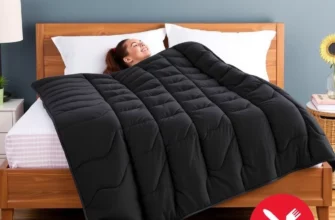
Many people turn to weighted blankets to manage anxiety or insomnia, seeking the comforting embrace of deep touch pressure. While this sensory input can calm the nervous system, the physical weight of the blanket can inadvertently create mechanical stress on the skeletal system.
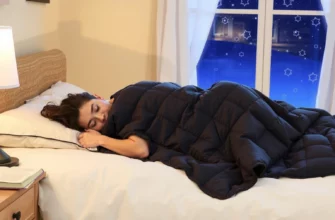
If you wake up with a dull ache in your lumbar region, the blanket may be sabotaging your sleep posture. Gravity does not distinguish between therapeutic pressure and harmful strain; it simply pushes everything closer to the mattress, which can be problematic if your body isn’t properly supported.
The Science of Spinal Alignment Under Heavy Pressure
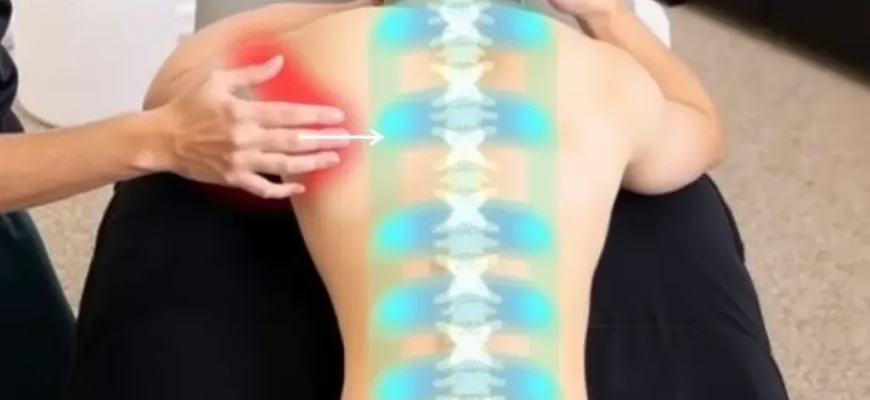
Achieving a neutral spine is the primary goal of any ergonomic sleep setup. When you add fifteen to twenty-five pounds of external weight, you are essentially increasing the downward force on your spine’s natural curves.
In a standard sleeping position, the midsection holds the majority of a person’s body mass. If your mattress lacks sufficient density, a heavy blanket will cause your hips and pelvis to sink deeper into the bed than your head or feet. This “hammocking” effect pulls the lumbar spine out of alignment, stretching the ligaments and putting uneven pressure on the spinal discs.
To prevent long-term damage, your mattress must be firm enough to counteract the added weight of the blanket. If the bedding causes your lower back to arch excessively or flatten out completely, the muscles in your core will remain “engaged” all night to protect the spine, leading to that familiar morning stiffness.
When Deep Pressure Hits the Wrong Spot: Aching Hips, Knees, and Ankles
Lower extremity pain is a common side effect for users who choose blankets that are disproportionately heavy for their frame. Unlike the torso, which has a large surface area and significant muscle padding, the joints of the lower body are bony and sensitive to localized pressure.
When a heavy duvet is draped over the legs, it can compress the nerves and blood vessels surrounding the joints. This often manifests as a throbbing sensation in the ankles or a sharp, pinching feeling in the hips that only appears after several hours of rest.
Why Your Feet and Ankles Feel the Weight Most
The ankles are frequently the most overlooked victims of heavy bedding. If you are a back sleeper, the weight of the blanket often forces your feet into a position called plantar flexion, where the toes point away from the shin.
Sustaining this pointed-toe position for eight hours can lead to shortened calf muscles and significant strain on the Achilles tendon. Furthermore, many users “tuck” their blankets tightly under the mattress, which increases the downward force on the top of the foot. This restricted movement can reduce blood flow to the extremities, leading to cold feet or a “pins and needles” sensation.
The Side Sleeper’s Dilemma: Hip and Knee Pain
Side sleepers face a unique set of challenges because their body weight is concentrated on a smaller surface area. When you add a weighted blanket to this equation, the pressure on the “downside” hip increases exponentially.
This localized pressure can irritate the trochanteric bursa, the fluid-filled sac that cushions the hip joint. Additionally, the weight can cause the top leg to slide forward or backward, twisting the pelvis and placing torque on the lower back. Placing a firm pillow between the knees is essential for side sleepers using weighted blankets to keep the hips stacked and prevent the knees from crushing against one another.
Is Your Blanket Too Heavy? The 10% Rule vs. Reality
The most common advice in the industry is to choose a blanket that is roughly 10% of your total body weight. However, this is a generalized guideline that fails to account for individual health factors like bone density, muscle mass, and pre-existing joint conditions.
A 150-pound person with chronic lower back pain may find a 15-pound blanket far too aggressive, while an athlete with high muscle density might require more weight to feel the same calming effects.
| User Body Weight | Standard 10% Rule | When to Downsize (7%) | Potential Risks of Excess Weight |
|---|---|---|---|
| 130 lbs | 13 lbs | 9 lbs | Ankle strain, shallow breathing |
| 160 lbs | 16 lbs | 11-12 lbs | Hip bursitis, lumbar sinking |
| 200 lbs | 20 lbs | 14-15 lbs | Knee compression, restricted mobility |
| 250 lbs+ | 25 lbs | 18-20 lbs | General joint soreness, circulation issues |
Signs You Need to Downsize Your Weighted Blanket
The most obvious sign that your blanket is too heavy is a struggle to move. If you find it physically taxing to roll from your back to your side, or if you feel “trapped” under the layers, the weight is likely excessive.
Healthy sleep requires a certain amount of micro-movements throughout the night to redistribute blood flow and prevent pressure sores. If you wake up with numbness in your arms or legs, the blanket is likely compressing your peripheral nerves and should be swapped for a lighter version immediately.
How to Use Weighted Therapy Without Waking Up Sore
You don’t necessarily have to get rid of your weighted blanket to find relief. Often, the issue isn’t the weight itself, but how that weight is distributed across your body’s pressure points.
By adjusting your positioning and focusing the weight on areas that can handle the load, you can enjoy the neurological benefits of deep touch pressure without the musculoskeletal fallout.
- Do: Use the “Shoulders-Down” technique by keeping the top of the blanket at chest level to avoid neck strain.
- Do: Leave your feet out from under the blanket to allow for natural ankle movement and temperature regulation.
- Do: Invest in a high-density mattress topper if you feel your hips sinking too far into the bed.
- Don’t: Fold the blanket in half to double the weight, as this creates dangerous “hot spots” of pressure.
- Don’t: Use a weighted blanket if you have advanced osteoarthritis in the small joints of the feet or hands.
The Shoulders-Down Technique and Other Positioning Hacks
One of the most effective ways to reduce back pain is to limit the blanket’s coverage to your torso. By pulling the blanket up only to your mid-chest and leaving your feet free, you provide the “grounding” sensation the brain craves while removing the weight from your sensitive lower joints.
This partial coverage method also helps with zonal weight distribution. If you suffer from hip pain specifically, try laying the blanket horizontally across your midsection rather than vertically down your entire body. This provides lumbar relief and pelvic grounding without overloading the knees and ankles.
Myth vs. Fact: Is Heavy Bedding Always Therapeutic?
There is a widespread misconception that if a 10-pound blanket feels good, a 20-pound blanket will feel twice as good. In reality, the therapeutic window for deep touch pressure is quite narrow.
Myth: Heavier blankets are always better for deep sleep.
Fact: Excessive weight can trigger a “guarding” reflex in the muscles, where the body stays tense all night to support the load, leading to more fatigue.
Myth: Weighted blankets can cure chronic back pain.
Fact: While they help with the emotional aspect of pain, they are not orthopedic devices and can actually worsen structural issues if used improperly.
Myth: Everyone can safely use a 20-lb blanket.
Fact: Individuals with circulatory issues, respiratory conditions, or joint hypermobility (like EDS) should consult a doctor before using heavy bedding.
Expert Perspective: Ergonomic Weighted Therapy
In my professional experience as a physical therapist, I have seen a significant rise in “unexplained” morning hip and back stiffness that correlates directly with the weighted blanket trend. The primary issue I observe is that users forget that their sleep position changes throughout the night. A blanket that feels perfect while you are lying on your back can become a crushing force on your hip joints the moment you roll onto your side. I always advise my patients to prioritize spinal neutrality over sensory input. If you must use a heavy blanket, you must also use supportive bracing—such as a lumbar roll or a contoured knee pillow—to ensure the weight doesn’t collapse your frame. If pain persists for more than three nights, the weight-to-body ratio is fundamentally incorrect for your musculoskeletal structure.
Frequently Asked Questions
The weight can compress the soft tissues and blood vessels in your legs, restricted circulation or irritating the nerves. If you have low muscle mass in your legs, the blanket may be pressing directly against the bone and joints.
Can a weighted blanket cause nerve pain or tingling?
Yes, excessive pressure can cause peripheral nerve compression. If you experience “pins and needles” or numbness, stop using the blanket immediately as this indicates the weight is obstructing normal neural signaling.
Is a 20 lb weighted blanket too heavy for someone who weighs 150 lbs?
Based on the 10% rule, 20 lbs is significantly over the recommended 15 lbs. For a 150-lb individual, this extra 5 lbs can be the tipping point that causes the mattress to sag and the spine to lose its neutral alignment.
Should I stop using my weighted blanket if my hips feel stiff?
You should take a break for 2-3 nights to see if the stiffness subsides. If the pain vanishes without the blanket, you likely need to downsize to a lighter weight or use a knee pillow to improve your side-sleeping alignment.
How do I know if the weight in my blanket is distributed incorrectly?
If you feel “lumps” or if the blanket feels heavier in some spots than others, the internal beads have likely shifted. This creates “pressure hot spots” that can cause localized joint pain in the knees or ankles.
Are there people who should avoid weighted blankets entirely?
People with sleep apnea, asthma, or circulatory disorders should avoid them. Additionally, those with advanced inflammatory arthritis or fragile skin should seek medical advice, as the pressure can exacerbate joint inflammation.