- Understanding George Monbiot’s Rewilding Britain Philosophy
- The Legacy of Feral: How One Book Changed the National Conversation
- Could Scotland Become the World’s First Rewilded Nation?
- The Highland Vision: From Bare Slopes to Thriving Forests
- The Lynx Debate: Apex Predators and the Scottish Highlands
- Trophic Cascades: Why Britain Needs its Ghost Cats Back
- Rewilding Germany: Lessons from the European Mainland
- Continental Success: How Germany Manages Large-Scale Wilding
- The Global Perspective: George Monbiot’s Vision to Rewild the World
- Climate Resilience through Ecosystem Complexity
- Actionable Insights: How to Support the Rewilding Movement
- Expert Perspective: The Shift from Conservation to Restoration
- Frequently Asked Questions
Understanding George Monbiot’s Rewilding Britain Philosophy
George Monbiot’s approach to ecological restoration represents a radical departure from traditional, hands-on conservation methods. Rather than attempting to freeze a landscape in a specific historical state, he advocates for a process of passive management where nature is granted the autonomy to chart its own course.
This philosophy challenges the “clinical” nature of modern environmentalism, which often focuses on protecting individual rare species in isolated pockets of habitat. Monbiot argues that we must move beyond these fragmented efforts and focus on restoring functional, self-sustaining ecosystems that do not require constant human intervention to survive.
The Legacy of Feral: How One Book Changed the National Conversation
When George Monbiot released his seminal work, Feral: Rewilding the Land, the Sea, and Human Life, it sparked a national debate that reached far beyond the ivory towers of academia. The George Monbiot rewilding Britain book introduced the general public to the concept of shifting baseline syndrome, a psychological phenomenon where each generation accepts the degraded state of the environment they inherit as “normal.”
By failing to recognize how much wildlife has been lost over centuries, we set our restoration targets far too low. Monbiot uses the book to argue for a wilder psychological state in humans, suggesting that reconnecting with a vibrant, unpredictable natural world is essential for our own mental well-being. This wasn’t just a call for more trees; it was a demand for a fundamental shift in how we perceive our place within the biosphere.
The impact of the book on British policy was profound, popularizing the concept of landscape recovery driven by trophic cascades. This ecological process occurs when the introduction or protection of a keystone species triggers a chain reaction through the food web, eventually improving the health of the entire ecosystem from the top down.
Could Scotland Become the World’s First Rewilded Nation?
Scotland stands at a unique geographical and political crossroads, possessing the vast tracts of land necessary to realize a truly national rewilding vision. The movement to make Scotland the first rewilded nation is gainly significant momentum, fueled by a coalition of environmentalists, community groups, and forward-thinking landowners.
The Scottish Rewilding Alliance has set an ambitious target to see 30% of Scotland’s land and sea managed for nature recovery by 2030. Achieving this requires a total reimagining of land management reform, particularly in the Highlands, where centuries of overgrazing by sheep and deer have left the hillsides biologically impoverished.
The Highland Vision: From Bare Slopes to Thriving Forests
The Scottish Highlands are often viewed as a “wilderness,” but ecological experts describe them as a “wet desert.” To achieve Highland restoration, we must address the chronic lack of natural forest regeneration caused by excessive deer populations that eat every sapling before it can mature.
A major tension in this movement lies between community-led projects and those funded by “Green Lairds”—wealthy individuals or corporations buying land for carbon offsetting. While large-scale investment can accelerate reforestation, meaningful rewilding must include community empowerment to ensure that local people benefit from nature-based tourism and new “green” jobs.
The economic potential is staggering; by moving away from traditional sporting estates toward diverse, wild landscapes, Scotland can attract global investment in ecotourism and high-value carbon sequestration projects. This shift would provide a more resilient economic foundation for rural communities than the current reliance on subsidized agriculture and deer stalking.
The Lynx Debate: Apex Predators and the Scottish Highlands
Perhaps no topic in the rewilding discourse generates as much heat as the potential return of the Eurasian lynx. These elusive “ghost cats” were once native to Britain, but their absence has left a massive hole in the predator-prey dynamics of our forests.
The prospect of lynx captured in Scottish Highlands spark rewilding concerns and debate among various stakeholders, particularly the farming community. However, scientific data from European reintroduction projects consistently shows that lynx pose a negligible threat to humans and a very low threat to livestock when compared to other causes of mortality.
Myth: Lynx are a danger to hikers and children in the Highlands.
Fact: Lynx are incredibly reclusive ambush predators that avoid human contact at almost all costs. There are zero recorded instances of healthy wild lynx attacking humans in Europe.
Myth: Lynx will decimate sheep populations and ruin the farming industry.
Fact: Lynx prefer deep forest cover and hunt roe deer. In countries like Switzerland, livestock predation is extremely low, and robust compensation schemes exist to support farmers in the rare event of a loss.
Trophic Cascades: Why Britain Needs its Ghost Cats Back
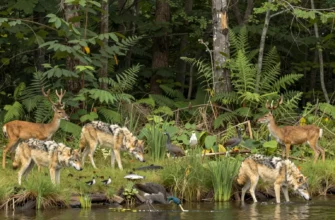
The primary ecological argument for the lynx is their ability to regulate deer behavior. In a landscape without predators, deer congregate in high numbers and overgraze specific areas, preventing forest regeneration. The presence of a predator creates a “landscape of fear,” forcing deer to move more frequently and avoid certain areas.
This behavioral shift allows young trees to survive, leading to a more diverse forest structure. Improved forest health then supports a wider array of birds, insects, and small mammals. Reintroducing the lynx is not about the cat itself; it is about restoring the essential predator-prey dynamics that keep an ecosystem in balance.
By controlling deer populations naturally, lynx can reduce the need for expensive human-led culling and deer fencing. This is a cost-effective, nature-based solution to the problem of overgrazing that currently plagues the Scottish Highlands.
Rewilding Germany: Lessons from the European Mainland
While the UK debates the theory of rewilding, Germany has been making significant practical strides. The German government has set a formal goal to designate 2% of the country’s territory as “Wildnisgebiete” (wilderness areas) where nature is left entirely to its own devices.
The contrast between rewilding Germany and the UK is stark. Germany benefits from larger blocks of contiguous forest and a more established culture of coexistence with large mammals; Wolves, which returned to Germany naturally from Poland, now number over 150 packs, demonstrating that large carnivores can live in a modern, industrial European nation.
| Feature | United Kingdom Approach | Germany Approach |
|---|---|---|
| Primary Focus | Species reintroduction and reforestation. | Passive management and “letting nature be.” |
| Wilderness Goal | No formal national percentage target. | Strict 2% federal mandate for total wilderness. |
| Large Predators | Extinct; reintroduction is highly controversial. | Established populations of wolves and lynx. |
| Land Connectivity | Highly fragmented; focus on small wildlife corridors. | Large, contiguous forest tracts and European wildlife corridors. |
Continental Success: How Germany Manages Large-Scale Wilding
One of the most successful examples is the Oder Delta, a cross-border rewilding project between Germany and Poland. Here, creatures like European bison, elk, and Atlantic sturgeon are returning to a landscape that is becoming increasingly wild. This project emphasizes that wildlife does not recognize national borders, making European wildlife corridors essential for genetic diversity.
Germany’s success is built on the principle of passive management—the idea that humans should stop trying to “fix” nature and instead provide the space for it to fix itself. By allowing rivers to flood and forests to grow old and rot, they are creating habitats for specialized species that cannot survive in managed timber forests.
The German model proves that economic prosperity and wild nature are not mutually exclusive. Many of these wilderness areas have become hubs for high-quality tourism, drawing visitors who want to experience a level of wildness that is increasingly rare in Western Europe.
The Global Perspective: George Monbiot’s Vision to Rewild the World
Monbiot’s vision is not limited to the British Isles; he advocates for a global movement to rewild the world. He argues that rewilding is perhaps our most effective and cheapest tool for climate mitigation, as wild ecosystems are far more efficient at sequestering carbon than monoculture plantations.
By restoring the world’s missing megafauna—from elephants in Africa to whales in the ocean—we can massively enhance the nutrient cycles that sustain life on Earth. Global biodiversity is currently in a state of crisis, and Monbiot suggests that only a large-scale return to wildness can prevent the sixth mass extinction.
Climate Resilience through Ecosystem Complexity
Healthy, complex ecosystems are inherently more resilient to the impacts of climate change. A wild forest with a diverse age structure and high species richness is better able to withstand pests, diseases, and extreme weather events than a commercial spruce plantation.
Furthermore, rewilding peatlands and saltmarshes provides a critical buffer against coastal flooding and serves as a massive carbon sink. The ethics of global land use are central here; Monbiot suggests that shifting away from land-intensive meat production would free up vast areas of the planet for ecological restoration without compromising global food security.
The goal is to restore the “complexity” of the world. An ecosystem without its top predators or its largest herbivores is like a machine with half its parts missing. To truly address the climate and biodiversity crises, we must commit to the mass restoration of the biological processes that have governed life for millions of years.
Actionable Insights: How to Support the Rewilding Movement
Rewilding is not just a task for governments and billionaires; it is a movement that individuals can contribute to at every level. Whether you have a small garden or a voice in local politics, you can help create the conditions for nature to return.
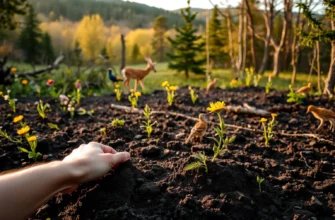
- Practice “Micro-Rewilding” in your garden: Stop using pesticides, leave a patch of grass to grow long, and create a small pond to support local amphibians and insects.
- Support rewilding charities: Organizations like Rewilding Britain and Trees for Life are doing the hard work of purchasing land and lobbying for policy changes.
- Choose sustainable food sources: Reduce your consumption of industrially produced meat and dairy, which are the primary drivers of habitat loss and ecological degradation globally.
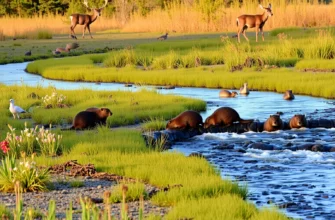
- Advocate for policy change: Write to your representatives to support land reform and the reintroduction of keystone species like the beaver and lynx.
- Visit rewilding projects: Use your tourism pounds to support estates and farms that are transitioning to nature-based models, proving that wildness is economically viable.
Expert Perspective: The Shift from Conservation to Restoration
In my professional experience working alongside ecologists, I have found that the hardest part of rewilding isn’t the biology—it’s the psychology. We have been trained for centuries to believe that a “well-managed” landscape is a tidy one. I always advise stakeholders that true rewilding requires us to let go of the steering wheel. We must accept that a forest might look “messy” with fallen timber, or that a river might change its course during a flood. Functional ecosystems are infinitely more resilient to the looming threats of climate change precisely because they are unpredictable and self-organizing. Our role is simply to remove the barriers—the fences, the dams, and the overgrazing—and then step back and watch the magic happen.
Frequently Asked Questions
Monbiot defines rewilding as the large-scale restoration of ecosystems to a point where they are self-sustaining, primarily through the return of keystone species and the cessation of human interference.
Is Scotland really going to become the first rewilded nation?
The Scottish Rewilding Alliance is actively campaigning for this goal, aiming to have 30% of Scotland’s land and sea in nature recovery by 2030 through policy change and community action.
Are lynx dangerous to people or livestock in the Highlands?
Scientific evidence confirms that lynx are extremely shy and pose no threat to human safety. Predation on livestock is statistically very low, and effective mitigation and compensation strategies are used successfully across Europe.
How does rewilding in Germany compare to the UK?
Germany has a more established “wilderness” policy with a federal goal of 2% total wilderness, benefiting from larger contiguous forests and existing populations of apex predators like wolves.
Where can I read more about George Monbiot’s rewilding theories?
His most comprehensive theories are found in his book “Feral: Rewilding the Land, the Sea, and Human Life,” and he frequently updates his perspectives through his columns in The Guardian.