- Understanding Why Most Weighted Blankets Make You Hot
- The Toaster Effect: How Density Traps Body Heat
- Does a Weighted Blanket Make You Sweat? Material Matters
- Minky vs. Bamboo: Which Fabric Breathes Better?
- Glass Beads vs. Plastic Pellets: Which One Stays Cooler?
- Why Glass Microbeads are the Secret to Cooling
- Myth vs. Fact: Common Misconceptions About Weighted Sleep
- Is the Weight Actually Causing the Heat?
- Practical Tips: How to Stop Overheating Under Your Blanket
- Optimizing Your Sleep Environment for Weight
- Final Verdict: Are There Weighted Blankets That Don’t Make You Hot?
- The Ideal Setup for Hot Sleepers
- Frequently Asked Questions
Understanding Why Most Weighted Blankets Make You Hot
The primary reason most people feel an uncomfortable rise in temperature under a weighted blanket is rooted in basic thermodynamics; While the sensation of deep pressure is designed to calm the nervous system, the physical density required to achieve that weight often creates an unintentional insulation effect that traps your natural body heat against your skin.
When you use a standard comforter, air can move relatively freely through the fibers. However, a weighted blanket is essentially a multi-layered sandwich of fabric, batting, and heavy fillers that significantly restricts air movement. This lack of circulation means the microclimate between your body and the mattress becomes increasingly humid and warm as the night progresses.
The Toaster Effect: How Density Traps Body Heat
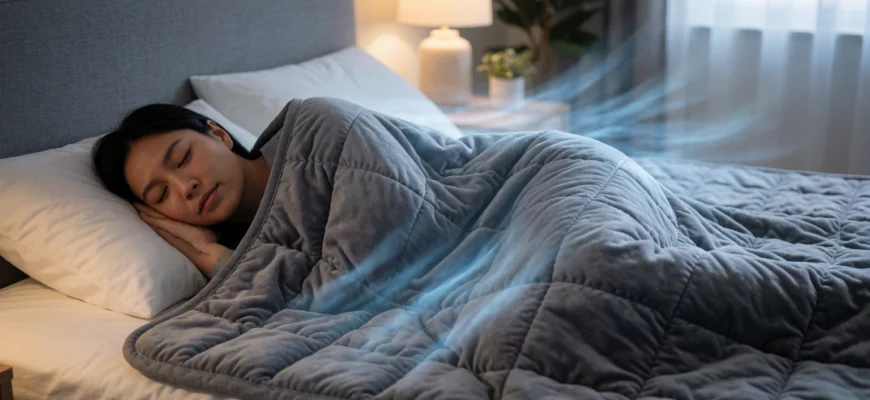
Think of your weighted blanket as a high-performance insulator rather than just a heavy cover. Because the blanket is designed to contour closely to your body to provide deep pressure stimulation, it effectively seals off the pathways where heat usually escapes. Heat dissipation relies on convection, but when a heavy blanket presses down on you, it eliminates the “air pockets” that normally allow your skin to breathe.
Furthermore, the internal construction often involves multiple layers of polyester padding to keep the weights from shifting. Polyester is a synthetic polymer that is notoriously poor at regulating temperature. These layers act as a thermal barrier, reflecting your own metabolic heat back toward you. If you already tend to sleep warm, this density can cause your core temperature to rise quickly, leading to the sensation of being “baked” inside your own bedding.
Does a Weighted Blanket Make You Sweat? Material Matters
If you find yourself waking up damp or overheated, the culprit is likely the textile composition of your blanket. Fabrics play a dual role in sleep comfort: they must allow for air permeability and provide moisture-wicking capabilities to manage perspiration. Synthetic fabrics often fail at both, leading to a cycle of overheating and night sweats.
| Material Type | Breathability Level | Moisture Management | Heat Retention |
|---|---|---|---|
| Polyester (Minky/Fleece) | Low | Poor (Repels moisture) | High (Traps heat) |
| 100% Cotton | Medium | Moderate (Absorbs moisture) | Medium |
| Bamboo Lyocell | Very High | Excellent (Wicks moisture) | Low (Cooling) |
Minky vs. Bamboo: Which Fabric Breathes Better?
The popular “minky” or “fleece” covers found on many budget weighted blankets are made of 100% polyester. While they feel incredibly soft to the touch, they are essentially a form of plastic. Polyester fibers do not have the microscopic pores necessary to move vapor away from the body. Consequently, perspiration stays trapped against your skin, which prevents the evaporative cooling process your body needs to lower its temperature for deep sleep.
In contrast, bamboo lyocell and eucalyptus fibers are engineered for high-performance thermoregulation. These natural fibers are hydrophilic, meaning they actively pull moisture away from the skin and release it into the air. If you are a hot sleeper, switching to a bamboo or Tencel cover is the single most effective change you can make to prevent the blanket from becoming a heat trap. These materials stay noticeably cooler to the touch and facilitate a much more stable sleep microclimate.
Glass Beads vs. Plastic Pellets: Which One Stays Cooler?
What’s inside your blanket matters just as much as the fabric on the outside. To provide the necessary weight, manufacturers typically use either plastic poly-pellets or glass microbeads. The physical properties of these materials dictate how much heat the blanket will hold throughout the night.
Plastic pellets are larger, bulkier, and made of synthetic materials that naturally act as insulators. Because they are less dense than glass, you need a greater volume of plastic to reach the desired weight. This extra bulk requires more polyester fiberfill to keep the pellets from rattling, which significantly increases the overall thickness and heat-retention of the blanket.
Why Glass Microbeads are the Secret to Cooling
Glass microbeads are the gold standard for high-quality, cooling weighted blankets. Because glass is much denser than plastic, the beads are tiny—roughly the size of grains of sand. This allows the blanket to be much thinner while still providing the same amount of pressure. A thinner profile means less insulation between you and the ambient air in the room, allowing heat to escape more efficiently.
Additionally, glass has a higher thermal conductivity than plastic. This means it doesn’t hold onto heat as stubbornly as synthetic pellets do. When you shift your weight during the night, glass beads can help dissipate heat more effectively. For those who struggle with overheating, selecting a blanket with glass beads and minimal polyester batting ensures that the weight doesn’t come at the cost of your thermal comfort.
Myth vs. Fact: Common Misconceptions About Weighted Sleep
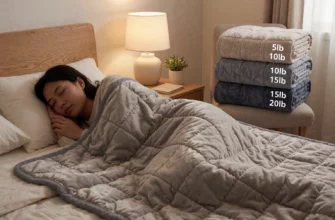
There is a widespread belief that a 20lb blanket must be twice as hot as a 10lb blanket. This is a misconception that prevents many people from getting the pressure they need for anxiety relief. The “heaviness” of a blanket is not the primary driver of temperature; the construction and airflow capacity are far more influential factors.
Myth: Heavier blankets are always hotter than lighter ones.
Fact: A 20lb blanket made of open-knit cotton is significantly cooler than a 5lb polyester throw. Airflow and material science determine heat, not the total weight on the scale.
Is the Weight Actually Causing the Heat?
It is rarely the weight itself that causes the heat, but rather the “fill power” and the layers required to hold that weight. If you use a traditional “quilted” weighted blanket, the squares are often stuffed with polyester fluff to keep the weights in place. This fluff is the real enemy of a cool night’s sleep. It acts like the insulation in your attic, designed specifically to stop heat from moving.
If you need heavy pressure but cannot stand the heat, look into open-knit or chunky-knit weighted blankets. These blankets are made by hand-knitting heavy tubes of cotton or bamboo yarn. Because there is no internal filler and no fabric “shell,” there are visible gaps between the loops. This design provides the necessary poundage through the weight of the yarn itself while allowing for 100% air circulation, making it virtually impossible to overheat.
Practical Tips: How to Stop Overheating Under Your Blanket
If you already own a weighted blanket and aren’t ready to buy a new one, there are several environmental and layering adjustments you can make to mitigate the heat. You don’t have to choose between the calming benefits of deep pressure and a sweat-free night if you optimize your sleep setup.
- Lower the ambient room temperature: Set your thermostat between 65°F and 68°F. This is the ideal range for human sleep and helps offset the extra warmth of a weighted blanket.
- Ditch the top sheet: Use the weighted blanket as your primary cover. Adding a flat sheet creates an extra layer of trapped air that can spike your temperature.
- Invest in a cooling mattress protector: Heat often gets trapped beneath you. A protector made of phase-change materials (PCM) can help draw heat away from your back while the blanket works on your front.
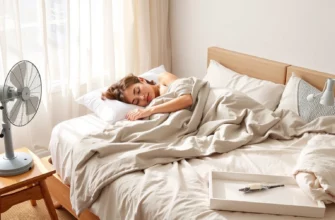
- Use a fan for active convection: Even a small bedside fan can help move air through the fibers of your blanket, assisting in the cooling process.
- Swap the cover: If your blanket has a removable cover, replace the polyester or minky version with a 100% cotton or bamboo duvet cover to immediately improve breathability.
Optimizing Your Sleep Environment for Weight
The interaction between your mattress and your weighted blanket is a major factor in how hot you feel. Memory foam mattresses are notorious for “sleeping hot” because they contour to your body and trap heat. When you add a weighted blanket on top, you are essentially being insulated from both sides. To combat this, ensure your base layers are as breathable as possible. Switching to percale weave cotton sheets, which have a crisp, breathable structure, can make a noticeable difference in how much heat builds up under the weight.
Final Verdict: Are There Weighted Blankets That Don’t Make You Hot?
The short answer is yes. You do not have to suffer through night sweats to enjoy the benefits of deep pressure stimulation. The market has evolved significantly from the early days of bulky, plastic-filled blankets. Today, manufacturers prioritize “breathable weight” by using advanced textile engineering and innovative designs.
When shopping for a cooling weighted blanket, the “holy trinity” of features to look for are bamboo or eucalyptus fabrics, glass microbead fillers, and minimal internal padding. If you are an exceptionally hot sleeper, the chunky-knit style is your best bet, as it bypasses the insulation problem entirely by removing the fabric layers that trap air.
The Ideal Setup for Hot Sleepers
The bottom line is that temperature control is entirely possible with a weighted blanket if you choose the right materials. By focusing on moisture-wicking natural fibers and high-density glass fills, you can achieve the “hug-like” sensation that reduces cortisol and boosts serotonin without waking up in a pool of sweat. Investing in a high-quality cooling model is a vital step in maintaining proper sleep hygiene and ensuring that your recovery isn’t sabotaged by thermal discomfort.
In my professional experience, I have seen many patients abandon the therapeutic benefits of weighted blankets simply because they couldn’t handle the heat. Biologically, your body must experience a drop in core temperature by about 2 to 3 degrees Fahrenheit to initiate and sustain deep sleep. When a non-breathable blanket prevents this drop, it disrupts your circadian rhythm and leads to fragmented, low-quality rest. For anyone with chronic night sweats or thermal sensitivity, a cooling weighted blanket isn’t just a luxury—it is a sleep hygiene necessity. I always advise my clients to look for “open-cell” construction and natural fibers to ensure their nervous system gets the calming input it needs without triggering a metabolic heat response.
Frequently Asked Questions
Yes, you can use a weighted blanket in the summer if it is specifically designed for cooling, such as those made from bamboo lyocell or featuring an open-knit design that allows for maximum airflow.
Do glass beads make a weighted blanket hotter than plastic pellets?
No, glass beads are actually cooler. They are much denser, allowing for a thinner blanket with less insulating fiberfill, and they have better thermal conductivity than plastic.
Will a 20lb weighted blanket be hotter than a 15lb one?
Not necessarily. The weight itself doesn’t generate heat; the fabric and filler do. A 20lb bamboo blanket will keep you much cooler than a 10lb polyester “minky” blanket.
What is the best fabric for a cooling weighted blanket?
The best fabrics for heat dissipation are 100% bamboo lyocell, eucalyptus (Tencel), and long-staple cotton in a percale weave, as they are breathable and wick moisture effectively.
Why do I wake up sweating under my weighted blanket?
This is most often caused by synthetic materials like polyester or fleece covers which trap body heat and moisture. Switching to a natural fiber cover can usually solve this problem.
Are knitted weighted blankets cooler than filled ones?
Yes, knitted weighted blankets are significantly cooler because the gaps between the yarn loops allow for constant air circulation, preventing the “toaster effect” of layered fabric.