- Can You Bring a Weighted Blanket on a Plane? Yes, But There Are Rules
- TSA Regulations for Heavy Bedding
- The Carry-On vs. Checked Baggage Dilemma
- Will Your Blanket Count as a Personal Item?
- Mastering the TSA Security Checkpoint with Heavy Gear
- Why Manual Inspections Happen
- Packing Hacks to Save Space and Avoid Fees
- Using Compression Bags for Bulky Blankets
- Weighted Blankets Beyond the Flight: Hospitals, Cruises, and Hotels
- Can You Bring a Weighted Blanket into the Hospital?
- Do Hotels and Disney Cruise Lines Offer Weighted Blankets?
- Essential Checklist for Traveling with a Weighted Blanket
- Expert Perspective: Expert Tips for Stress-Free Travel with Heavy Bedding
- Frequently Asked Questions
Can You Bring a Weighted Blanket on a Plane? Yes, But There Are Rules
You can absolutely bring a weighted blanket on a plane, as the Transportation Security Administration (TSA) does not classify these items as prohibited. While the blanket itself is allowed through security, the logistical challenge lies with the airline’s specific weight restrictions and storage capacity. Most travelers find that the blanket’s weight, rather than its size, is the primary obstacle when navigating the airport.
The core issue is that a standard 15-pound blanket can consume more than half of your total carry-on weight allowance on many international carriers. Before you head to the gate, you must evaluate whether the comfort of deep pressure stimulation outweighs the potential for heavy baggage fees. Carrying a heavy blanket requires a strategic approach to packing and a clear understanding of how security personnel view dense materials.
TSA Regulations for Heavy Bedding
TSA officers are primarily concerned with safety and the identification of prohibited items within your luggage. When taking a weighted blanket through security, it is helpful to know that these items are treated similarly to standard quilts or comforters. They are not on the restricted list, meaning you won’t be asked to leave your comfort item behind at the checkpoint.
However, the internal composition of the blanket matters significantly during the x-ray process. Blankets filled with a non-liquid filling like plastic pellets or glass beads are perfectly fine, but they appear as a dense, dark mass on the security monitor. Glass beads are particularly dense and may obscure the view of other items in your bag, which often leads to a secondary manual inspection of your carry-on.
The Carry-On vs. Checked Baggage Dilemma
Deciding whether to keep your blanket in the cabin or stow it in the cargo hold depends on your need for anxiety relief during the flight. A carry-on blanket provides immediate comfort during turbulence but adds significant physical strain while walking through the terminal. Conversely, checking the blanket frees up your hands but exposes the item to the risk of being lost or soiled during transit.
Weight limits are the ultimate decider in this debate. Many budget airlines limit carry-on bags to 7kg (roughly 15 lbs), meaning a single weighted blanket could put you over the limit before you even pack a change of clothes. Always weigh your packed bag at home to ensure you are not hit with an unexpected gate-check fee that can exceed $50.
| Factor | Carry-On Option | Checked Baggage Option |
|---|---|---|
| Accessibility | Available for use during the flight. | Unavailable until you reach your destination. |
| Weight Limits | Strict limits (usually 7kg–10kg). | Higher limits (usually 23kg/50lbs). |
| Security Risk | High chance of manual bag search. | Low interaction; screened behind scenes. |
| Physical Effort | Requires carrying through the terminal. | Drop off at check-in counter. |
Will Your Blanket Count as a Personal Item?
Most airlines allow one carry-on bag and one personal item, such as a laptop bag or purse. If your weighted blanket is small enough to be folded into a compact square, you might attempt to classify it as your personal item. However, it must fit entirely under the seat in front of you to qualify under most airline contracts of carriage.
If you plan to use the blanket during the flight, be aware of the limited overhead bin space on smaller regional jets. If the bin is full and your blanket doesn’t fit under the seat, the flight crew will require you to gate-check it. To avoid this, pack the blanket in a bag with a sturdy handle so it can withstand being tossed into the cargo hold at the last minute.
Mastering the TSA Security Checkpoint with Heavy Gear
Navigating the baggage screening process with a weighted blanket requires patience and transparency. Because the filling is so dense, the X-ray machine often cannot “see” through the blanket to the bottom of your bag. This creates a “blind spot” for the security officer, which is a standard trigger for a bag search.
To speed up the process, place your blanket in its own bin if it is not packed inside a suitcase. If it is packed, inform the TSA officer before your bag enters the machine that you have a weighted blanket inside. This proactive communication can prevent the officer from suspecting you are trying to hide something beneath the dense material.
Why Manual Inspections Happen
If your bag is flagged for a TSA pat-down or manual search, don’t panic. The officer is simply verifying that the dense mass detected by the X-ray is indeed bedding and not a prohibited item. Keep the blanket near the top of your bag so the officer can easily feel the texture and confirm the contents without emptying your entire suitcase.
In some cases, the officer may use an Explosive Trace Detection (ETD) swab on the blanket. This is a routine procedure where they wipe a small cloth over the fabric to check for chemical residues. Cooperate fully and remain calm; as long as the blanket contains standard glass or plastic filling, you will be cleared to proceed to your gate within a few minutes.
Packing Hacks to Save Space and Avoid Fees
The bulkiness of a weighted blanket is often more frustrating than the weight itself. A standard 48×72 inch blanket can take up the entire volume of a medium suitcase. To travel efficiently, you need to use physics to your advantage. Compression is your best friend when dealing with heavy, soft goods.
One of the most effective space-saving travel tips is the “wearable” method. If your bag is over the weight limit, drape the blanket over your shoulders like a heavy shawl or wrap while checking in and boarding. Most airline gate agents do not count clothing or wraps against your baggage weight allowance, effectively allowing you to bypass strict scales.
- Use a vacuum seal bag to remove all excess air, which can reduce the blanket’s volume by up to 50%.
- Roll the blanket tightly instead of folding it; this creates a dense cylinder that fits better in the corners of a suitcase.
- Choose a travel-size blanket (typically 5–7 lbs) which provides enough pressure for the lap and chest without the bulk of a full-size version.
- Remove the duvet cover and pack it separately or leave it at home to shave off an extra pound of weight.
Using Compression Bags for Bulky Blankets
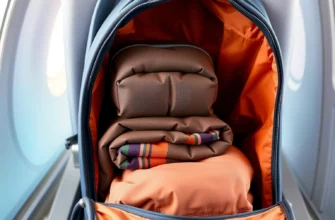
Compression bags are essential for packing a heavy blanket because they transform a floppy, unmanageable item into a solid, stackable brick. However, remember that compression bags only reduce size, not weight. While your bag might look smaller, it will still register the same heavy numbers on the airline’s scale.
If you use a vacuum bag, ensure you have access to a vacuum cleaner at your destination for the return trip. If not, purchase “roll-up” style compression bags that allow you to squeeze the air out by hand. This ensures you can repack your blanket just as tightly for the flight home without needing extra equipment.
Weighted Blankets Beyond the Flight: Hospitals, Cruises, and Hotels
The need for therapeutic bedding doesn’t end when the plane lands. Many travelers bring weighted blankets to manage the stress of hospital stays or the sensory overload of a cruise ship. However, these environments have their own sets of rules regarding outside linens and safety protocols.
In hospitals, infection control is the top priority. Most facilities allow personal blankets, but they must be clean and may be subject to inspection. Always ask the nursing staff for permission before placing personal bedding on a hospital bed, as it may interfere with medical equipment or emergency access.
Can You Bring a Weighted Blanket into the Hospital?
While hospital safety rules vary, most clinical settings permit therapeutic bedding as long as it doesn’t pose a tripping hazard for staff. If the blanket is used in a surgical or high-acuity area, it may be prohibited due to sterilization requirements. Opt for a blanket with a wipeable or waterproof cover if you are bringing it into a medical environment to ensure it stays hygienic.
Be prepared for the possibility that the blanket might get lost in the hospital’s industrial laundry system if it is mistaken for facility-owned linens. Label your blanket clearly with your name and phone number using a permanent fabric marker on the tag to prevent it from being whisked away during a bed change.
Do Hotels and Disney Cruise Lines Offer Weighted Blankets?
Standard hotel amenities rarely include weighted blankets, though some high-end wellness-focused hotels are beginning to offer them upon request. If you are staying at a major chain, call the front desk 48 hours in advance to see if they have a “pillow menu” or specialized bedding available. Usually, you will need to bring your own.
When it comes to the Disney Cruise Line packing list, weighted blankets are generally allowed. However, cruise lines are extremely strict about prohibiting any items with heating elements, such as electric weighted blankets. As long as your blanket is non-electric and for personal use, you can enjoy the same comfort in your stateroom as you do at home.
Essential Checklist for Traveling with a Weighted Blanket
Before you zip up your suitcase and head to the airport, run through this final list to ensure you haven’t missed a critical logistical detail. Preparation is the difference between a relaxing flight and an expensive headache at the check-in counter.
- Check the airline’s weight limit: Confirm the maximum allowed weight for both carry-on and checked bags on every leg of your journey.
- Verify the filling: Ensure the blanket is filled with glass or plastic beads, as some organic fillings (like grain or beans) may be restricted by international customs.
- Pack a sturdy bag: Use a bag with reinforced seams; 15 pounds of concentrated weight can easily tear a cheap tote bag.
- Arrive early for security: Allow an extra 15 minutes for the likely manual bag inspection at the TSA checkpoint.
- Plan for hygiene: Bring a removable, washable cover to protect the blanket from dirty airport floors and airplane seats.
- Consider a lap pad: If a full blanket is too heavy, bring a 5-pound weighted lap pad instead; it provides similar benefits with much less bulk.
Expert Perspective: Expert Tips for Stress-Free Travel with Heavy Bedding
In my professional experience as a frequent traveler with sensory needs, the biggest mistake people make is trying to fit a full-sized 20-pound blanket into a standard carry-on. I always advise travelers to utilize the “wearable shawl” strategy. If you drape the blanket over your shoulders while boarding, it is technically an article of clothing. This has saved me hundreds of dollars in overweight baggage fees. Furthermore, if you are traveling internationally, I highly recommend switching to a travel-sized weighted lap pad. It provides the necessary proprioceptive input to the femoral nerves while you’re seated, which is often enough to stave off mid-flight anxiety without the 15-pound penalty on your luggage scale.
Frequently Asked Questions
It typically counts as one of your two allotted bags. To count as a personal item, it must fit completely under the seat in front of you, which is difficult for full-sized blankets.
Will glass beads in a weighted blanket set off the airport metal detector?
No, glass is non-metallic and will not trigger the walk-through detector. However, the density of the beads will show up as a dark mass on the X-ray, which usually prompts a manual search.
Can I use my weighted blanket during takeoff and landing?
Generally, no. For safety reasons, all large items must be stowed in the overhead bin or under the seat during these critical phases of flight to ensure a clear evacuation path.
Is it better to buy a travel-sized weighted blanket?
Yes, I strongly suggest a 5-to-7 pound travel version. These are designed to be more compact and are much less likely to trigger overweight baggage fees or space issues.
Can you take a weighted blanket on a Disney Cruise?
Yes, they are allowed in your stateroom. Just ensure the blanket does not have an electric heating element, as these are strictly banned by cruise line fire safety regulations.