- How to Measure a Weighted Blanket Correcty for Your Bed
- Measuring the Physical Dimensions: Width vs. Length
- The Definitive Guide to Standard Weighted Blanket Dimensions
- Understanding Queen Size Weighted Blanket Measurements
- King Size Weighted Blanket Dimensions and Weight Distribution
- Twin and Twin XL Weighted Blanket Sizes for Single Sleepers
- How to Figure the Ideal Size and Weight for Your Needs
- The Relationship Between Blanket Area and Pressure
- DIY Weighted Blanket Measurements: How Much Fabric Do You Need?
- Calculating Yardage and Sewing Dimensions
- Common Mistakes to Avoid When Sizing Your Blanket
- Frequently Asked Questions
How to Measure a Weighted Blanket Correcty for Your Bed
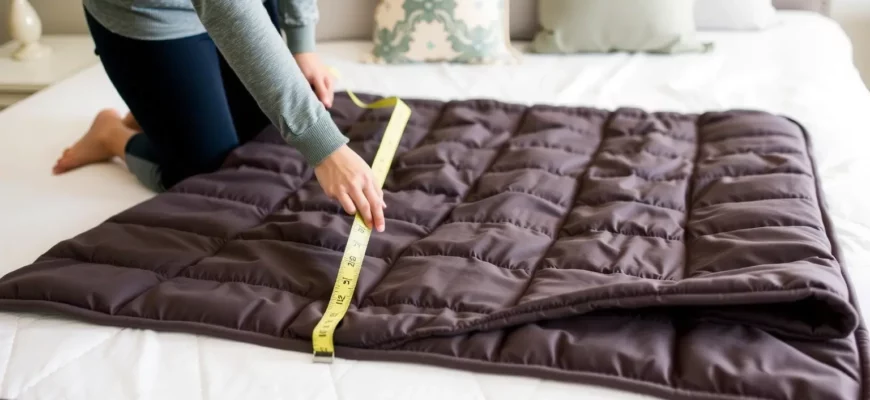
Measuring a weighted blanket involves more than just pulling a tape measure from one corner to another. Because these blankets are filled with dense materials like glass beads or plastic poly-pellets‚ the fabric tends to bunch or stretch under its own weight‚ which can lead to inaccurate readings.
To get a true measurement‚ you must account for the physical pull of the internal fill. A blanket that appears to be 60 inches wide while draped over a sofa might actually measure 58 inches when laid perfectly flat on a hard surface.
- Clear a large‚ hard floor space such as a hardwood or tile floor‚ as measuring on a plush carpet can cause the blanket to sink and distort the dimensions.
- Lay the blanket completely flat and use your hands to smooth out any ripples or bunches from the center toward the edges.
- Identify the outer seams and place your measuring tape at the very edge of the fabric‚ ensuring you are measuring the total surface area including the borders.
- Record the width first‚ then the length‚ to ensure you are matching standard industry sizing conventions.
Measuring the Physical Dimensions: Width vs. Length
When you begin the process of determining how are weighted blankets measured‚ you must realize that the “loft” or thickness of the blanket can slightly pull the fabric inward. This is why a brand-new blanket might seem an inch or two shorter than the dimensions listed on the packaging until the fabric has had time to settle.
To measure for a weighted blanket accurately‚ always measure from outer seam to outer seam across the middle of the blanket rather than the very top or bottom. This accounts for any slight “bowing” that happens when the glass beads settle toward the center of the quilted pockets.
You may find that a common size for individual sleepers is 48 x 72 inches. If you are wondering what size is 48 x 72 weighted blanket in practical terms‚ it is widely considered the “Large Throw” or “Twin” size. This specific dimension is engineered to cover a single adult from the neck down to the feet without excess fabric dragging on the floor.
The Definitive Guide to Standard Weighted Blanket Dimensions
Selecting the right size is not about matching your mattress dimensions exactly; it is about ensuring the weight stays on top of your body. Unlike a traditional comforter‚ a weighted blanket should never hang over the sides of the bed‚ as the weight of the overhang will eventually pull the entire blanket onto the floor during the night.
The golden rule for weighted bedding is edge-to-edge coverage of the sleep surface area only. This prevents the “gravity slide” effect and ensures that the deep touch pressure remains concentrated on the sleeper rather than the mattress edges.
| Bed Size | Recommended Blanket Size | Primary Benefit |
|---|---|---|
| Twin / Twin XL | 48″ x 72″ or 48″ x 80″ | Ideal for single sleepers; prevents overhang on narrow beds. |
| Queen | 60″ x 80″ | Fits the top of a standard Queen mattress perfectly for one person. |
| King / Cal King | 80″ x 87″ or Two 48″ x 72″ | Provides full coverage for couples or extra-large individual use. |
| Lap / Travel | 36″ x 48″ | Portable sensory input for office chairs or car rides. |
Understanding Queen Size Weighted Blanket Measurements
A standard Queen mattress measures 60 inches wide by 80 inches long. When looking at queen size weighted blanket dimensions‚ you will notice that most high-quality options are exactly 60×80 inches. This is intentional‚ as it aligns perfectly with the perimeter of the mattress top.
If you are wondering how big is queen size weighted blanket‚ it is large enough to cover two people‚ but it is often better suited for a single sleeper who wants room to move. For a single person on a queen bed‚ a 15 to 20-pound weight is standard. However‚ if two people are sharing the blanket‚ you must calculate the weight based on 10% of their combined body weight‚ or more commonly‚ use two separate twin-sized blankets.
The weight for queen size weighted blanket models usually ranges from 15 to 35 pounds. Never exceed 35 pounds for a shared blanket unless specifically advised by a professional‚ as it can become difficult to move under or adjust during sleep.
King Size Weighted Blanket Dimensions and Weight Distribution
King size weighted blanket dimensions typically fall around 76×80 or 80×87 inches. The primary challenge with these larger dimensions is maintaining even pressure distribution. Because the surface area is so vast‚ a 20-pound king blanket will feel significantly lighter than a 20-pound twin blanket because the weight is spread over more square inches.
Many experts suggest that instead of buying one massive king blanket‚ you should consider what size is a king size weighted blanket in relation to your partner’s needs. Often‚ using two individual twin-sized blankets is superior to a single king. This allows each person to choose their own weight (e.g.‚ one person uses 15 lbs‚ the other uses 25 lbs) and prevents the “tug-of-war” that happens with heavy bedding.
If you do opt for a single large unit‚ you may need to double weight of weighted blanket for king bed setups to achieve the same therapeutic effect. A 30-pound or 35-pound blanket is often necessary to provide enough downward force across the wider surface area of a king mattress.
Twin and Twin XL Weighted Blanket Sizes for Single Sleepers
The twin size weighted blanket dimensions are usually 48×72 inches‚ which is designed to fit the 38×75 inch surface of a twin bed with just enough room to tuck in the sides if desired. For taller individuals or college students‚ the size of twin xl weighted blanket is often extended to 80 inches in length to match the longer mattress.
When determining what size is a twin weighted blanket for a child or teenager‚ the 10% body weight rule is the safest metric. For a 100-pound teenager‚ a 10-pound twin blanket is the logical choice. Ensure the user can easily remove the blanket themselves to maintain safety during the night.
Twin sizes are also the most compatible with standard duvet covers. Since weighted blankets are difficult to wash‚ always verify that your blanket size matches a standard duvet size to make maintenance easier. A 48×72 blanket fits most “Small” or “Individual” duvet covers sold by specialty sleep retailers.
How to Figure the Ideal Size and Weight for Your Needs
The effectiveness of a weighted blanket relies on the ratio of weight to surface area. This is a concept known as pressure density. If you take 15 pounds of glass beads and put them in a small lap blanket‚ the pressure is intense and localized. If you put that same 15 pounds into a King-sized blanket‚ the pressure is barely noticeable.
To get the best results‚ you must balance the physical dimensions with the 10 percent body weight rule. This ensures the blanket provides enough sensory input to trigger the release of serotonin and melatonin without feeling restrictive or causing overheating.
The Relationship Between Blanket Area and Pressure
When learning how to figure size and weight of weighted blanket‚ you must consider the fill material. Glass beads are much denser than plastic poly-pellets‚ meaning a glass-filled blanket will be thinner and more breathable than a plastic-filled one of the same weight. This affects how the blanket contours to your body.
The measurement of 20 pound weighted blanket models can vary‚ but most are 60×80. If you find a 20-pound blanket that is only 48×72‚ be prepared for a much more “heavy” sensation because the weight is concentrated over a smaller area. This is often preferred by those seeking intense deep touch pressure for anxiety relief.
For those who need portability‚ a target 12 pound weight blanket size is usually 36×48 inches. This is often referred to as a “lap blanket.” These are measured to sit comfortably across the thighs or shoulders while seated‚ providing sensory input without the bulk of a full-sized bed blanket.
DIY Weighted Blanket Measurements: How Much Fabric Do You Need?
Creating your own weighted blanket allows for complete customization of the fabric‚ weight‚ and size. However‚ the math can be tricky. You aren’t just sewing two pieces of fabric together; you are creating a grid of individual pockets that must each hold a precise amount of weight.
To ensure the weight doesn’t shift to the corners‚ the pocket size should generally be between 4×4 and 5×5 inches. Smaller pockets lead to better weight distribution but require significantly more sewing time and precision.
- For a Twin project (48×72): You will need approximately 4 yards of 54-inch wide fabric.
- For a Queen project (60×80): Plan for 5 yards of 60-inch wide fabric to account for seam allowances.
- For a King project (80×87): You will likely need 6-7 yards and may need to seam multiple pieces of fabric together.
- Always add a 1-inch seam allowance to all outer edges to ensure the final dimensions don’t shrink during assembly.
Calculating Yardage and Sewing Dimensions
When calculating how many yards to make a king sized weighted blanket‚ you must account for both the front and back panels. Most upholstery-grade fabrics come in 54-inch or 60-inch widths. Since a King blanket is wider than 60 inches‚ you will need to sew vertical seams to create the necessary width.
The blanket dimensions for a queen diy weighted project are more straightforward because 60-inch wide fabric can often be used without extra vertical seams. When sewing‚ use a heavy-duty needle and reinforced nylon thread. The total weight of the blanket will put immense stress on the seams‚ especially the outer perimeter.
For diy weighted blanket dimensions‚ remember to calculate the number of pockets first. If you are making a 15-pound blanket with 100 pockets‚ each pocket needs exactly 2.4 ounces of fill. Measuring the fabric and the fill with precision is the only way to avoid a lumpy‚ uneven finished product.
Common Mistakes to Avoid When Sizing Your Blanket
The most frequent error is buying a weighted blanket based on mattress size rather than the sleeper’s body size. A King-sized weighted blanket is often too heavy and cumbersome for a single person‚ leading to restless sleep as they struggle to adjust the covers.
Another common pitfall is ignoring the “overhang” factor. Unlike decorative quilts‚ excess fabric hanging off the bed is your enemy. The constant pull of gravity on the overhanging weight will cause the blanket to slowly slide off you during the night‚ which can wake you up or leave you feeling cold.
- Don’t buy a King size for a Twin bed: The extra weight on the sides will pull the blanket off the mattress.
- Don’t skip the duvet cover: Weighted blankets are hard to wash; always size your blanket to fit a standard‚ washable cover.
- Avoid oversized blankets for children: A blanket that is too large can be a safety hazard if the child cannot easily push it off.
- Check the pocket size: Avoid blankets with pockets larger than 6×6 inches‚ as the weight will bunch in the corners.
In my professional experience working with textile design and sleep hygiene‚ I always advise clients to view a weighted blanket as a therapeutic tool rather than a decorative bedspread. The Golden Rule I follow is that the blanket should cover the person‚ not the mattress. I have seen countless users return blankets because they bought a King size for their King bed‚ only to find it on the floor every morning. Overhang is the #1 reason users find weighted blankets frustrating because gravity is constantly working against the heavy fill. If you want the best results‚ measure your body’s “footprint” on the bed and choose a size that covers you with only a few inches of clearance on either side.
Frequently Asked Questions
This is the standard individual or Twin size. It is designed to cover one person from the neck to the feet perfectly without hanging over the edges of the bed.
How many yards of fabric do I need for a king size weighted blanket?
You will typically need 6 to 7 yards of 45-inch wide fabric or 4 to 5 yards of 60-inch wide fabric to cover both the front and back of the project.
Does a queen size weighted blanket fit a queen bed?
Yes‚ a 60×80 inch blanket fits the top of a queen mattress exactly. However‚ it will not hang down the sides like a traditional comforter or bedspread.
What is the best weight for a 60×80 queen blanket?
For most adults‚ 15 to 25 pounds is ideal. Always aim for approximately 10% of your body weight plus one or two pounds for the best therapeutic effect.
How do you measure a weighted blanket accurately?
The most accurate method is to lay the blanket flat on a hard floor. Smooth out all wrinkles and measure from outer seam to outer seam with a metal tape measure.
What are the measurements for a 6 pound weighted blanket?
A 6-pound blanket is typically 36×48 inches. This size is specifically designed for young children or for use as a portable lap blanket for adults.