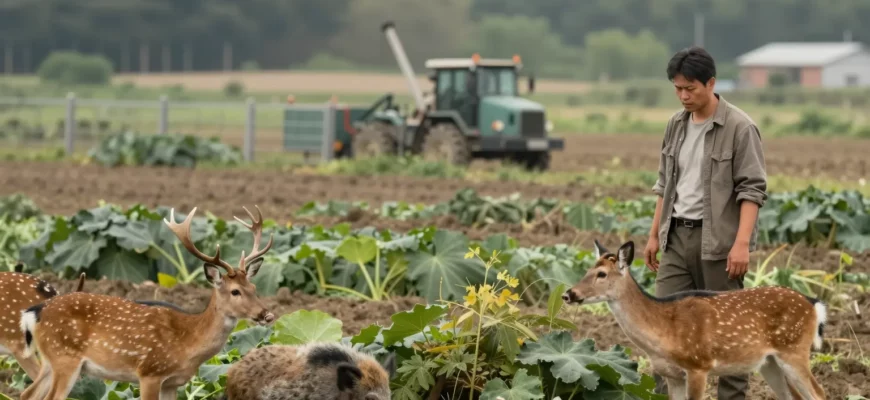
- The Growing Conflict: How Rewilding Harms Farmers and Rural Stability
- Why Modern Conservation Often Overlooks the Producer
- Beyond the Greenery: Why Rewilding Hurts Farmers and Traditional Land Use
- The Threat of Predator Reintroduction to Livestock
- The Land Crisis: How Rewilding Takes Land Away from Small Farmers
- The Disproportionate Impact on Tenant and Small-Scale Growers
- Economic Displacement: Why Rewilding Removes Jobs from Farmers
- The Erosion of Rural Support Sectors
- Food Security at Risk: Why Rewilding Increases Food Prices
- The Vulnerability of Local Food Chains
- The Human Cost: Why Rewilding Pushing People Out of Their Land is a Social Crisis
- Preserving the Cultural Identity of the Countryside
- Frequently Asked Questions
The Growing Conflict: How Rewilding Harms Farmers and Rural Stability
The push for massive nature restoration often paints a romantic picture of returning the land to a pristine, untouched state. However, this vision frequently clashes with the practical realities of those who actually manage the landscape: our farmers.
For generations, agricultural families have acted as the primary stewards of the countryside, balancing food production with environmental care. When rewilding policies prioritize abandonment over active management, they threaten to dismantle the very foundations of rural life and national food security.
Why Modern Conservation Often Overlooks the Producer
There is a widening chasm between urban-led environmental policy and the boots-on-the-ground reality of rural communities. Policy designers often view the countryside as a playground for biodiversity rather than a workplace that sustains human life. This perspective ignores the fact that managed landscapes often harbor higher biodiversity than total wilderness because of the varied habitats created by traditional land management.
When land is pulled out of production, we lose the centuries of localized knowledge that farmers possess. This shift toward “passive” conservation assumes that nature will simply fix itself, yet without grazing and mowing, many rare species that rely on open meadows are quickly choked out by invasive scrub. The impact on rural communities is profound, as the cultural connection to the land is severed in favor of an idealized, human-free environment.
Beyond the Greenery: Why Rewilding Hurts Farmers and Traditional Land Use
Rewilding is not a victimless environmental win; it introduces immediate operational hazards for active farms. When a neighboring property is left to go “wild,” it often becomes a breeding ground for pests, weeds, and diseases that do not respect property boundaries.
Farmers find themselves spending more on mitigation as invasive species migrate from rewilded zones onto productive fields. This lack of maintenance on neighboring lands creates a systemic burden, forcing agriculturalists to defend their livelihoods against a tide of unmanaged nature that was previously kept in check by collective effort.
The Threat of Predator Reintroduction to Livestock
One of the most contentious aspects of rewilding is the reintroduction of apex predators like wolves or lynx. While these animals are celebrated by conservationists, they pose a direct threat to livestock protection and the economic viability of sheep and cattle farming. A single night of predation can wipe out a year’s profit for a small-scale producer, creating a level of financial instability that most businesses could not survive.
The mental health toll on farming families is equally severe. Watching animals you have raised from birth be slaughtered by predators leads to chronic stress and burnout. Predator management programs are often bogged down in bureaucracy, leaving farmers with little recourse or compensation when their livelihoods are literally torn apart. This pressure is a primary driver in the decision for many younger generations to abandon the family trade entirely.
The Land Crisis: How Rewilding Takes Land Away from Small Farmers
The competition for land has reached a fever pitch, but it is no longer just between different types of agriculture. Today, farmers must compete with multi-million dollar conservation NGOs and state-funded entities looking to meet “net zero” targets through land abandonment.
| Metric of Comparison | Productive Agricultural Land | Rewilded / Abandoned Land |
|---|---|---|
| Economic Output | High: Supports local food chains and exports. | Low: Relies on grants and sporadic tourism. |
| Employment Density | 1 worker per 50-100 acres (varies by sector). | 1 worker per 5,000+ acres (monitoring only). |
| Local Revenue | High: Taxes, equipment sales, and services. | Minimal: Reduced tax base and service demand. |
| Community Stability | High: Maintains schools, shops, and infrastructure. | Low: Drives depopulation and service closure. |
As governments offer lucrative subsidies for rewilding, the price of land is driven up beyond the reach of those who want to farm it. This “green grabbing” ensures that only the wealthiest entities can afford to own land, effectively pricing out the next generation of food producers.
The Disproportionate Impact on Tenant and Small-Scale Growers
Small-scale farming is particularly vulnerable to these shifts because these operations lack the capital to pivot or absorb losses. When land prices inflate due to conservation demand, land tenure becomes insecure for tenant farmers. Landlords may choose to evict tenants to take advantage of government rewilding payouts, which often require less oversight and labor than managing a rental agreement with a working farm.
This displacement destroys the social fabric of the countryside. Small farms are the backbone of local economies; when they disappear, they are replaced by vast, empty tracts of land that provide no daily utility to the local population. The loss of multi-generational land access means that once a farm is rewilded, it is almost never returned to food production, permanently shrinking the nation’s agricultural capacity.
Economic Displacement: Why Rewilding Removes Jobs from Farmers
The economic impact of rewilding ripples far beyond the farm gate. A farm is the center of a complex web of local businesses, from the mechanic who services the tractors to the veterinarian who cares for the herd. When a farm is retired for rewilding, that entire micro-economy begins to collapse.
Promoters of rewilding often suggest that ecotourism will replace the lost agricultural income. However, birdwatching and hiking rarely provide the consistent, high-paying, year-round employment that a functioning farm offers. Most “green” jobs in these areas are seasonal, low-wage, or require specialized degrees that local residents may not possess.
-
Signs of Rural Economic Decay Following Land Abandonment:
- Closure of local hardware and agricultural supply stores due to lack of volume.
- Decline in school enrollment as young families move away to find work.
- Loss of specialized rural services, such as large-animal veterinarians and specialized mechanics.
- Increased “ghost town” effect, where houses are bought as holiday rentals rather than primary residences.
- Dilapidation of shared infrastructure, like drainage systems and boundary fences.
The Erosion of Rural Support Sectors
Agricultural supply chains are built on volume and proximity. When enough farms in a region are converted to wild land, the local grain mill or abattoir becomes unviable and closes. This forces the remaining farmers to travel much further to process their goods, adding massive overhead costs and carbon emissions to their operations.
The economic displacement is not just a shift in job titles; it is a total removal of industry. Rural employment depends on active land use, and when that use is removed, the community loses its purpose. Ecotourism cannot support a village of 500 people the same way ten active family farms can, leading to a slow but certain decline in rural vitality.
Food Security at Risk: Why Rewilding Increases Food Prices
At a time of global instability, reducing domestic food production is a dangerous gamble. Every acre of land taken out of production and turned over to rewilding is an acre that is no longer feeding the population. This reduction in supply naturally leads to higher prices at the grocery store.
When domestic production falls, we do not simply eat less; we import more. This creates a fragile reliance on international supply chains that are susceptible to geopolitical shocks, fuel price hikes, and crop failures in other parts of the world. Rewilding may look “green” on a local map, but it often results in “carbon leakage” as we import food from countries with much lower environmental standards.
The Vulnerability of Local Food Chains
Local food sovereignty is the first casualty of large-scale rewilding. By prioritizing wilderness over wheat, we compromise our ability to react to food shortages. The cost of living is directly tied to the efficiency and proximity of our food sources; as we push production further away, the consumer pays the price in both dollars and quality;
There is a bitter irony in policies that claim to save the planet while forcing consumers to buy beef shipped from thousands of miles away because local grazing land was abandoned. This global shipping reliance increases the total carbon footprint of our diet, negating many of the localized carbon sequestration benefits that rewilding was supposed to provide in the first place.
The Human Cost: Why Rewilding Pushing People Out of Their Land is a Social Crisis
The narrative that rewilding is a voluntary transition for farmers is often false. In many cases, it is a forced retreat caused by regulatory pressure, the removal of essential services, and a tax system that favors “natural capital” over actual food production.
Myth: Rewilding is a natural and voluntary progression for “unproductive” land.
Fact: Much of the land being rewilded is highly productive grazing land that is made “unviable” through the removal of subsidies and the introduction of impossible regulatory hurdles.
When the government stops maintaining rural roads or drainage systems to encourage “natural processes,” they are effectively making it impossible for families to live and work on that land. This is a form of social displacement that targets one of the most hardworking segments of our population.
Preserving the Cultural Identity of the Countryside
The countryside is not just a collection of trees and soil; it is a living history of human endeavor. When we push people off their land, we lose the songs, stories, and traditions that have defined rural culture for centuries. This rural exodus leads to a loss of identity that can never be recovered.
The psychological impact of being forced off ancestral land is devastating. Farmers often view themselves as a single link in a long chain of ancestors. To be the generation that “loses the farm” to a rewilding project is a source of profound trauma, contributing to the high rates of depression and isolation seen in modern agricultural communities. We must ask ourselves if a slightly higher biodiversity count is worth the destruction of our human heritage.
In my professional experience as an agricultural economist, I have seen that the most successful conservation efforts are those that keep the farmer in the center of the frame. I always advise that true environmentalism should support “working landscapes”—where biodiversity is integrated into a productive farm model. Instead of total abandonment, we should be incentivizing soil health, hedgerow restoration, and regenerative grazing. This keeps our food supply secure, keeps rural economies thriving, and achieves environmental goals without the catastrophic social cost of clearing people off the land. Environmentalism without people is just a museum; environmentalism with farmers is a future.
Frequently Asked Questions
Large NGOs and government-backed entities often outbid small farmers for land using conservation grants. Additionally, increasing regulatory costs make traditional farming so expensive that small owners are eventually forced to sell to rewilding projects.
Does rewilding really cause food prices to go up?
Yes. By reducing the total acreage used for food production, the domestic supply of meat and produce drops. This forces a reliance on more expensive imports and increases the cost of living for everyone.
What happens to rural jobs when a farm is rewilded?
Most agricultural support jobs—such as mechanics, vets, and suppliers—disappear because rewilded land requires almost no human labor or technical maintenance compared to a working farm.
Can rewilding and farming ever coexist?
Coexistence is possible through regenerative or high-nature-value farming. These methods prioritize biodiversity while keeping the land productive, ensuring food security and rural employment remain intact.
Why is rewilding pushing people out of their land in the US?
In the US, changes to federal grazing permits, water rights restrictions, and zoning laws can make ranching and farming economically impossible, effectively forcing families to leave land they have managed for generations.