- Alastair Driver and the Bold Vision of Rewilding Britain
- Defining the Rewilding Britain Philosophy
- Rewilding Scotland: The Influence of Anders Holch Povlsen
- The Glenfeshie Model: A Blueprint for the Highlands
- Common Myths vs. Realities in British Rewilding
- The Ecological Mechanics: Restoring Trophic Cascades
- Beavers: The Ecosystem Engineers of Britain
- Pros and Cons of Large-Scale Private Land Ownership
- Economic Resilience Through Nature Recovery
- Job Creation in the Wild Economy
- Key Takeaways: The Future of the UK’s Wild Spaces
- Frequently Asked Questions
Alastair Driver and the Bold Vision of Rewilding Britain
The movement to restore the British wilderness found its most articulate advocate when Alastair Driver took the helm as Director of Rewilding Britain. After decades serving as the Head of Conservation for the Environment Agency, Driver brought a unique blend of bureaucratic insight and radical ecological ambition to the charitable sector. His transition signaled a shift in the national conversation, moving away from “protecting what remains” toward a proactive strategy of large-scale landscape recovery.
Driver’s leadership is defined by a commitment to the “30 by 30” goal, a target that aims to see 30% of Britain’s land and sea supporting nature’s recovery by 2030. This is not merely a numbers game; it represents a fundamental change in how we perceive the British countryside. Instead of viewing the landscape as a series of isolated “postage stamp” reserves, Driver advocates for a connected, living system where natural processes take the lead, reducing the need for constant, expensive human intervention.
Defining the Rewilding Britain Philosophy
The core of the Rewilding Britain philosophy lies in the distinction between traditional conservation and active restoration. While traditional methods often focus on maintaining a specific species or habitat in a static state—often through intensive grazing or mowing—rewilding seeks to kickstart natural processes and then step back. This approach prioritizes restoring the complexity of the food web and allowing the land to dictate its own evolutionary path.
Understanding how to restore natural ecosystems requires a departure from the “command and control” management style of the 20th century. Driver emphasizes that by building robust nature recovery networks, we can create resilient landscapes capable of withstanding the pressures of climate change. This means moving beyond fences and boundary lines to think about landscape-scale connectivity, where wildlife can migrate, adapt, and thrive without being confined to tiny, disconnected islands of green.
By focusing on the restoration of missing links—such as the reintroduction of keystone species—Rewilding Britain aims to create a self-sustaining environment. This philosophy suggests that if we provide the space and the initial biological building blocks, nature has an incredible capacity to heal itself, often in ways that human planners could never predict or design;
Rewilding Scotland: The Influence of Anders Holch Povlsen
Nowhere in the United Kingdom is the scale of rewilding more visible or more debated than in the Scottish Highlands. The landscape here is being reshaped not just by policy, but by the vision and capital of private individuals, most notably the Danish billionaire Anders Holch Povlsen. Through his company, Wildland Ltd, Povlsen has become the largest private landowner in the UK, holding over 200,000 acres across several estates, including Glenfeshie, Gaick, and Ben Loyal.
Povlsen’s approach is characterized by a “200-year vision,” a timeframe rarely seen in a world dominated by short-term financial cycles. His strategy focuses on the massive scale of Scottish Highland restoration, removing the artificial pressures that have kept the land in a state of “wet desert” for centuries. By prioritizing ecological health over traditional sporting interests like high-density deer stalking, Wildland Ltd is demonstrating how private land conservation can achieve results at a speed and scale that public bodies often struggle to match.
The Glenfeshie Model: A Blueprint for the Highlands
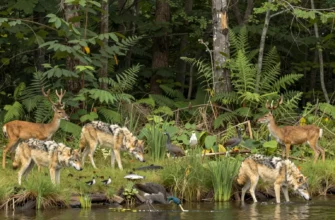
The Glenfeshie estate serves as the flagship for this ambitious vision. For decades, the primary obstacle to forest regeneration in Scotland has been the overpopulation of red deer, which graze young saplings to the ground before they can take root. The Glenfeshie model flipped the script by reducing deer densities to below two per square kilometer, a move that was initially controversial among traditionalists but has yielded undeniable ecological results.
Without the need for expensive and unsightly deer fencing, the natural regeneration of the Caledonian pine forest has exploded across the estate. Thousands of young Scots pine, birch, and rowan are now reclaiming the hillsides, creating a mosaic of habitats that support a far richer array of biodiversity. This success highlights the potential for spontaneous forest expansion when the primary stressor—overgrazing—is managed effectively.
This model proves that the return of the forest does not require planting millions of plastic-guarded trees. Instead, by managing herbivore impacts, the “seed rain” from surviving ancient trees can naturally re-establish the woodland. This creates a more genetically diverse and resilient forest structure than traditional plantations, offering a template for how other Highland estates might transition toward a more ecological future.
Common Myths vs. Realities in British Rewilding
Myth: Rewilding means abandoning the land and letting it become a “messy” wasteland.
Fact: Rewilding is a managed transition toward self-sufficiency. It requires initial high-level expertise and monitoring to ensure that natural processes are successfully restarted and that the land provides essential services like carbon storage and clean water.
Myth: Rewilding will destroy the farming industry and lead to food insecurity.
Fact: Rewilding is most effective on marginal land where traditional farming is often only viable through heavy subsidies. By integrating rewilding with regenerative agriculture, farmers can diversify their income through ecotourism and environmental credits while focusing food production on the most fertile soils.
Myth: Rewilding is only about bringing back wolves and bears.
Fact: While apex predators are part of the long-term ecological theory, the current focus is on “ecosystem engineers” like beavers and restoring missing vegetation layers. Reintroducing large carnivores is not on the immediate agenda for organizations like Rewilding Britain.
The Ecological Mechanics: Restoring Trophic Cascades
To understand the science behind Alastair Driver’s advocacy, one must grasp the concept of trophic cascades. This ecological phenomenon occurs when the addition or removal of a top predator or a keystone species ripples through the entire food web, affecting even the vegetation and soil chemistry. In the UK, our ecosystems are “bottom-heavy,” dominated by herbivores with no natural checks, leading to impoverished landscapes and low biodiversity.
By reintroducing species that perform specific ecological functions, we can trigger these cascades. For example, the presence of a predator doesn’t just reduce prey numbers; it creates an “ecology of fear” that keeps herbivores moving, preventing them from overgrazing a single area. This allows vegetation to recover in patches, creating a diverse structural mosaic that supports insects, birds, and small mammals. Driver argues that we must stop viewing species in isolation and start seeing them as functional components of a working machine.
Beavers: The Ecosystem Engineers of Britain
The beaver is perhaps the most significant success story in the modern British rewilding movement. Once extinct in the UK, their reintroduction—both through official releases and unsanctioned populations—has provided a masterclass in the measurable benefits of reintroducing beavers. These rodents are not just animals; they are hydrological architects that transform the landscape to suit their needs, creating a windfall of benefits for other species and human communities alike.
The dams built by beavers slow the flow of water, which is a vital component in implementing natural flood prevention strategies. During heavy rainfall, these structures reduce peak flow downstream, protecting towns and villages from flooding. Conversely, during droughts, the ponds created by beavers hold water in the landscape, maintaining stream flow and providing a refuge for aquatic life. The ecological impact is profound, with beaver-engineered wetlands supporting significantly higher levels of biodiversity than standard drainage ditches.
Furthermore, these wetlands act as a natural filter for pollutants. As water moves through the complex network of beaver dams and silt, nitrates and phosphates from agricultural runoff are captured, improving water quality. This “nature-based solution” is often far more cost-effective than building multi-million-pound water treatment plants or concrete flood defenses, proving that ecological restoration has a direct, positive impact on human infrastructure.
Pros and Cons of Large-Scale Private Land Ownership
The rise of the “Green Laird” in Scotland has sparked an intense debate about the ethics and efficacy of billionaire-led conservation. While the scale of restoration achieved by individuals like Anders Holch Povlsen is unprecedented, it raises significant questions about community agency and land reform. The following table outlines the primary arguments surrounding this model of land management.
| Pros of Private Large-Scale Rewilding | Cons and Community Concerns |
|---|---|
| Speed of Action: Private owners can bypass bureaucratic delays and implement restoration plans immediately. | Democratic Deficit: Decisions affecting vast areas of land are made by a single individual rather than the local community. |
| Long-term Funding: Billionaires can provide the “patient capital” required for 200-year ecological visions. | Land Prices: Increased demand for “rewilding estates” can drive up land prices, making community buyouts difficult. |
| Ecological Ambition: Private estates like Glenfeshie set high standards for biodiversity and forest regeneration. | Cultural Displacement: Traditional land uses, such as deer stalking, are often central to local identity and employment. |
Economic Resilience Through Nature Recovery
A common critique of rewilding is that it prioritizes “birds over butterflies” over people and their livelihoods. Rewilding Britain vigorously contests this, arguing that nature recovery is a catalyst for economic resilience. The traditional Highland estate model, often reliant on subsidies and a narrow range of sporting activities, is frequently economically fragile. Rewilding offers a path toward a diversified “wild economy” where income is generated through various streams.
This transition involves moving from a high-input, low-output land management system to one that capitalizes on natural capital and ecosystem services. As the world moves toward net-zero targets, the ability of restored peatlands and forests to sequester carbon has become a valuable commodity. By selling carbon credits, landowners can generate income that was previously unavailable, providing a financial incentive to keep the land wild rather than overgrazing it.
Job Creation in the Wild Economy
The shift toward rewilding is already driving the expansion of green jobs in rural areas. While traditional stalking might employ a handful of people on a large estate, a rewilded landscape requires a diverse workforce. We are seeing a transition from gamekeeping to ecological monitoring, where staff are employed to manage habitat restoration, track wildlife populations, and oversee complex carbon-sequestration projects.
Ecotourism is another massive growth area. Modern travelers are increasingly looking for “wild” experiences, leading to a surge in demand for nature-based hospitality. By adopting sustainable land management practices, estates can support a range of businesses, from high-end wildlife photography hides to low-impact glamping sites. This “nature-based tourism” often distributes wealth more broadly across the local community, supporting cafes, transport providers, and local guides, rather than concentrating it within a single estate house.
Key Takeaways: The Future of the UK’s Wild Spaces
- Scale Matters: For rewilding to be truly effective, it must move beyond small reserves and encompass entire landscapes and catchments.
- Keystone Species are Essential: Reintroducing animals like beavers is not a luxury; it is a functional necessity for healthy ecosystems and flood management.
- Economic Diversification: Nature recovery creates more resilient rural economies by shifting focus from subsidies to carbon credits and ecotourism.
- Community Engagement is Critical: To be sustainable, rewilding must work with local people, ensuring they have a stake in the new wild economy.
- Policy Change is Needed: The government must reform agricultural subsidies to reward farmers for public goods like biodiversity and clean water.
In my professional experience, I have found that the most successful rewilding projects are those that embrace a “pragmatic radicalism.” While the vision of a wilder Britain is inspiring, I always advise practitioners that rewilding isn’t about excluding humans or turning back the clock to a pre-human era. Instead, it is about finding our place within a self-sustaining system. I have observed that when we empower farmers to transition toward nature-friendly practices, the results are far more durable than when conservation is forced upon them. The real challenge—and the real opportunity—lies in creating a policy framework where nature recovery is the most profitable choice for a landowner. We need to move past the binary of “farming vs. nature” and recognize that healthy soil and functional ecosystems are the primary assets of any land-based business.
Frequently Asked Questions
Alastair Driver is the Director of Rewilding Britain and a former Head of Conservation at the Environment Agency. He is a leading advocate for large-scale ecological restoration and policy reform to support nature recovery across the UK.
What is the Danish billionaire’s role in Scottish rewilding?
Anders Holch Povlsen, through his company Wildland Ltd, owns over 200,000 acres in Scotland. His role is that of a “Green Laird,” using private capital to fund massive forest regeneration and deer management projects in the Highlands.
Does rewilding mean reintroducing wolves to Britain?
While apex predators are ecologically important, Rewilding Britain currently focuses on immediate goals like beaver reintroduction, forest expansion, and peatland restoration. Reintroducing wolves is not a current priority or proposal.
How does rewilding affect local communities in Scotland?
Rewilding can create new jobs in tourism and ecology, but it also creates tension regarding land ownership and traditional cultural practices. Success depends on involving local communities in the transition and benefits.
What is the difference between traditional conservation and rewilding?
Traditional conservation often focuses on protecting specific species in static habitats, while rewilding focuses on restoring natural processes and allowing ecosystems to become self-sustaining with minimal intervention.
Can small-scale landowners participate in Rewilding Britain’s network?
Yes, the Rewilding Network supports projects of all sizes. Rewilding is not just for billionaires; small-scale landowners can contribute by creating wildlife corridors and adopting nature-first management on their property.