- The Hidden Reality: Why Rewilding Decreases Biodiversity in Specific Contexts
- The Loss of Open-Habitat Species to Forest Encroachment
- Myth vs. Fact: Debunking the Nature Always Knows Best Narrative
- The Agricultural Trade-off: How Rewilding Decreases Food Supply
- Global Food Security and the Land-Sharing vs. Land-Sparing Debate
- Pros and Cons of Large-Scale Ecosystem Transitions
- Unintended Consequences: When Apex Predators and Invasive Species Collide
- The Trophic Cascade Failure: When Nature Doesn’t Rebalance
- The Strategic Playbook: How to Avoid Rewilding Pitfalls
- Key Takeaways for a Balanced Conservation Strategy
- Frequently Asked Questions
The Hidden Reality: Why Rewilding Decreases Biodiversity in Specific Contexts
Rewilding is frequently presented as a universal remedy for the ongoing extinction crisis, yet the reality on the ground is far more nuanced. While the ambition to restore natural processes is noble, a “hands-off” approach can inadvertently trigger a collapse in species variety within ecosystems that have evolved alongside human activity for thousands of years. In these specific environments, rewilding decreases biodiversity by removing the very disturbances that maintain niche habitats for specialized flora and fauna.
The core of the issue lies in the transition from “cultural landscapes”—areas shaped by traditional grazing, hay-cutting, and wood-pasture management—to wilder states; Many of Europe’s most biodiverse regions are not “pristine” wilderness but are products of low-intensity agriculture. When these practices cease, the sudden lack of management allows a few dominant species to outcompete rare specialists, leading to a homogenized landscape that supports fewer total species than the managed land it replaced.
Conservationists must distinguish between restoring ecological function and simply abandoning land. True ecological health requires a mosaic of habitats, and the assumption that nature will automatically return to a high-diversity state without intervention often ignores the fragmented state of modern ecosystems. Without active management or the presence of missing megafauna to replicate human-driven disturbances, rewilding can lead to a biological “dead zone” of dense scrub and low-value secondary forest.
The Loss of Open-Habitat Species to Forest Encroachment
One of the most immediate risks of passive rewilding is the rapid colonization of open ground by opportunistic scrub and pioneer tree species. This process, known as natural forest succession, sounds positive in theory but often results in the total displacement of meadow-dwelling birds, butterflies, and rare wildflowers that require high light levels and low-nutrient soils to thrive.
In regions like the Mediterranean or the UK’s chalk grasslands, the abandonment of traditional grazing leads to a “scrub invasion.” Species such as the Duke of Burgundy butterfly or the Grey Partridge rely on the early-successional stages of vegetation. When these areas are left to rewild without the introduction of large herbivores like bison or wild cattle, the habitat loss for open-ground specialists is near-total within a single decade.
Furthermore, habitat homogenization occurs when a diverse patchwork of fields, hedgerows, and wetlands is replaced by a uniform canopy of birch or willow. This lack of structural diversity means that while the total biomass of the area might increase, the variety of ecological niches is drastically reduced. To maintain high biodiversity, we must recognize that a “messy” human-influenced landscape often provides more opportunities for life than a young, unmanaged forest.
Myth vs. Fact: Debunking the Nature Always Knows Best Narrative
Myth: If humans simply step back and leave land alone, it will eventually return to a “pristine” state teeming with diverse wildlife.
Fact: Abandonment often leads to “passive rewilding,” which in fragmented modern landscapes frequently results in the dominance of a few invasive or generalist species at the expense of rare biodiversity.
Myth: Rewilding is the most efficient way to sequester carbon and protect the planet simultaneously.
Fact: Certain rewilding projects can actually increase net carbon emissions or reduce local biodiversity if they involve draining ancient peatlands or destroying high-nature-value grasslands to plant uniform tree stands;
Myth: Apex predators will always create a “trophic cascade” that fixes the entire ecosystem’s health.
Fact: In small or fenced reserves, apex predators can over-predate vulnerable prey populations or cause significant conflict with local communities, leading to a failure of both conservation and social support.
The Agricultural Trade-off: How Rewilding Decreases Food Supply
The tension between expanding wild spaces and maintaining a stable food supply is one of the most significant challenges of the 21st century. As large-scale rewilding projects take agricultural land out of production, the immediate result is a reduction in local food output. This creates a dangerous paradox: rewilding decreases food supply locally while potentially increasing environmental destruction globally through the “leakage effect.”
When productive farmland in developed nations is rewilded, the demand for food does not vanish. Instead, the production is often offshored to countries with lower environmental standards and higher biodiversity risks. For every hectare of temperate grassland rewilded in Europe, we risk clearing multiple hectares of tropical rainforest in the Amazon to meet the global demand for soy and beef, resulting in a net loss for global biodiversity.
The economic impact on rural communities is equally profound. Traditional farming is often the backbone of local economies; when land is converted to “wilderness,” the loss of agricultural jobs can lead to rural depopulation and the collapse of the social infrastructure necessary for long-term land stewardship. Sustainable conservation must find a way to integrate food security with ecological restoration rather than treating them as mutually exclusive goals.
Global Food Security and the Land-Sharing vs. Land-Sparing Debate
The debate between “land-sparing” (intensive farming on less land to leave more for nature) and “land-sharing” (low-intensity farming across all land) is central to the rewilding conversation. Large-scale rewilding typically follows the land-sparing model, but it often fails to account for the yield gaps that occur when high-quality agricultural land is converted to non-productive wild space.
Small-scale farmers are often the hardest hit by these transitions. In many regions, the economic pressure to rewild comes from subsidies that favor carbon sequestration over food production. This can lead to a loss of food sovereignty for local populations, making them more dependent on volatile global supply chains. To mitigate food production risks, rewilding initiatives should focus on marginal land rather than high-yielding agricultural zones.
Furthermore, agricultural land conversion must be handled with extreme caution to avoid “green grabbing,” where land is taken from local producers for conservation projects that primarily benefit distant stakeholders. A balanced approach involves regenerative farming techniques that maintain biodiversity—such as silvopasture or organic meadow management—ensuring that we do not sacrifice our ability to feed the population in the pursuit of a wilder landscape.
Pros and Cons of Large-Scale Ecosystem Transitions
| Factor | Pros of Rewilding | Cons of Rewilding |
|---|---|---|
| Biodiversity | Restores natural processes and supports large, charismatic megafauna. | Causes the local extinction of open-habitat specialists and meadow species. |
| Carbon Sequestration | Mature forests and wetlands act as significant long-term carbon sinks. | May result in methane release or loss of soil carbon if managed incorrectly. |
| Economic Impact | Creates new opportunities for eco-tourism and nature-based businesses. | Displaces traditional agriculture and undermines local food security. |
| Ecosystem Health | Reduces the need for chemical fertilizers and mechanical intervention. | Can lead to the spread of invasive species and unmanaged disease outbreaks. |
Unintended Consequences: When Apex Predators and Invasive Species Collide
Introducing apex predators or removing human management is often touted as the “reset button” for nature, but ecosystems are rarely that simple. In the absence of careful wildlife management, rewilding can trigger unintended consequences that destabilize the very food webs we are trying to protect. Without the human “buffer,” invasive species often find a foothold in disturbed or unmanaged ground, outcompeting native flora and fauna.
The introduction of predators like wolves or lynx into modern, fragmented landscapes requires vast territories that often do not exist. When these predators are confined to smaller areas, they can decimate local populations of vulnerable prey, such as ground-nesting birds or rare ungulates, who have lost their ancestral anti-predator behaviors. This is not a “natural” balance but an ecological imbalance caused by human-imposed spatial constraints.
Moreover, rewilding areas often become corridors for the spread of non-native invasive species. When we stop active weeding, mowing, or culling, aggressive plants like Japanese Knotweed or pests like the Grey Squirrel can overrun native habitats and cause local extinctions. True restoration requires a “guiding hand” to ensure that the species filling the vacuum are the ones that belong there.
The Trophic Cascade Failure: When Nature Doesn’t Rebalance
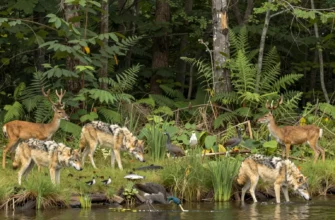
The concept of a trophic cascade—where a top predator regulates the entire ecosystem—is a cornerstone of rewilding theory, but it frequently fails in practice. In many projects, overgrazing by unmanaged populations of herbivores (like deer or wild horses) occurs because the predator-to-prey ratio is off or the landscape is too small to allow for natural migration patterns.
When herbivore populations explode without management, they strip the land of vegetation, leading to soil erosion and the destruction of the understory needed by nesting birds and insects. This is particularly problematic in “passive” rewilding zones where human hunting has been banned but natural predators have not yet returned or are not present in sufficient numbers to control the herd.
Disease transmission is another significant risk. When wild and domestic animals are forced into closer proximity in rewilded agricultural fringes, the risk of cross-species infections increases. Without active wildlife management and health monitoring, a rewilding project can become a reservoir for diseases that threaten both local wildlife and the livestock of neighboring farms, further eroding the social license for conservation.
The Strategic Playbook: How to Avoid Rewilding Pitfalls
Successful rewilding requires a shift from ideological purity to pragmatic, data-driven management. To prevent biodiversity loss and food supply disruptions, conservationists must move away from the “abandonment” model and toward a model of active stewardship. The following strategies are essential for ensuring that rewilding actually achieves its goals.
- Prioritize Marginal Land: Focus rewilding efforts on areas with low agricultural productivity to minimize the impact on global food security.
- Embrace Active Management: Use “proxy” grazing with traditional livestock if wild megafauna are unavailable to maintain the mosaic of habitats required for biodiversity.
- Ensure Community Buy-In: Engage with farmers and local residents early to prevent the social backlash that often sabotages large-scale conservation projects.
- Monitor for Invasives: Implement rigorous protocols to detect and remove non-native species before they outcompete native wildlife in unmanaged zones.
- Establish Ecological Corridors: Connect rewilded areas with existing habitats to allow for the genetic flow and migration of species, preventing “island syndrome.”
Key Takeaways for a Balanced Conservation Strategy
The future of conservation lies in the middle ground between intensive exploitation and total abandonment. Rewilding is a powerful tool, but it must be applied with surgical precision and a deep understanding of local ecological history. To maximize biodiversity while protecting the food supply, we must follow these core principles.
- Biodiversity is not a default: Simply leaving land alone can lead to a net loss of species if it results in the disappearance of unique cultural landscapes.
- Food security is an ecological issue: Offshoring food production to deforested regions is not a win for the environment; we must maintain productive, sustainable agriculture locally.
- Management is often necessary: In a human-dominated world, active intervention is frequently required to mimic the natural processes that have been lost.
- Success is measured by function, not “wildness”: The goal should be resilient, functioning ecosystems that support a high variety of life, regardless of how much human “interference” is involved.
In my professional experience as a landscape ecologist, I have found that the greatest threat to rewilding’s success is the romanticized idea that nature has a “static baseline” we can return to. I always advise my clients and students that nature is a dynamic process, not a museum piece. If we treat rewilding as an ideological abandonment of the land, we fail in our ethical responsibility to the species that depend on human-maintained niches. We must view rewilding as a deliberate management choice—one that requires constant data monitoring and a willingness to intervene when the system drifts toward homogenization or ecological failure. Restoring a landscape is not about walking away; it is about learning to be a different kind of steward, one that balances the needs of the wild with the fundamental human requirement for a stable food system.
Frequently Asked Questions
No. In “cultural landscapes” like meadows or heathlands, rewilding can cause forest encroachment that wipes out specialized species, leading to a net decrease in local biodiversity.
How does rewilding affect the local food supply?
Rewilding often converts productive farmland into wild space, which reduces local yields and can force a reliance on imported food from more environmentally sensitive regions.
Can rewilding cause the spread of invasive species?
Yes. Without active human management or natural competition, aggressive non-native plants and animals can quickly dominate rewilded areas and displace native flora.
What is the difference between passive and active rewilding?
Passive rewilding is the simple abandonment of land, which carries a high risk of biodiversity loss. Active rewilding involves managed restoration, such as species reintroduction and habitat “guiding.”
Is rewilding compatible with traditional farming?
Yes, through high-nature-value farming and regenerative agriculture, it is possible to maintain high biodiversity while still producing food and supporting rural economies.
Why do some scientists argue that rewilding harms biodiversity?
The argument is based on the loss of niche habitats and the fact that a few dominant species often take over when human disturbances like grazing or mowing are removed.