- Finding Your Perfect Match: The Comprehensive Weighted Blanket Size Chart
- Quick Reference for Adults and Teens
- The 10% Rule: What Size Weighted Blanket Should You Actually Get?
- Solving the 155-Pound Dilemma
- Sizing for Kids: Safety Guidelines for Children and Autism Support
- Weight Guide for a 102 lb Child
- Dimension Matters: Why Bed Size and Body Size Are Different
- Choosing a Weighted Blanket for One Person
- Common Sizing Mistakes That Ruin Your Sleep
- How Height Affects Your Selection
- Frequently Asked Questions
Finding Your Perfect Match: The Comprehensive Weighted Blanket Size Chart
Selecting the right weighted blanket is not as simple as picking a comforter for your bed. Because these tools rely on Deep Pressure Stimulation (DPS) to encourage serotonin production and reduce cortisol, the weight must be distributed specifically to your body mass rather than the mattress surface. If the blanket is too light, you miss the neurological benefits; if it is too heavy, you risk physical fatigue or restricted circulation.
| User Body Weight (lbs) | User Body Weight (kg) | Recommended Blanket Weight (lbs) | Recommended Blanket Weight (kg) |
|---|---|---|---|
| 90 – 120 lbs | 40 – 54 kg | 10 lbs | 4.5 kg |
| 121 – 150 lbs | 55 – 68 kg | 15 lbs | 6.8 kg |
| 151 – 180 lbs | 69 – 82 kg | 20 lbs | 9.0 kg |
| 181 – 220 lbs | 83 – 100 kg | 25 lbs | 11.3 kg |
| 221+ lbs | 100+ kg | 30 lbs | 13.6 kg |
Quick Reference for Adults and Teens
The standard industry guideline for adults is the 10% rule, which suggests your blanket should weigh approximately ten percent of your total body weight. This ratio is designed to provide enough pressure to signal the nervous system to switch from a “sympathetic” (fight or flight) state to a “parasympathetic” (rest and digest) state without causing respiratory strain. For teens transitioning into adult sizes, this rule remains the safest baseline for improving sleep hygiene and reducing nightly tossing and turning.
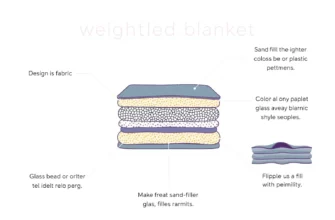
When looking at a weighted blanket size chart lbs vs kg, international users should note that most manufacturers use high-density glass beads or plastic poly-pellets to achieve weight. Glass beads are smaller and denser, meaning a 15-lb glass-filled blanket is often thinner and more breathable than a 15-lb plastic-filled one. If you weigh 150 lbs (approx. 68 kg), a 15-lb blanket is your target. However, if you are between standard manufactured sizes, such as 12 lbs and 15 lbs, always consider your physical strength and any underlying joint issues before rounding up.
The 10% Rule: What Size Weighted Blanket Should You Actually Get?
While the 10% rule serves as a reliable starting point, it is not a rigid law of physics. Personal preference plays a massive role in therapeutic success, and many users find that adding or subtracting 2 pounds from that 10% calculation creates a more personalized “hug” sensation. The goal is to feel grounded, not pinned down, so your ability to move comfortably beneath the weight is a critical safety metric.
If you find yourself exactly between two sizes—for example, weighing 175 pounds where both 15-lb and 20-lb blankets are viable—most occupational therapists suggest going with the heavier option unless you struggle with claustrophobia or mobility issues. A slightly heavier blanket ensures the pressure is felt even when you shift positions. However, if you have respiratory or circulatory conditions, rounding down is the safer, more conservative approach to prevent any restriction of chest expansion during deep sleep.
Solving the 155-Pound Dilemma
The 155-pound individual often faces the most significant decision in the buying process because they sit right at the transition point of the 10% rule. Technically, 10% of 155 lbs is 15.5 lbs, a size that is rarely manufactured. This leaves the user choosing between a 15-lb “light” option and a 20-lb “heavy” option. I recommend the 15-lb blanket for side sleepers, as the weight is concentrated on a smaller surface area (the hips and shoulders), which can lead to pressure point pain if the blanket is too heavy.
For back sleepers weighing 155 lbs, the 20-lb blanket is often more effective. Because the weight is distributed across the entire flat surface of the body, the extra 4.5 lbs above the 10% threshold provides a more profound calming effect. Furthermore, if you are using the blanket primarily for anxiety relief during the day (draped over the lap or shoulders) rather than all-night sleep, the 20-lb option offers the high-intensity input needed for quick nervous system regulation.
Sizing for Kids: Safety Guidelines for Children and Autism Support
When selecting a weighted blanket for a child, safety is the absolute priority. These tools are frequently used to help children with sensory processing disorders or autism spectrum disorder (ASD) find a sense of security and “body awareness.” However, weighted blankets should never be used for infants or toddlers under the age of 2, as they lack the motor skills and strength to move the blanket if it covers their face, posing a significant suffocation risk.
- DO ensure the child can independently remove the blanket from their body without assistance.
- DO consult with an occupational therapist to determine the specific sensory needs of the child.
- DON’T use a weighted blanket as a restraint or for “time-out” purposes.
- DON’T fold the blanket in half to double the weight; this creates dangerous pressure spikes.
- DO check the integrity of the seams regularly to prevent small beads from becoming a choking hazard.
Weight Guide for a 102 lb Child
For children, the calculation differs slightly from adults. The common pediatric recommendation is 10% of body weight plus 1 or 2 pounds. For a 102 lb child, the math suggests a blanket between 11 and 12 lbs. Since blankets are typically sold in 5-lb increments (5, 10, 15), a 10-lb blanket is usually the most appropriate and safest choice. This provides the necessary sensory input without overwhelming a developing musculoskeletal system.
In cases of autism where a child seeks intense tactile input, parents might be tempted to jump to a 15-lb blanket. Resist this urge unless specifically directed by a professional. A 15-lb blanket on a 102-lb frame represents nearly 15% of their body weight, which can cause the child to wake up feeling fatigued or “trapped,” potentially increasing nighttime anxiety rather than soothing it. Stick to the 10-lb range and focus on blankets with a soft minky or sensory-dot fabric to provide additional tactile stimulation.
Dimension Matters: Why Bed Size and Body Size Are Different
A frequent mistake is matching the weighted blanket size to the mattress size (e.g., buying a King-size weighted blanket for a King-size bed). Unlike standard bedding, a weighted blanket should not hang over the edges of the bed. If the weight hangs over the side, gravity will inevitably pull the blanket toward the floor throughout the night, causing you to wake up as you fight to keep it on the bed. This “sliding effect” also concentrates all the weight on the edge of your body rather than distributing it evenly across your torso.
Standard dimensions for weighted blankets are typically smaller than traditional bedding:
- Twin / Individual: Approximately 48 x 72 inches. Ideal for single sleepers on any bed size.
- Full / Queen: Approximately 60 x 80 inches. Covers the top of a Queen mattress without much overhang.
- King: Approximately 80 x 87 inches. Designed for couples, though individual blankets are often preferred.
Choosing a Weighted Blanket for One Person
Even if you sleep on a King-size mattress, I highly recommend choosing a Twin-sized weighted blanket (48×72 inches) if you are the only one using it. A smaller blanket keeps the weight concentrated directly on your body. When the weight is spread over a 60×80 or 80×87 inch surface, much of the “therapeutic poundage” is wasted on the empty space of the mattress beside you, meaning you aren’t actually feeling the full 15 or 20 lbs you paid for.
For those who share a bed, individual blankets are almost always superior to one large shared blanket. Shared blankets often lead to a “tug-of-war” scenario where one person ends up with 30 lbs of pressure while the other has none. Furthermore, weight needs are rarely identical between partners. By using two separate Twin-sized blankets, each person can customize their weight ratio and fabric preference (such as a cooling bamboo cover for a hot sleeper and a fleece cover for a cold sleeper) without disturbing the other.
Common Sizing Mistakes That Ruin Your Sleep
Many people invest in a high-quality weighted blanket only to find it uncomfortable because they overlooked the “physics of sleep.” It is not just about the number on the scale; it is about how that weight interacts with your height, your mattress, and your physical ability to adjust the bedding in the middle of the night. Ignoring the weight-to-surface-area ratio is the fastest way to turn a therapeutic tool into a sleep disruptor.
- Buying for the Bed, Not the Person: Choosing a King size for a single person results in the weight being too thin and ineffective.
- Ignoring Physical Strength: Elderly users or those with arthritis should round down to ensure they can easily pull the blanket up or kick it off.
- Forgetting About Height: A blanket that is too short will leave your feet cold or your chest uncovered, breaking the “pressure chain.”
- Overlooking the “Warmth Factor”: More weight often means more filling, which can trap body heat unless you choose breathable fabrics.
- Neglecting Cover Dimensions: Buying a 15-lb blanket and a separate cover that is 2 inches too large will cause the weighted insert to bunch up in the corners.
How Height Affects Your Selection
While weight is the primary metric, your height determines the length of the blanket required for full-body coverage. For the most effective deep pressure stimulation, the blanket must cover you from your chin to past your feet. If you are over 6 feet tall, a standard 72-inch (6-foot) blanket may feel restrictive, as your toes will likely poke out the bottom or you will be forced to pull the blanket down, leaving your shoulders exposed.
Tall individuals should look for “Large” or “Queen” dimensions (80 inches in length) even if they are only 150 lbs. This ensures that the 15 lbs of weight is distributed over a longer area, providing a consistent “grounding” sensation from the neck to the ankles. The height-to-weight ratio is about coverage; if the blanket is too short, you won’t achieve the full relaxation of the vagus nerve, which is essential for turning off the body’s stress response.
In my professional experience as someone who has worked closely with sensory integration, I cannot overstate the importance of autonomy. While the 10% rule is a fantastic mathematical guide, the ultimate safety test is whether the user can unassistedly remove the blanket in under five seconds. This is why I often advise elderly clients or those with chronic fatigue to start with a 5% or 7% ratio. We are looking for “gentle swaddling,” not “immobilization.” If you feel any tingling in your limbs or find it difficult to take a full, deep breath, the blanket is too heavy, regardless of what the chart says. Always prioritize your body’s feedback over the chart’s numbers.
Frequently Asked Questions
The 15-lb and 20-lb weights are the most popular for adults, typically in a 48×72 inch (Twin) or 60×80 inch (Queen) dimension to fit the average body mass.
Can a weighted blanket be too heavy?
Yes, a blanket that exceeds 12-15% of your body weight can cause respiratory restriction, joint pain, or circulation issues, especially for side sleepers or those with pre-existing medical conditions;
Should I get a Queen size weighted blanket for my Queen bed?
Generally, no. A 60×80 inch Queen weighted blanket is fine, but ensure it does not hang over the sides, or the weight will pull the blanket off the bed during the night.
What size weighted blanket does Reddit recommend?
The consensus across communities like Reddit is to prioritize the individual’s weight over bed size and to look for glass bead fills for a lower profile and better temperature regulation.
How do I choose a weighted blanket size for a child with autism?
Follow the 10% of body weight plus 1-2 lbs rule strictly, ensure the child can move it themselves, and always consult an occupational therapist for personalized sizing.
Is it better to go up or down in weight if I am between sizes?
Go up if you are a healthy back sleeper seeking deep pressure; go down if you are a side sleeper, elderly, or have joint sensitivity to avoid unnecessary physical strain.