- Why a California King Weighted Blanket Changes the Game for Oversized Beds
- Solving the Blanket Tug-of-War in Large Beds
- Sizing it Right: From California King to Alaskan King Weighted Blanket Options
- When Should You Upgrade to an Alaskan King Size?
- The Science of Weight: How Heavy Should Your Cali King Weighted Blanket Be?
- Calculating Weight for Shared Sleeping Spaces
- Spotlight on Quality: What to Look for in a Jollyvogue California King Size Weighted Blanket
- The Importance of Small Pockets and Double Stitching
- Logistics and Care: Handling a Massive Weighted Blanket
- Washing and Drying Without Damaging Your Machine
- Expert Perspective: Professional Perspective on Weighted Bedding Sizing
- Frequently Asked Questions
Why a California King Weighted Blanket Changes the Game for Oversized Beds
California King beds are often misunderstood by those who don’t own them. While most people assume “King” means bigger in every direction, the California King is actually narrower and longer than a standard Eastern King. This unique 72-inch by 84-inch footprint creates a specific challenge when it comes to bedding: standard blankets are frequently too short, leaving your feet exposed or causing the blanket to migrate toward the foot of the bed during the night.
A dedicated weighted blanket designed for these dimensions solves the structural issues of oversized bedding. By adding concentrated weight to a longer surface area, you anchor the fabric in place, preventing that annoying midnight slide. The grounding sensation provided by these blankets works in tandem with the extra legroom of a Cal King, ensuring that even the tallest sleepers remain fully covered from shoulders to toes without the fabric bunching up.
Solving the Blanket Tug-of-War in Large Beds
Sharing a bed of this size usually implies that both partners value their personal space, yet the “blanket thief” phenomenon remains a primary cause of sleep disruption. When using a standard-sized throw on a Cal King mattress, there isn’t enough lateral “give” for two people to move independently. Switching to a blanket with a minimum width of 80 inches ensures that even when one partner rolls over, the other isn’t left in the cold.
Beyond physical coverage, the weight itself acts as a stabilizer for the entire sleep surface. In a large bed, motion transfer can be exaggerated by the sheer amount of mattress real estate. A heavy blanket dampens these vibrations, creating a localized cocoon that absorbs movement. This means if your partner is a restless sleeper, the weighted fill helps isolate their tossing and turning, allowing you to remain undisturbed in your own sleep zone.
Sizing it Right: From California King to Alaskan King Weighted Blanket Options
Selecting the correct dimensions is the first technical hurdle in optimizing your sleep setup. If you choose a blanket that is exactly the size of your mattress, it will likely feel too small because it doesn’t account for the height of your body underneath it. For a California King, you need a blanket that provides enough overhang to stay secure but not so much that the weight of the overhanging fabric pulls the rest of the blanket onto the floor.
| Blanket Category | Standard Dimensions (Inches) | Best Mattress Match | Ideal For |
|---|---|---|---|
| California King Weighted | 80″ x 87″ or 80″ x 90″ | California King (72″x84″) | Tall sleepers and couples needing extra length. |
| Standard King Weighted | 80″ x 80″ or 86″ x 92″ | Eastern King (76″x80″) | Side sleepers who prefer more width than length. |
| Alaskan King Weighted | 108″ x 108″ to 120″ x 120″ | Alaskan King (120″x120″) | Massive family beds and co-sleeping setups. |
When Should You Upgrade to an Alaskan King Size?
The Alaskan King is the behemoth of the bedding world, measuring a staggering 10 feet by 10 feet. If you have moved beyond the California King into this custom territory, a standard “oversized” blanket will look like a postage stamp in the center of your bed. The challenge with an Alaskan King weighted blanket is the weight-to-surface-area ratio; because the fabric covers 100 square feet, the total weight must be significantly higher to provide the same therapeutic pressure.
Managing a 120-inch blanket requires a commitment to logistics. You aren’t just buying a blanket; you are buying a piece of furniture that requires its own maintenance plan. When dealing with blankets of this scale, ensure the fill is made of high-density glass beads rather than plastic pellets. Glass beads take up less volume, allowing a 50-pound Alaskan King blanket to remain relatively thin and breathable rather than becoming a stifling, bulky mountain of polyester.
The Science of Weight: How Heavy Should Your Cali King Weighted Blanket Be?
The “10% of your body weight” rule is a solid starting point for single sleepers using a twin or queen blanket, but it loses accuracy when applied to California King dimensions. Because the weight is distributed over a massive 72×84-inch area, a 15-pound blanket—which might feel heavy on a small bed—will feel surprisingly light on a Cal King. The pressure is spread so thin that the therapeutic “hugging” sensation is diminished.
For couples sharing a bed, the calculation shifts further. You aren’t just looking for 10% of one person’s weight; you are looking for a weight that provides enough downward force to satisfy two people across the entire mattress. Most couples find that a 25lb to 35lb blanket is the “Goldilocks” zone for oversized beds. This weight provides enough resistance to trigger the nervous system’s relaxation response without making it impossible to move your legs or make the bed in the morning.
Calculating Weight for Shared Sleeping Spaces
When two people share a weighted blanket, individual preferences for pressure can vary wildly. If one partner weighs 130 lbs and the other weighs 220 lbs, a 30lb blanket might feel perfect for the larger partner but overwhelming for the smaller one. In these cases, look for blankets with edge-to-edge weight distribution that allows the smaller partner to “opt-out” by pushing a portion of the blanket toward the center or the side.
The physics of a heavy blanket for two also involves the “bridge effect.” If the blanket is too light, it will drape over the two sleepers but leave a gap of cold air in the middle. A heavier fill (30 lbs+) ensures the fabric contours tightly to both bodies, sealing in warmth and maintaining consistent pressure. To ensure maximum comfort, verify that the blanket is at least 80 inches wide to prevent the weight from pulling inward and leaving the outer edges of the bed exposed.
Spotlight on Quality: What to Look for in a Jollyvogue California King Size Weighted Blanket
When evaluating high-end options like a Jollyvogue or similar premium brands, the construction details matter more than the brand name itself. A 30-pound blanket puts immense stress on its seams and fabric. If the internal engineering is poor, the beads will eventually shift to the corners, leaving you with a blanket that is heavy on the edges and empty in the middle.
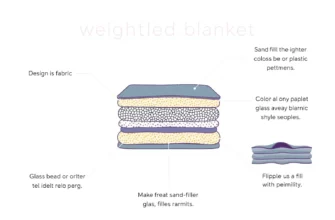
- Precision Quilted Squares: Look for pockets no larger than 4×4 or 5×5 inches to lock beads in place.
- Seven-Layer Construction: High-quality blankets use extra layers of microfiber or cotton to pad the beads and prevent noise.
- Reinforced Loops: Ensure there are at least 8 to 12 tie-down loops to secure the blanket inside a duvet cover.
- Breathable Shell: For a blanket this large, 100% cotton or bamboo is essential to prevent heat trapping.
- Non-Toxic Fill: Confirm the use of lead-free, hypoallergenic glass beads for safety.
The Importance of Small Pockets and Double Stitching
The “leakage” of internal fill is the number one complaint among weighted blanket owners. Because California King blankets are so heavy, the force of gravity constantly pulls the beads against the stitching. Double-stitched perimeters are a mandatory safety feature for any blanket over 20 pounds. This prevents the microscopic glass beads from escaping and creating a gritty mess in your sheets.
Furthermore, the size of the quilted pockets determines the consistency of the pressure. In a high-quality quilted design, the beads are partitioned into hundreds of small cells. This prevents the “pooling” effect where all the weight slides to one side when you move. If you can feel large clumps of beads moving around inside a single pocket, the blanket will likely lose its shape and effectiveness within a few months of use.
Logistics and Care: Handling a Massive Weighted Blanket
Owning a 30lb California King weighted blanket is a luxury for your sleep, but a workout for your chores. You cannot simply toss a 30lb textile into a standard residential top-load washing machine. Doing so can permanently damage the machine’s suspension springs or burn out the motor during the high-speed spin cycle. Understanding the maintenance requirements is vital before you make the investment.
- DO: Use a removable duvet cover. It is much easier to wash a 3 pounds of fabric than 30 pounds of weighted beads.
- DO: Spot clean the inner blanket with a mild detergent and a damp cloth for minor spills.
- DO: Take the blanket to a commercial laundromat with heavy-duty front-load washers if a full wash is necessary.
- DON’T: Use a dryer on high heat. Excessive heat can weaken the fibers and the stitching that holds the beads in place.
- DON’T: Iron your weighted blanket. The heat can melt synthetic internal layers or damage the bead distribution.
Washing and Drying Without Damaging Your Machine
If you must wash the inner weighted core at home, check your washer’s manual for the maximum load capacity. Most standard machines are rated for 20 pounds; a wet 30lb blanket can easily weigh over 50 pounds, which is a recipe for a mechanical breakdown. Air drying is the safest method for the longevity of the blanket, though it may take 24 to 48 hours to fully dry due to the density of the material.
To avoid the hassle of washing the core, prioritize buying a high-thread-count cotton or bamboo duvet cover. These covers protect the inner blanket from oils, sweat, and skin cells. Since the cover is lightweight, you can wash it weekly with your standard bedding, ensuring your sleep environment remains hygienic without the back-breaking labor of moving a massive weighted insert.
Expert Perspective: Professional Perspective on Weighted Bedding Sizing
In my professional experience as a sleep environment consultant, the most common mistake people make with California King beds is buying a blanket that is too narrow. I always advise my clients to prioritize length and “hang” over the exact mattress dimensions. If a weighted blanket does not hang at least 4 to 6 inches over the sides of the mattress, the tension of your body underneath it will cause the edges to lift, creating “air gaps” that let heat escape. For a Cal King, I specifically look for blankets that hit the 86-inch length mark. This ensures that even if you pull the blanket up to your chin, your feet aren’t pulling the bottom edge off the mattress, which is a frequent complaint for those over six feet tall. Additionally, remember that visual aesthetics matter; a blanket that perfectly covers the top but shows the mattress sides can look unfinished. A slight overhang provides that “hotel-luxury” drape while functionally anchoring the weight so it doesn’t shift during the REM cycle.
Frequently Asked Questions
Technically yes, but it won’t be a perfect fit. A standard king is wider and shorter, meaning it may hang off the sides but leave your feet exposed or the mattress top visible at the bottom.
How heavy should a California king weighted blanket be for a couple?
For two adults sharing an oversized bed, a weight between 25 and 35 pounds is ideal. This accounts for the large surface area and ensures both people feel the calming effects of the pressure.
Are there cooling California king size weighted blankets available?
Yes. Look for blankets made with bamboo, Tencel, or 400-thread-count cotton covers. These materials promote airflow and prevent the heavy glass beads from trapping body heat.
Can I wash a 30lb weighted blanket in my home washer?
It is not recommended. Most home washers have a 20lb limit. To protect your appliance, use a duvet cover and only wash the inner blanket at a commercial laundromat with industrial-grade machines.
What is the difference between an Alaskan king and a California king weighted blanket?
An Alaskan king is much larger (120×120 inches) and usually requires custom manufacturing. A California king is a standard oversized size (72×84 inches) that is widely available in retail stores.