- Safety First: Can You Use Weighted Blankets with Asthma?
- Understanding Respiratory Restriction and Weighted Therapy
- How Weighted Blankets Support the Autistic Sensory Experience
- Do Weighted Blankets Help Autistic Children Stay Asleep?
- AAP Recommendations and Essential Safety for Toddlers
- At What Age Are Weighted Blankets Safe for Kids?
- Managing Night Terrors and Bedwetting with Calming Pressure
- Can a Weighted Blanket Help with Bedwetting and Nightmares?
- Glass Beads vs. Quartz Microspheres: Choosing the Right Fill
- Which Material Is Best for Sensory Processing Disorder?
- Beyond Autism: ADD, Dementia, and Developmental Trauma
- Weighted Therapy for Dementia and Trauma Recovery
- Common Mistakes to Avoid When Starting Weighted Therapy
- How to Properly Introduce a Weighted Blanket to a Restless Child
- Frequently Asked Questions
Safety First: Can You Use Weighted Blankets with Asthma?
The intersection of respiratory health and sensory therapy is a delicate balance that requires a nuanced understanding of human physiology. For individuals living with asthma, the primary concern when introducing a weighted blanket is the potential for mechanical restriction of the thoracic cavity. Breathing is not just a function of the lungs; it is a physical process involving the diaphragm and the intercostal muscles that expand the rib cage.
When a person experiences an asthma flare-up, their airways narrow and become inflamed, making it significantly harder to move air in and out. Adding external weight to the chest during these episodes can increase the “work of breathing,” potentially leading to fatigue of the respiratory muscles. It is essential to recognize that while these blankets offer neurological benefits, they must not compromise the physical ease of ventilation.
Understanding Respiratory Restriction and Weighted Therapy
The medical community uses the term “chest wall excursion” to describe the expansion of the chest during inhalation. For a healthy individual, a 15-pound blanket distributed across the body poses no threat to this movement. however, for someone with chronic asthma or compromised lung function, that same weight can act as a restrictive force. Never use a weighted blanket during an active asthma attack or when a patient is experiencing shortness of breath, as the extra pressure can exacerbate the feeling of suffocation and physical distress.
The distinction between therapeutic pressure and restrictive weight lies in the distribution and the individual’s baseline health. A blanket that is too heavy or concentrated specifically over the upper torso can limit the ability of the rib cage to expand fully. To mitigate these risks, consulting with a pulmonologist or a primary care physician is a mandatory first step for anyone with a history of nocturnal asthma or sleep apnea. They can help determine if the benefits of improved sleep outweigh the potential for respiratory load, often suggesting a “test run” with a lighter weight or a smaller lap pad before committing to a full-sized blanket.
How Weighted Blankets Support the Autistic Sensory Experience
For children and adults on the autism spectrum, the world can often feel like a chaotic barrage of sensory information. Weighted blankets serve as a tool for sensory regulation by providing consistent, “grounding” tactile input that helps the brain organize these external signals. This process, known as Deep Pressure Stimulation (DPS), works by shifting the body from a state of high-alert (the sympathetic nervous system) to a state of rest (the parasympathetic nervous system).
The physiological shift triggered by DPS is similar to the effect of a firm hug or swaddling. By stimulating the deep touch receptors located throughout the body, the brain increases the production of serotonin and dopamine while simultaneously lowering cortisol levels. This biochemical change is particularly effective for those with Asperger’s or sensory processing disorders who may struggle with transitions, meltdowns, or overstimulation in their daily environments.
| Feature | Benefit for Autism | Potential Drawback |
|---|---|---|
| Deep Pressure Stimulation | Reduces “fight or flight” response and calms the nervous system. | Some children may find the physical sensation initially overwhelming or “trapping.” |
| Proprioceptive Input | Helps the child understand where their body is in space, reducing restlessness. | If the blanket is too heavy, it can lead to joint strain or muscle fatigue over time. |
| Consistent Tactile Boundary | Provides a clear physical limit that helps with sensory grounding. | Blankets can trap heat, which may cause sensory discomfort for “hot” sleepers. |
Do Weighted Blankets Help Autistic Children Stay Asleep?
Sleep disturbances are remarkably common in the autism community, often stemming from low natural melatonin production or an inability to “shut down” the sensory systems at night. Weighted blankets facilitate better sleep hygiene by providing the proprioceptive input necessary to calm a restless body. Increased serotonin production from the pressure acts as a natural precursor to melatonin, the hormone responsible for regulating sleep-wake cycles.
Beyond the chemistry, the physical weight of the blanket helps minimize the “startle reflex” and involuntary movements that might otherwise wake a child during the lighter stages of sleep. By reducing the frequency of nighttime awakenings, the blanket helps the child reach the deeper, more restorative stages of REM sleep. This improvement in sleep quality often translates to better emotional regulation and cognitive focus during the following day, creating a positive feedback loop for the entire family.
AAP Recommendations and Essential Safety for Toddlers
When it comes to pediatric sleep safety, the American Academy of Pediatrics (AAP) maintains strict guidelines to prevent Sudden Infant Death Syndrome (SIDS) and accidental suffocation. While weighted products have gained popularity, they are not a “one size fits all” solution, especially for the youngest and most vulnerable users. Safety must always take precedence over the desire for a better night’s sleep, particularly when the user cannot communicate distress or move the blanket independently.
The primary concern for toddlers is the risk of entrapment or the inability to reposition themselves if the blanket covers their face. Because a toddler’s muscular strength is still developing, a blanket that seems light to an adult can become a formidable obstacle for a child. The AAP generally advises against any weighted bedding for infants and children under the age of two, emphasizing that a clear, flat sleep surface is the only safe environment for this age group.
- The 10% Rule: Always ensure the blanket weight does not exceed 10% of the child’s total body weight plus one or two pounds.
- Independent Removal: A child must be physically capable of pushing the blanket off their own body and head without any adult assistance.
- No Infant Use: Never use weighted blankets for babies under 24 months old, as their respiratory systems and neck muscles are not strong enough to handle the weight.
- Vital Signs Check: Ensure the blanket does not restrict the visible movement of the child’s chest or abdomen while they are sleeping.
At What Age Are Weighted Blankets Safe for Kids?
The consensus among occupational therapists and pediatricians is that weighted blankets should only be introduced once a child has reached significant developmental milestones. This typically occurs after age two, but the specific age is less important than the child’s physical strength and cognitive ability to manage the blanket. If a child is a “restless sleeper” who frequently gets tangled in sheets, a weighted blanket could actually pose an increased risk of entrapment rather than providing a calming effect.
There is a common myth that the weight of these blankets can “stunt a child’s growth” by putting pressure on the epiphysis (growth plates) of the bones. There is currently no clinical evidence to support this claim; the pressure exerted by a properly sized 5 or 7-pound blanket is far less than the force exerted by gravity during daily activities like running or jumping. The real danger is not skeletal, but respiratory and obstructive. Safety is determined by the child’s ability to maintain an open airway and their capacity to regulate their own body temperature under the extra layers.
Managing Night Terrors and Bedwetting with Calming Pressure
Night terrors and nocturnal enuresis (bedwetting) are often symptoms of a nervous system that is struggling to transition smoothly between different stages of sleep. Unlike nightmares, which occur during REM sleep, night terrors usually happen during the transition from deep non-REM sleep to lighter sleep. This “glitch” in the sleep cycle causes the body to wake up in a state of intense fear while the brain remains partially asleep. Weighted blankets can help bridge these transitions by keeping the body in a more stable, parasympathetic-dominant state.
By providing a constant “anchor” of pressure, the blanket helps prevent the sudden physiological spikes in heart rate and cortisol that precede a night terror. This grounding effect keeps the child (or adult) from reaching the level of arousal required to trigger a full terror episode. For those suffering from chronic sleep disturbances, this can lead to a significant reduction in the frequency and intensity of nocturnal outbursts.
Can a Weighted Blanket Help with Bedwetting and Nightmares?
While a weighted blanket is not a direct cure for bedwetting, it can be a valuable part of a broader management strategy. Bedwetting is frequently linked to deep sleep “arousal disorders,” where the brain does not receive the signal from the bladder because it is either too deeply asleep or in a state of stress. By regulating the parasympathetic nervous system, weighted blankets can help the body maintain better autonomic control, which includes the signals sent between the bladder and the brain during the night.
Furthermore, reducing overall anxiety through deep pressure stimulation can lower the production of antidiuretic hormones that are often disrupted by stress. For adults who experience night terrors or sleepwalking, the weight acts as a physical deterrent to getting out of bed while in a semi-conscious state. The blanket functions as a gentle physical reminder of the sleep environment, helping the individual stay grounded and safe until they are fully awake or return to a deeper sleep stage.
Glass Beads vs. Quartz Microspheres: Choosing the Right Fill
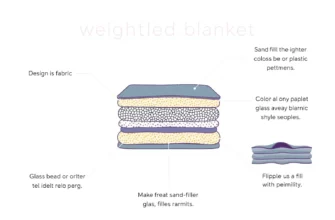
The effectiveness and safety of a weighted blanket are heavily influenced by the materials used inside. For individuals with asthma or sensory processing disorders, the choice of filler is not just about weight, but about heat retention and tactile feedback. Traditional “poly-pellets” (plastic) are often bulky and trap significant amounts of body heat, which can be a major trigger for asthmatics who find that warm, humid environments make breathing more difficult.
Modern high-end blankets typically use glass beads or quartz microspheres. Glass beads are tiny, sand-like grains that offer high density without the bulk of plastic. They are also non-porous and hypoallergenic, making them an excellent choice for those with respiratory sensitivities. Quartz microspheres are even smaller and provide a “fluid-like” feel, allowing the blanket to contour perfectly to the body’s shape without creating pressure points or “clumping” in the corners of the fabric pockets.
| Material | Breathability | Sensory Profile | Best For |
|---|---|---|---|
| Glass Beads | High (runs cool) | Quiet, smooth distribution | Asthmatics and hot sleepers |
| Quartz Microspheres | Medium-High | Silky, fluid-like movement | Severe Sensory Processing Disorder |
| Plastic Poly-Pellets | Low (traps heat) | Bumpy, can be noisy | Budget-conscious users with no allergies |
Which Material Is Best for Sensory Processing Disorder?
When selecting a blanket for SPD, the “noise” of the filler is a frequently overlooked factor. Many children with autism are hypersensitive to sound; the “crinkling” or “shuffling” sound of plastic pellets every time they move can be enough to prevent sleep. Glass beads are virtually silent, providing the necessary weight without the auditory overstimulation. Additionally, glass and quartz have higher thermal conductivity than plastic, meaning they pull heat away from the body rather than trapping it.
The texture of the fill also dictates how well the blanket provides “distributed pressure.” For those who need intense proprioceptive input, quartz microspheres are often preferred because they feel more like a heavy liquid, ensuring that every inch of the body is in contact with the weight. This eliminates “sensory gaps” where the blanket might bridge over a curve in the body, which can be irritating to someone who requires consistent tactile feedback to feel secure.
Beyond Autism: ADD, Dementia, and Developmental Trauma
While weighted blankets were originally popularized within the autism community, their therapeutic applications have expanded to include a wide range of neurological and psychological conditions. The same principles of grounding and nervous system regulation apply to anyone experiencing hyper-arousal or a lack of physical focus. For individuals with ADD or ADHD, the blanket can act as a “sensory filter,” helping them ignore distracting external stimuli and focus on the task of resting.
In the context of developmental trauma or PTSD, weighted therapy offers a sense of safety and containment. Trauma often leaves the nervous system “stuck” in a state of hyper-vigilance, where the brain is constantly scanning for threats. The deep pressure provided by the blanket signals to the amygdala (the brain’s fear center) that the body is safe and protected, allowing the individual to lower their guard and experience true relaxation.
Weighted Therapy for Dementia and Trauma Recovery
In geriatric care, weighted blankets are becoming a staple for managing “sundowning”—the period of increased confusion and agitation that many dementia patients experience in the late afternoon and evening. The grounding weight can reduce the urge to pace or wander, providing a sense of comfort that mimics the presence of a caregiver. By reducing the patient’s anxiety, caregivers often find they can reduce the reliance on sedative medications, which can have dangerous side effects in the elderly.
For those in trauma recovery, the blanket can be used during therapy sessions or at home to manage “flashbacks” or dissociation. By bringing the person’s attention back to the physical sensation of the weight on their limbs, it pulls them out of the mental trauma loop and back into the present moment. This grounding technique is a powerful tool for emotional regulation, providing a non-pharmacological way to manage the intense physical symptoms of anxiety and panic attacks.
Common Mistakes to Avoid When Starting Weighted Therapy
Introducing a weighted blanket is not as simple as throwing it over a bed and hoping for the best. Many users give up on the tool because they encounter “sensory pushback” or physical discomfort due to improper introduction techniques. One of the most common mistakes is choosing a blanket that is too heavy right out of the gate, assuming that “more is better.” In reality, an overly heavy blanket can cause a child to feel trapped or panicked, creating a negative association with the therapy.
Another frequent error is ignoring the maintenance requirements of the blanket. Many weighted blankets are not machine washable, or they require a heavy-duty industrial washer due to their weight. Always check the care label before purchasing, as a blanket that cannot be easily cleaned is a poor choice for children or individuals with allergies and asthma. Keeping the blanket free of dust and pet dander is a critical part of maintaining respiratory health for asthmatic users.
Common Mistakes to Avoid:
- Buying a “one size fits all” weight for the whole family.
- Covering the user’s face or head with the blanket.
- Forcing a child to stay under the blanket if they are resisting or crying.
- Using a weighted blanket as a form of physical restraint or “punishment.”
- Neglecting the breathability of the outer cover (opt for cotton or bamboo).
How to Properly Introduce a Weighted Blanket to a Restless Child
For children who are “sensory defensive,” a sudden 7-pound weight on their chest can feel like an attack. I recommend the “feet-first” approach: start by placing the blanket only over the child’s feet and legs while they are watching TV or reading. This allows them to get used to the sensation in a low-stakes environment where they feel in control. Gradually move the blanket up to their waist, and eventually to their shoulders, over several days or even weeks.
It is also helpful to give the child “ownership” over the blanket. Let them choose the color or the texture of the cover. Ensure they know how to kick the blanket off if they feel too hot or “stuck.” If a child kicks the blanket off in the middle of the night, do not go in and pull it back over them. Their body may be self-regulating, and forcing the weight back on can disrupt their natural sleep rhythm or cause overheating. Let the child dictate the duration of use until they are fully comfortable with the sensation.
In my professional experience working with pediatric sensory disorders, I cannot overstate that the 10% of body weight plus one pound rule is a maximum limit, not a target. For many children, a blanket that is only 7% or 8% of their body weight provides ample therapeutic benefit without the risk of physical exhaustion. I always advise parents that if a child has any history of compromised breathing—whether from asthma, sleep apnea, or even a severe chest cold—the weighted blanket should be removed until they are 100% healthy. These are medical devices, not just bedding, and they require the same level of respect and supervision as any other therapeutic tool.
Frequently Asked Questions
Yes, if the blanket is too heavy or used during a flare-up, it can restrict chest expansion and increase the work of breathing. Always consult a pulmonologist before use.
Are weighted blankets only for people with autism?
No. While they originated in the autism community, they benefit anyone with anxiety, ADHD, PTSD, dementia, or general insomnia by regulating the nervous system.
Do weighted blankets stunt a child’s growth?
This is a myth. There is no evidence that the pressure of a correctly sized blanket affects bone growth or height; the primary concern is safety and suffocation, not growth.
Will a weighted blanket stop my child from bedwetting?
It is not a cure, but by improving sleep quality and reducing stress, it can help the nervous system better regulate bladder signals at night.
What is the AAP’s stance on weighted blankets for toddlers?
The AAP advises against any weighted products for infants and children under two years old due to the high risk of SIDS and accidental suffocation.
How do I know if the blanket is too heavy for my child?
Follow the 10% body weight rule and perform the “independent removal test”: if the child cannot easily push the blanket off their chest and head, it is too heavy.