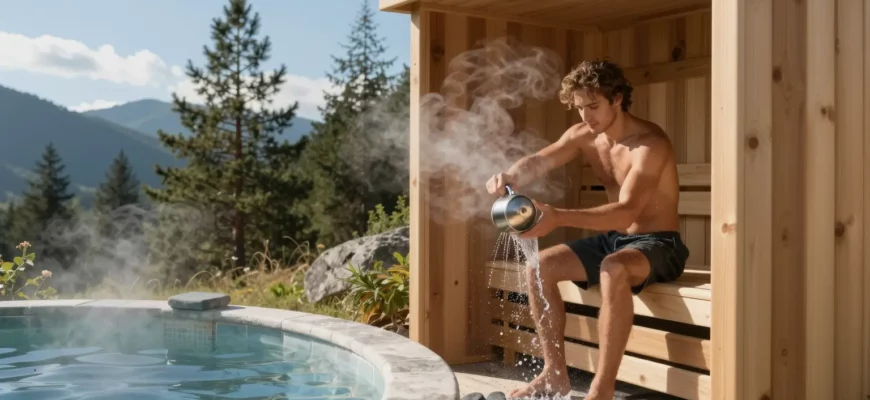
- The Biological Foundation of the Huberman Sauna Cold Plunge Protocol
- How to Reduce Inflammation Through Temperature Contrast
- Comparing the Huberman Routine with the Joe Rogan Sauna Cold Plunge Style
- Finding Your Ideal Minimum Effective Dose
- Step-by-Step Instructions for Your First Contrast Session
- The Importance of Ending on Cold for Fat Loss
- Common Pitfalls and Staying Safe After a Cold Plunge
- Why You Should Never Plunge Alone
- Maximizing Recovery: When to Use the Protocol for Best Results
- Separating Strength Training from Cold Exposure
- Expert Perspective on Hormetic Stress Limits
- Frequently Asked Questions
The Biological Foundation of the Huberman Sauna Cold Plunge Protocol
The science of deliberate temperature stress rests on the principle of hormesis, where the body adapts to brief, controlled bouts of extreme environments. By alternating between intense heat and freezing water, you trigger a systemic biological reset that influences everything from cellular repair to neurotransmitter production.
This specific methodology, popularized by neurobiologist Dr. Andrew Huberman, leverages your body’s innate survival mechanisms to enhance physical and mental performance. Unlike casual spa visits, this protocol is a precision tool designed to optimize the autonomic nervous system.
How to Reduce Inflammation Through Temperature Contrast
One of the primary drivers behind the Huberman approach is the massive release of norepinephrine, a chemical that functions as both a hormone and a neurotransmitter. When you submerge yourself in cold water, levels of norepinephrine in the brain and body can increase by 200% to 300%, staying elevated for several hours. This sustained release is why many practitioners report a significant boost in energy and focus that lasts throughout the entire day.
Furthermore, this temperature contrast acts as a powerful catalyst for improving blood flow. The rapid transition from heat-induced vasodilation to cold-induced vasoconstriction creates a “pumping” effect within the vascular system. This process helps flush metabolic waste from muscle tissue while simultaneously activating brown adipose tissue (BAT). Unlike white fat, brown fat is thermogenic, meaning it burns calories to generate heat, which significantly enhances your metabolic health and baseline caloric burn.
By subjecting the body to this specific type of hormetic stress, you are essentially training your nervous system to remain calm under pressure. This translates to better cortisol management and an increased ability to handle the psychological stressors of daily life.
Comparing the Huberman Routine with the Joe Rogan Sauna Cold Plunge Style
While both protocols utilize the same basic elements of heat and cold, the execution and underlying philosophy differ significantly. Huberman advocates for a clinical, “minimum effective dose” approach to maximize health markers, whereas Rogan focuses on high-intensity endurance to build psychological grit.
The following table breaks down the core differences in their application:
| Feature | Huberman Protocol (Clinical) | Rogan Routine (Intensity-Based) |
|---|---|---|
| Weekly Cold Goal | 11 minutes total (divided sessions) | Varies, often 15-20 minutes total |
| Weekly Heat Goal | 57 minutes total (divided sessions) | Daily or near-daily 20-minute sessions |
| Sauna Temp | 176°F to 210°F | Often 200°F+ (high heat) |
| Primary Focus | Metabolic health and neurotransmitters | Mental toughness and cardiovascular endurance |
Finding Your Ideal Minimum Effective Dose
Huberman’s research suggests that you don’t need to suffer for hours to see results; the key is reaching specific thresholds. For cold water immersion, the 11-minute weekly total is the “magic number” for increasing metabolism and improving insulin sensitivity. Breaking this into three sessions of roughly 3.5 minutes each is often more sustainable for the average person than one long, grueling plunge.
In contrast, those following the Rogan-style routine often prioritize building mental resilience by staying in the heat or cold longer than is strictly necessary for physiological benefits. While this builds “grit,” it also increases the demand on the central nervous system. If you are just starting, prioritize the 57-minute weekly sauna threshold to trigger the release of heat shock proteins, which help repair damaged proteins and protect against neurodegenerative decline.
Step-by-Step Instructions for Your First Contrast Session
Executing a contrast session correctly requires more than just jumping in and out of a pool. To maximize the biological response, you must follow a specific order that respects the body’s thermoregulatory limits.
- Pre-Hydration: Drink at least 16 ounces of water with added electrolytes 30 minutes before starting. Extreme sweating in the sauna rapidly depletes sodium and magnesium.
- The Heat Phase: Enter the sauna (ideally 176°F–200°F) for 15 to 20 minutes. Ensure you are sweating profusely to activate the body’s cooling mechanisms.
- The Transition: Move directly from the sauna to the cold plunge. Do not take a lukewarm shower in between; the sudden shift is what triggers the massive norepinephrine spike.
- The Cold Phase: Submerge yourself up to the neck in water between 45°F and 55°F for 2 to 5 minutes. Focus on deep, rhythmic breathing to override the initial “gasp reflex.”
- The Soberg Principle: Exit the cold and do not immediately enter a hot shower or wrap yourself in a towel. Allow your body to reheat naturally to maximize metabolic benefits.
The Importance of Ending on Cold for Fat Loss
A critical component of the Huberman protocol is the “end on cold” rule, often referred to as the Soberg Principle. If you end your session in the sauna, your body relies on the external environment to cool down. However, if you end in the cold plunge, your body must internally generate heat to return to its core temperature.
This process of natural body warming is where the metabolic magic happens. By forcing your system to warm itself, you trigger shivering for thermogenesis. Shivering releases succinate, a metabolic signal that further activates brown fat thermogenesis. For those focused on fat loss and metabolic optimization, avoiding the post-sauna inflammatory rebound by finishing with a cold exposure is the most effective strategy.
Common Pitfalls and Staying Safe After a Cold Plunge
The physiological demands of extreme temperature shifts are significant. While the benefits are vast, ignoring safety protocols can lead to vasovagal syncope (fainting) or dangerous drops in core temperature.
- Never Plunge Alone: Cold shock can occasionally cause temporary muscle paralysis or disorientation. Always have a spotter or use a shallow tub where you can easily stand up.
- Monitor for the Afterdrop: Your core temperature can continue to drop for 10-15 minutes after exiting the water. If you begin to feel uncontrollable shivering or mental confusion, seek warmth immediately.
- Avoid Hyperventilation: Rapid, shallow breathing in the cold can lead to respiratory alkalosis. Practice box breathing (4 seconds in, 4 seconds out) to maintain CO2 balance.
- Hydration is Non-Negotiable: Sauna sessions can result in the loss of up to 2 liters of fluid per hour. Replenish with 2:1 potassium-to-sodium ratios to prevent heart palpitations.
Why You Should Never Plunge Alone
Even experienced athletes can succumb to the “afterdrop effect,” where cold blood from the skin and limbs returns to the heart and brain once you begin to warm up. This can lead to dizziness after sauna sessions or even a sudden loss of consciousness. Listening to your body is more important than hitting a specific time on a stopwatch.
If you feel lightheaded, immediately sit down on the floor rather than trying to walk to a locker room. Ensuring a safe water temperature (start at 55°F-60°F) is much more productive for long-term consistency than trying to endure 35°F water and risking a cardiac event.
Maximizing Recovery: When to Use the Protocol for Best Results
The timing of your heat and cold exposure can either amplify or negate your hard work in the gym. Understanding the interference effect is vital for anyone pursuing hypertrophy (muscle growth).
Separating Strength Training from Cold Exposure
While a cold plunge feels incredible after a heavy lifting session, it may actually blunt your gains. Hypertrophy requires a certain level of inflammation to signal the body to repair and grow muscle fibers. Cold water immersion is so effective at reducing inflammation that it can cancel out the muscle-building signals if done within 4 hours of resistance training.
If your goal is athletic performance and muscle recovery, wait at least 6 to 8 hours after lifting before doing a cold plunge. Conversely, using the sauna immediately after a workout is highly beneficial. The heat increases blood flow to the muscles, delivering nutrients and enhancing the growth hormone response, which can be boosted by up to 16-fold with specific heat protocols.
Expert Perspective on Hormetic Stress Limits
In my professional experience, the most common mistake I see is the “more is better” fallacy. I always advise clients to treat temperature exposure like a pharmaceutical grade stimulus. You are looking for the minimum dose required to trigger a biological adaptation, not trying to win a contest of suffering. If you notice your resting heart rate increasing over several days or your heart rate variability (HRV) dropping significantly, you are likely overtaxing your nervous system. The goal is to exit the cold feeling invigorated and “bright,” not exhausted and shivering for the next three hours. True mastery of this protocol lies in the subtle art of progressive overload—slowly lowering the temperature or increasing the duration only when the previous level no longer elicits a stress response.
Frequently Asked Questions
Huberman recommends a total of 11 minutes per week. This is typically split into 2 to 4 sessions, each lasting between 2 and 5 minutes depending on the water temperature and your individual tolerance.
Is it better to do the sauna or the cold plunge first?
For metabolic benefits, always start with the sauna and end with the cold plunge. This follows the Soberg Principle, forcing your body to spend energy reheating itself naturally, which activates brown fat and increases caloric burn.
What is the ideal temperature for a Huberman-style sauna session?
The clinical literature cited by Huberman suggests a range between 176°F and 212°F (80°C–100°C). Staying within this range for 57 minutes total per week provides the most significant cardiovascular and longevity benefits.
Can I do the Joe Rogan sauna routine every day?
While possible, daily 20-minute sessions at 200°F+ are extremely taxing. You must prioritize electrolyte replenishment and monitor for signs of central nervous system fatigue to avoid burnout or dehydration.
Does cold plunging after a workout stop muscle growth?
Yes, if done too soon. You should avoid cold water immersion for at least 4 hours following hypertrophy-focused strength training, as it suppresses the inflammatory pathways necessary for muscle fiber adaptation.
What are the main benefits of the Huberman sauna cold plunge protocol?
The primary benefits include enhanced mood via dopamine and norepinephrine, improved metabolic rate, better stress resilience, reduced systemic inflammation, and improved cardiovascular health through heat shock protein activation.