- How to Size a Weighted Blanket Using the 10% Rule
- Calculating the Ideal Weight for Adults
- Quick Reference: Weighted Blanket Weight Chart
- How Should a Weighted Blanket Fit Your Bed?
- Sizing a Weighted Blanket for a King Bed vs; Queen
- How to Pick the Right Dimensions for Children and Seniors
- Safety Guidelines for Kids and Toddlers
- Common Mistakes to Avoid When Choosing Your Size
- How to Tell if Your Weighted Blanket is the Wrong Size
- Signs the Blanket is Too Heavy
- Final Checklist: How to Decide What Size to Buy Today
- Frequently Asked Questions
How to Size a Weighted Blanket Using the 10% Rule
Finding the perfect weighted blanket is more of a science than a styling choice. Unlike a standard duvet, the effectiveness of these therapeutic tools relies entirely on the physics of pressure distribution against your specific body mass.
The golden standard for selecting the right weight is the 10% rule. This guideline suggests that for the most effective experience, your blanket should weigh approximately one-tenth of your total body weight plus or minus a pound or two depending on your comfort threshold.
Calculating the Ideal Weight for Adults
When you begin to determine the correct mass for your needs, start with your current weight as the primary metric. If you weigh 150 pounds, a 15-pound blanket is your baseline; if you weigh 200 pounds, a 20-pound model is usually the sweet spot for achieving comfortable pressure without feeling restricted.
Personal preference plays a significant role in how you calculate weighted blanket size for your specific situation. Some users prefer a “light” hug, while others require a deeper, more grounding sensation to quiet a restless nervous system. If you find yourself positioned between two standard commercial sizes—for example, if you weigh 165 pounds and must choose between a 15-pound and a 20-pound blanket—it is generally recommended to round up to the heavier option unless you have joint sensitivities or respiratory concerns.
The goal is to achieve a consistent body weight ratio that triggers the release of serotonin and melatonin. This biological response is often referred to as deep touch pressure, and it only occurs when the blanket is heavy enough to provide a gentle “cocoon” effect without making it difficult to change positions during the night.
Quick Reference: Weighted Blanket Weight Chart
Use the following data to narrow down the specific weight range that aligns with your physical profile and desired intensity of pressure.
| User Body Weight (lbs) | Recommended Blanket Weight (lbs) | Pressure Intensity Level |
|---|---|---|
| 90 – 120 lbs | 10 lbs | Medium to Deep |
| 130 – 160 lbs | 15 lbs | Standard Therapeutic |
| 170 – 210 lbs | 20 lbs | Deep Pressure |
| 220 – 250 lbs | 25 lbs | Heavy Grounding |
| 260+ lbs | 30 lbs | Maximum Intensity |
How Should a Weighted Blanket Fit Your Bed?
One of the most frequent errors shoppers make is trying to match their weighted blanket to the dimensions of their mattress. This is counterintuitive because a weighted blanket serves a functional purpose for the body, not an aesthetic purpose for the furniture.
Standard comforters are designed to hang over the edges of the bed for visual appeal. However, if a weighted blanket hangs over the side, gravity will inevitably pull the weight toward the floor, causing the blanket to slide off in the middle of the night or create an uneven, uncomfortable pull on your limbs.
Sizing a Weighted Blanket for a King Bed vs; Queen
When you are sizing a weighted blanket for a king bed, you must decide if the blanket is for an individual sleeper or a couple. A standard King mattress is 76 by 80 inches, but a weighted blanket for a single person on that bed should typically be around 48 by 72 inches or 60 by 80 inches. This ensures the weight remains concentrated entirely on top of the mattress surface.
For couples sharing a bed, the math changes significantly. If two people of vastly different weights share one large blanket, the person who weighs less may find the pressure overwhelming, while the heavier individual may not feel enough. In many cases, buying two separate twin-sized weighted blankets is more effective than one large King-size version. This allows for individual weight customization and prevents a “tug-of-war” over the heavy material.
If you insist on a shared option, look for “Couples Size” blankets which usually measure 80 by 87 inches. Just ensure your mattress coverage is centered; the blanket should cover the top flat surface of the bed and stop exactly at the edges to prevent the dreaded “overhang slide.”
How to Pick the Right Dimensions for Children and Seniors
Safety is the absolute priority when selecting a blanket for more vulnerable demographics. The standard 10% rule still applies, but the margins for error are much smaller. For children and the elderly, the ability to move the blanket independently is the primary safety metric.
A child or senior must have enough physical strength to remove the blanket from their face or body without assistance. If the user has limited mobility or weakened grip strength, a weighted blanket may pose a safety risk rather than a benefit.
Safety Guidelines for Kids and Toddlers
When figuring out what weighted blanket you need for a child, never use one for an infant or a child under the age of two. Their respiratory systems and muscle strength are not developed enough to handle the concentrated pressure. For children over two, the weight should be strictly 10% of their body weight plus one pound.
Check the dimensions carefully; a child’s blanket should be proportional to their height. If the blanket is too long, the weight will be distributed away from their body, reducing the calming effect. Always consult with a pediatrician or occupational therapist before introducing a weighted product to a child’s sleep routine, especially for those with sensory processing disorders or ADHD.
Common Mistakes to Avoid When Choosing Your Size
Even with a chart in hand, it is easy to make a choice that leads to a return. Avoiding these common pitfalls will save you time and ensure a better night’s rest.
- Matching Mattress Sizes: Do not buy a Queen size blanket just because you have a Queen bed. Focus on your body dimensions and weight instead.
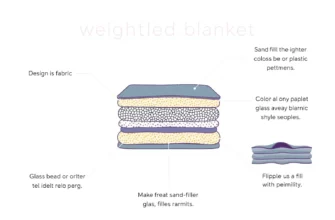
- Ignoring the Fill Material: Glass beads are much denser than plastic pellets. A 20-pound glass bead blanket will be significantly thinner and lower-profile than a 20-pound plastic pellet version, which can feel bulky and hot.
- Overestimating Your Pressure Tolerance: More weight does not always mean more relaxation. Going too heavy can lead to joint pain or a feeling of claustrophobia.
- Neglecting the Cover: A weighted blanket is difficult to wash. Ensure you choose a size that fits standard duvet covers, or buy a blanket with a removable, breathable fabric cover.
How to Tell if Your Weighted Blanket is the Wrong Size
You will usually know within the first two or three nights if you have made the right choice. Pay attention to how your body feels upon waking. A perfect fit should leave you feeling refreshed and grounded, not stiff or exhausted.
If you find yourself constantly reaching down to pull the blanket back up from the floor, the dimensions are likely too large for your mattress. Conversely, if you feel like you can’t get full body coverage from your shoulders to your toes, the blanket is too short.
Signs the Blanket is Too Heavy
It is a common misconception that “heavier is better.” If you experience any of the following, you should likely trade your blanket in for a lighter model:
- Difficulty taking deep breaths or a feeling of weight on your chest that causes anxiety.
- Waking up with soreness in the hips, knees, or ankles due to the constant downward pressure on your joints.
- Extreme overheating; even with breathable fabric, a blanket that is too heavy for your frame can trap excessive body heat.
To properly test your blanket, try using it for short 20-minute intervals while relaxing on the couch before committing to a full eight hours of sleep. This helps your nervous system acclimate to the new stimulus.
Final Checklist: How to Decide What Size to Buy Today
Before you hit the checkout button, run through this final list to ensure you have accounted for all variables.
- Step 1: Confirm your current body weight and calculate the 10% baseline.
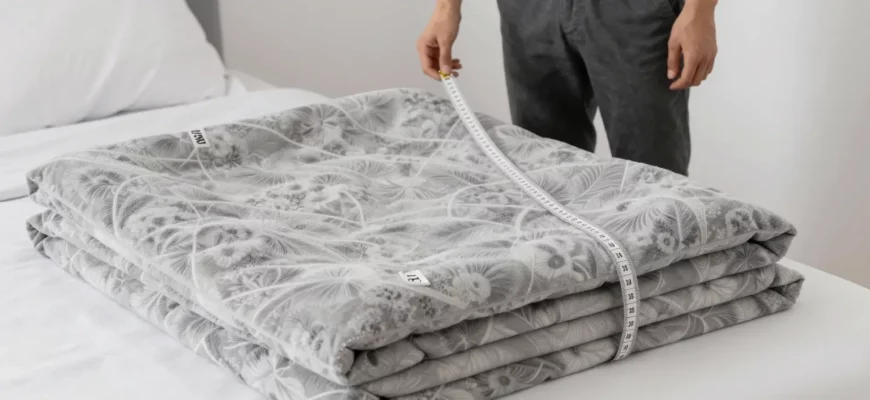
- Step 2: Measure the flat surface of your mattress (width and length) and ensure the blanket dimensions are smaller than the mattress top.
- Step 3: Decide on filler material; choose micro-glass beads for a cooler, less bulky feel.
- Step 4: If buying for a child, confirm they meet the age and weight minimums and can move the blanket freely.
- Step 5: Check the return policy. Most reputable brands offer a “sleep trial” because they know it takes time for the body to adjust to deep touch pressure.
In my professional experience as a sleep specialist, I’ve seen that users often treat a weighted blanket as bedding when they should treat it as a clinical tool. We focus heavily on proprioceptive input—the way your joints and muscles send signals to your brain about where your body is in space. If a blanket is too wide and hangs off the bed, that input becomes “noisy” and inconsistent. I always advise my clients to prioritize body contact over bed aesthetics. A smaller, heavier blanket that stays perfectly centered on your torso provides a much cleaner neurological signal than a massive King-sized blanket that is constantly shifting. Think of it as a targeted therapy, not a decorative throw.
Frequently Asked Questions
It is generally better to use two individual blankets. Sharing leads to uneven weight distribution, and unless both partners are the same weight, the pressure will not be therapeutic for both people.
What if I am between two weight options?
If you are between sizes, round up for more intense grounding or round down if you have physical mobility issues, joint pain, or prefer a lighter touch.
Does the size of the blanket change based on the filler?
Yes, in terms of bulk. Glass beads are much smaller and denser, resulting in a thinner blanket. Plastic pellets are larger and require more layers of fabric, making the blanket feel much thicker and puffier.
Is a Queen size weighted blanket the same size as a Queen mattress?
No. A Queen weighted blanket is usually 60×80 inches, which fits the top of the mattress exactly. A standard Queen comforter is much larger (around 90×90) to allow for overhang.
How do I know if a weighted blanket is safe for my child?
The child must be at least 2 years old, weigh at least 30 pounds, and have the cognitive and physical ability to remove the blanket without help. Always consult a pediatrician first.