- How Rewilding Helps Climate Change: Nature’s Most Potent Carbon Tool
- The Science of Carbon Sequestration in Wild Landscapes
- Restoring the Web of Life: How Rewilding Increases Biodiversity
- The Role of Ecosystem Engineers and Trophic Cascades
- Common Misconceptions: Is Rewilding Actually a Good Idea?
- Natural Disaster Prevention: Does Rewilding Work in Practice?
- Natural Flood Management and Healthy Riparian Zones
- The Human Element: How Rewilding Affects Farmers and Communities
- Finding Common Ground Between Agriculture and Nature
- Global Perspectives: Could Rewilding Help North American Habitats?
- Why Urban Rewilding is Good for Modern Cities
- Expert Perspective: Rewilding Strategies
- Frequently Asked Questions
How Rewilding Helps Climate Change: Nature’s Most Potent Carbon Tool
Rewilding represents a fundamental shift in how we approach environmental stewardship‚ moving away from the rigid‚ human-centric management of “nature reserves” toward the restoration of self-sustaining ecosystems. By allowing natural processes to take the lead‚ we unlock the planet’s inherent ability to regulate its own atmosphere‚ creating a resilient buffer against a warming world.
Unlike traditional conservation‚ which often focuses on preserving a specific snapshot in time‚ rewilding prioritizes the return of functional ecosystems that can adapt to changing conditions. This dynamic approach ensures that landscapes are not just static museum pieces but active participants in the global carbon cycle‚ drawing down greenhouse gases with unparalleled efficiency.
The Science of Carbon Sequestration in Wild Landscapes
To understand how rewilding mitigates climate change‚ we must look beneath the surface at the complex interplay between vegetation‚ soil‚ and microbial life. While industrial tree planting projects often focus on fast-growing monocultures‚ naturally regenerated forests store significantly more carbon over the long term because they develop complex root systems and fungal networks that stabilize organic matter in the soil.
Peatlands‚ often overlooked in climate discussions‚ are perhaps the most critical natural carbon sinks on Earth. When we rewild these waterlogged landscapes by blocking man-made drainage ditches‚ we prevent the oxidation of ancient organic matter‚ effectively locking away billions of tonnes of carbon that would otherwise escape into the atmosphere. A healthy‚ wet peatland is a permanent vault‚ whereas a degraded one is a constant source of emissions.
Diverse‚ wild forests outperform commercial timber plantations because they possess a multi-layered structure. From the mosses on the floor to the high canopy‚ every niche is filled with life that processes carbon. Research indicates that naturally occurring forests can store up to 40 times more carbon than monoculture plantations‚ primarily because they are more resistant to pests‚ diseases‚ and extreme weather events that cause massive die-offs in simplified systems.
Restoring the Web of Life: How Rewilding Increases Biodiversity
Biodiversity is not just a list of species; it is a complex web of interactions that keeps the planet’s life-support systems functioning. Rewilding addresses the biodiversity crisis by restoring the missing links in this web‚ particularly the “top-down” influences that predators and large herbivores exert on their environment.
The concept of trophic cascades illustrates how the presence of a single species can transform an entire landscape. When we reintroduce missing animals‚ we trigger a biological chain reaction that creates new habitats‚ increases nutrient cycling‚ and provides opportunities for thousands of other organisms to thrive. This is how rewilding helps biodiversity—by rebuilding the machinery of life rather than just protecting the individual parts.
The Role of Ecosystem Engineers and Trophic Cascades
Large mammals‚ often referred to as ecosystem engineers‚ play a disproportionate role in shaping their surroundings. For instance‚ the introduction of herbivores like wild horses or bison prevents any single plant species from dominating the landscape. Their grazing‚ trampling‚ and wallowing create a “mosaic” of habitats—patches of thicket‚ open grassland‚ and bare earth—which allows a much wider variety of insects‚ birds‚ and small mammals to coexist in the same area.
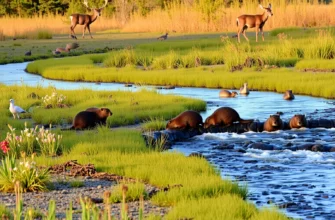
Beavers are perhaps the most famous of these engineers. By building dams‚ they transform simple‚ fast-flowing streams into complex wetland systems. These ponds filter pollutants‚ recharge groundwater‚ and provide essential breeding grounds for amphibians and fish. The presence of keystone species roles like the beaver creates a ripple effect that boosts local biomass and genetic diversity far beyond the immediate vicinity of their dams.
The influence of George Monbiot has been pivotal in shifting the public consciousness toward these “wilder” landscapes. He argues that we have become accustomed to a “shifted baseline‚” where we accept depleted‚ sheep-shorn hills as natural. Rewilding challenges this by showing that ecological abundance is the natural state of the world‚ and that by stepping back‚ we allow nature to return to a state of vibrant‚ self-regulating equilibrium.
Common Misconceptions: Is Rewilding Actually a Good Idea?
Despite its proven benefits‚ rewilding often faces skepticism from those who view it as a threat to traditional land management or human safety. It is essential to distinguish between the reality of ecological restoration and the myths that surround it.
Myth: Rewilding means human abandonment of the land and the loss of all management.
Fact: Most rewilding projects require intensive human intervention in the initial stages‚ such as removing redundant dams‚ thinning over-planted forests‚ or reintroducing species‚ before the system becomes self-sustaining.
Myth: Rewilding is “anti-farmer” and threatens food security.
Fact: Rewilding often targets marginal land that is economically unviable for intensive farming. By restoring soil health and supporting pollinators‚ these projects actually provide essential “ecosystem services” that make surrounding agricultural land more productive.
Myth: Predators reintroduced through rewilding are a major danger to people.
Fact: Successful rewilding programs focus on coexistence strategies and ecological balance. In many European countries‚ wolves and lynx have returned naturally‚ and data shows that with proper management‚ conflicts with humans remain extremely rare.
Natural Disaster Prevention: Does Rewilding Work in Practice?
As the climate changes‚ we are seeing an increase in the frequency and intensity of floods‚ droughts‚ and wildfires. Traditional engineering solutions‚ such as concrete flood walls‚ are often brittle and expensive to maintain. Rewilding offers a “soft” alternative by using nature’s own defenses to absorb the impact of extreme weather.
Healthy ecosystems act as a biological buffer. A wild landscape with diverse vegetation and healthy soils functions like a giant sponge‚ soaking up excess rainfall and releasing it slowly over time. This natural regulation is far more effective and cost-efficient than artificial systems that often just move the problem further downstream.
Natural Flood Management and Healthy Riparian Zones
One of the most effective ways how rewilding prevents natural disasters is through the restoration of riparian zones—the areas bordering rivers and streams. By allowing rivers to meander and reconnect with their natural floodplains‚ we drastically reduce the peak flow of water during heavy storms‚ protecting downstream towns and cities from devastating floods.
Beavers contribute to mitigating flood risk naturally by creating series of leaky dams. These structures don’t stop the water entirely; instead‚ they slow it down. During a storm‚ the dams hold back thousands of cubic meters of water‚ lowering the “flood pulse” and preventing the sudden surges that cause property damage. During dry spells‚ these same ponds release water slowly‚ ensuring that streams don’t dry up and providing a lifeline for wildlife.
Furthermore‚ wilder landscapes are more resilient to fire. While monoculture pine plantations can act as tinderboxes‚ a diverse mosaic of deciduous trees‚ wetlands‚ and grazed clearings creates natural firebreaks. This structural diversity prevents the rapid‚ unstoppable spread of crown fires‚ making the landscape much easier for emergency services to manage during heatwaves.
The Human Element: How Rewilding Affects Farmers and Communities
The transition to wilder landscapes is not without friction. For centuries‚ rural communities have been defined by their relationship with the land‚ often through intensive agriculture or forestry. Acknowledging these cultural and economic ties is vital for the long-term success of any rewilding initiative.
| Pros of Rewilding for Communities | Cons and Challenges for Land Managers |
|---|---|
| New economic opportunities through eco-tourism and wildlife photography. | Potential for livestock predation by reintroduced species. |
| Access to “green subsidies” for carbon sequestration and public goods. | Concerns over the loss of traditional rural heritage and identity. |
| Improved water quality and air filtration for local residents. | Increased land prices making it harder for young farmers to enter the industry. |
| Enhanced psychological well-being and recreational space. | Need for long-term funding beyond initial project cycles. |
Finding Common Ground Between Agriculture and Nature
The debate is often framed as “for or against rewilding‚” but the most successful projects usually find a middle path. Regenerative grazing is a prime example of this compromise. By using cattle or pigs as proxies for extinct wild herbivores‚ farmers can maintain productive herds while simultaneously creating the disturbance patterns that biodiversity needs to thrive.
This approach answers the question of how does rewilding affect farmers by turning them into “stewards of the wild.” Instead of fighting against nature with chemicals and heavy machinery‚ land managers are increasingly rewarded for the carbon they store and the species they protect. This shift from commodity production to “public goods” production offers a viable economic future for many rural areas that are currently struggling under traditional agricultural models.
Global Perspectives: Could Rewilding Help North American Habitats?
While much of the modern rewilding movement gained momentum in Europe‚ the principles are equally applicable to North America. From the vast Great Plains to the Appalachian Mountains‚ there are immense opportunities to restore ecological equilibrium on a continental scale. The return of the American Bison to tribal lands is a powerful example of how ecological restoration can also serve as a tool for social and cultural healing.
In the American West‚ rewilding focuses on habitat connectivity. Wildlife corridors—strips of protected land that allow animals to migrate safely between larger wilderness areas—are essential for maintaining genetic health. Without these links‚ populations become isolated and vulnerable to extinction. By removing obsolete fencing and constructing wildlife overpasses‚ we allow nature to regulate itself over vast distances.
Why Urban Rewilding is Good for Modern Cities
Rewilding is not limited to the remote wilderness; it has a vital role to play in our urban centers; Urban rewilding involves bringing nature back into the places where most people live‚ from “pocket forests” in New York to “wildflower verges” in London. These small-scale interventions have a massive impact on the quality of life for city dwellers.
One of the primary reasons why urban rewilding is good for cities is its ability to combat the urban heat island effect. Concrete and asphalt soak up heat‚ making cities several degrees warmer than the surrounding countryside. By increasing canopy cover and replacing paved surfaces with permeable vegetation‚ we can significantly lower city temperatures during heatwaves‚ reducing the need for energy-intensive air conditioning.
Is rewilding effective in a city? Absolutely. Beyond the physical benefits‚ the presence of wild spaces has been clinically proven to reduce stress‚ anxiety‚ and depression in urban populations. When we allow a little bit of “chaos” back into our parks and gardens—letting the grass grow long or planting native shrubs—we create a sanctuary for both people and pollinators‚ proving that rewilding is a universal tool for a healthier planet.
Rewilding is one of the few environmental strategies that addresses the climate crisis and the biodiversity crisis simultaneously; By trusting in nature’s ability to heal itself‚ we can create a more resilient and vibrant world for future generations.
- Maximum Carbon Storage: Wild ecosystems sequester carbon more reliably and for longer periods than industrial plantations.
- Enhanced Biodiversity: Reintroducing keystone species restores the trophic cascades necessary for a functioning food web.
- Natural Flood Protection: Restored wetlands and beaver-engineered river systems slow the flow of water and protect communities.
- Climate Resilience: Diverse landscapes are better equipped to survive wildfires‚ pests‚ and extreme temperature fluctuations.
- Economic Diversification: Rewilding creates new revenue streams in rural areas through eco-tourism and environmental subsidies.
- Improved Human Health: Access to wilder spaces reduces urban heat and provides significant mental health benefits.
- Self-Regulating Systems: Successful rewilding leads to an ecological equilibrium that requires minimal human maintenance over time.
Expert Perspective: Rewilding Strategies
In my professional experience as a conservation biologist‚ I have observed that the most common mistake in rewilding is the belief that it is a “hands-off” approach from day one. I always advise practitioners that rewilding is a hands-on kickstart to a self-sustaining system. We are essentially repairing a broken machine; you have to fix the gears before you can let it run on its own. Success should never be measured merely by the number of species present‚ but by ecological resilience—the ability of the landscape to absorb a shock‚ such as a drought or a flood‚ without collapsing. We must move away from counting individual animals and start measuring functional outcomes like soil organic matter and water infiltration rates.
Frequently Asked Questions
Yes‚ rewilding almost always requires initial human intervention to remove man-made obstacles such as dams‚ fences‚ or invasive species‚ and to reintroduce missing keystone animals before the ecosystem can become self-regulating.
How does rewilding help biodiversity in depleted areas?
Rewilding restores biodiversity by re-establishing ecological niches and food chain links. When keystone species return‚ they create the structural diversity in habitats that allows hundreds of other plants and animals to recolonize the area.
What are the main benefits of rewilding according to George Monbiot?
Monbiot emphasizes the restoration of trophic cascades and the psychological “wilding” of the human spirit‚ arguing that rewilding offers a vision of hope and abundance that traditional‚ “defensive” conservation lacks.
How is rewilding an example of ecological equilibrium?
Rewilding aims to reach a state where natural processes like predation‚ decomposition‚ and succession balance each other out‚ creating a stable system that manages itself without constant human interference or chemical inputs.
Does rewilding work for carbon capture?
Wild ecosystems are highly efficient and stable carbon sinks. Because they have greater species diversity and healthier soils‚ they are less likely to release their stored carbon due to disease or fire compared to commercial timber forests.
Why is rewilding sometimes controversial for farmers?
Controversy often stems from concerns over land-use changes‚ potential livestock losses to predators‚ and the fear that traditional rural identities and food production methods are being devalued in favor of environmental goals.