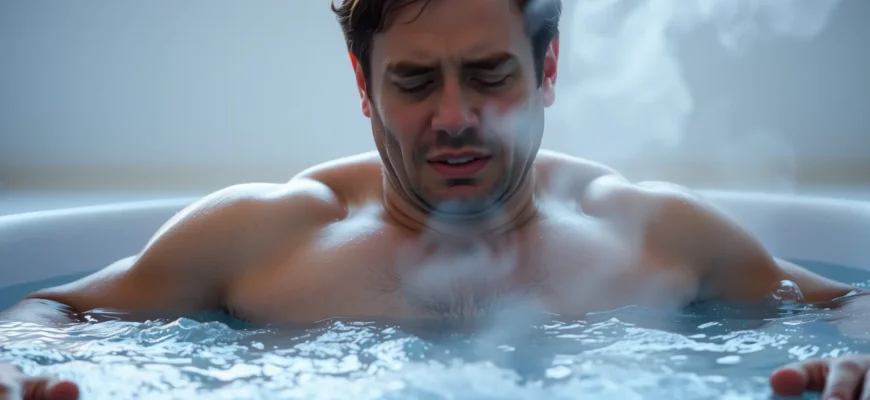
- Why do cold plunges get easier after the first few sessions?
- The 30-second threshold: Why the start is the hardest part
- The biology of habituation: How your body stops panicking
- Building brown fat for better heat production
- Vagus nerve health and the relaxation response
- The Cold Plunge Adaptation Timeline
- It’s a mental game: Training your brain to embrace the chill
- Overcoming the anticipatory anxiety
- Common mistakes that make cold plunging harder than it needs to be
- Practical strategies to make your next plunge feel easier
- The power of the long exhale
- Using movement to warm up safely
- Frequently Asked Questions
Why do cold plunges get easier after the first few sessions?
The initial shock of freezing water feels like a direct assault on your survival instincts․ However, this agonizing sensation is temporary, as your body possesses an incredible capacity for thermal adaptation․
The 30-second threshold: Why the start is the hardest part
When you first submerge, your body triggers an immediate cold shock response, characterized by a sharp gasp and a rapid spike in heart rate․ This is a primitive survival mechanism where the brain assumes you are in a life-threatening situation, flooding your system with adrenaline and norepinephrine․
Once you push past the initial 30 to 60 seconds, the intensity of the “sting” begins to plateau․ As you focus on calming the nervous system, your body transitions from a state of total panic into a maintenance mode․ During this shift, your peripheral blood vessels constrict to protect your vital organs, and the overwhelming sensory input from the skin starts to dull, making the remaining minutes feel significantly more manageable․
The biology of habituation: How your body stops panicking
Habituation is the process by which your brain learns to ignore a repeated stimulus that it once perceived as a threat․ Over several sessions, your physiological “alarm” system recalibrates, requiring a much colder temperature or a longer duration to trigger the same level of distress․
Building brown fat for better heat production
One of the most profound adaptations to cold water is the recruitment and activation of brown adipose tissue (BAT), commonly known as brown fat․ Unlike white fat, which stores energy, brown fat is packed with mitochondria that burn glucose and lipids specifically to generate heat․
Regular exposure to the ice acts as a signal to increase the density of these metabolic heaters․ As you build more brown fat, your ability to stay warm naturally improves, allowing you to maintain your core temperature without the violent shivering associated with the first few plunges․ This metabolic adaptation effectively turns your body into a more efficient furnace, reducing the perceived “bite” of the water․
Vagus nerve health and the relaxation response
The vagus nerve is the primary component of the parasympathetic nervous system, acting as the “brake” for your heart rate and stress levels․ Cold water immersion is a powerful tool for improving vagal tone, which directly influences your heart rate variability (HRV)․
By repeatedly exposing yourself to the stress of the cold, you are essentially training your vagus nerve to switch off the fight-or-flight response more rapidly․ This means that while the water is still cold, your body no longer stays in a state of high-alert stress․ Instead, you develop the ability to remain calm and centered even when your skin is screaming, a skill that carries over into managing stress levels in your daily life․
The Cold Plunge Adaptation Timeline
Adapting to the cold is not an overnight occurrence; it is a progressive journey of neurological and cellular changes․ Following a consistent schedule allows your body to predict the stressor and prepare accordingly․
- Week 1: The Survival Phase․ During the first seven days, every plunge will feel like a battle of wills․ Your primary goal is simply to stay in the water for 60 to 90 seconds while fighting the urge to jump out․ Your recovery time may be long, often leaving you feeling cold for an hour after the session․
- Week 2: The Breathing Phase․ By the second week, the “gasp reflex” becomes more controllable․ You will notice that you can find your breath within the first 20 seconds rather than the full minute․ Consistency in cold plunging during this window is vital to cementing the habit in your nervous system․
- Month 1: The Calm Phase․ After 30 days of regular exposure, the water begins to feel refreshing․ The initial shock is still present, but the psychological dread is gone․ You will likely find that you can stay in for 3 to 5 minutes with a steady heart rate, and your first month progress will be visible in how quickly you warm up afterward․
It’s a mental game: Training your brain to embrace the chill
While the biological changes are fascinating, the true “easiness” of cold plunging comes from psychological resilience․ You are teaching your prefrontal cortex—the logical part of your brain—to override the emotional limbic system that wants to flee․
Overcoming the anticipatory anxiety
For many, the hardest part of the cold plunge isn’t the water itself, but the 10 minutes spent dreading the dip․ This anticipatory anxiety can release more cortisol than the actual plunge, making the experience feel much more taxing than it needs to be․
To conquer this, I recommend the “Five-Second Rule”: once the tub is ready, you have five seconds to get in before your brain starts rationalizing why you shouldn’t․ By shortening the thinking time, you prevent the mental preparation from turning into mental paralysis․ Beating the urge to quit starts the moment you walk toward the water, not when you hit it․
Common mistakes that make cold plunging harder than it needs to be
If you find that plunging still feels like a traumatic event after several weeks, you might be accidentally fighting your body’s natural adaptation process․ Small errors in technique can keep you stuck in a permanent state of cold shock․
- Holding your breath: When you hold your breath, you increase internal pressure and signal to the brain that you are suffocating, which amplifies the panic response․
- Inconsistent scheduling: Plunging once a week isn’t enough to trigger habituation․ You need at least three sessions per week to keep the biological adaptations active․
- Going too cold too soon: Jumping into 34°F (1°C) water as a beginner is a recipe for burnout․ Start at 50°F (10°C) and only lower the temperature once you can remain calm for three minutes․
- Checking the clock constantly: Watching the seconds tick by makes the experience feel longer․ Focus on your exhalations instead of the timer to shift your internal focus․
Practical strategies to make your next plunge feel easier
To accelerate the transition from “painful” to “refreshing,” you should implement specific protocols that assist your nervous system in regulating your temperature and heart rate․
The power of the long exhale
The fastest way to lower your heart rate in freezing water is to extend your exhalation․ A short, sharp inhale followed by a slow, controlled exhale of 6 to 8 seconds signals to your brain that you are safe․
Unlike the natural gasp reflex, which keeps you in a state of high arousal, the long exhale triggers the parasympathetic nervous system․ When you master how to breathe in cold water, you effectively take the “edge” off the temperature, turning a chaotic experience into a meditative one․
Using movement to warm up safely
What you do after the plunge is just as important as the time spent in the water․ To avoid the “afterdrop”—where cold blood from your limbs returns to your core and causes shivering—you should use active rewarming techniques․
Warning: Never jump into a hot shower immediately after a cold plunge․ This can cause peripheral vasodilation so rapid that it leads to fainting or extreme dizziness․
Instead, use the Horse Stance—a wide-legged squat with slow arm movements—to generate internal heat․ This method of warming up after an ice bath encourages your muscles to produce heat naturally and ensures post-plunge safety by stabilizing your blood pressure․
In my professional experience working with high-performance athletes, I have found that the biggest hurdle to adaptation is the “more is better” fallacy․ Many people think they need to stay in the ice for 10 minutes to see results, but this actually triggers a massive cortisol spike that can hinder recovery․ I always advise my clients to focus on the Minimum Effective Dose․ For most people, 11 total minutes of cold exposure per week—split into 2 or 3-minute sessions—is the sweet spot for neurological habituation․ Once you hit the 3-minute mark, you have already achieved the majority of the norepinephrine and brown fat benefits; staying in longer often just makes the habit harder to maintain․
Frequently Asked Questions
Most individuals notice a significant improvement in comfort and a reduction in the cold shock response after 5 to 10 consistent sessions performed over two weeks․
Does the cold plunge ever stop being shocking?
The initial “sting” on the skin remains, but the internal panic and gasping reflex subside, allowing you to maintain a calm mindset throughout the duration․
Can I lose my cold tolerance if I take a break?
Yes, de-acclimatization begins after about two to three weeks of no exposure, though re-adapting usually happens much faster than the initial process․
Is it better to plunge every day or every other day?
While daily plunging speeds up adaptation, 3 to 4 times a week is sufficient for most people to maintain brown fat levels and vagal tone․
Does the temperature matter for getting easier?
Yes, it is more effective to start at 55°F (13°C) and gradually lower the temperature as your tolerance builds, rather than starting at freezing and quitting due to discomfort․
Why do I feel more tired after a cold plunge early on?
Early sessions are metabolically expensive because your body is working overtime to produce heat via shivering and high adrenaline; this fatigue disappears as your thermoregulation becomes more efficient․