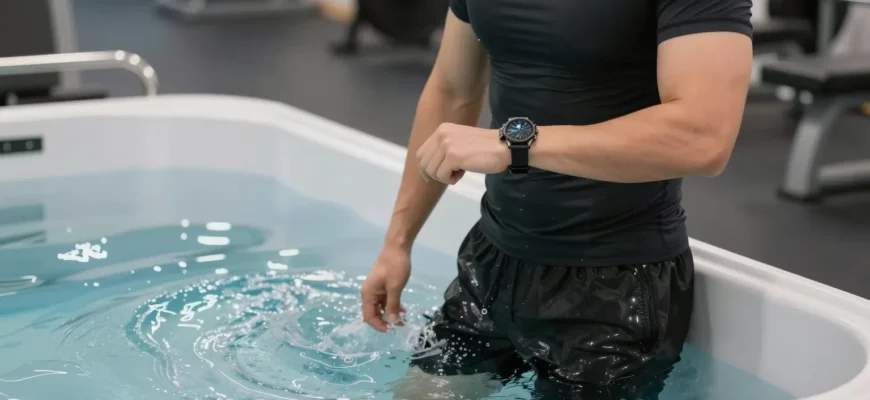
- Cold Plunge Before or After Workout: Why Timing is Everything
- The Core Debate: Performance vs. Recovery
- Does a Cold Plunge After a Workout Really Ruin Your Gains?
- Why Cold Plunge After Weight Training Might Slow Progress
- The Myth vs. Fact: Cold Exposure and Muscle Growth
- Using a Cold Plunge Pre-Workout to Boost Performance
- Waking Up the Nervous System Before You Lift
- Choosing Your Chill: A Quick Reference for Timing
- Tailoring Your Routine: Cardio, Weights, and Strength Training
- Why Endurance Athletes Love the Post-Run Plunge
- Logistics: Cold Plunging Around Meals and Morning Routines
- Should You Eat Before a Cold Plunge?
- Essential Safety Steps for Your First Cold Plunge
- Expert Perspective: Cold Timing Strategy
- Frequently Asked Questions
Cold Plunge Before or After Workout: Why Timing is Everything
The surge in popularity of deliberate cold exposure has left many athletes standing over a tub of ice water, wondering if they are about to supercharge their performance or accidentally delete their hard-earned muscle gains. The reality is that cold water immersion is a powerful physiological lever, but like any tool, its effectiveness depends entirely on when and how you pull it.
The concept of hormesis—the idea that a controlled amount of stress triggers a beneficial adaptation—is at the heart of this practice. When you submerge your body in 50-degree water, you aren’t just “getting cold”; you are triggering a systemic hormonal and neurochemical cascade that forces your body to adapt. However, the timing of this stressor can either amplify your workout results or create a “biological interference” that stalls progress.
The Core Debate: Performance vs. Recovery
The decision usually boils down to a fundamental choice: are you training for maximum power and size, or are you training for endurance and rapid recovery? If you cold water plunge before a workout, you are primarily using the ice as a central nervous system stimulant to sharpen focus and increase output. This approach prioritizes the immediate session over the long-term inflammatory signaling required for muscle growth.
Conversely, many use the cold post-workout to manage systemic inflammation and reduce the sensation of fatigue. While this is excellent for someone in a high-frequency competition phase—like a tournament-style weekend—it can be counterproductive for a bodybuilder looking to maximize hypertrophy. Understanding this distinction is the first step toward optimizing your routine.
Does a Cold Plunge After a Workout Really Ruin Your Gains?
The “ruining gains” narrative isn’t just gym-bro lore; it is backed by significant molecular biology research. When you lift weights, you create micro-tears in the muscle fibers, which triggers an inflammatory response. This inflammation is not a “bad” thing; it is the essential biological signal that tells your body to activate satellite cells and initiate muscle protein synthesis.
By jumping into a cold plunge immediately after a heavy lifting session, you induce rapid vasoconstriction, which shunts blood away from the muscles and back to the core. This effectively “mutes” the inflammatory signal. Research published in the Journal of Physiology has shown that cold water immersion within the first two hours of resistance training can significantly blunt the long-term growth of muscle fibers and decrease strength gains compared to active recovery.
Why Cold Plunge After Weight Training Might Slow Progress
The primary culprit in the “gains-killing” phenomenon is the suppression of the mTOR pathway, which is the master regulator of protein synthesis. When you are exposed to extreme cold, your body prioritizes thermal regulation over building new tissue. This metabolic shift, combined with reduced blood flow to the trained limbs, means that the nutrients and hormones needed for repair aren’t reaching their destination efficiently.
For those focused on hypertrophy, the consensus is clear: the 4-hour window following a workout is sacred for inflammation-driven growth. If you must plunge on a day you lift weights, it is vital to separate the two activities by at least six hours, or better yet, save the cold for your rest days. This allows the acute inflammatory phase to do its job before you introduce the anti-inflammatory effects of the cold.
The Myth vs. Fact: Cold Exposure and Muscle Growth
- Myth: Cold plunging after a workout helps you build muscle faster by reducing soreness.
- Fact: While you will feel less sore, the cold actually reduces the structural adaptation of the muscle, meaning you may see less growth over time.
- Myth: You should stay in the ice for at least 10 minutes to see results.
- Fact: For most benefits, 2 to 5 minutes at 50°F (10°C) is sufficient; staying in longer can lead to excessive shivering and “afterdrop,” which drains your energy for the rest of the day.
- Myth: Cold plunging is only for elite athletes.
- Fact: Anyone can benefit from the metabolic boost and dopamine spike, provided they adjust the duration and temperature to their current cold tolerance.
Using a Cold Plunge Pre-Workout to Boost Performance
While the post-workout plunge is under fire for hypertrophy, the pre-workout plunge is gaining traction as a high-performance hack. Stepping into the ice before you head to the gym acts as a massive reset for the central nervous system. The immediate shock triggers a significant release of norepinephrine and adrenaline, which heightens alertness and prepares the body for physical exertion.
This isn’t just about “waking up.” The cold-induced spike in dopamine—which can rise up to 250% above baseline—provides a sustained level of focus and drive that can last for several hours. For athletes who struggle with “gym fog” or lack of motivation, a 2-minute dip can provide a cleaner, more sustainable energy boost than a high-dose caffeine supplement.
Waking Up the Nervous System Before You Lift
When you submerge yourself before training, your body undergoes a process called peripheral vasoconstriction. This forces blood into the core and brain, increasing mental clarity. Once you exit the water and begin your dynamic warm-up, the subsequent vasodilation—the “flush”—brings fresh, oxygenated blood back to the muscles.
However, there is a technical caveat: you must ensure your muscles are properly warmed up before lifting heavy loads. Cold muscles are less pliable and more prone to strains. If you plunge before the gym, follow it with 10-15 minutes of dynamic movement or a light jog to bring your intramuscular temperature back to a functional range. This gives you the neural benefits of the cold without the physical risk of “stiff” muscles.
Choosing Your Chill: A Quick Reference for Timing
| Goal | Recommended Timing | Primary Benefit | Primary Drawback |
|---|---|---|---|
| Muscle Hypertrophy | Rest Days or 6+ hours after | Protects growth signaling | No immediate recovery benefit |
| Endurance / Cardio | Post-Workout | Lowers core temperature | Minimal interference with cardio |
| Mental Focus / Energy | Pre-Workout (Morning) | Massive dopamine & adrenaline | Requires a longer physical warm-up |
| Injury Management | Immediately Post-Injury | Reduces acute swelling | May slow long-term tissue repair |
Tailoring Your Routine: Cardio, Weights, and Strength Training
The “interference effect” of cold water immersion is much more pronounced in resistance training than it is in cardiovascular exercise. If your routine consists of long-distance running, cycling, or high-intensity interval training (HIIT), the rules change. Endurance adaptations are primarily driven by mitochondrial biogenesis and improved oxygen utilization, rather than the mechanical tension and inflammation that drive muscle size.
In fact, some studies suggest that cold exposure can actually enhance the endurance response by increasing the expression of PGC-1alpha, a protein that regulates mitochondrial production. For endurance athletes, the cold plunge is a powerful tool to lower core body temperature, which is often the limiting factor in performance during long sessions in the heat.
Why Endurance Athletes Love the Post-Run Plunge
For runners and triathletes, the post-workout plunge serves a dual purpose; First, it rapidly brings the body’s internal thermostat back to baseline, preventing the “afterburn” that can lead to heat exhaustion or prolonged fatigue. Second, it reduces the perception of effort and muscle soreness, allowing the athlete to return to high-volume training more quickly.
If your goal is to improve your 5k time or increase your aerobic capacity, you can be much more aggressive with post-workout cold exposure. Unlike the bodybuilder who needs to protect their inflammation, the endurance athlete benefits from the systemic cooling and the reduction in delayed onset muscle soreness (DOMS), which helps maintain a high weekly mileage.
Logistics: Cold Plunging Around Meals and Morning Routines
Integrating cold exposure into a daily schedule requires more than just a tub; it requires a strategy for digestion and metabolic timing. One of the most common questions is whether to plunge before or after breakfast. Generally, plunging on an empty stomach is the preferred method for both comfort and metabolic efficiency.
When you are in a fasted state, your body is more efficient at mobilizing fatty acids for thermogenesis. The shock of the cold forces your “brown fat” (BAT) to burn calories to generate heat. If you have just eaten a large meal, your body is diverting a significant amount of blood flow to your digestive tract; Submerging in ice water forces that blood away from the gut and toward the skin and core, which can lead to cramping, nausea, and poor digestion.
Should You Eat Before a Cold Plunge?
If you must eat before your dip, keep it light. A small snack 30 minutes prior is usually fine, but a full “lumberjack breakfast” followed by a 45-degree plunge is a recipe for gastrointestinal distress. Many practitioners find that the “Cold-then-Coffee” routine works best: use the cold to wake up the nervous system, then reward yourself with a warm meal or beverage afterward.
Furthermore, the “afterdrop”—the phenomenon where your core temperature continues to fall even after you leave the water—is easier to manage if you aren’t also trying to digest food. Wait at least 60 to 90 minutes after a heavy meal before attempting any significant cold water immersion to ensure your circulatory system can handle the competing demands of thermoregulation and digestion.
Essential Safety Steps for Your First Cold Plunge
- Start slow and warm: You don’t need to jump into 33°F water immediately. Start at 55-60°F and gradually lower the temperature as your tolerance improves.
- Control your breath: The “cold shock response” will make you want to gasp. Force yourself to exhale slowly through your nose to calm the sympathetic nervous system.
- Never plunge alone: Especially in the beginning, have someone nearby in case you experience a vasovagal response or extreme lightheadedness.
- Monitor your time: Use a timer. Most of the benefits occur within the first 120 to 180 seconds. Staying in for 20 minutes increases the risk of hypothermia without adding significant hormonal benefits.
- Warm up naturally: After exiting, try to warm up through movement (air squats, jumping jacks) rather than jumping immediately into a hot shower, which can cause fainting due to rapid vasodilation.
Expert Perspective: Cold Timing Strategy
In my professional experience working with both strength athletes and high-performance executives, I have found that the “4-to-6 hour rule” is the most critical factor for success. If your primary goal is hypertrophy (building muscle size), you must treat the cold plunge as a separate training stimulus rather than a post-workout recovery tool. I always advise my strength-focused clients to plunge first thing in the morning on an empty stomach. This provides the dopamine and metabolic benefits without interfering with the evening lifting session. However, if you are in a “recovery-first” phase—such as a week of heavy competition or a high-volume hiking trip—then the post-workout plunge becomes your best friend. The most important thing to remember is that cold is a tool for adaptation, not just a way to feel better. Use it with intent, and respect the biological signals your body is trying to send after a hard workout.
Frequently Asked Questions
Yes, if done immediately after resistance training. It blunts the inflammatory signals required for hypertrophy, so it is best to wait at least 4-6 hours after lifting weights.
Is it better to cold plunge before or after cardio?
Post-workout is generally better for cardio. It helps lower core temperature and reduces fatigue without interfering with endurance adaptations as much as it does with strength gains.
Can I cold plunge on an empty stomach?
Yes. Plunging while fasted is often more comfortable and can enhance the metabolic benefits of brown fat activation while avoiding digestive issues.
How long should I stay in the cold plunge before a workout?
Keep it brief, around 1 to 3 minutes. This is enough to trigger a nervous system spike without excessively cooling the muscles, which could increase injury risk.
Should I cold plunge before or after a gym session for fat loss?
Before the gym is slightly better for fat loss due to the increased metabolic demand and the dopamine-driven boost in workout intensity, but consistency matters more than timing for this goal.
Why do people on Reddit recommend plunging before a workout?
The community highlights the massive “dopamine hit” and mental toughness developed by plunging early, which many users claim allows them to push significantly harder during their training sessions.