- Understanding Weighted Blanket Strain Relief and How Deep Pressure Works
- The Science of Proprioceptive Input in Occupational Therapy
- Managing Restless Legs and Periodic Limb Movement Disorder
- What Reddit Users Say About Weighted Blankets for Restless Legs
- Navigating Chronic Pain: From CRPS to Ehlers-Danlos Syndrome
- Supporting Hypermobility: Weighted Blanket Use for Ehlers-Danlos
- Safety First: Using a Weighted Blanket After Surgery or with COPD
- Respiratory Considerations and Weight Limits for COPD Patients
- Neurological Support: MS, Vertigo, and the Vestibular System
- Can Weight Help with Vertigo and Balance Issues?
- The Fill Matters: Plastic BBs vs. Glass Beads for Comfort
- Why Plastic BBs and Glass Beads Impact Your Sleep Quality
- Additional Benefits: Bruxism, Fatigue, and Digestive Comfort
- Calming the Jaw: Weighted Blankets for Bruxism and Stress
- Expert Perspective: Sensory Integration Therapy
- Frequently Asked Questions
Understanding Weighted Blanket Strain Relief and How Deep Pressure Works
Physical strain is rarely just a matter of tired muscles; it is a complex intersection of neurological signals, inflammatory responses, and the “fight or flight” state of the nervous system. When we talk about strain, we are describing the body’s inability to fully reset after physical or emotional exertion.
Deep Pressure Stimulation (DPS) acts as a mechanical reset button for this state; By applying firm, even pressure across the body, these blankets trigger the release of neurotransmitters like serotonin and dopamine while simultaneously lowering cortisol levels. This shift from the sympathetic nervous system to the parasympathetic nervous system allows the body to move from a state of high alert into a restorative phase.
The Science of Proprioceptive Input in Occupational Therapy
The proprioceptive system is often called our “sixth sense,” responsible for telling the brain where our limbs are in space. For individuals dealing with chronic strain or sensory processing issues, this internal GPS can become “noisy” or uncalibrated. Proprioceptive input via a weighted blanket provides a clear, grounding signal to the brain, which helps organize the nervous system and reduce the feeling of being physically overwhelmed.
Occupational therapists have used weighted tools for decades to help patients achieve sensory grounding. When the heavy beads of a blanket press against the skin, they stimulate mechanoreceptors that send calming signals directly to the central nervous system. This process is not merely psychological; it is a physiological requirement for many people to lower their heart rate and reach a state of deep muscular relaxation.
Managing Restless Legs and Periodic Limb Movement Disorder
Restless Leg Syndrome (RLS) and Periodic Limb Movement Disorder (PLMD) are often grouped together, but they represent different challenges for the sleeper. RLS is characterized by an irresistible urge to move the legs, often described as a “creepy-crawly” sensation, while PLMD involves involuntary twitching or kicking. Weighted blankets provide a physical barrier that helps dampen these sensations and movements.
Restless Leg Relief: Myth vs. Fact
Myth: A weighted blanket will physically pin your legs so they cannot move.
Fact: The blanket provides sensory “noise” that overrides the tingling sensations of RLS, making the urge to move less intense.
Myth: Heavier is always better for RLS.
Fact: Too much weight can actually cause joint strain; finding a blanket that is roughly 10% of your body weight is the clinical gold standard for safety and efficacy.
What Reddit Users Say About Weighted Blankets for Restless Legs
Online communities, particularly on Reddit, provide a wealth of anecdotal evidence regarding weight preferences for leg-specific issues. Many users report that while a full-body blanket is helpful, folding a weighted blanket in half and placing it specifically over the lower legs provides the concentrated pressure needed to “quiet” the nerves during an RLS flare-up.
Common complaints often center around heat; users with RLS frequently experience “hot legs,” and a heavy polyester blanket can exacerbate the discomfort. The consensus among successful users is to prioritize glass bead fills and bamboo or cotton covers to ensure the grounding effect doesn’t lead to overheating, which can actually trigger more restlessness.
Navigating Chronic Pain: From CRPS to Ehlers-Danlos Syndrome
For those living with Complex Regional Pain Syndrome (CRPS) or Ehlers-Danlos Syndrome (EDS), the relationship with pressure is complicated. In CRPS, the nervous system is in a state of constant high-voltage pain signaling. A weighted blanket can act as a form of desensitization therapy, providing a consistent, non-threatening stimulus that helps recalibrate the brain’s perception of touch and pain.
| Condition | Primary Benefit | Critical Precaution |
|---|---|---|
| Ehlers-Danlos (EDS) | Provides joint stabilization and spatial awareness. | Avoid excessive weight on small joints to prevent subluxation. |
| CRPS | Desensitizes overactive pain receptors. | Introduce weight gradually; use soft, non-abrasive covers. |
| Fibromyalgia | Reduces global muscle tension and improves sleep depth. | Ensure the blanket is easy to remove to avoid “trapped” sensations. |
Supporting Hypermobility: Weighted Blanket Use for Ehlers-Danlos
In the context of Ehlers-Danlos Syndrome, the proprioceptive system is often severely impaired because the connective tissues do not provide accurate feedback to the brain. A weighted blanket can offer a “cocoon” of stability, helping to keep joints aligned during sleep and reducing the micro-movements that lead to morning soreness.
However, users with hypermobility must be cautious. If a blanket is too heavy, the sheer force of the weight can pull a shoulder or hip out of its socket (subluxation) during the night. I recommend starting with a lighter weight—perhaps 7% of body weight—and focusing on “lap pads” or smaller weighted sections before committing to a heavy king-sized version.
Safety First: Using a Weighted Blanket After Surgery or with COPD
While the benefits of deep pressure are vast, certain medical conditions make weighted blankets a potential hazard. For patients with Chronic Obstructive Pulmonary Disease (COPD) or those recovering from major thoracic or abdominal surgery, the primary concern is the restriction of chest expansion and the work of breathing.
- Do: Consult your surgeon before using weight over a fresh incision to avoid “dehiscence” or the reopening of the wound.
- Do: Use a weighted lap pad instead of a full blanket if you have respiratory limitations.
- Don’t: Use a weighted blanket if you have a history of sleep apnea without a doctor’s approval.
- Don’t: Allow the blanket to cover the face or neck, as this increases the risk of CO2 rebreathing.
Respiratory Considerations and Weight Limits for COPD Patients
For a COPD patient, breathing is already a high-energy task. Adding 15 to 20 pounds of external pressure to the ribcage can significantly increase the effort required to inhale deeply. This can lead to decreased oxygen saturation and increased carbon dioxide retention during the night.
If a patient with respiratory issues finds comfort in weight, the safest approach is to apply the weight only to the legs or lower lap. This provides the neurological benefits of deep pressure stimulation without compromising the mechanical movement of the diaphragm and intercostal muscles.
Neurological Support: MS, Vertigo, and the Vestibular System
Multiple Sclerosis (MS) and vestibular disorders often result in a “disconnect” between the body and the environment. For MS patients, sensory ataxia—a loss of sensory input into how the limbs are moving—can make it feel like you are floating or disconnected from your bed. A weighted blanket provides a firm boundary that helps the brain map the body’s position.
Can Weight Help with Vertigo and Balance Issues?
Vertigo is not just a feeling of spinning; it is a conflict between the visual system and the vestibular system in the inner ear. By providing a strong tactile reference point, a weighted blanket can help “anchor” the individual. When the brain receives strong, consistent pressure signals from the skin and muscles, it can sometimes deprioritize the faulty balance signals coming from the inner ear.
This grounding effect is particularly useful during a vertigo flare-up. Lying still under a weighted blanket can reduce the perceived intensity of the “spinning” sensation by giving the brain a reliable source of spatial information. It acts as a supplement to vestibular rehabilitation exercises, providing a safe “home base” for the nervous system to recover.
The Fill Matters: Plastic BBs vs. Glass Beads for Comfort
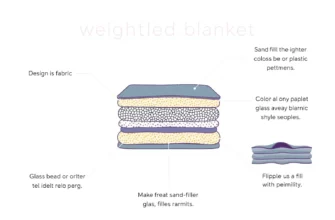
The technical construction of a weighted blanket determines whether it provides relief or creates more strain. Historically, many blankets were filled with plastic poly-pellets (BBs). While cost-effective, plastic is a natural insulator, meaning it traps body heat and can lead to uncomfortable night sweats.
Why Plastic BBs and Glass Beads Impact Your Sleep Quality
Glass beads are now considered the gold standard for high-quality therapeutic bedding. Because glass is denser than plastic, the beads are much smaller, which allows the blanket to be thinner and more flexible. This flexibility ensures the blanket contours to the specific shape of your body, providing more even pressure distribution across “strain points” like the lower back and shoulders.
Furthermore, glass beads have better thermal conductivity. They do not hold onto heat the way plastic does, making them ideal for people who suffer from inflammation-related pain, which often flares up when the body gets too warm. For those looking for eco-friendly options, some manufacturers are now using steel shot or even dried grains, though glass remains the most durable and washable option.
Additional Benefits: Bruxism, Fatigue, and Digestive Comfort
The reach of deep pressure therapy extends into surprising areas of health, including jaw tension and even digestion. Bruxism, or the involuntary clenching and grinding of teeth, is often a physical manifestation of high nighttime cortisol. By lowering the overall stress response of the body, weighted blankets can indirectly reduce the intensity of jaw clenching.
Calming the Jaw: Weighted Blankets for Bruxism and Stress
When the body is under a weighted blanket, the reduction in muscle tension is systemic. It is difficult to maintain a clenched jaw when the rest of the musculoskeletal system is being signaled to relax. Improving sleep architecture—specifically increasing the time spent in deep, restorative sleep stages—gives the nervous system the time it needs to “clear” the stress hormones that drive bruxism.
In terms of digestive comfort, some users find that the gentle pressure of a weighted blanket over the abdomen can help with issues like Irritable Bowel Syndrome (IBS) or “nervous stomach.” The pressure can stimulate the Vagus nerve, which is a key player in both heart rate regulation and digestive motility.
Expert Perspective: Sensory Integration Therapy
In my professional experience working with sensory integration, I cannot stress enough the importance of the 10% body weight rule. I have seen many patients with Ehlers-Danlos Syndrome attempt to use a blanket that is far too heavy, leading to increased joint pain rather than relief. Always consult a clinician if you have underlying respiratory or connective tissue disorders. A weighted blanket is a powerful therapeutic tool, but it must be calibrated to your specific physiological limits to be effective and safe.
Frequently Asked Questions
You should wait until your surgeon provides clear clearance, typically after the incision is fully closed and internal healing is well underway, to avoid putting unnecessary tension on surgical sites.
How does a weighted blanket help with MS-related sensory issues?
The blanket provides strong tactile boundaries that help the brain compensate for the “numbness” or “tingling” often associated with Multiple Sclerosis sensory ataxia.
Can a weighted blanket make vertigo worse?
While most find it grounding, some individuals with severe vestibular sensitivity may find the added pressure disorienting; start with a weighted lap pad to test your tolerance.
Is it okay to use a weighted blanket if I have COPD?
It is generally not recommended to place weight on the chest of a COPD patient; consult a doctor about using weight only on the legs to avoid restricting breathing.
Why do people recommend glass beads over plastic BBs?
Glass beads provide superior temperature regulation, a lower profile, and more even weight distribution compared to the bulkier, heat-trapping plastic pellets.
Will a weighted blanket stop my legs from moving at night?
It is effective at calming the sensory “urge” to move associated with Restless Leg Syndrome, but it may not physically stop the involuntary muscle jerks of PLMD.