- The Simple Explanation: What is a Weighted Blanket and How Does It Work?
- The Science of Deep Pressure Stimulation
- Why Weighted Blankets for Adults are Becoming a Sleep Essential
- Managing Daily Anxiety and Nighttime Overthinking
- Helping Little Ones Rest: A Guide to Weighted Blankets for Children
- Safety First: When is a Child Ready for a Weighted Blanket?
- Common Misconceptions vs. Reality
- The Heat Factor: What is a Cooling Weighted Blanket?
- Materials Matter: Bamboo vs. Cotton vs. Glass Beads
- How to Choose Your Perfect Weighted Blanket
- Care and Maintenance: Keeping Your Blanket Fresh
- Frequently Asked Questions
The Simple Explanation: What is a Weighted Blanket and How Does It Work?
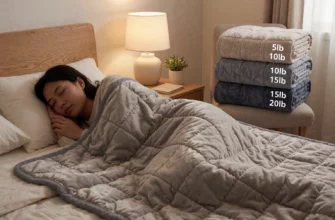
A weighted blanket is exactly what it sounds like—a heavy-duty blanket engineered to weigh between 5 and 30 pounds. Unlike a standard comforter filled with down or synthetic fibers, these blankets are typically constructed with a multi-layered design featuring a “heavy” core filled with fine glass beads, plastic poly-pellets, or even high-density steel shot. These materials are sewn into small, quilted pockets to ensure the weight remains evenly distributed across your body rather than bunching up at the edges.
The core magic of these blankets lies in a therapeutic technique known as Deep Pressure Stimulation (DPS). Think of it as a firm, gentle hug or the sensation of being swaddled. This consistent, distributed pressure signals to the brain that the environment is safe, which triggers a cascade of physiological changes designed to settle the mind and body. While they were once primarily used in clinical settings, they have transitioned into a staple of modern sleep hygiene for anyone looking to improve their rest quality.
The Science of Deep Pressure Stimulation
Deep Pressure Stimulation works by interacting with the body’s proprioceptive system—the sensory system that tells us where our limbs are in space. When you apply firm but gentle pressure to the body, it stimulates the tactile receptors, which in turn sends signals to the brain to shift from a state of high alert to one of relaxation. By calming the nervous system, the body moves from the sympathetic nervous system (the “fight or flight” mode) to the parasympathetic nervous system (the “rest and digest” mode);
This physiological shift is not just a feeling; it is measurable. Studies have shown that therapeutic pressure can lead to a decrease in heart rate and a more stable breathing pattern. For individuals who struggle with sensory processing or high stress, this mechanical input provides a grounding sensation that helps the brain filter out distracting external stimuli, making it significantly easier to transition into the early stages of sleep.
Why Weighted Blankets for Adults are Becoming a Sleep Essential
For many adults, the challenge of falling asleep isn’t just physical tiredness; it is the inability to “turn off” the brain. Between work deadlines, domestic responsibilities, and the constant hum of digital notifications, the adult nervous system is often stuck in a loop of low-level anxiety. Weighted blankets provide a non-pharmacological way to break this cycle by offering a physical anchor that discourages tossing and turning.
Beyond simple relaxation, these blankets are highly effective for specific conditions like Restless Leg Syndrome (RLS) and general insomnia. The weight acts as a physical deterrent to the involuntary leg movements common in RLS, providing a “grounding” effect that can reduce the urge to move. For those who experience frequent nighttime awakenings, the added weight helps maintain a deeper state of sleep by limiting micro-movements that often lead to full arousal.
Managing Daily Anxiety and Nighttime Overthinking
The relationship between stress and sleep is a vicious cycle: high stress leads to poor sleep, and poor sleep makes it harder to manage stress. Deep pressure therapy helps break this link by reducing the production of cortisol, the body’s primary stress hormone. High cortisol levels at night keep the brain alert and the heart rate elevated, which is the antithesis of what is needed for restorative rest.
As cortisol levels drop, the body is better able to produce serotonin—a neurotransmitter often called the “happy hormone”—which is a precursor to melatonin, the hormone responsible for regulating sleep-wake cycles. By facilitating this chemical shift, weighted blankets don’t just help you fall asleep faster; they help improve the overall architecture of your sleep, allowing for more time in the crucial REM and deep sleep phases. This results in feeling more refreshed and cognitively sharp the following morning.
Helping Little Ones Rest: A Guide to Weighted Blankets for Children
Children, particularly those with ADHD or Autism Spectrum Disorder (ASD), often struggle with sensory regulation. For these children, the world can feel overwhelming, loud, and unpredictable. A weighted blanket serves as a portable “safe space” that provides the sensory support for kids they need to feel secure. By providing a consistent level of tactile input, the blanket helps organize their sensory system, making it easier for them to settle down after a long day of school or play.
However, introducing a weighted blanket to a child’s routine requires more caution than it does for an adult. It is not a “one size fits all” solution, and parents must be diligent about selecting the correct weight and ensuring the child is developmentally ready. The blanket should never be used as a restraint, and the child must always have the physical strength to remove it on their own without assistance.
Safety First: When is a Child Ready for a Weighted Blanket?
The primary safety rule for pediatric use is that the child must be at least two years old. Infants and toddlers do not have the motor skills or respiratory strength to move a heavy blanket if it covers their face, posing a serious suffocation risk. Most pediatricians and occupational therapists recommend a weight that is roughly 10% of the child’s body weight plus one or two pounds.
When selecting a blanket for a child, look for high-quality construction with reinforced seams. Children can be rough on their bedding, and you want to ensure that the internal fill—whether glass beads or pellets—cannot leak out, as these can be choking hazards. Always supervise the first few uses to ensure your child feels comfortable and can easily maneuver the blanket. If a child expresses discomfort or feels “stuck,” it is a clear sign the blanket is too heavy or they are not yet ready for weighted therapy.
Common Misconceptions vs. Reality
There is a lot of misinformation surrounding weighted blankets, often leading people to believe they are either “magic cures” or dangerously hot. Let’s look at the actual facts behind the most common myths.
| Myth | Reality |
|---|---|
| They are only for people with medical disorders. | While they originated in clinical therapy, anyone looking to reduce stress or improve sleep quality can benefit from the calming effects of deep pressure. |
| Weighted blankets are too hot for summer use. | Modern “cooling” versions use breathable fabrics like bamboo and Tencel to wick away moisture and promote airflow, making them suitable year-round. |
| The heavier the blanket, the better the results. | Excessive weight can lead to discomfort or joint strain. The 10% of body weight rule is the gold standard for safety and efficacy. |
| They are impossible to wash. | Many come with removable duvet covers, and many modern blankets are machine washable in commercial-grade machines. |
The Heat Factor: What is a Cooling Weighted Blanket?
One of the biggest complaints about early weighted blanket designs was their tendency to trap body heat. Because they are denser than standard blankets, they can act as an insulator, which is a nightmare for “hot sleepers” or those prone to night sweats. This led to the development of cooling weighted blankets, which utilize advanced textile technology to provide the weight without the warmth.
Cooling blankets tackle the heat problem in two ways: through the fill material and the outer fabric. Instead of using plastic pellets, which trap heat, these blankets use micro-glass beads that have higher thermal conductivity, meaning they help pull heat away from the body. Furthermore, manufacturers have moved away from polyester and fleece toward natural, high-performance fibers that allow for maximum breathability.
Materials Matter: Bamboo vs. Cotton vs. Glass Beads
When shopping for a cooling option, the choice of fabric is the most critical factor. Bamboo-derived fabrics and Tencel (made from eucalyptus) are superior for temperature regulation because they are naturally moisture-wicking and feel cool to the touch. Unlike cotton, which can absorb moisture and become heavy and damp, these fibers allow sweat to evaporate quickly, keeping your body temperature stable throughout the night.
The internal fill also plays a role in how the blanket “breathes.” Glass beads are preferred over plastic poly-pellets because they are much smaller and denser. This allows the blanket to be thinner while maintaining the same weight, which reduces the amount of insulating padding required. For the ultimate cooling experience, some brands even offer open-knit weighted blankets made from heavy loops of fabric, which provide weight while allowing for 100% unobstructed airflow.
How to Choose Your Perfect Weighted Blanket
Buying a weighted blanket is an investment in your health, so you shouldn’t just grab the first one you see on a shelf. The right blanket should feel like an extension of your body, providing comfort without restriction. Follow this checklist to ensure you get the best match for your needs:
- Calculate the 10% Rule: For most adults, the ideal weight is 10% of your total body weight. If you weigh 150 lbs, a 15 lb blanket is usually perfect.
- Check the Dimensions: Unlike a standard comforter, a weighted blanket should not hang over the edges of your bed. If it does, the weight will pull the blanket off you during the night.
- Inspect the Stitching: Look for “gridded” or “diamond” stitching patterns. Smaller pockets (under 6 inches) ensure the beads don’t shift to one side, which maintains even pressure.
- Evaluate the Fabric: Choose bamboo or cotton for breathability, or minky/fleece if you are someone who is always cold and wants maximum coziness.
- Verify Washability: Check if the blanket is machine washable or if it requires a duvet cover. Blankets over 15 lbs may require a commercial-grade washer to avoid damaging your home machine’s drum.
Care and Maintenance: Keeping Your Blanket Fresh
Maintaining a weighted blanket requires a bit more thought than a standard sheet set. Because of their weight, frequent washing can put a strain on both the blanket’s seams and your washing machine’s motor. The best way to extend the life of your blanket is to use a removable duvet cover. This allows you to wash the outer layer frequently while only washing the heavy inner blanket once or twice a year.
When you do need to wash the weighted portion, use cold water and a gentle cycle. Avoid bleach or fabric softeners, as these can break down the fibers and the internal fill over time. Air drying is the safest method to prevent the internal beads from melting or the fabric from shrinking, though some blankets can be tumbled dry on low heat if the manufacturer’s label explicitly allows it.
In my professional experience, I have seen weighted therapy evolve from a niche clinical tool for sensory processing disorders into a mainstream wellness essential. While the benefits for sleep hygiene are clear, I always advise my clients to remember that a weighted blanket is a tool, not a cure-all. It works best when integrated into a broader routine that includes consistent sleep schedules and reduced blue light exposure. If you have underlying respiratory or circulatory issues, I highly recommend consulting with a healthcare provider before starting weighted therapy to ensure it won’t impede your breathing or blood flow during the night.
Frequently Asked Questions
The standard recommendation for both adults and children is approximately 10% of your total body weight plus or minus a pound or two depending on personal preference.
Can I use a weighted blanket every night?
Yes, for most healthy adults, it is perfectly safe for nightly use. Listen to your body; if you wake up with joint soreness, the blanket may be too heavy for your current needs.
Are weighted blankets safe for toddlers?
Generally, they are not recommended for children under 2 years old or any individual who lacks the physical strength to remove the blanket independently to avoid suffocation risks.
Do cooling weighted blankets actually work?
Yes. By utilizing moisture-wicking fabrics like bamboo and high-density glass bead fills, they provide the necessary weight without the heat-trapping properties of polyester or plastic pellets.
Can a weighted blanket help with restless leg syndrome?
Many users report significant relief as the steady pressure provides a grounding sensation that reduces the neurological urge to move the legs, facilitating a quicker transition to sleep.