- Why Your Choice of Weighted Blanket Summer Cooling Materials Dictates Sleep Quality
- The Science of Staying Cool Under Pressure
- Top Fabric Contenders: Bamboo vs. Cotton vs. Eucalyptus
- Why Cotton is the Standard for Night Sweats
- Inside the Blanket: Why Glass Beads Beat Plastic for Airflow
- Micro-Glass Beads vs. Poly-Pellets
- The All-Season Strategy: Weighted Blankets for Summer and Winter Use
- Removable Duvet Covers vs. Integrated Designs
- Crucial Checklist: Finding Your Perfect Summer Weight
- Is a 6lb or 15lb Blanket Better for Heat?
- Frequently Asked Questions
Why Your Choice of Weighted Blanket Summer Cooling Materials Dictates Sleep Quality
For many, the heavy embrace of a weighted blanket is the only way to silence a racing mind and achieve restorative rest. However, as temperatures climb, that comforting weight can quickly transform into a stifling heat trap, leading to the dreaded “sauna effect” mid-sleep.
The secret to maintaining the benefits of Deep Pressure Stimulation (DPS) without waking up drenched in sweat lies entirely in the physics of the materials used. Choosing a blanket with high thermal conductivity and superior air circulation ensures that your body heat escapes rather than circulates back to your skin.
The Science of Staying Cool Under Pressure
Traditional weighted blankets often rely on thick polyester batting to keep their internal fill in place, which acts as a powerful insulator. When you are looking for cool blankets with enough weight to be effective, you must prioritize air permeability—the ability of air to pass through the fabric and fill layers.
During summer use, the goal is to facilitate heat transfer away from the body through convection. Weighted blankets for summer use specifically utilize “open-cell” structures or natural fibers that do not store kinetic energy as heat, maintaining a skin temperature that is 1.5 to 2 degrees lower than standard bedding.
Top Fabric Contenders: Bamboo vs. Cotton vs. Eucalyptus
The outer shell of your blanket is the primary interface between your body and the environment. While synthetic microfibers are cheap and durable, they are essentially plastic weaves that repel water and trap hot air against your limbs.
To maximize comfort, you should look toward plant-based fibers. Bamboo, cotton, and eucalyptus (often branded as Tencel) offer varying degrees of moisture management and tactile coolness, making them the gold standard for high-performance summer bedding.
| Material Type | Breathability | Softness Level | Durability |
|---|---|---|---|
| Bamboo Lyocell | High (Excellent Wicking) | Silky / Smooth | Moderate (Needs Gentle Care) |
| Long-Staple Cotton | High (Air Circulation) | Crisp / Structured | High (Machine Washable) |
| Eucalyptus (Tencel) | Very High | Ultra-Smooth | Moderate |
Why Cotton is the Standard for Night Sweats
If you find yourself waking up with damp sheets, a cotton weighted blanket if you sweat is often the most reliable solution. Cotton is a highly absorbent natural fiber that can hold up to 27 times its own weight in water, pulling moisture away from your skin before it can cause discomfort.
Furthermore, soft summer weight blankets made of cotton percale offer a “cool-to-the-touch” sensation due to the tight, flat weave. This specific construction maximizes surface area for heat dissipation, making it significantly more effective than sateen weaves which tend to be heavier and more insulating.
Inside the Blanket: Why Glass Beads Beat Plastic for Airflow
What is inside your blanket matters just as much as the fabric on the outside. The “weight” in these blankets usually comes from one of two sources: plastic poly-pellets or micro-glass beads, and the difference in their thermal profiles is staggering.
Plastic is a natural insulator, which is why it is used in everything from coffee cups to home insulation. Glass, conversely, is much denser and more efficient at dispersing heat, ensuring the internal temperature of the blanket remains neutral.
Myth: Heavier blankets are always hotter because they have more “stuff” inside them.
Fact: High-density glass beads allow for a thinner overall profile, which actually increases breathability by reducing the amount of insulating polyester fill required to hold the weight in place.
Micro-Glass Beads vs. Poly-Pellets
When searching for a thin weighted blanket for summer, glass beads are the superior choice because of their size. Because they are roughly the size of grains of sand, they take up less volume than bulky plastic pellets, allowing the blanket to lie flatter and permit more air to flow through the fabric weave.
Beyond the thermal benefits, glass beads provide a more “fluid” feel that contours to the body without the lumpy, “bean-bag” texture of plastic. If you prefer a light weighted blanket for summer, opt for a glass-fill model with a quilted square size of 4 inches or less to prevent the beads from bunching and creating hot spots.
The All-Season Strategy: Weighted Blankets for Summer and Winter Use
Investing in a high-quality weighted blanket is a significant commitment, and many users worry about having to buy separate products for different seasons. Fortunately, a modular approach allows you to maintain the perfect micro-climate regardless of the thermometer reading outside.
The most cost-effective strategy is to purchase a “naked” weighted inner and utilize a weighted blanket summer cooling duvet cover. This setup allows you to strip away the heavy fleece or minky covers in June and replace them with breathable bamboo or linen options.
Removable Duvet Covers vs. Integrated Designs
An integrated design, where the cooling fabric is sewn directly to the weight, offers the best immediate heat transfer but can be difficult to clean. Using a removable cover allows for frequent washing to remove sweat and skin oils, which can clog the pores of the fabric and reduce breathability over time.
When switching your weighted blanket summer and winter setups, look for covers with at least 8 internal ties. This prevents the inner blanket from shifting, which can cause the fabric to bunch up and create layers of insulation that trap unwanted body heat.
Crucial Checklist: Finding Your Perfect Summer Weight
Selecting the right weight is a balancing act between achieving the therapeutic benefits of pressure and avoiding the physical bulk that retains heat. While the general rule of thumb is 10% of your body weight, summer conditions may require a slight adjustment to that formula.
If you are on the fence between two weights, erring on the lighter side during summer can prevent the “suffocation” feeling that sometimes accompanies heavy bedding in high humidity. A blanket that feels perfect in a 65-degree winter bedroom may feel oppressive in a 75-degree summer environment.
- Check the “Fill Power”: Ensure the blanket uses minimal polyester batting; the less “fluff” inside, the cooler it will be.
- Verify the Fabric Origin: Look for 100% Bamboo Viscose or Lyocell rather than “Bamboo-blends,” which often contain heat-trapping polyester.
- Weight Distribution: Smaller quilted pockets (under 5 inches) ensure the weight stays even, preventing heat from getting trapped in “valleys” of the blanket.
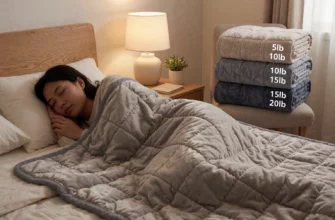
- Weight Selection: For adults, a 15lb blanket is standard, but a cooling weighted 6lb blanket is often sufficient for lap use or for those who are highly heat-sensitive.
- Trial Periods: Always choose a brand that offers a 30-night sleep trial, as thermal comfort is highly subjective and depends on your local humidity.
Is a 6lb or 15lb Blanket Better for Heat?
The relationship between mass and heat is linear; more material generally means more heat retention. However, a summer weighted blanket for adults that is too light will fail to trigger the release of serotonin and melatonin. The 15lb glass-bead blanket in a bamboo shell will often feel cooler than a 10lb plastic-pellet blanket in a polyester shell.
If you primarily struggle with “hot feet,” consider a smaller throw-sized weighted blanket. This allows you to apply pressure to your torso while leaving your extremities exposed to the air, which is the fastest way for the human body to regulate its core temperature during sleep.
In my professional experience, the primary mistake people make is focusing on the ambient room temperature rather than the micro-climate beneath their sheets. I always advise patients that your body needs to drop its core temperature by about 2 to 3 degrees Fahrenheit to initiate deep sleep. If you use an integrated weighted blanket with a tight weave, you are essentially creating an oven. I highly recommend an open-weave hand-knitted weighted blanket for the most extreme hot sleepers, as these have physical holes in the design that allow for 100% air exchange while still providing the necessary weight through the heavy yarn itself.
Frequently Asked Questions
No, provided you choose materials like bamboo, eucalyptus, or cotton paired with glass bead fill. These materials promote airflow and moisture wicking, making them comfortable even in warmer months.
What is the coolest material for a weighted blanket?
Bamboo Lyocell and Tencel are the top choices. They offer the highest moisture-wicking capabilities and have a natural “cool-to-the-touch” feel that outperforms traditional cotton.
Can I use a cooling weighted blanket if I have night sweats?
Yes. A 100% cotton or bamboo shell with glass bead fill is ideal for night sweats because it absorbs moisture and allows it to evaporate quickly, preventing the clammy feeling associated with synthetic fabrics.
What is the difference between a cooling blanket and a weighted blanket?
A cooling blanket uses specialized fabrics to lower temperature, while a weighted blanket uses mass for pressure therapy. A cooling weighted blanket combines both technologies into one product.
How do I wash a summer cooling weighted blanket?
Most cooling covers are machine washable on a cold, gentle cycle. The weighted inner portion should be spot cleaned or professionally laundered to protect the integrity of the glass beads and internal stitching.