- Can a Weighted Blanket Make You Sore? The Science of Sleep Pressure
- How Your Muscles React to Excess Weight Overnight
- Why Your Legs Might Ache or Cramp Under Heavy Bedding
- Nerve Compression and Poor Circulation in the Lower Body
- Critical Safety: When a Weighted Blanket Is Actually Harmful
- Weighted Blankets and Muscular Dystrophy or DVT
- Troubleshooting Stomach Pain and Full-Body Aches
- The Impact of Weight on Your Digestive System
- Finding Your Ideal Weight: The 10% Rule and Beyond
- Adjusting for Body Type and Personal Sensitivity
- Dos and Donts for Pain-Free Weighted Blanket Use
- Frequently Asked Questions
Can a Weighted Blanket Make You Sore? The Science of Sleep Pressure
The rise of weighted blankets in modern sleep hygiene is largely due to the clinical concept of Deep Pressure Stimulation (DPS). This therapeutic technique applies firm but gentle pressure across the body, effectively mimicking the sensation of a deep hug or professional massage to trigger a parasympathetic nervous system response. When functioning correctly, this pressure encourages the release of serotonin and melatonin while simultaneously reducing cortisol levels, leading to a state of profound relaxation.
However, the line between therapeutic pressure and physical strain is surprisingly thin. While the goal is to ground the body and calm the “fight or flight” response, an incorrectly calibrated blanket can transition from a soothing embrace to a restrictive weight that pins the skeletal structure. This mechanical stress can result in waking up with unexplained muscle aches, stiffness, or localized pain that contradicts the very purpose of the bedding.
How Your Muscles React to Excess Weight Overnight
During a typical night of sleep, the human body is not static; it undergoes hundreds of micro-movements to redistribute weight and maintain healthy blood flow. When a blanket is too heavy, it creates a physical barrier to these natural adjustments, forcing the musculoskeletal system to work harder even while in a state of rest. If you find yourself struggling to roll over or adjust your position under the covers, you are likely experiencing muscle fatigue before you even wake up.
This restriction is particularly problematic during the REM (Rapid Eye Movement) cycle, a phase where the brain triggers temporary muscle paralysis to prevent us from acting out our dreams. If your body is already under significant external pressure, the inability to make subtle postural corrections can lead to micro-strains in the connective tissues. To prevent morning stiffness, ensure your blanket allows for effortless movement of the limbs without requiring conscious physical exertion.
Why Your Legs Might Ache or Cramp Under Heavy Bedding
The lower extremities are often the first part of the body to signal that a weighted blanket is inappropriate for your frame. Because the legs have a smaller surface area relative to the torso but often bear a significant portion of the blanket’s weight, the pressure per square inch can become excessive. This concentrated force can disrupt the delicate balance of the vascular and nervous systems in the calves and thighs.
Myth: Leg cramps under a weighted blanket mean the pressure is working to “deeply” relax the muscles.
Fact: Persistent cramping is a sign of oxygen deprivation in the muscle tissue or nerve irritation. Immediately reduce the weight if you experience sharp, involuntary muscle contractions during the night.
Nerve Compression and Poor Circulation in the Lower Body
One of the most common complaints regarding heavy bedding is the sensation of “pins and needles” or total numbness in the feet. This is frequently caused by external compression of the sciatic nerve or the peroneal nerve, which runs near the surface of the skin at the knee and ankle. Sustained pressure on these neural pathways can lead to temporary paresthesia, a clear indicator that the blanket is obstructing vital signals between your brain and your limbs.
Furthermore, gravity plays a significant role in how blood returns from your legs to your heart. Heavy blankets can create enough resistance to impede venous return, particularly for individuals who already struggle with low blood pressure or varicose veins. To protect your circulatory health, avoid bunching the blanket at the foot of the bed, as this multiplies the weight applied to your ankles and toes.
Critical Safety: When a Weighted Blanket Is Actually Harmful
While weighted blankets are marketed as a universal wellness tool, they are medical contraindications for several specific health conditions. The primary concern is the physical ability of the user to manage the weight independently. Safety is compromised the moment a user becomes “trapped” or unable to remove the blanket in an emergency, leading to potential respiratory or cardiovascular distress.
For individuals with pre-existing medical conditions, the added weight isn’t just a matter of comfort—it is a matter of physiological safety. Never use a weighted blanket for a child, an elderly person with frailty, or anyone who lacks the upper body strength to toss the blanket off their chest in under three seconds.
Weighted Blankets and Muscular Dystrophy or DVT
In the context of muscular dystrophy, the progressive weakening of the muscle fibers makes the use of heavy bedding particularly hazardous. Because these individuals may lack the motor control to shift their weight, the blanket can create “pressure sores” or contribute to respiratory fatigue by making the simple act of expanding the chest wall for a breath much more difficult. Consult a physical therapist before introducing weighted therapy to anyone with a primary muscle-wasting disorder.
Deep Vein Thrombosis (DVT) presents another significant risk. If a blood clot is present in the deep veins of the legs, the external pressure from a weighted blanket could theoretically contribute to the dislodging of that clot, leading to a life-threatening pulmonary embolism. If you have a history of blood clots or use blood thinners, the mechanical pressure of a weighted blanket should be avoided unless cleared by a vascular specialist.
Troubleshooting Stomach Pain and Full-Body Aches
It is not uncommon for new users to report a general “bruised” feeling or specific abdominal discomfort after their first few nights. This usually stems from how the weight is distributed across the torso. Unlike a standard duvet, a weighted blanket applies a constant downward force on the internal organs, which can interfere with the natural processes of the digestive tract.
Common Mistakes to Avoid:
- Folding the blanket in half: This doubles the weight and creates dangerous pressure points on the midsection.
- Using a blanket that is too small: This concentrates the entire weight on the stomach and chest rather than spreading it across the mattress.
- Sleeping exclusively on your side: This focuses the weight on the hip and shoulder joints, leading to misalignment of the spine.
The Impact of Weight on Your Digestive System
For side sleepers, a weighted blanket can be particularly problematic for the stomach. The lateral pressure can exacerbate symptoms of Acid Reflux or GERD by physically pushing stomach acid upward into the esophagus. If you suffer from digestive issues, try keeping the weighted portion of the blanket below the ribcage to alleviate pressure on the upper gastric system.
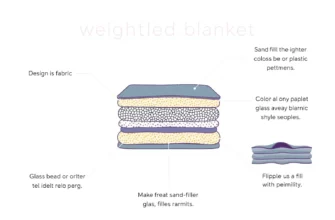
Full-body aches are often the result of “weight concentration.” If the glass beads or plastic pellets inside the blanket shift to one side, you may be receiving 20 pounds of pressure on your shoulder while your legs receive none. Choose a blanket with small, quilted pockets (no larger than 4 inches) to ensure the weight stays evenly distributed and doesn’t overload specific joints.
Finding Your Ideal Weight: The 10% Rule and Beyond
The standard industry recommendation is to select a blanket that is approximately 10% of your total body weight. While this is a helpful baseline, it is not a scientific law. Factors such as height, bone density, and personal sensory thresholds play a massive role in how that weight feels once you are horizontal. A 150-pound person who is 5’2″ will experience that 15-pound blanket much differently than someone who is 6’0″.
The goal is to achieve a sensation of “grounding” without feeling restricted. If you fall between standard sizes (such as 15 and 20 pounds), it is almost always safer to choose the lighter option first. Your body needs time to adapt to the new sensory input, and jumping into a heavy weight too quickly is the fastest way to develop chronic muscle soreness.
Adjusting for Body Type and Personal Sensitivity
When starting your weighted blanket journey, treat it like a new exercise routine. Begin by using the blanket for only 20 to 30 minutes during evening relaxation before attempting a full eight hours of sleep. This allows your nervous system to habituate to the pressure and gives you a chance to monitor for any emerging aches or pains.
Individual sensitivity varies wildly. Some people find that a blanket weighing only 7% of their body weight provides the necessary calming effect, while others may require 12% to feel any benefit. Always prioritize your subjective comfort over the mathematical 10% rule; if the blanket feels “heavy” rather than “cozy,” it is likely the wrong fit for your physiology.
Dos and Donts for Pain-Free Weighted Blanket Use
To maximize the benefits of Deep Pressure Stimulation while minimizing the risk of waking up sore, follow these tactical guidelines for daily use. Consistency and proper positioning are the keys to long-term success with weighted bedding.
- Do ensure the blanket covers your body from the shoulders down, never covering the head or neck.
- Do use a blanket with a breathable cover to prevent overheating, as heat can increase muscle inflammation.
- Do check for leaking beads, as uneven weight distribution is a primary cause of joint strain.
- Don’t use a weighted blanket on a very soft memory foam mattress, as this can cause your spine to “hammock” or sag.
- Don’t allow the blanket to hang off the side of the bed, as gravity will pull the weight downward and create uneven tension on your body.
- Don’t force yourself to use the blanket every night if you are feeling particularly fatigued or sore; occasional breaks can help prevent overuse injuries.
In my professional experience, I have seen many patients transition from chronic insomnia to restful sleep using weighted blankets, but I have also seen the “morning-after” consequences of poor ergonomics. I always advise my clients to view a weighted blanket as a tool for the nervous system, not a heavy-duty restraint. If you wake up with a dull ache in your lower back or a stiffness in your knees that takes more than ten minutes to “walk off,” the weight is compromising your joint alignment. The most critical metric is your ability to move freely; if the blanket prevents your natural nocturnal shifting, it is a liability to your musculoskeletal health. I recommend alternating nights with and without the blanket to see if your body is recovering or simply being suppressed.
Frequently Asked Questions
Leg pain is usually caused by the blanket compressing nerves or restricting the natural micro-movements your legs make to maintain circulation. If the pain persists, try a lighter blanket or ensure the weight is not concentrated specifically on your calves and ankles.
Can a weighted blanket cause permanent nerve damage?
While permanent damage is extremely rare, temporary nerve compression (paresthesia) is a common side effect of an overweight blanket. You should immediately stop using the blanket if you experience persistent numbness, tingling, or weakness in your limbs.
Is it normal to feel sore the first few nights?
A mild period of adjustment is normal as your muscles adapt to the new pressure, similar to the feeling after a deep-tissue massage. However, sharp pains, joint throbbing, or intense muscle cramps are red flags that the blanket is too heavy.
Can I use a weighted blanket if I have poor circulation?
It is generally discouraged without medical supervision. Added pressure can worsen conditions like peripheral neuropathy or DVT. Always consult a physician if you have a history of circulatory issues before using weighted therapy.
What should I do if my weighted blanket makes my body ache?
First, reduce the duration of use to short intervals during the day. If the aching continues, switch to a blanket that is 5-7% of your body weight or use a “weighted lap pad” that provides the benefits of pressure without the full-body load.