- How to determine what size weighted blanket is right for your bed
- The golden rule: Why blanket dimensions differ from standard bedding
- Matching your mattress: Weighted blanket dimensions for every bed size
- What size weighted blanket for queen bed and full-size setups?
- King size weighted blanket dimensions: Is bigger always better?
- Are weighted blankets meant for 1 or 2 people on a King bed?
- Sizing for smaller sleepers: Twin beds and 10 lb options
- Twin weighted blanket dimensions and the 10 lb standard
- The relationship between body size and blanket weight
- The 10% rule: Selecting the right weight for your frame
- Common mistakes when picking a weighted blanket size
- How big do weighted blankets go and should you buy the biggest?
- Frequently Asked Questions
How to determine what size weighted blanket is right for your bed
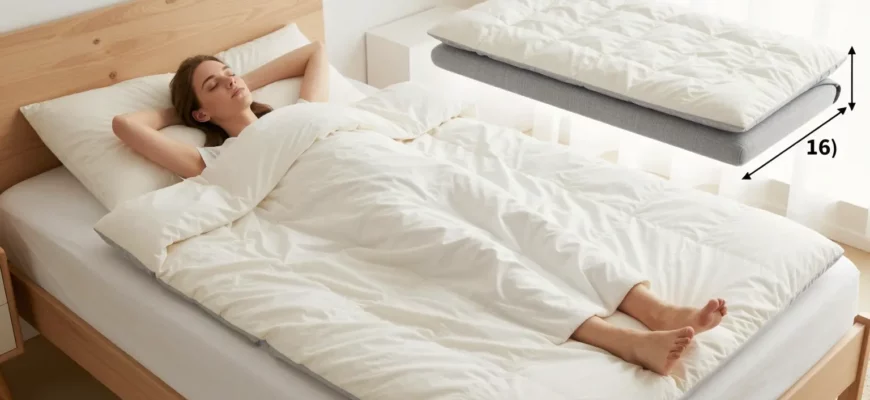
Choosing a weighted blanket is fundamentally different from selecting a standard duvet or quilt. While you usually want traditional bedding to drape elegantly over the sides of your mattress, a weighted blanket must stay strictly on the flat surface of the bed to function correctly.
If the dimensions are too large, the weight of the glass beads or pellets will catch the edge of the mattress and use gravity to pull the rest of the blanket toward the floor. This results in a frustrating night of “blanket tug-of-war” where the heavy fabric slowly slides off your body while you sleep.
The golden rule: Why blanket dimensions differ from standard bedding
The core purpose of a weighted blanket is to provide Deep Touch Pressure (DTP) directly to the sleeper’s body, not to decorate the furniture. Because of this, the ideal blanket size should cover your body from the chin down to your feet without extending far beyond the mattress edges.
Standard bedding is oversized to account for the thickness of the mattress and the aesthetic of the “drop.” However, with weighted options, any fabric hanging over the side acts as an anchor that constantly pulls the pressure away from your torso. This is why a “Queen size” weighted blanket is actually smaller than a standard Queen comforter.
When calculating your needs, remember that the “10% of body weight” rule only works if that weight is concentrated on your frame. If the blanket is too wide, a significant portion of those 15 or 20 pounds will rest on the mattress rather than on you, effectively neutralizing the calming effect you paid for.
Matching your mattress: Weighted blanket dimensions for every bed size
Finding the sweet spot between your mattress dimensions and the blanket’s surface area is the key to long-term comfort. Use the following data to align your current bed setup with the most effective blanket dimensions available on the market.
| Mattress Type | Mattress Dimensions (Inches) | Recommended Blanket Size (Inches) | Best Use Case |
|---|---|---|---|
| Twin / Twin XL | 38 x 75 / 38 x 80 | 48 x 72 | Individual children, teens, or solo adults. |
| Full / Double | 54 x 75 | 48 x 72 or 60 x 80 | Single sleepers who want full mattress coverage. |
| Queen | 60 x 80 | 60 x 80 | Standard for couples or single sleepers in large beds. |
| King | 76 x 80 | 80 x 87 or (2) 48 x 72 | Shared use or high-coverage individual use. |
| California King | 72 x 84 | 80 x 87 | Extra length for taller sleepers. |
What size weighted blanket for queen bed and full-size setups?
For a Queen mattress, the 60×80 inch dimension is the industry standard because it mirrors the exact top surface of the bed. If you are a solo sleeper on a Queen bed, you might actually prefer a 48×72 inch blanket, as it focuses the weight entirely on your body and prevents “weight dissipation” across the empty half of the bed.
Full-size or double beds present a unique challenge because they sit between the Twin and Queen categories. A 54×75 inch mattress is best served by a 48×72 inch blanket if you want to ensure zero overhang to prevent the blanket from sliding during the night. If you share a full-size bed, moving up to the 60×80 size is possible, but be prepared for a few inches of drape on the sides.
When shopping for these mid-range sizes, pay close attention to the construction. Because Queen and Full blankets carry more total weight (often 15 to 25 lbs), the internal baffle boxes should be no larger than 4×4 or 5×5 inches to keep the glass beads from pooling in the corners of the fabric.
King size weighted blanket dimensions: Is bigger always better?
Many owners of King and California King beds instinctively reach for the largest blanket available, but this is often a mistake. A King-sized weighted blanket can weigh 30 pounds or more, making it extremely difficult to move, wash, or adjust without assistance.
Large-format blankets also suffer from “center-sag,” where the weight pulls toward the middle of the bed if two people are sleeping under it. This can leave both sleepers with less pressure than they actually need for therapeutic benefits. The logistics of cleaning a 30lb blanket are also a major hurdle, as most residential washing machines have a weight limit that these blankets easily exceed.
Are weighted blankets meant for 1 or 2 people on a King bed?
Most sleep specialists and ergonomic experts suggest that weighted blankets are primarily individual tools. While “Couple’s King” blankets exist, sharing a single heavy blanket often leads to uneven weight distribution because one person inevitably “hogs” more of the weighted fill than the other.
If you browse communities like Reddit, the overwhelming consensus among King bed owners is to purchase two separate Twin-sized (48×72) weighted blankets. This approach allows each partner to choose their own ideal weight—perhaps 15 lbs for one and 25 lbs for the other—and prevents the common issue of one partner feeling overheated while the other is cold.
Using two blankets also solves the “overhang” problem on a King bed. Since a King mattress is 76 inches wide, two 48-inch blankets will overlap slightly in the middle or sit side-by-side, ensuring the weight stays on top of the mattress and doesn’t pull down toward the floor on either side.
Sizing for smaller sleepers: Twin beds and 10 lb options
The Twin bed category is the most versatile for weighted blankets because it caters to children, teenagers, and solo-sleeping adults. Because the surface area is smaller, the pressure is more concentrated, which often makes a lighter blanket feel more substantial than a heavier version spread across a Queen bed.
When selecting for a Twin bed, the 48×72 inch size is the gold standard. This allows for roughly 5 inches of clearance on each side of a 38-inch wide Twin mattress, minimizing the risk of the blanket sliding off while still providing enough width for a person to roll over comfortably.
- 41 x 60 inches: Ideal for small children or as a “lap blanket” for sensory regulation.
- 48 x 72 inches: The standard for adults on Twin or Full beds.
- 36 x 48 inches: Specifically designed for toddlers (use only with pediatric guidance).
Twin weighted blanket dimensions and the 10 lb standard
The 10 lb weighted blanket is the most common entry-point for new users. Brands like Bell and Howell or Allevia typically manufacture their 10 lb options in 41×60 or 48×72 inch dimensions. A 10 lb blanket in a 41×60 size will feel significantly “heavier” than the same weight in a 48×72 size because the weight-per-square-inch is higher.
The technical construction of these smaller blankets is vital for durability. You should look for reinforced double-stitching on the outer seams, as the concentrated weight in a smaller area puts more stress on the fabric. If the squares (baffle boxes) are too large, you will feel the beads shifting toward your feet, leaving your chest and torso without the necessary pressure.
The relationship between body size and blanket weight
While mattress size determines where the blanket sits, your body size determines how much weight you actually need. The blanket should be viewed as a wearable therapeutic tool rather than a piece of furniture. This means your personal height and weight are the primary metrics for success.
A tall, lean person may need a longer blanket (72 or 80 inches) to ensure their feet aren’t left uncovered, while a shorter, heavier person needs to prioritize the weight-to-surface-area ratio; Always ensure the blanket is long enough to cover from your shoulders to past your toes, as pressure on the feet is a key component of the calming effect.
- Do: Choose a blanket that is roughly 10% of your total body weight plus one or two pounds.
- Do: Measure your “sleep footprint”—the area you actually occupy—rather than the mattress size.
- Don’t: Use a weighted blanket for anyone who cannot move the blanket off themselves independently.
- Don’t: Buy a King size for a solo sleeper unless you specifically need 30+ lbs of pressure.
- Do: Account for “The 57 Mystery”—some brands list 57-inch widths, which are often mislabeled 60-inch blankets that shrunk during manufacturing.
The 10% rule: Selecting the right weight for your frame
The “10% rule” is the most widely accepted guideline for safety and comfort. For an adult weighing 150 lbs, a 15 lb blanket is the starting point. However, if you fall between sizes, it is generally recommended to round up for adults and round down for children to ensure safety.
Safety is the most critical factor when sizing for weight. Never use a weighted blanket for children under the age of 2 or individuals with respiratory or circulatory issues without consulting a doctor. The pressure must be enough to stimulate the nervous system but never enough to restrict natural chest expansion during deep sleep.
Common mistakes when picking a weighted blanket size
The most frequent error buyers make is purchasing a blanket based on their bed’s “marketing name” (like King or Queen) without checking the actual inch measurements. Manufacturers often have varying definitions of these sizes, especially brands like Degrees of Comfort which offer specialized “cooling” or “warming” dimensions.
Another common pitfall is ignoring the cleaning instructions. A blanket that is too large for your home dryer will likely never get fully dry in the center, leading to musty odors or damage to the internal fill. Always check if the blanket comes with a removable duvet cover, which makes maintaining a large-sized blanket much more manageable.
Pro Tip: If you sleep alone on a large bed, resist the urge to buy a blanket that covers the whole mattress. You will lose half the therapeutic benefit to the empty space next to you, and your morning routine will involve hauling a heavy mass back onto the bed every single day.
How big do weighted blankets go and should you buy the biggest?
Weighted blankets can go up to 80×87 inches or even larger for custom orders, but “bigger” rarely means “better” in the world of sensory sleep. The largest blankets are notoriously difficult to keep centered, and the sheer volume of fabric can lead to overheating, even if the blanket is made of breathable bamboo or cotton.
Before committing to the largest size, consider your lifestyle. Will you be traveling with this blanket? A Twin-sized 15 lb blanket is portable; an 80-inch King 30 lb blanket is essentially a permanent fixture. Most users find that a medium-sized blanket (60×80) provides the best balance of coverage, ease of use, and effective pressure distribution.
In my professional experience as a sleep specialist, I’ve found that many people dilute the benefits of Deep Touch Pressure (DTP) by choosing blankets that are far too large for their frames. For the nervous system to truly downregulate, the weight needs to be concentrated. When you use a blanket that sprawls across a King bed, the pressure is “leaked” into the mattress. I always advise my clients to prioritize a blanket that is sized strictly to their body. A smaller, more concentrated 15-pound blanket often provides more therapeutic relief than a 25-pound blanket that is oversized and cumbersome. Think of it as a targeted hug rather than a heavy rug.
Frequently Asked Questions
For full mattress coverage, choose a 60×80 inch blanket. If you sleep alone and want more concentrated pressure, a 48×72 inch size is often more effective.
Is a 10 lb weighted blanket big enough for an adult?
A 10 lb blanket is ideal for adults weighing around 100 lbs. These blankets are typically Twin-sized (48×72) or smaller, so they may not cover the full surface of a larger bed.
Can two people share a weighted blanket?
While King-sized shared blankets exist, experts recommend individual blankets. This ensures each person receives the correct weight-to-body ratio without the blanket sliding toward the heavier sleeper.
What are the dimensions of a King size weighted blanket?
King weighted blankets are typically 80×87 inches. Note that they will not have the same side-drape as a standard King comforter to prevent the weight from pulling the blanket off the bed.
Why is my weighted blanket sliding off the bed?
Your blanket is likely too large for your mattress. If the weighted edges hang over the side, gravity pulls the heavy fill downward, eventually sliding the entire blanket onto the floor.
What size weighted blanket for a full bed is best?
A 48×72 inch blanket is best for a Full bed to ensure it stays centered. If you prefer more coverage, a 60×80 (Queen size) will work but may have a slight overhang.