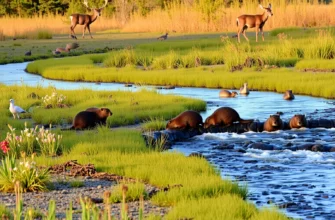
- Beyond the Green: Why Rewilding Golf Courses is a Conservation Masterstroke
- Turning Abandoned Fairways into Wildlife Corridors
- Golf Course vs. Wild Meadow: The Ecological Trade-off
- The Investor’s Guide to Buying Land for Rewilding Projects
- What to Look for When Buying Land to Rewild
- From Monoculture to Mosaic: Rewilding Farmland and Restoring Soil
- Rewilding Abandoned Farmland: The First Five Years
- The Four-Legged Engineers: Why Rewilding Cattle and Pigs are Essential
- How Rewilding Cattle Mimic Ancient Grazing Patterns
- Carbon Rewilding: How Your Land Becomes a Natural Carbon Sink
- Measuring the Environmental ROI of Your Rewilding Estate
- Essential Steps for Successful Rewilding Management
- Common Pitfalls in Feral Rewilding: What to Avoid
- Expert Perspective: Large-Scale Land Restoration
- Frequently Asked Questions
Beyond the Green: Why Rewilding Golf Courses is a Conservation Masterstroke
Golf courses occupy vast swathes of land that are often managed as ecological deserts despite their lush appearance. By stripping away the intensive maintenance regimes of chemical fertilizers and constant mowing, these spaces can transition into high-functioning biological hubs.
The transformation from a manicured sporting venue to a self-sustaining ecosystem represents a shift from control to facilitation. This process allows dormant seed banks to emerge and restores the natural hydrology of the landscape, which is often severely altered by artificial drainage systems.
Turning Abandoned Fairways into Wildlife Corridors
The linear design of most golf courses makes them perfect candidates for habitat connectivity. Most modern landscapes are fragmented by urban sprawl and intensive agriculture, leaving wildlife isolated in small pockets of greenery. When we begin rewilding golf courses, these long strips of land serve as vital arteries for species movement.
Transitioning from short-cropped turf to native meadows involves more than just stopping the mowers. It requires a managed transition where dominant grasses are suppressed to allow wildflowers and diverse forbs to take hold. Landowners should prioritize the removal of drainage tiles to allow the soil to return to its natural moisture levels, creating a mosaic of damp hollows and dry ridges.
Letting nature take over does not mean the land becomes unproductive; rather, its productivity shifts from human recreation to ecosystem services. As the fairways grow out, they provide nesting sites for ground-nesting birds and essential nectar sources for pollinators that have been squeezed out of the surrounding suburbs. Wildlife corridors succeed best when they connect two larger “anchor” habitats, such as ancient woodlands or existing nature reserves, allowing for a flow of genetic diversity across the region.
Golf Course vs. Wild Meadow: The Ecological Trade-off
Understanding the environmental footprint of a traditional golf course compared to a rewilded landscape highlights the urgent need for land-use reform. The following data points illustrate the drastic reduction in resource consumption and the exponential gain in biological health.
| Metric | Standard Golf Course | Rewilded Meadow/Woodland |
|---|---|---|
| Annual Water Usage | Up to 1 million gallons per day during peak summer. | Zero artificial irrigation; relies on natural precipitation. |
| Chemical Inputs | Heavy use of fungicides, herbicides, and nitrogen-rich fertilizers. | Zero synthetic chemicals; soil health is restored via natural decay. |
| Biodiversity Index | Low; dominated by 2-3 species of non-native turf grass. | High; supports hundreds of plant, insect, and vertebrate species. |
| Carbon Sequestration | Net emitter due to machinery use and fertilizer production. | Significant net sink through deep-rooted perennials and soil organic matter. |
| Maintenance Cost | High; requires constant labor, fuel, and specialized equipment. | Low; limited to monitoring and occasional animal management. |
The Investor’s Guide to Buying Land for Rewilding Projects
Investing in land for restoration is no longer just a philanthropic endeavor; it is a burgeoning sector of the green economy. As carbon credits and biodiversity net gain (BNG) units become tradable commodities, the financial logic for purchasing degraded land is stronger than ever.
Successful land acquisition requires a shift in perspective from traditional agricultural yield to ecological potential. Investors must look for “marginal” land—areas that are difficult to farm or maintain—as these often provide the highest returns in terms of biodiversity recovery and carbon capture.
What to Look for When Buying Land to Rewild
When assessing a potential site, the first priority should be the soil’s history. Land that has been heavily treated with systemic pesticides may have a depleted microbiome, meaning the recovery of mycorrhizal fungi—the “internet of the forest”—will take longer. Performing a comprehensive soil baseline test is essential to understand the level of nutrient loading, particularly phosphate, which can hinder the growth of native wildflowers.
Identifying existing biodiversity anchors is the next step in buying land to rewild. Look for properties with “remnant” features like overgrown hedgerows, old ponds, or a few ancient trees. These features act as biological catalysts, providing a source of seeds and local fauna that will quickly colonize the rest of the property. Proximity to existing protected areas increases the land’s value because it enhances the regional habitat connectivity, making your project more attractive for government subsidies and private conservation grants.
Effective rewilding property management also involves understanding local water rights and topography. Land that naturally floods or has a high water table is an asset, not a liability. In the context of climate change, wetland restoration is one of the most valuable ecosystem services a landowner can provide, offering flood mitigation for downstream communities while sequestering massive amounts of carbon in peat and silt.
From Monoculture to Mosaic: Rewilding Farmland and Restoring Soil
Traditional farming often relies on monocultures—growing a single crop over a large area—which exhausts the soil and requires constant chemical intervention. Rewilding farmland breaks this cycle by allowing a diverse “mosaic” of habitats to develop, ranging from scrubland and groves to open grasslands.
This transition is not about abandoning the land but about changing the harvest. Instead of tons of wheat or barley, the land “produces” clean water, stable soil, and a resilient climate. The shift from intensive production to ecological restoration allows the soil to rebuild its structure, increasing its ability to hold water and resist erosion.
Rewilding Abandoned Farmland: The First Five Years
The initial phase of rewilding abandoned farmland is often the most difficult for the human eye to accept. This is the “scrub phase,” where hardy plants like brambles, hawthorn, and gorse begin to take over. While it may look messy, this thorny scrub is the nursery of the future forest, protecting young saplings from being eaten by deer and providing essential nesting cover for songbirds.
When rewilding a British farm or any temperate landscape, a patient, hands-off approach is vital. Avoid the temptation to plant trees in neat rows. Instead, allow “natural regeneration” to take place. Trees that seed themselves are more resilient than nursery-grown saplings because they have developed in situ, adapting to the specific micro-climate and soil conditions of your land. During these first five years, your primary role is to remove internal fences and observe how the water moves across the land after heavy rain.
The Four-Legged Engineers: Why Rewilding Cattle and Pigs are Essential
A truly wild landscape is not a static forest; it is a dynamic system kept open by the movement and feeding habits of large herbivores. Without these “ecosystem engineers,” a rewilded site will often revert to a dense, uniform canopy that shades out smaller plants and reduces overall diversity.
Animals like cattle and pigs introduce “disturbance” into the environment. This disturbance is the engine of biodiversity, creating a variety of niches where different species can thrive. By mimics the roles played by extinct megafauna like the Aurochs and wild boar, we can maintain a healthy balance between woodland and grassland.
How Rewilding Cattle Mimic Ancient Grazing Patterns
There is a fundamental difference between commercial grazing and the use of rewilding cattle. In a commercial setting, cattle are often kept in high densities and moved frequently. In a rewilding project, stocking densities must be kept extremely low—often just one animal per several hectares—to ensure they do not overgraze the site.
Hardy, primitive breeds like English Longhorns or Highland cattle are preferred because they can thrive on coarse vegetation and live outdoors year-round without supplemental feed. These animals don’t just eat grass; they browse on bark, knock down saplings, and create “pioneer” ground with their hooves. Pigs are equally important for their rooting behavior; as they dig for roots and tubers, they turn over the soil, exposing the seed bank and creating bare earth patches where light-demanding wildflowers can germinate. This process of a rewilding landscape being dug up by animals is what prevents the land from becoming a stagnant monoculture of tall grass or dense scrub.
Carbon Rewilding: How Your Land Becomes a Natural Carbon Sink
The climate crisis has turned carbon into a currency. Rewilding is one of the most effective nature-based solutions for carbon sequestration because it stores carbon in multiple “pools”: the standing biomass of trees, the complex root systems of perennial plants, and, most importantly, the soil itself.
Unlike a commercial timber plantation, which is harvested every few decades, a rewilded estate keeps its carbon locked away indefinitely. As the ecosystem matures and the soil organic matter increases, the land’s capacity to store carbon grows year after year, creating a permanent and resilient carbon sink.
Measuring the Environmental ROI of Your Rewilding Estate
The financial return on a rewilding estate is increasingly tied to its carbon performance. Deep-rooted native plants, such as oaks and various meadow grasses, transport carbon deep into the earth where it is less likely to be released back into the atmosphere. Soil carbon can be stored for centuries if the land remains undisturbed by plowing or heavy machinery.
Landowners can now tap into financial incentives for carbon rewilding through various verification standards. To maximize your “Return on Integrity,” you must establish a rigorous carbon baseline before the project begins. This involves taking deep soil cores to measure current carbon stocks. As the project progresses, the increase in carbon can be sold as high-quality offsets to companies looking to mitigate their unavoidable emissions. This revenue stream can cover the costs of land management and provide a long-term income for the estate owner.
Essential Steps for Successful Rewilding Management
Starting a restoration project requires a balance of scientific planning and the courage to let go of control. Follow these steps to ensure your land transitions smoothly from a managed state to a wild one.
- Conduct a Baseline Ecological Survey: Hire a professional to document every plant, bird, and insect species currently present. You cannot measure success without a starting point.
- Map the Hydrology: Identify old drainage pipes and fill them in. Water is the lifeblood of rewilding; let it pool and flow naturally to create diverse habitats.
- Remove Internal Boundaries: Take down fences and walls that restrict animal movement. This allows herbivores to choose their own grazing paths, creating a more natural mosaic.
- Introduce “Engineers” Slowly: Start with a very low number of hardy cattle or ponies. Observe their impact for a full season before adding more animals or different species like pigs.
- Implement Minimal Intervention: Once the basics are in place, resist the urge to “fix” things. Dead wood should be left where it falls to provide habitat for fungi and beetles.
- Establish a Monitoring Protocol: Set up fixed-point photography and annual surveys to track the return of key indicator species;
Common Pitfalls in Feral Rewilding: What to Avoid
While the goal of rewilding is to let the land go feral, total neglect can lead to legal issues or poor relations with the local community. Use the following guide to navigate the complexities of large-scale restoration.
| Action | The “Do” Approach | The “Don’t” Approach |
|---|---|---|
| Neighbor Relations | Communicate early and often. Explain the benefits of flood mitigation and wildlife return to those living nearby. | Don’t ignore concerns about “weeds” or escaped livestock. Unmanaged fences can lead to legal disputes. |
| Invasive Species | Target non-native invasive plants like Rhododendron or Japanese Knotweed that can choke out all other life. | Don’t assume “wild” means everything is welcome. Invasive species can destroy the biodiversity you are trying to build. |
| Tree Planting | Prioritize natural regeneration. Only plant native species if there is no local seed source within a reasonable distance. | Don’t plant trees in plastic guards and straight rows. This creates a plantation, not a wild forest. |
| Animal Welfare | Provide minimal but essential care. Ensure animals have access to water and check them regularly for health issues. | Don’t “set and forget” livestock. In many jurisdictions, you are legally responsible for their welfare, even in a rewilding context. |
Expert Perspective: Large-Scale Land Restoration
In my professional experience, the most significant barrier to successful rewilding isn’t the soil or the species—it’s the human ego. We have been conditioned for centuries to equate “good land management” with tidiness, straight lines, and high yields. I always advise my clients that the hardest part of rewilding is learning to do nothing. When a tree falls, your instinct will be to clear it; when a field fills with thistles, you will want to mow it. You must resist these urges. True expertise in this field involves becoming a facilitator rather than a commander. You are setting the stage for natural processes—like herbivory, decay, and succession—to take the lead. The most biodiverse landscapes are often the messiest, and embracing that complexity is the hallmark of a truly successful restoration project.
Frequently Asked Questions
Most golf courses can be restored, but the speed of recovery depends on local soil health, historical chemical use, and the proximity of “seed rain” from nearby healthy ecosystems.
Is rewilding farmland the same as organic farming?
No. While organic farming avoids synthetic chemicals, it still focuses on food production. Rewilding prioritizes the restoration of natural processes and ecosystem functions over any commercial yield.
How do you manage cattle in a rewilding project?
Management involves using low-density, hardy breeds that can live outdoors year-round. Human intervention is kept to a minimum, focusing mainly on mandatory health checks and water access.
What are the financial benefits of carbon rewilding?
Landowners can generate significant income through the sale of carbon credits, biodiversity net gain units, and by accessing government subsidies designed for environmental land management.
How long does it take for a rewilded farm to show results?
Initial results, such as the return of insects and birds, are often visible within 1-3 years. However, the development of a complex mosaic of woodland and scrub takes several decades.
Does rewilding require digging up the existing landscape?
Generally, no. While some initial soil de-compaction or drainage removal might be necessary, the ultimate goal is to let natural processes and animals like pigs do the “digging” over time.