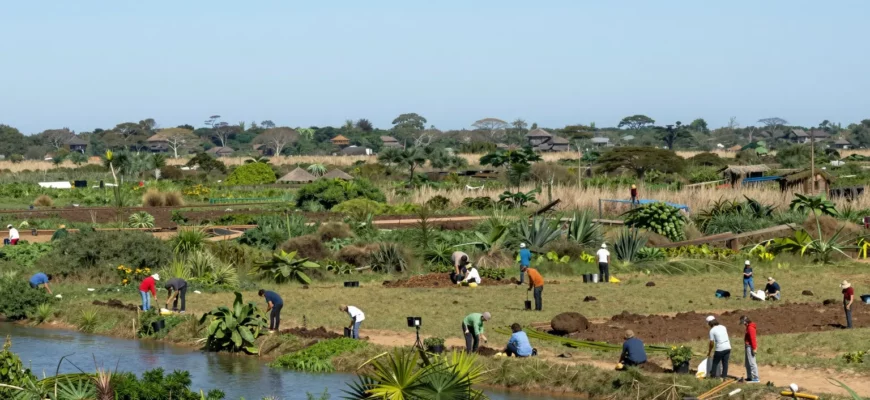
- The Ecological Imperative to Rewild Substantial Tracts of Land
- Why Size Matters for Biodiversity Recovery
- Concrete Jungles to Living Forests: Rewilding Urban Areas
- The Rise of Micro-Wilderness in City Planning
- Navigating the Conflict: Does Rewilding Mean Taking Land Away?
- Balancing Food Security with Ecological Health
- Scientific Assessment: Identifying Land Capable of Being Rewilded
- The Topography of Restoration Potential
- The Legal Framework: How Rewilding Policy Drives Change
- Incentivizing Nature: From Subsidies to Natural Capital
- Large-Scale vs. Localized Efforts: A Strategic Comparison
- Frequently Asked Questions
The Ecological Imperative to Rewild Substantial Tracts of Land
Modern conservation is shifting from merely protecting what remains to actively restoring what has been lost. To truly reverse the decline of our natural world‚ we must look beyond small‚ isolated nature reserves and focus on expansive landscapes that allow nature to govern itself.
Large-scale ecosystems provide the space necessary for natural processes to fluctuate and evolve without constant human interference. By restoring these substantial tracts of land‚ we create resilient environments capable of weathering the pressures of a changing climate.
Why Size Matters for Biodiversity Recovery
The success of biodiversity recovery is fundamentally tied to the scale of the available habitat. Large-scale conservation ensures that species have the room to roam‚ forage‚ and breed without the constant threat of human encroachment or genetic isolation.
For apex predators such as wolves‚ lynx‚ or eagles‚ a small woodland is simply insufficient; these animals require territories spanning hundreds of square kilometers. When we manage land at this scale‚ we trigger trophic cascades‚ where the presence of top predators naturally regulates prey populations‚ which in turn allows vegetation to recover and creates niches for thousands of other species.
Furthermore‚ conserving environments at a landscape scale is the only way to effectively reduce habitat fragmentation. By establishing ecological connectivity‚ we allow species to migrate in response to seasonal changes or long-term climate shifts. Without these corridors‚ many species face “climate traps” where they cannot move fast enough to find suitable new habitats as their current ones become unviable.
Concrete Jungles to Living Forests: Rewilding Urban Areas
Rewilding is often associated with remote mountains or vast plains‚ but its principles are increasingly being applied to the heart of our cities. Urban restoration serves as a vital bridge between human civilization and the wild‚ proving that biodiversity can thrive even in densely populated zones.
Integrating nature into city planning isn’t just an aesthetic choice; it is a functional necessity for modern urban resilience. By replacing sterile lawns and concrete with complex‚ multi-layered ecosystems‚ cities can manage heat and water more effectively.
The Rise of Micro-Wilderness in City Planning
City planners are moving away from traditional manicured parks in favor of “micro-forests” and “pocket jungles.” These small-scale interventions‚ often following the Miyawaki method‚ involve planting a high density of native species to jumpstart a self-sustaining forest in a fraction of the time it would take naturally.
Urban biodiversity relies on these small patches acting as stepping stones for insects‚ birds‚ and small mammals. When cities invest in green infrastructure‚ such as green roofs and “daylighted” streams—where buried waterways are brought back to the surface—they create a network that links the city center to the wider rural wild zones.
This connectivity is essential for urban cooling. A dense micro-forest can be up to 10 degrees Celsius cooler than the surrounding pavement‚ providing a natural solution to the urban heat island effect. Moreover‚ these spaces provide residents with essential ecosystem services‚ including improved air quality and significant mental health benefits from regular contact with nature.
Navigating the Conflict: Does Rewilding Mean Taking Land Away?
One of the most significant hurdles to large-scale restoration is the perception that it competes with food production or traditional rural livelihoods. This tension often creates a “wild vs. farmed” binary that ignores the nuance of sustainable land management.
The transition toward a more wild landscape does not require the abandonment of agriculture‚ but rather a strategic shift in where and how we produce food. By focusing restoration on marginal land—areas where farming is economically unviable without heavy subsidies—we can maximize ecological gains without compromising national food security.
Myth: Rewilding will lead to a food shortage by removing all farmland.
Fact: Most rewilding projects target low-grade agricultural land (Grade 4 or 5) that contributes less than 2% of total caloric output while requiring the highest chemical inputs.Myth: Rewilding is a “land grab” by the government or wealthy elites.
Fact: Successful projects are increasingly community-led models where local stakeholders retain land use rights and benefit from new green economies.
Balancing Food Security with Ecological Health
The key to resolving land-use conflict lies in rural community engagement. When local farmers and residents are treated as partners rather than obstacles‚ rewilding becomes a tool for rural revitalization. New income streams from nature-based tourism‚ carbon credits‚ and specialized conservation grazing can often outperform traditional sheep or hill farming on poor soil.
We must prioritize the restoration of natural processes on land that is currently “working” against its own ecology. For example‚ restoring peatlands that were unsuccessfully drained for grazing can sequester massive amounts of carbon while preventing downstream flooding‚ providing a public good that far outweighs the value of the minimal livestock those lands could support.
Scientific Assessment: Identifying Land Capable of Being Rewilded
Not every piece of land is a candidate for immediate rewilding. To ensure the success of a project‚ ecologists must conduct a rigorous site suitability analysis to determine the baseline conditions and the potential for autonomous recovery.
A technical assessment looks beyond the surface to understand the underlying “skeleton” of the landscape. This includes analyzing the soil’s microbial health‚ the history of chemical use‚ and the existing seed bank that may still lie dormant beneath the surface.
- Soil Health Baseline: Measure bulk density and fungal-to-bacterial ratios to determine if the land can support native reforestation without heavy intervention.
- Hydrological Mapping: Identify historic floodplains and blocked watercourses to see where hydrological connectivity can be restored.
- Existing Biodiversity Reservoirs: Locate nearby “source” populations of native flora and fauna that can naturally colonize the new site.
- Topographic Variation: Prioritize land with varied elevations and aspects‚ as these provide “micro-refugia” for species during extreme weather events.
- Chemical Residue Analysis: Test for persistent pesticides or high phosphate levels that might inhibit the growth of certain native plant communities.
The Topography of Restoration Potential
Ecological potential is often hidden by decades of intensive management. A site that looks like a barren monoculture may have a high recovery potential if the watershed health is intact. If the natural flow of water can be restored by removing old drainage tiles or re-meandering straightened streams‚ the landscape will often “heal” itself with surprising speed.
Technical site selection also involves looking at the surrounding landscape. A 500-hectare plot adjacent to an existing national park has significantly more value than a 1‚000-hectare plot surrounded by intensive industrial development. The goal is to build upon existing natural capital to create a functional‚ self-sustaining whole.
The Legal Framework: How Rewilding Policy Drives Change
Science identifies the “where‚” but policy dictates the “how.” Without a supportive environmental legislation framework‚ large-scale rewilding remains a series of isolated projects rather than a systemic shift in land management.
Governments are beginning to realize that paying for “public goods”—such as clean water‚ carbon storage‚ and biodiversity—is a more efficient use of taxpayer money than subsidizing inefficient food production. This shift is creating a nature-based economy where land stewardship is a profitable enterprise.
Incentivizing Nature: From Subsidies to Natural Capital
In regions like the UK‚ the transition to the Environmental Land Management Scheme (ELMS) represents a massive shift. Farmers are no longer paid simply for owning land; they are paid for the ecosystem services they provide. This includes creating wildlife corridors‚ restoring hedgerows‚ and allowing scrubland to develop.
The private sector is also playing a growing role through biodiversity net gain mandates. In many jurisdictions‚ developers must now ensure that any natural loss during construction is offset by a 10% to 20% gain in biodiversity elsewhere. This creates a direct market for rewilded land‚ as developers purchase “credits” from landowners who have restored their tracts.
Furthermore‚ carbon sequestration tax breaks and the sale of carbon credits provide long-term financial stability for large-scale projects. By quantifying the amount of carbon captured by a restored peatland or a new native woodland‚ landowners can tap into global voluntary carbon markets‚ making rewilding a competitive alternative to traditional development.
Large-Scale vs. Localized Efforts: A Strategic Comparison
While both large-scale and localized rewilding are essential‚ they serve different ecological and social functions. Understanding these differences allows policy makers and conservationists to allocate resources more effectively.
| Feature | Large-Scale Rewilding (1‚000+ Ha) | Localized/Urban Rewilding (1-50 Ha) |
|---|---|---|
| Primary Goal | Species recovery & trophic cascades | Ecosystem services & human well-being |
| Species Supported | Large carnivores‚ migratory herds | Pollinators‚ songbirds‚ amphibians |
| Management Style | Passive / Minimal intervention | Active / High-density planting |
| Economic Drivers | Carbon credits‚ eco-tourism‚ BNG | Property value‚ cooling‚ flood relief |
| Social Impact | Rural revitalization | Public health & education |
In my professional experience‚ I have found that the greatest mistake in rewilding is the desire to control the outcome. I always advise my clients that rewilding is not about “gardening on a big scale.” It is about active management to reach a state of self-sustaining ecological autonomy. If you are still deciding which tree goes where after ten years‚ you haven’t rewilded; you’ve just built a park. True success is marked by the moment the land starts making its own decisions—when a flood creates a new wetland or a fallen tree opens up a glade without a chainsaw ever touching the bark. We must focus on restoring function and process‚ not just a static picture of what we think the past looked like.
Frequently Asked Questions
While definitions vary by region‚ a substantial tract is generally an area large enough to support self-sustaining populations of keystone species and natural disturbance regimes‚ typically exceeding 1‚000 contiguous hectares.
Is urban rewilding as effective as rural rewilding?
They serve different purposes; urban rewilding provides critical ecosystem services like flood mitigation and cooling for human populations‚ whereas rural rewilding is essential for broad-scale species recovery and genetic diversity.
Does rewilding always mean removing livestock?
No‚ many projects utilize conservation grazing with hardy‚ ancient breeds of cattle or ponies to mimic the ecological impact of extinct wild herbivores like the aurochs or wild horse.
How does rewilding policy impact private landowners?
Current policies offer financial incentives such as biodiversity credits‚ carbon offsets‚ and government grants‚ often making rewilding more profitable than traditional farming on marginal‚ low-yield land.
Can rewilded land ever be returned to agriculture?
Technically yes‚ as rewilding often drastically improves soil fertility and structure; however‚ many projects use long-term legal easements to ensure the ecological gains are protected for future generations.