- Why The Flowering Wand is Rewilding the Sacred Masculine
- Moving Beyond the Hero’s Journey
- Rewilding the Mind: Insights from Manchán Magán
- Language as a Bridge to the Living World
- The Occult Roots of Rewilding Witchcraft
- Scarlet Imprint and the Apocalyptic Craft
- Sarah Anne Lawless and Ancestral Wisdom
- Comparing Rewilding Paths: Men, Women, and the Dark Goddess
- Shakti and the Dark Goddess: Rewilding for Women
- Practical Spells for Making Hidden Things Visible
- Rewilding the Tarot: A New Lens for Divination
- The Library of the Wild: Essential Reading and Resources
- How to Borrow and Study The Flowering Wand
- Frequently Asked Questions
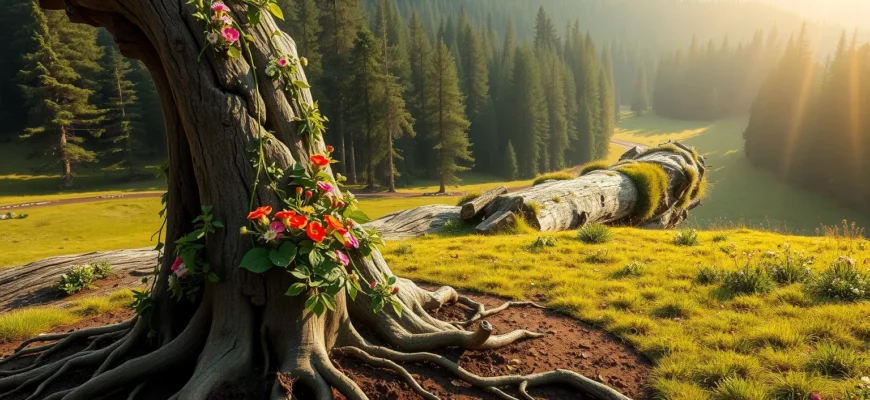
Why The Flowering Wand is Rewilding the Sacred Masculine
The traditional image of the masculine often involves a stone-faced conqueror or a solar hero who slays the dragon to win the prize. Sophie Strand’s work, particularly in her seminal text, challenges this rigid architecture by rooting the masculine back into the soil and the fungal networks of the forest floor.
By rewilding masculinity, we move away from the “Iron Crown” of patriarchal dominance and toward a “Flowering Wand” that represents growth, decay, and ecological integration. This shift requires us to see the masculine not as a static hierarchy, but as a vegetative and mycelial force that is deeply intertwined with the health of the planet.
Moving Beyond the Hero’s Journey
The Hero’s Journey, popularized by Joseph Campbell, often emphasizes the individual’s ascent and ultimate separation from the “ordinary world” to achieve a singular goal. To truly rewild the masculine, we must abandon the pursuit of the solar hero who lives forever in the sky and instead embrace the sprout-king who eventually returns to the mud.
This transition involves examining mythic archetypes that have been suppressed by centuries of industrial and colonial thought. Figures like Dionysus, the Green Man, and even the original, un-sanitized versions of Orpheus provide a blueprint for a masculinity that is fluid, ecological, and comfortable with the cycles of life and death.
When we look at these older myths, we find that the masculine was once synonymous with the “wetness” of the world—the sap in the trees and the blood in the veins. By reclaiming these stories, we begin to dismantle the toxic expectation that men must be unmoving monoliths, allowing them to become part of the living, breathing ecosystem once again.
Rewilding the Mind: Insights from Manchán Magán
Our thoughts are often as domesticated as the lawns we mow, pruned into straight lines and predictable patterns by consumerist culture. Manchán Magán suggests that to truly reconnect with the earth, we must first rewild the mind by examining the language we use to describe our environment.
Magán’s exploration of the Irish language reveals a world where the landscape is not an object to be owned, but a relative to be respected. This linguistic shift is essential for unlearning the habits of a society that views nature as a resource rather than a living community.
| Core Concept | Domestication (Modern View) | Rewilding (Indigenous View) |
|---|---|---|
| Land Ownership | A commodity to be bought and sold. | A living entity that hosts our existence. |
| Language | A tool for efficiency and commerce. | A bridge to the spirits of the landscape. |
| Identity | Defined by career and consumption. | Defined by ecological relationships and ancestry. |
| Thought Patterns | Linear, logical, and growth-oriented. | Cyclical, intuitive, and seasonally aware; |
Language as a Bridge to the Living World
In many indigenous languages, including the archaic layers of Irish, there are hundreds of words for specific types of hills, bogs, and weather patterns that English collapses into generic terms. To engage in rewilding the mind, we must cultivate a vocabulary that recognizes the nuances of the local ecosystem.
When we use specific names for the plants, stones, and winds of our home, we move from being strangers in a strange land to being members of a community; This process of “unlearning” requires us to stop seeing the world as a backdrop for human drama and start seeing it as the lead actor.
The “Unlearn” philosophy popularized by Magán encourages us to seek out these linguistic fossils. By doing so, we can break the cycle of consumerist thought that demands constant novelty and instead find depth in the familiar rhythms of the seasons.
The Occult Roots of Rewilding Witchcraft
Rewilding is not merely an environmental movement; it is a spiritual revolution that seeks to return magic to the dirt and the darkness. The Rewilding Witchcraft movement rejects the “fluffy” or overly commercialized versions of modern spirituality in favor of a visceral, often unsettling connection to the land spirits.
This path is about more than just lighting candles; it is about becoming an active participant in the ecology of your local area. It involves a “radical traditionalism” that looks back to ancestral wisdom while remaining fiercely committed to the survival of the earth in the present moment.
Scarlet Imprint and the Apocalyptic Craft
Peter Grey and the Scarlet Imprint publishing house have been instrumental in defining this “Apocalyptic Craft.” Grey’s call for an earth-centered magic is a rejection of the escapist tendencies in modern occultism that focus on astral planes rather than the physical degradation of our planet.
In this context, witchcraft is a tool for survival and a method of resistance against the systems that destroy the wild. To practice Rewilding Witchcraft is to stand with the forest and the mountain, recognizing that their fate is inextricably linked to our own.
The magic described here is heavy and rooted, dealing with the “dark” aspects of nature—decomposition, predation, and the necessity of death. It is a spirituality that does not flinch at the sight of bone or the smell of rot, understanding that these are the foundations of all new life.
Sarah Anne Lawless and Ancestral Wisdom
Sarah Anne Lawless has long advocated for a return to folk horror and herbalism as primary tools for rewilding. Her work emphasizes the importance of local land spirits and the specific folklore of the places where we actually live, rather than adopting generic, globalized traditions.
By working with “poisonous” plants or exploring the folklore of the “wild hunt,” practitioners can access a raw, primal power that has been largely sterilized in modern society. This is about connecting with the “genius loci”—the spirit of the place—and offering it your devotion and protection.
Ancestral wisdom in this tradition is not just about genealogy; it is about becoming a worthy ancestor for the future. This requires us to develop a deep, working knowledge of the plants, animals, and geological history of our immediate surroundings.
Comparing Rewilding Paths: Men, Women, and the Dark Goddess
While the goal of rewilding is a healthier, more integrated ecosystem, the archetypal paths to get there can vary. Whether we are working with the sprouting masculine or the destructive feminine, we are all moving toward the same center: a state of ecological grace.
The Dark Goddess archetypes, such as Kali, Hecate, or the Morrigan, serve as the perfect counterparts to the rewilded masculine. While the “Flowering Wand” represents the sprout, the “Dark Goddess” represents the necessary force of decomposition that clears the way for that sprout to emerge.
| Archetype | Primary Energy | Ecological Function | Focus for Practice |
|---|---|---|---|
| Rewildled Masculine | Vegetative / Mycelial | Nutrient exchange and growth. | Vulnerability and networking. |
| Shakti / Wild Feminine | Creative / Primal | The raw power of manifestation. | Embodiment and sensuality. |
| Dark Goddess | Decomposition / Void | Clearing the old for the new. | Shadow work and boundary setting. |
Shakti and the Dark Goddess: Rewilding for Women
For women, rewilding often involves reclaiming Shakti—the primal, creative energy that has been suppressed or commodified. This is not a “gentle” femininity; it is the power of the storm, the volcano, and the birthing room.
The Dark Goddess acts as a guide through the “underworld” phases of life, teaching us that destruction is a holy act when it removes what is dead and stagnant. Rewilding for women often means embracing these “darker” aspects of the feminine that are usually labeled as “hysterical” or “dangerous” by the patriarchy.
By aligning with these forces, women can reclaim their sovereignty and reconnect with the wild rhythms of their own bodies. This is a form of spiritual ecology that recognizes the female body as a mirror of the earth’s own cycles of fertility and barrenness;
Practical Spells for Making Hidden Things Visible
Rewilding is not just a theoretical exercise; it requires action. “Making hidden things visible” is a metaphor for developing the eyes to see the magic and the life that is already present in your backyard, even in the most urban environments.
These “spells” are often simple rituals of attention and unlearning. They are designed to break the trance of the screen and the shopping mall, forcing us to engage with the physical reality of the world around us.
- The Sit Spot: Spend 20 minutes every day in the same outdoor spot. Do not look at your phone; simply observe the changes in light, insect activity, and bird calls.
- Foraging for Awareness: Learn to identify three “weeds” in your local area. Research their medicinal properties and folklore to transform them from “pests” into “allies.”
- The Soil Offering: Before starting any creative project, bury a biodegradable offering in the earth. Ask the local land spirits for permission and guidance to ground your work in reality.
- Lunar Tracking: Stop following the Gregorian calendar for a month. Track your energy levels and moods according to the phases of the moon and the local weather.
- Ancestral Altar: Create a small space with stones, water, and photos of ancestors. Include “ancestors of the land”—the people who lived where you live now—to acknowledge the history of your home.
Rewilding the Tarot: A New Lens for Divination
The Tarot is often used for human-centric psychology, but it can also be a map for ecological connection. Rewilding the Tarot involves interpreting the cards through the lens of seasonal cycles and animal behaviors.
For example, the Emperor might be viewed through the archetype of the Oak tree—stable, sheltering, but also prone to rigidity. The High Priestess might be the deep, dark water of a hidden spring. By shifting the focus from the individual ego to the wider ecosystem, divination becomes a tool for aligning our lives with the earth.
When you pull a card, ask what it is telling you about your relationship with the non-human world. If you pull the Three of Swords, perhaps it is not just about heartbreak, but about the “heartbreak” of the land being paved over, and how you can help it heal.
The Library of the Wild: Essential Reading and Resources
To truly unlearn the habits of industrial society, we need to fill our minds with better stories. Building a “Library of the Wild” is about curating a collection of voices that challenge the status quo and offer a more regenerative vision of the future.
Many of these titles are published by independent presses and may not be available in your local big-box bookstore. Seeking them out is part of the rewilding process—supporting the small, the niche, and the radical rather than the mass-produced.
Pro-Tip for Seekers: When looking for niche titles like “The Flowering Wand” or “Rewilding Witchcraft,” always check with independent booksellers or specialty occult shops first. These businesses are the “mycelial networks” of the literary world and deserve your support.
How to Borrow and Study The Flowering Wand
If you cannot afford to buy these books, use the library system. Many libraries allow you to request “Inter-Library Loans” for niche titles. This is a great way to access radical information without contributing to the consumerist cycle of buying and discarding.
When studying these texts, do not just read them with your head; read them with your hands. Take the concepts outside. If you read about a specific myth, find a place in nature that feels like that myth and sit with it. This is how information becomes wisdom.
Building a personal rewilding syllabus should be a slow, intentional process. Don’t rush to finish a book just to say you’ve read it. Let the ideas compost in your mind, allowing them to transform your perception of the world over months and years.
In my professional experience working with both ecological restoration and psychological archetypes, I have found that the “Flowering Wand” approach is the most effective way to address the modern crisis of masculinity. Rewilding is not about becoming “savage” or “aggressive”; it is about becoming “sensitive” and “connected.” By adopting a mycelial mindset, men can learn to lead through support and collaboration rather than dominance. I always advise my clients to start by tending a small patch of earth—even if it’s just a window box. The act of caring for something that can die is the fastest way to rewild a heart that has been hardened by modern life.
Frequently Asked Questions
The core argument is that masculinity should be rooted in ecological connection and mycelial networking rather than patriarchal dominance and the “solar hero” archetype.
How can I start rewilding my mind daily?
Begin by learning the specific names of local plants and birds, and try to describe your surroundings using sensory language rather than commercial or functional terms.
Who is Peter Grey in the context of rewilding witchcraft?
Peter Grey is a co-founder of Scarlet Imprint and a leading voice in radical, earth-centered occultism, advocating for a magic that is physically engaged with environmental defense.
Are there specific spells for rewilding yourself?
Yes, these are typically rituals of attention, such as the “23 spells” concept, which focuses on unlearning domesticated habits and observing the natural world with fresh eyes.
What does rewilding the tarot mean?
It is the practice of interpreting tarot cards through an ecological and animistic lens, looking for how the cards reflect seasonal changes and the needs of the non-human world.
Is rewilding the sacred masculine only for men?
No, these are archetypal energies available to all genders. Anyone can work with the “vegetative masculine” to foster ecological and spiritual healing.