- The Oostvaardersplassen Rewilding Experiment: A Laboratory of Nature
- Frans Vera and the Theory of the Open Park-Like Landscape
- Beyond the Polders: The Expansion of Dutch Rewilding Projects
- From River Banks to Coastal Dunes: The Netherlands Rewilding Map
- The European Wildness: From the Côa Valley to the Danube Delta
- Restoring the Water Giants: Water Buffalo in the Danube Delta
- Predators and Prey: The Return of the Iberian Lynx
- Philanthropy and the Private Sector: The Povlsen Influence
- The Wildland Vision: Anders Holch Povlsen’s Conservation Legacy
- Global Rewilding Frontiers: Chile‚ Argentina‚ and Beyond
- The Iberá Wetlands and the Return of the Jaguar
- Deserts and Deltas: From the Aral Sea to the South China Tiger
- Essential Species: The Engineers of the Rewilding World
- Beavers‚ Buffalo‚ and the Tauros: Nature’s Architects
- Expert Perspective: The Shift from Management to Wildness
- Frequently Asked Questions
The Oostvaardersplassen Rewilding Experiment: A Laboratory of Nature
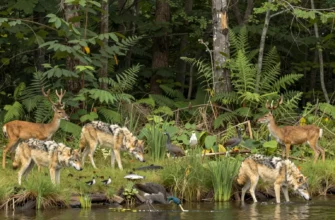
The Oostvaardersplassen is not your typical nature reserve; it is a 6‚000-hectare experiment that fundamentally altered how we perceive conservation. Born from reclaimed polder land in the Dutch province of Flevoland‚ this site was originally intended for industrial use before nature took a different path. When the industrial plans fell through‚ the heavy clay soils spontaneously transformed into a lush wetland‚ attracting thousands of migratory birds and setting the stage for one of the most ambitious ecological projects in history.
The core philosophy here was a radical departure from traditional “management.” Instead of humans deciding which plants should grow where‚ the project leaders decided to let natural processes take the wheel. This approach‚ pioneered by visionary ecologists‚ aimed to recreate a self-sustaining ecosystem where large herbivores acted as the primary drivers of landscape architecture.
Frans Vera and the Theory of the Open Park-Like Landscape
For decades‚ the prevailing ecological narrative suggested that prehistoric Europe was covered by a dense‚ impenetrable “primeval forest.” Frans Vera challenged this status quo with a hypothesis that shifted the entire rewilding movement. He argued that the landscape was historically an open‚ park-like mosaic of grasslands‚ thorny scrub‚ and groves‚ maintained not by climate alone‚ but by the relentless grazing of large herbivores.
To test this‚ the Dutch rewilding park introduced Konik horses and Heck cattle to mimic the extinct Tarpan and Aurochs. These animals do more than just eat; they create structural diversity by preventing a single species of tree from dominating the canopy. By debarking trees and grazing on saplings‚ they ensure that light reaches the ground‚ allowing wildflowers and rare insects to thrive in the gaps.
This model of Europe rewilding horses and cattle proved that natural grazing is a superior tool for biodiversity than mechanical mowing or human intervention. The results were immediate: the OVP became a haven for species like the white-tailed eagle‚ which had been absent from the Netherlands for centuries. The lesson was clear: if you provide the space and the “engineers‚” nature will find its own balance.
Beyond the Polders: The Expansion of Dutch Rewilding Projects
The success and the harsh lessons of the Oostvaardersplassen pushed Dutch conservationists to look beyond fenced enclosures. While the OVP demonstrated the power of trophic rewilding‚ it also highlighted the limitations of “islands” of nature that lack connectivity. Modern projects in the Netherlands now focus on “rewilding the landscape‚” integrating nature into river systems and coastal regions to create resilient corridors.
Wouter Helmer and the founders of Rewilding Europe transitioned the focus toward functional ecosystems that benefit both wildlife and local economies. This evolution moved away from the “hands-off” isolation of the early days toward a dynamic model where rivers are allowed to flood naturally and wildlife is free to migrate across borders.
| Feature | Early Dutch Experiments (e.g.‚ OVP) | Modern Open System Projects |
|---|---|---|
| Connectivity | Closed‚ fenced enclosures with no migration. | Open corridors and transboundary wildlife passages. |
| Population Control | Natural selection (often leading to winter mortality). | Dynamic management and migration to other regions. |
| Human Interaction | Strictly observational with limited access. | Eco-tourism‚ flood protection‚ and shared land use; |
| Ecological Goal | Species reintroduction in a static area. | Restoring natural processes like river flooding and predation. |
From River Banks to Coastal Dunes: The Netherlands Rewilding Map
One of the most significant shifts in the Netherlands rewilding strategy is the Grensmaas project. Along the Meuse River‚ conservationists have moved away from traditional dikes in favor of “Room for the River.” By widening the riverbed and removing artificial barriers‚ they have created thousands of hectares of new wilderness that double as a flood-prevention mechanism for nearby cities.
This project connects Dutch habitats to the broader European network‚ allowing species to move as the climate changes. The rewilding Europe Netherlands initiative has shown that nature-based solutions can be more cost-effective than traditional engineering. In the coastal dunes‚ the introduction of European bison (wisent) has helped manage overgrowth‚ proving that these massive animals can coexist with high-density human populations if managed with expertise.
The European Wildness: From the Côa Valley to the Danube Delta
The Dutch blueprint has exported its “nature-first” logic across the continent. From the abandoned farmlands of Portugal to the sprawling wetlands of Romania‚ rewilding is being used to reverse the trend of land abandonment and biodiversity loss. These projects aren’t just about saving individual species; they are about restoring the “web of life” that keeps ecosystems functioning during climate extremes.
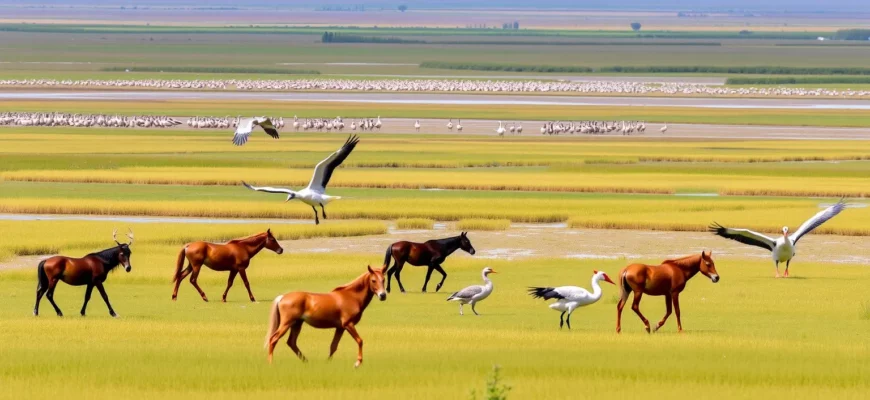
In the Danube Delta‚ the focus has shifted from drainage for agriculture back to the restoration of natural hydrology. This massive wetland system‚ the largest in Europe‚ is a critical stopover for millions of birds. Here‚ the reintroduction of large herbivores is helping to maintain the open water and reed beds that are essential for fish spawning and nesting sites.
Restoring the Water Giants: Water Buffalo in the Danube Delta
The reintroduction of water buffalo in the Danube Delta is a masterclass in functional ecology. These “water giants” are uniquely adapted to muddy terrains where cattle and horses struggle. By wallowing in the silt‚ water buffalo create small pools and channels that become vital micro-habitats for amphibians and rare aquatic plants.
In the Eastern Carpathians‚ similar efforts are underway to restore the grazing patterns of bison and red deer. These animals act as “nutrient pumps‚” moving minerals across the landscape and creating a patchwork of habitats. The goal is a self-sustaining ecosystem where human intervention is only required to remove the initial barriers to movement‚ such as old fences or dams.
Predators and Prey: The Return of the Iberian Lynx
Rewilding is incomplete without the “top-down” pressure of predators. In the Côa Valley of Portugal and the plains of Spain‚ the Iberian lynx rewilding project is a global success story. Once the world’s most endangered cat‚ the lynx is returning to its ancestral hunting grounds. This isn’t just a win for feline lovers; the presence of an apex predator regulates the populations of smaller carnivores like foxes and mongooses‚ which in turn protects ground-nesting birds.
The Western Iberia initiatives are working to create a “wildlife corridor” that allows the lynx and other species to move between protected areas. By working with local landowners to restore the Mediterranean scrubland‚ conservationists are proving that wild nature can be a driver of rural regeneration through high-end eco-tourism.
Philanthropy and the Private Sector: The Povlsen Influence
While many rewilding projects rely on government grants‚ a new wave of private philanthropy is accelerating the pace of restoration. Large-scale land acquisition by wealthy individuals has allowed for “landscape-scale” thinking that is often difficult for public agencies constrained by political cycles. This private-led conservation is particularly evident in the Scottish Highlands and parts of Scandinavia.
Anders Holch Povlsen has emerged as one of the most influential figures in this space. Through his organization‚ Wildland‚ he has acquired vast tracts of the Scottish Highlands with a 200-year vision for recovery. His approach is simple: remove the artificial pressures of overgrazing and let the forest return on its own terms.
The Wildland Vision: Anders Holch Povlsen’s Conservation Legacy
Povlsen’s work in Scotland focuses on reducing the unnaturally high deer populations that have prevented the regeneration of the Caledonian pine forest for centuries. By implementing strict deer management and removing old fences‚ the estate has seen a dramatic resurgence of native birch‚ rowan‚ and pine. This is not about creating a museum of the past‚ but about building a functional future.
The Povlsen rewilding model balances strict ecological restoration with sustainable tourism. By converting old shooting lodges into eco-retreats‚ the project generates the revenue needed to fund ongoing restoration. This demonstrates that private ownership can provide the long-term stability required for ecosystems that take centuries to mature.
Global Rewilding Frontiers: Chile‚ Argentina‚ and Beyond
The principles of trophic rewilding have crossed the Atlantic‚ finding a massive canvas in South America. The work of the late Douglas Tompkins and his wife Kristine has transformed conservation in Chile and Argentina. Their strategy—buying massive cattle ranches‚ removing the livestock‚ and then donating the land back to the state as National Parks—is perhaps the most successful private conservation effort in history.
In the Iberá wetlands‚ this has led to the reintroduction of species that hadn’t been seen in the region for nearly a century. This global expansion proves that the “Dutch model” of allowing natural processes to lead is a universal principle‚ whether you are dealing with a North Sea polder or a sub-tropical wetland.
- Restoration of Apex Predators: Reintroducing jaguars to the Iberá wetlands to restore the natural “landscape of fear” that manages herbivore behavior.
- Species Translocation: Moving giant anteaters and pampas deer back into protected zones to fill vacant ecological niches.
- Economic Transformation: Shifting local economies from extractive ranching to “nature-viewing” services‚ providing higher wages and better job security.
- Carbon Sequestration: Using rewilded peatlands and forests as massive natural carbon sinks to mitigate global temperature rises.
The Iberá Wetlands and the Return of the Jaguar
The Fundación Rewilding Argentina has achieved what many thought impossible: the return of the jaguar to the Iberá National Park. As the largest cat in the Americas‚ the jaguar’s presence is a critical indicator of a healthy ecosystem. Its return ensures that prey species like capybara remain healthy and that the vegetation isn’t overgrazed.
This project is a prime example of “complete rewilding‚” where every level of the food chain is restored to create a resilient‚ self-regulating system. The success here has inspired similar projects in the Patagonia region‚ where the focus is on protecting the elusive puma and the Andean condor.
Deserts and Deltas: From the Aral Sea to the South China Tiger
Rewilding is even touching some of the most degraded landscapes on Earth. In the Aral Sea basin‚ once a site of ecological catastrophe‚ projects are underway to plant millions of saxaul trees to stabilize the desert sands and restore a semblance of the former ecosystem. Meanwhile‚ the South China Tiger project‚ though controversial‚ aims to “re-wild” captive-bred tigers in South Africa before returning them to their native range.
In the United States‚ the Bolson tortoise rewilding effort in the Chihuahuan Desert highlights how ancient species can be used to restore modern grasslands. These tortoises are “ecosystem engineers” that dig deep burrows used by dozens of other species‚ proving that even the slowest animals can be the most effective architects of biodiversity.
Essential Species: The Engineers of the Rewilding World
To understand rewilding‚ you must understand the “engineers”—the species that physically change their environment. These animals are not just residents of the habitat; they are the creators of it. By choosing the right mix of species‚ conservationists can trigger a “trophic cascade” that benefits everything from soil bacteria to apex predators.
The selection of these species is a scientific process. In the absence of extinct megafauna‚ ecologists look for modern equivalents that perform the same “job.” This is the logic behind using Konik horses for the role of the wild Tarpan or the Tauros for the Aurochs.
Critical Insight: The success of a rewilding project is rarely measured by the number of animals introduced‚ but by the complexity of the interactions they trigger. A single beaver colony can do more for water quality and flood prevention than a multi-million dollar engineering project.
Beavers‚ Buffalo‚ and the Tauros: Nature’s Architects
Beavers are perhaps the most famous engineers. In the Czech Republic and across Europe‚ beaver rewilding is transforming dry streams into vibrant wetland mosaics. Their dams filter pollutants‚ trap sediment‚ and create deep pools that provide refuge for fish during droughts.
The Tauros programme is another fascinating frontier. By back-breeding ancient cattle breeds that still carry the DNA of the Aurochs‚ scientists are creating a “super-grazer” capable of surviving in the wild without human assistance. These animals are hardier than domestic cattle and have the instinctual behavior needed to defend themselves against wolves‚ making them the perfect fit for the wilder landscapes of the Eastern Carpathians.
Expert Perspective: The Shift from Management to Wildness
In my professional experience‚ the greatest challenge in rewilding isn’t the biology—it’s the human desire for control. The “Oostvaardersplassen paradox” taught us a vital lesson: if we want true wildness‚ we must accept its unpredictability. In the 2018 winter‚ the public was shocked by natural mortality in the Dutch polders‚ but that mortality is exactly what feeds the soil and the scavengers. True authority in conservation comes from data-driven humility. We must stop trying to “fix” nature and instead focus on removing the obstacles we’ve put in its way. When we step back‚ nature doesn’t just recover; it innovates in ways we could never plan in a boardroom.
Frequently Asked Questions
The controversy stemmed from a lack of predators and the fenced nature of the site‚ which led to significant herbivore die-offs during harsh winters. This sparked a global debate on whether humans should intervene with supplemental feeding or allow natural selection to take its course in a restricted area.
How does Dutch rewilding differ from North American rewilding?
European rewilding‚ led by the Dutch model‚ focuses heavily on using large herbivores to maintain open‚ biodiverse landscapes. In contrast‚ North American rewilding often prioritizes large carnivores and wilderness preservation in vast‚ unfenced territories like Yellowstone.
Who is Frans Vera and how did he change conservation?
Frans Vera is a Dutch ecologist who proposed that prehistoric Europe was an open‚ park-like landscape maintained by grazing megafauna. His “Vera Hypothesis” shifted the focus of conservation from protecting closed-canopy forests to restoring natural grazing processes.
Can rewilding help with climate change and flood prevention?
Yes. By restoring wetlands and allowing rivers to flood naturally‚ rewilding creates massive carbon sinks and natural sponges that absorb excess water‚ significantly reducing the risk of downstream flooding in urban areas.
What is the Tauros Programme?
This is a scientific initiative aimed at back-breeding ancient cattle breeds to recreate a functional equivalent of the extinct Aurochs. The goal is to produce a self-sufficient grazer that can fulfill its ecological role in modern European wilderness.
Where can I see the results of Rewilding Europe projects?
Key sites include the Danube Delta in Romania‚ the Velebit Mountains in Croatia‚ the Central Apennines in Italy‚ and the Rhodope Mountains in Bulgaria‚ all of which showcase the return of wild nature and sustainable eco-tourism.