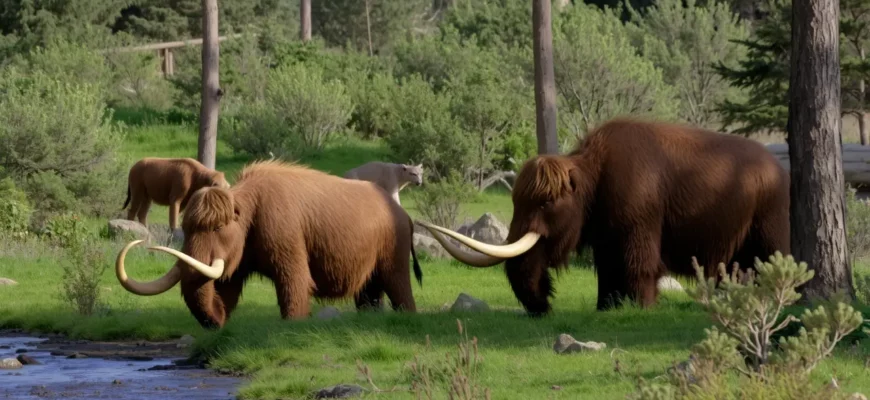
- Defining Pleistocene Rewilding: A Vision Beyond Traditional Conservation
- The Core Philosophy: Why the Pleistocene Matters
- The Science of Large Animals: How Megafauna Act as Ecosystem Engineers
- Trophic Cascades and Landscape Architecture
- Pleistocene Rewilding in Practice: From Siberia to North America
- Zimov’s Experiment: The Pleistocene Park Case Study
- The Great Debate: Potential Benefits vs. Ethical Concerns
- Can Rewilding Fight Climate Change?
- Common Misconceptions About Restoring Ancient Ecosystems
- Is This Just De-Extinction by Another Name?
- Expert Perspective: A Conservationist’s View on Rewilding
- Frequently Asked Questions
Defining Pleistocene Rewilding: A Vision Beyond Traditional Conservation
Modern conservation often focuses on protecting what remains, acting as a defensive shield against further degradation. Pleistocene rewilding shifts this paradigm from defense to offense by attempting to restore the evolutionary potential of entire continents. This approach suggests that ecosystems are currently “dysfunctional” because they lack the large animals that shaped them for millions of years.
Instead of merely preserving a 21st-century landscape, proponents of this movement look back to the late Quaternary period. They argue that the extinction of megafauna left a massive ecological void that humans must now fill to ensure long-term environmental stability. It is a proactive, high-stakes strategy designed to restart the biological engines of the planet.
The Core Philosophy: Why the Pleistocene Matters
The Pleistocene epoch, which ended roughly 11,700 years ago, was defined by a diversity of massive mammals—from ground sloths to woolly rhinos. These creatures were not just passive residents; they were the primary drivers of evolutionary history and landscape architecture. When these species vanished, the “evolutionary theater” lost its lead actors, leading to the simplified, less resilient ecosystems we see today.
To define pleistocene rewilding accurately, one must understand it as a quest for functional restoration rather than historical reenactment. The goal is to reintroduce ecosystem functions that have been dormant for millennia. By reintroducing large animals, we allow nature to regain its lost complexity, moving beyond the “shifting baseline syndrome” where we mistake a depleted environment for a healthy one.
The Science of Large Animals: How Megafauna Act as Ecosystem Engineers
Large animals do more than just eat and sleep; they physically and chemically alter their surroundings. Ecologists refer to these species as “ecosystem engineers” because their daily activities create habitats for thousands of other organisms. Without them, landscapes often trend toward low-diversity monocultures of dense scrub or forest.
The impact of these giants is felt through high-intensity disturbance. Trampling, grazing, and the bulk transport of nutrients create a mosaic of different habitats within a single region. This structural variety is the foundation of high biodiversity, providing niches for insects, birds, and smaller mammals that cannot survive in a uniform environment.
Trophic Cascades and Landscape Architecture
A trophic cascade occurs when the addition or removal of a top predator or a major herbivore ripples through every level of the food web. In the context of rewilding, large herbivores act as the primary regulators of plant community structure. By suppressing dominant woody species, they prevent “shrubification” and maintain open, productive grasslands that support a wider array of life.
These animals also serve as the planet’s circulatory system for nutrients. Megafauna consume massive amounts of vegetation in nutrient-rich lowlands and deposit it as manure in nutrient-poor uplands. This lateral nutrient transfer is essential for maintaining soil fertility across vast distances, a process that has largely stalled in the absence of free-ranging giants. Furthermore, many large-seeded plants rely exclusively on megaherbivores for seed dispersal; without them, these plant species face “ecological strangulation.”
Pleistocene Rewilding in Practice: From Siberia to North America
While the concept sounds like science fiction, several projects are already testing these theories on the ground. These initiatives range from remote Siberian wildernesses to the Great Plains of North America, each attempting to prove that large-scale animal reintroduction can reverse ecological decay. The use of proxy species—modern animals that fill the roles of extinct ones—is a cornerstone of these practical applications.
| Project Name | Location | Primary Strategy | Key Species Used |
|---|---|---|---|
| Pleistocene Park | Siberia, Russia | Restoring the Mammoth Steppe to stabilize permafrost. | Bison, Musk Ox, Yakutian Horses, Camels. |
| American Prairie Reserve | Montana, USA | Reconnecting fragmented grasslands via massive herbivore herds. | Plains Bison. |
| Oostvaardersplassen | Netherlands | Proxy-based rewilding in a man-made polder. | Heck Cattle, Konik Ponies, Red Deer. |
| Rewilding Argentine | Iberá Wetlands | Reintroducing apex predators and large grazers to wetlands. | Giant Anteaters, Jaguars, Pampas Deer. |
Zimov’s Experiment: The Pleistocene Park Case Study
In the far reaches of the Sakha Republic, Sergey and Nikita Zimov are conducting one of the most ambitious experiments in history. Their goal is to transform the mossy, carbon-leaking Arctic tundra back into the highly productive “Mammoth Steppe” grassland. This isn’t just for biodiversity; it is a direct intervention against permafrost melting, which threatens to release billions of tons of methane into the atmosphere.
The Zimovs have found that bison reintroduction and horse grazing significantly lower soil temperatures. In winter, these animals trample the thick layer of insulating snow, allowing the extreme Arctic cold to reach the soil and freeze the permafrost more deeply. This simple mechanical action could be a more effective carbon sequestration tool than any high-tech carbon capture machine, proving that ancient ecological roles have modern climatic value.
The Great Debate: Potential Benefits vs. Ethical Concerns
The prospect of releasing herds of elephants or lions into modern landscapes naturally sparks intense debate. Proponents see it as a moral imperative to fix a broken world, while critics worry about the unintended consequences of “ecological tinkering” on such a grand scale. The tension lies between the hope for a rejuvenated planet and the fear of unpredictable biological shifts.
| Potential Benefits | Ethical & Practical Risks |
|---|---|
| Significant climate change mitigation through soil carbon storage. | Ecological risks of “proxy” species becoming invasive or destructive. |
| Restoration of lost biodiversity and “extinct” ecological processes. | Potential for human-wildlife conflict in populated areas. |
| Increased ecosystem resilience against wildfires and droughts. | Diversion of funds from traditional, “proven” conservation efforts. |
Can Rewilding Fight Climate Change?
The intersection of rewilding and climate change mitigation is the most compelling argument for the movement. Beyond the snow-trampling effect in the Arctic, grasslands are often more reliable carbon sinks than forests in a warming world. Unlike trees, which release their stored carbon when they burn, grasslands store the majority of their carbon underground in vast root systems that remain protected during wildfires.
However, the transition is not without danger. Introducing large animals to new environments can lead to unforeseen ecological risks, such as the overgrazing of endangered plant species or the transmission of novel diseases. Critics argue that the world has changed too much since the Pleistocene, and trying to force ancient systems onto a modern, fragmented map is a recipe for disaster.
Common Misconceptions About Restoring Ancient Ecosystems
The term “rewilding” often conjures images of “Jurassic Park,” leading many to believe the movement is obsessed with cloning and genetic engineering. This misconception overlooks the much more practical and scientifically grounded reality of the field. It is less about the “form” of the animal and more about the “function” it performs within the habitat.
Myth: Pleistocene rewilding requires the de-extinction of mammoths and sabertooth cats.
Fact: The movement primarily uses proxy species—living animals like elephants, bison, and lions—to replicate the ecological roles of their extinct ancestors.
Is This Just De-Extinction by Another Name?
While de-extinction technology is progressing, Pleistocene rewilding is a separate ecological discipline. Rewilding focuses on ecological functionalism, meaning it prioritizes the job an animal does over its specific genetic makeup. For example, an Asian elephant living in a North American woodland would perform the same role of knocking over trees and dispersing large seeds that the extinct mastodon once did.
The distinction is vital: rewilding is about the health of the system, not the novelty of the species. Using modern substitutes allows ecologists to observe the immediate benefits of megafauna presence without waiting for the complex and ethically murky process of cloning extinct DNA. It is a pragmatic approach to a desperate environmental situation.
Expert Perspective: A Conservationist’s View on Rewilding
In my professional experience, the most significant hurdle for rewilding isn’t the biology—it’s the human social structure. While the theory of using large herbivores to stabilize permafrost is sound, we must acknowledge that the world is no longer an open canvas. I always advise that rewilding projects must be implemented with strict controls and, more importantly, with the full cooperation of local human populations. If we ignore the socio-economic reality of the people living in these areas, even the most scientifically brilliant project will fail. We are not just managing animals; we are managing the intersection of ancient ecology and modern civilization. Controlled experimentation is the only way forward; we cannot afford to be reckless, but given the climate crisis, we also cannot afford to be stagnant.
Frequently Asked Questions
The primary objective is to restore large-scale ecological processes, such as nutrient cycling and trophic cascades, that have been missing since the megafauna extinctions. This aims to boost biodiversity and create more resilient ecosystems.
Is Pleistocene rewilding the same as de-extinction?
No. De-extinction focuses on the genetic resurrection of specific species. Pleistocene rewilding focuses on restoring ecological functions, often using modern “proxy” animals like bison or elephants to do the work of extinct ones.
Where is Pleistocene rewilding being tested today?
The most prominent example is Pleistocene Park in Siberia. Other efforts include bison reintroduction in the American West and various “proxy” grazing projects across Europe and South America.
What are the risks of reintroducing large animals?
Risks include habitat disruption, the potential for species to become invasive, competition with existing endangered wildlife, and conflicts with human agriculture or safety.
How does rewilding help the climate?
In the Arctic, animals trample snow, allowing the ground to freeze deeper and protecting permafrost. In other regions, rewilding promotes grasslands, which are highly stable and efficient carbon sinks compared to forests.