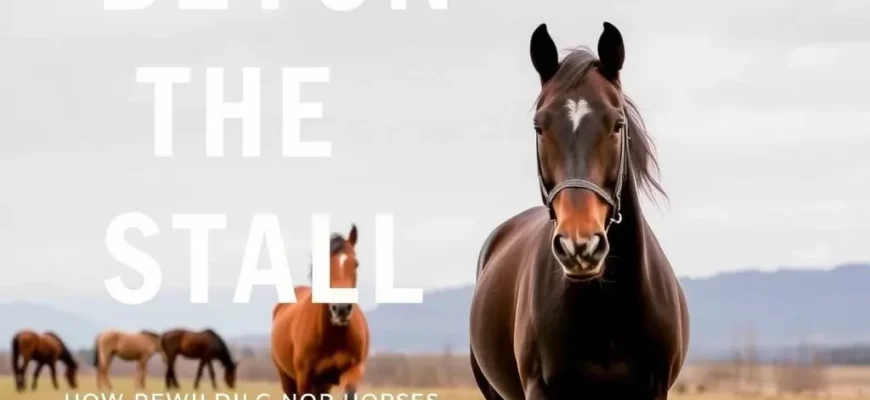
- The Science and Spirit of Rewilding Horses in a Modern World
- From Stalls to Steppes: Understanding Equine Autonomy
- How to Avoid Midlife Back Pain by Rewilding Your Body
- The Coyote Crawl: Ancestral Movement for Spinal Health
- Rewilding Your Mind: Navigating Anger and Depression Through Nature
- Unlearning the Grind: Mental Health Lessons from the Wild
- The 30-Day Rewild Your Life Challenge: A Practical Roadmap
- Morning Rhythms and Midnight Stars: Daily Habit Shifts
- Finding Your Guide: Rewilding Coaches, Therapy, and Wellness Retreats
- Sacred Hoops and Wild Retreats: Immersive Healing Spaces
- Common Misconceptions About the Rewilding Lifestyle
- Frequently Asked Questions
The Science and Spirit of Rewilding Horses in a Modern World
The concept of returning horses to their ancestral roots is often misunderstood as a simple act of abandonment. In reality, it is a sophisticated ecological strategy designed to restore the biological integrity of both the animal and the landscape it inhabits.
When we look at the history of equine restoration, we see a movement that prioritizes the horse’s inherent need for social complexity and physical freedom. This shift away from traditional husbandry recognizes that a horse is not a static asset but a dynamic participant in a living ecosystem.
From Stalls to Steppes: Understanding Equine Autonomy
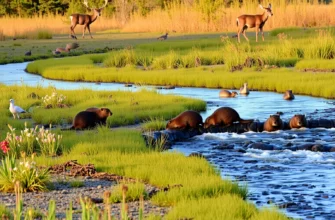
Traditional horse keeping often involves 23 hours of confinement in a twelve-by-twelve-foot box, a practice that fundamentally breaks the horse’s physiological systems. In the wild, these animals are continuous grazers, moving up to 20 miles a day to find forage and water. This constant movement is the engine that drives their circulation and hoof health. When we remove the walls, we allow the horse to reclaim its role as a “landscape architect,” where their grazing patterns and hoof impacts stimulate soil health and encourage a wider variety of plant species to thrive.
The restoration of natural herd dynamics is equally critical for their mental well-being. Horses are highly social creatures that rely on a complex hierarchy for safety and emotional regulation. In a rewilded setting, the herd functions as a single organism, where younger members learn essential equine behavior from elders. This social cohesion reduces the chronic stress levels often seen in isolated domestic horses, leading to a profound improvement in their overall biodiversity contribution within their local habitat. To truly rewild a horse, one must provide enough space for the animal to make its own choices regarding movement, social interaction, and foraging.
How to Avoid Midlife Back Pain by Rewilding Your Body
As we cross the threshold of midlife, many of us find that our bodies feel like a collection of stiff hinges and rusted gears. This is not an inevitable consequence of aging, but rather a direct result of living in a world designed for 90-degree angles.
Modern environments force us into a sedentary “C-shape” that collapses the chest and rounds the lower back. By adopting a more ancestral approach to movement, we can reverse the compression that leads to chronic discomfort. The goal is to move like a creature of the earth, rather than a passenger of a cubicle.
| Modern Habit | Rewilding Alternative | Physiological Impact |
|---|---|---|
| Sitting in ergonomic chairs for 8+ hours. | Floor sitting and active rest postures. | Opens the hip flexors and restores the natural lumbar curve. |
| Wearing cushioned, narrow-toed shoes. | Barefoot movement or minimalist footwear. | Awakens the 200,000 nerve endings in the feet and stabilizes the kinetic chain. |
| Repetitive, linear gym workouts. | Variable, multi-planar natural movement. | Builds functional strength that protects joints from injury. |
The Coyote Crawl: Ancestral Movement for Spinal Health
One of the most effective ways to combat midlife back pain is to get back on the ground. The “coyote crawl” is a quadrupedal movement pattern that forces the body to integrate the shoulders, core, and hips in a synchronized fashion. Unlike the rigid movements of a treadmill, crawling requires constant micro-adjustments that build deep stabilizing muscles around the spine.
When you practice ground-based patterns, you are engaging in a form of functional mobility that modern fitness often ignores. Always ensure your movements are fluid and silent; a heavy footfall or hand-strike indicates a lack of control and unnecessary joint impact. By spending just ten minutes a day moving at ground level, you facilitate natural spinal decompression and reclaim the hip mobility that is often lost to decades of chair-sitting.
Rewilding Your Mind: Navigating Anger and Depression Through Nature
The psychological toll of modern life is often a symptom of what researchers call “nature deficit disorder.” We have evolved over millions of years to be in constant dialogue with the natural world, and our current disconnection has left us in a state of chronic nervous system dysregulation.
Integrating the philosophy of unlearning modern stressors allows us to address the root causes of anger and depression. It is not about “fixing” a broken mind, but rather about returning a wild mind to its proper environment. When we step into the woods, our cortisol levels drop, and our parasympathetic nervous system—the “rest and digest” mode—finally takes the lead.
Unlearning the Grind: Mental Health Lessons from the Wild
The modern world demands a constant, linear output that is entirely alien to the seasonal and rhythmic nature of the wild. This “always-on” culture is a primary driver of burnout and emotional exhaustion. By observing the wild, we learn that there is a time for explosive growth and a time for deep, restorative dormancy. Breaking the cycle of seasonal affective disorder, for instance, often requires more than just a light lamp; it requires a fundamental shift in how we perceive our own energy cycles.
Nature acts as a powerful co-therapist by providing a “soft fascination” that allows the brain to recover from the “directed attention fatigue” caused by screens and urban environments. If you feel a surge of anger or the heavy weight of depression, seek a “green” or “blue” space immediately; even twenty minutes of quiet observation can reset your emotional baseline. Developing emotional resilience is not an internal battle; it is an external alignment with the world around you.
The 30-Day Rewild Your Life Challenge: A Practical Roadmap
Embarking on a rewilding journey does not require moving to a cabin in the woods. It requires a systematic reintroduction of ancestral habits into your existing routine. This 30-day challenge is designed to bridge the gap between your modern obligations and your biological needs.
By following this roadmap, you will slowly peel back the layers of domesticity that have muffled your senses and weakened your physical frame. Each week focuses on a different pillar of human vitality.
- View direct sunlight within 30 minutes of waking to set your internal clock.
- Eliminate blue light from screens two hours before bed.
- Practice “wide-angle vision” while walking, focusing on the periphery rather than a single point.
- Spend 15 minutes a day walking barefoot on natural surfaces like grass or sand.
- Replace your desk chair with a floor cushion for at least two hours a day.
- Perform 5 minutes of “coyote crawling” or ground-play every morning.
- Take a 30-second cold shower every morning to boost metabolic health.
- Eat at least one meal outside, away from all digital distractions.
- Identify three local plants or birds in your neighborhood each day.
- Engage in a “digital-free” evening with friends or family.
- Join a local rewilding group or nature-based movement class.
- Reflect on which habits felt most natural and commit to keeping them.
Morning Rhythms and Midnight Stars: Daily Habit Shifts
The most profound changes often come from the simplest shifts in our daily rhythm. Our circadian rhythm is the master conductor of our hormones, digestion, and mood. By aligning our sleep and wake cycles with the rising and setting of the sun, we tap into a reservoir of energy that caffeine can never provide.
Earthing, or the practice of making direct physical contact with the earth, is more than just a holistic trend; it is a way to neutralize the oxidative stress that accumulates in our bodies. When walking barefoot, always scan the ground ahead for hazards, but keep your weight centered over your midfoot to allow the natural arch to absorb the shock. These small, daily engagements with the elements serve as a constant reminder that we are part of the earth, not separate from it.
Finding Your Guide: Rewilding Coaches, Therapy, and Wellness Retreats
For many, the transition from an urban lifestyle to a wilder existence is too daunting to navigate alone. This has led to the rise of professional guides who specialize in nature-based therapy and ancestral coaching. These practitioners act as bridge-builders, helping individuals translate ancient wisdom into a modern context.
Whether through a dedicated rewilding coach or an immersive retreat, these experiences provide the structure and community necessary for lasting transformation. They offer a safe space to explore the “wilder” parts of ourselves that have been suppressed by social expectations.
Sacred Hoops and Wild Retreats: Immersive Healing Spaces
Immersive retreats, such as those inspired by the “of the wolves” philosophy, focus on the interconnectedness of all living things. These spaces often utilize the “Sacred Hoop” concept, which emphasizes that every action we take ripples through our community and the environment. Participants are often led through somatic experiencing exercises that help release stored trauma from the body through movement and breathwork.
The role of community healing cannot be overstated. In a world of digital isolation, standing around a fire or tracking animals with a group of like-minded individuals provides a sense of belonging that is deeply restorative. When choosing a retreat or coach, look for those who prioritize ecological literacy as much as personal growth; true rewilding is never a selfish act. These professional services provide the “training wheels” for a lifestyle that eventually becomes self-sustaining.
Common Misconceptions About the Rewilding Lifestyle
As the rewilding movement gains popularity, several myths have begun to cloud its true intent; It is often portrayed as an “all-or-nothing” rejection of technology, which can discourage those who are interested but unable to quit their jobs or move to the wilderness.
The reality is that rewilding is a scalable practice. It is about “wild-ing” your current life, not necessarily leaving it behind. You can be a rewilder in a high-rise apartment just as easily as you can on a 50-acre farm.
Myth: Rewilding means you have to give up modern medicine and technology.
Fact: Rewilding is about using technology as a tool, rather than being a slave to it. It encourages the use of modern science to understand and better implement ancestral health practices.
Myth: You need to be an elite athlete to practice natural movement or rewilding workouts.
Fact: Ancestral movement is the most accessible form of fitness because it is based on what the human body was evolved to do. It meets you exactly where you are, whether you are 25 or 75.
Myth: Rewilding is only for people who love the outdoors.
Fact: Rewilding is for anyone who feels “out of sync” with their own biology. It is a physiological and psychological necessity, regardless of your hobbies.
In my professional experience, I have observed that the most profound breakthroughs in human rewilding often occur when people spend time observing unhandled, rewilded horses. There is a specific “language of presence” that horses demand. Unlike humans, horses do not care about your job title or your bank account; they respond entirely to your internal state and your physical posture. I always advise my clients to watch how a lead mare moves through a herd—her movements are never wasted, her boundaries are clear but not aggressive, and her “posture of leadership” is one of relaxation, not tension. By mimicking this equine authenticity, we can learn to navigate our own social hierarchies with more grace and less stress. The Sacred Hoop philosophy reminds us that the horse’s health is a mirror of our own environmental stewardship; when we heal the land for them, we inevitably heal ourselves.
Frequently Asked Questions
Rewilding a horse involves returning the animal to a natural environment where it can live in a herd, move freely over diverse terrain, and forage for its own food, thereby restoring its natural instincts and physical health.
How can a rewilding coach help with midlife back pain?
A coach uses ancestral movement patterns to identify and correct postural imbalances caused by modern furniture, teaching you how to sit, stand, and move in ways that naturally decompress the spine.
Can rewilding therapy really help with clinical depression?
While not a substitute for clinical care, rewilding therapy provides evidence-based support by reducing cortisol, increasing sensory engagement, and helping individuals unlearn the modern stressors that contribute to depressive states.
What are the core activities in a 30-day rewilding challenge?
The challenge typically includes daily habits like viewing morning sunlight, barefoot walking, practicing ground-based movement, and taking regular breaks from digital devices to reconnect with local ecology.
Is the rewilding lifestyle becoming more popular?
Yes, search trends and cultural shifts indicate a growing interest in rewilding as people seek sustainable solutions to the “diseases of civilization” like chronic stress, obesity, and environmental disconnection.
What is the coyote routine in rewilding?
The coyote routine is a movement practice inspired by the agility and awareness of wild canines, focusing on ground-crawling, observational stillness, and multi-planar agility to build a resilient and capable body.