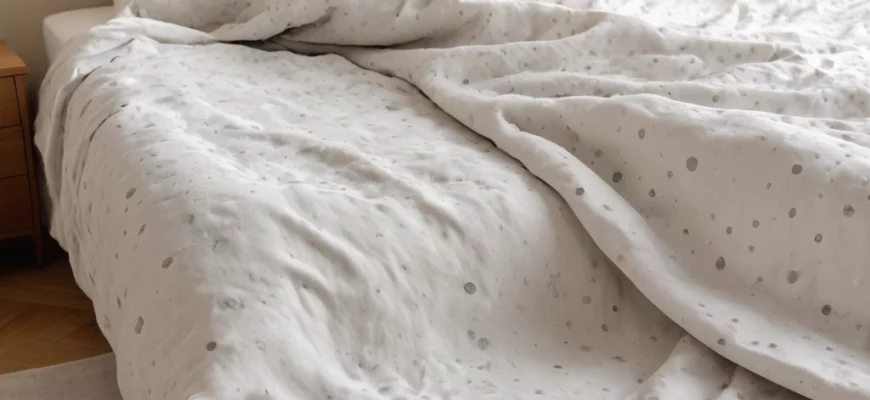
- Neutralizing the Funk: Why Your Weighted Blanket Smells Bad
- Hidden Culprits Behind the Scent
- Stop the Shift: Fixing a Weighted Blanket That Keeps Bunching Up
- How to Re-Distribute Filling for Even Pressure
- Breathing Easy: The Critical Safety Rules for Weight and Placement
- Why You Should Never Cover Your Head or Face
- Beating the Heat and Zapping Static Electricity
- Cooling Down a Hot Weighted Blanket
- Maintenance 101: From Cracked Laptops to Missing Ties
- Protecting Your Electronics and Your Investment
- Frequently Asked Questions
Neutralizing the Funk: Why Your Weighted Blanket Smells Bad
A weighted blanket is a significant investment in your sleep health, but nothing ruins the relaxation of deep pressure stimulation faster than a mysterious, lingering odor. If you have noticed a musty or chemical scent emanating from your bedding, you are not alone. These blankets are constructed with multiple layers of dense fabric and heavy fill materials, creating a perfect environment for trapping scents that a standard thin quilt would simply air out.
The reality is that odors rarely come from the fabric alone; they are usually a result of what is happening deep inside the weighted chambers. Whether it is a brand-new “factory smell” or a scent that has developed over months of use, identifying the source is the first step toward reclaiming your fresh sleep environment. Before you consider throwing the entire unit in the wash, which can be risky for your machine, you must understand the chemistry of why these smells occur.
Hidden Culprits Behind the Scent
The most common cause of a foul-smelling blanket is biological accumulation from daily use. Every night, the human body sheds millions of skin cells and releases varying amounts of sweat and sebum. In a standard blanket, these particles might dissipate, but the dense weave of a weighted blanket acts as a filter, trapping organic matter against the internal glass beads or plastic poly-pellets. When moisture from sweat meets these trapped skin cells, it creates a breeding ground for bacteria, leading to that characteristic “sour” or “locker room” smell.
Another frequent issue is chemical off-gassing from synthetic materials. If your blanket is new and smells like a plastic factory or “new car,” you are likely smelling Volatile Organic Compounds (VOCs). This is common in blankets that use plastic poly-pellets or synthetic polyester batting. While these smells usually dissipate with time, they can be overwhelming in a small, unventilated bedroom. To speed up the process, place the blanket in a room with a HEPA air purifier or hang it outside in direct sunlight for six hours, as UV rays help break down these chemical bonds.
Finally, moisture trapped during the drying process is a silent killer of blanket freshness. If you have recently washed your blanket but did not ensure it was 100% dry before putting it back on the bed, mildew can form deep within the batting. This creates a persistent musty odor that is incredibly difficult to remove. To combat this naturally, liberally apply a mixture of baking soda and a few drops of essential oil to the dry blanket, let it sit for a full day, and then vacuum it thoroughly using a high-suction upholstery attachment.
Stop the Shift: Fixing a Weighted Blanket That Keeps Bunching Up
Few things are more frustrating than waking up to find all fifteen pounds of your blanket have migrated to one corner, leaving you under a thin sheet of fabric while a heavy lump sits by your feet. This phenomenon, known as “bunching” or “clumping,” completely negates the benefits of even weight distribution. When the weight is uneven, your body doesn’t receive the consistent sensory input required to lower cortisol levels and stimulate serotonin production.
The cause of this shifting is usually mechanical. Most weighted blankets are designed with a “baffle-box” construction—internal square pockets meant to keep the beads in place. However, if the stitching is loose or if the blanket is not properly secured to its duvet cover, gravity will inevitably pull the fill toward the lowest point. Fixing a lumpy blanket requires a combination of manual redistribution and structural reinforcement.
- Separate the layers: Remove the weighted inner from the decorative duvet cover and lay both flat on the floor to inspect for damage.
- Identify the “voids”: Run your hands across the inner blanket to feel for empty squares. If you find sections with no beads, gently massage the beads from overfilled neighboring pockets back into the empty zones to level the distribution.
- Check the internal ties: Look at the corners and the midpoints of the inner blanket. If your blanket did not come with ties, or if they have snapped, sew 4-inch strips of heavy-duty twill tape to the edges of the inner blanket to create new anchor points.
- Secure the anchor points: Turn your duvet cover inside out, tie every single internal loop to the blanket’s ribbons using a double knot, and then carefully pull the cover right-side out.
- The Vertical Shake: Once assembled, hold the blanket by the top edge and give it one firm, rhythmic shake to settle the beads into the bottom of their individual quilted pockets.
How to Re-Distribute Filling for Even Pressure
If your blanket feels lumpy even when it is not in a cover, the problem lies in the internal batting. Cheaply manufactured blankets often use thin polyester fiberfill that collapses over time, allowing the glass beads to roll around freely within each square. This creates “dead zones” where you feel no weight at all. To fix this, you may need to use a clothes dryer on a “no heat” or “air fluff” setting with three clean tennis balls. The mechanical action of the balls hitting the blanket helps break up clumps of batting and redistributes the beads.
The quality of the stitching is the primary factor in long-term weight stability. High-end blankets utilize double-reinforced Gridded Stitching with smaller 4×4 inch pockets, which prevents the “bean bag effect” seen in lower-quality 6×6 inch pockets. If you find that the beads are leaking from one pocket to another internally, it means the interior baffles have ruptured. In this case, stitching a new seam directly across the leaking area is the only way to permanently stop the shifting and restore the therapeutic pressure.
Breathing Easy: The Critical Safety Rules for Weight and Placement
While weighted blankets are incredible tools for anxiety and insomnia, they are not ordinary bedding. They are therapeutic devices that exert significant physical force on the human frame. If used incorrectly, the very pressure meant to soothe can become a safety hazard. This is particularly true for individuals who feel “trapped” or find it hard to breathe while under the weight. Safety is non-negotiable when dealing with 15 to 25 pounds of concentrated mass.
The most important rule for weighted sleep is the 10% body weight guideline. A blanket should never exceed 10% of the user’s total body weight plus one or two pounds. For a 150-pound adult, a 15-pound blanket is the upper limit. Exceeding this ratio can lead to physical exhaustion during the night, as your body works harder just to move and breathe under the load.
- DO: Ensure the user can independently remove the blanket without assistance in under five seconds.
- DO: Place the blanket so it covers the body from the shoulders down to the feet only.
- DON’T: Ever cover your head, face, or neck with a weighted blanket, as this significantly increases the risk of CO2 rebreathing.
- DON’T: Use a weighted blanket for infants, toddlers, or pets, as their ribcages are not strong enough to support the weight.
- DO: Listen to your body; if you feel a “heavy chest” sensation or tingling in your limbs, the blanket is likely too heavy for your frame.
Why You Should Never Cover Your Head or Face
Covering your head with a weighted blanket is a dangerous practice that can lead to hypoxia or accidental suffocation. Unlike a standard cotton sheet, the dense layers of a weighted blanket—often including a non-porous moisture barrier and heavy beads—do not allow for easy airflow. If your face is covered, the carbon dioxide you exhale can become trapped in the fabric’s folds, leading you to breathe in “stale” air. This can cause headaches, dizziness, and in extreme cases, loss of consciousness.
Furthermore, the weight of the blanket can impede chest expansion. To breathe deeply, your intercostal muscles and diaphragm must lift the weight of whatever is on your chest. If the blanket is too heavy or positioned too high, it increases the “work of breathing.” This is why people with chronic obstructive pulmonary disease (COPD) or asthma should consult a physician before using weighted bedding. Safety also dictates that these items should never be shared between two people of vastly different sizes; a blanket that is perfect for a 200-pound man could be dangerously restrictive for a 110-pound partner.
Beating the Heat and Zapping Static Electricity
A common complaint among weighted blanket users is that they “sleep hot.” This is largely due to the insulating properties of the materials used. Glass beads actually hold onto heat quite well, and many covers are made from minky or fleece—fabrics designed to trap warmth. If you find yourself waking up in a sweat, the issue is likely a lack of breathable materials in your sleep system.
Additionally, the friction between the inner blanket and a synthetic duvet cover often creates a buildup of static electricity. This can lead to annoying “zaps” when you shift positions or try to get out of bed. Managing the microclimate under your blanket is essential for maintaining the deep, uninterrupted sleep that these blankets are designed to provide.
Cooling Down a Hot Weighted Blanket
To reduce night sweats, you must prioritize thermal conductivity. Look for covers made from bamboo-derived rayon or Tencel. These fabrics are “moisture-wicking,” meaning they pull sweat away from your skin and allow it to evaporate, rather than trapping it against your body. Switching from a polyester-filled blanket to one with 100% glass bead fill can also help, as glass is more efficient at dissipating body heat than plastic poly-pellets.
Static electricity is usually a symptom of a dry environment. During winter months, the air in your bedroom can become incredibly dry, which allows static charges to build up in synthetic fibers like polyester. Using a humidifier to keep your room’s humidity between 40% and 50% will naturally grounded the fabric and eliminate those frustrating shocks. If the static persists, lightly misting the duvet cover with a mixture of water and a teaspoon of liquid fabric softener can create a conductive barrier that prevents charge accumulation.
Maintenance 101: From Cracked Laptops to Missing Ties
A weighted blanket is a heavy physical object, and we often forget how much damage 20 pounds of dead weight can do to household items. One of the most common “modern” problems is the cracked laptop screen. Many people enjoy using their blankets while sitting on the sofa with a computer. However, if you fold the blanket and set it on top of your closed laptop, the concentrated pressure can easily crush the delicate internal components of the screen.
Maintenance also extends to the structural integrity of the blanket itself. If your blanket arrived without ties, or if the beads have started to leak, you don’t necessarily need to return it. Most manufacturing defects can be solved with a bit of DIY ingenuity, ensuring your investment lasts for years rather than months.
- Protecting Electronics: Never place a weighted blanket on top of laptops, tablets, or smartphones; even a 10-pound blanket can exert enough pressure to damage a motherboard or fracture a glass screen.
- Fixing Missing Ties: If your blanket has no loops, sew “buttonhole” reinforcements into the corners of the blanket or use heavy-duty safety pins (on the outside of the bead pockets) to anchor it to the cover.
- Emergency Leak Repair: If you see beads escaping, immediately apply a piece of iron-on fabric mending tape to the hole to prevent a total loss of filling before you can sew it properly.
- Washing Machine Safety: Always check your machine’s weight limit; most standard home washers are not rated for items over 15 pounds, and attempting to wash a heavy blanket can burn out the motor or snap the suspension springs.
Protecting Your Electronics and Your Investment
The sheer mass of a weighted blanket makes it a “crushing hazard” for small electronics. When you are not using the blanket, store it flat or neatly folded on a sturdy shelf or in a dedicated storage bin. Avoid draping it over the back of a chair, as the constant gravitational pull can stretch the fabric and eventually cause the internal baffle seams to pop.
If you are dealing with a blanket that is leaking filling, you must act quickly. Glass beads are tiny and can be a slipping hazard on hard floors, and they are difficult to vacuum out of high-pile carpets. Periodically inspect the perimeter seams of your blanket for signs of thinning thread. If you catch a weak spot early, a simple “zigzag” stitch with a heavy-duty nylon thread can reinforce the area and prevent a catastrophic leak. Proper maintenance ensures that your blanket continues to provide the “hug-like” sensation you bought it for without becoming a source of stress.
In my professional experience, the most overlooked aspect of weighted blanket ownership is the “break-in” period for both the user and the materials. I always advise new owners to use the blanket for only 20 minutes a day for the first week to allow their respiratory muscles to adapt to the new mechanical load. Furthermore, to prevent deep-set odors, I recommend using a 100% cotton internal liner between the weighted element and the duvet cover. This acts as a secondary “sacrificial” layer that absorbs oils and sweat, which can be washed much more frequently than the heavy weighted core itself. If you have respiratory sensitivities, always opt for glass beads over plastic, as glass is non-porous and significantly less likely to harbor allergens or chemical residues.
Frequently Asked Questions
This is likely off-gassing from synthetic fills; air the blanket out in a well-ventilated area or outdoors in indirect sunlight for 24 to 48 hours to allow the VOCs to dissipate.
Can I fix a weighted blanket that has stopped working or lost its shape?
A blanket doesn’t “stop working,” but the filling can shift; check for broken internal ties and use a “no-heat” dryer cycle with dryer balls to redistribute the beads and fluff the batting.
Is it normal for a weighted blanket to feel lumpy after washing?
Yes, the internal fiberfill can clump when wet; tumble dry on the lowest heat setting with clean tennis balls to break up the lumps and ensure the filling is completely dry to prevent mildew.
How do I stop my weighted blanket from slipping inside the cover?
Ensure all internal ties are double-knotted; if your blanket lacks ties, sew 1-inch wide twill tape loops to the corners and midpoints of the inner blanket for extra stability.
Why does my weighted blanket give me static shocks?
Static is caused by friction in dry air; use a humidifier in your bedroom or switch to a natural fiber duvet cover like bamboo or cotton to reduce electron buildup.
Why is it dangerous to share a weighted blanket with a partner?
Weighted blankets are sized for individual body weights; a blanket that is safe for a heavy person can cause dangerous chest compression or restricted movement for a lighter partner.