- Essential Rules for Weighted Blankets: Finding Your Perfect Setup
- Why the 10% Rule is the Gold Standard
- Layering Logic: Does a Weighted Blanket Go Over or Under a Comforter?
- Maximizing Pressure vs. Managing Temperature
- Maintenance Mastery: How to Even Out a Weighted Blanket
- Restoring Balance to Your Internal Fill
- Customizing Your Comfort: Can You Add or Remove Weight?
- The Risks of DIY Modifications
- Taking Comfort to the Skies: Traveling with Your Weighted Blanket
- TSA Rules and Carry-On Logistics
- Sharing the Weight: Can Two People Use One Blanket?
- The Physics of Sharing Pressure
- Medical Necessity and Financial Coverage
- Navigating CPT and DME Codes
- Beating the Heat: How to Use a Weighted Blanket in Summer
- Cooling Strategies for Hot Sleepers
- Expert Perspective: Sensory Pressure Therapy
- Frequently Asked Questions
Essential Rules for Weighted Blankets: Finding Your Perfect Setup
Stepping into the world of therapeutic bedding requires more than just picking a heavy fabric and hoping for the best. To truly benefit from deep pressure stimulation, you must understand how these tools interact with your nervous system and physical frame. The goal is to trigger the release of serotonin while lowering cortisol, but achieving this balance depends entirely on the specific ratio of the blanket’s mass to your own body weight.
A common mistake is treating a weighted blanket like a standard comforter where “bigger is better.” In reality, a blanket that is too heavy can cause physical fatigue or even restrict breathing, while one that is too light fails to activate the proprioceptive sensors in your joints and muscles. Finding the “sweet spot” ensures you remain comfortable throughout the night without feeling trapped or overheated.
Why the 10% Rule is the Gold Standard
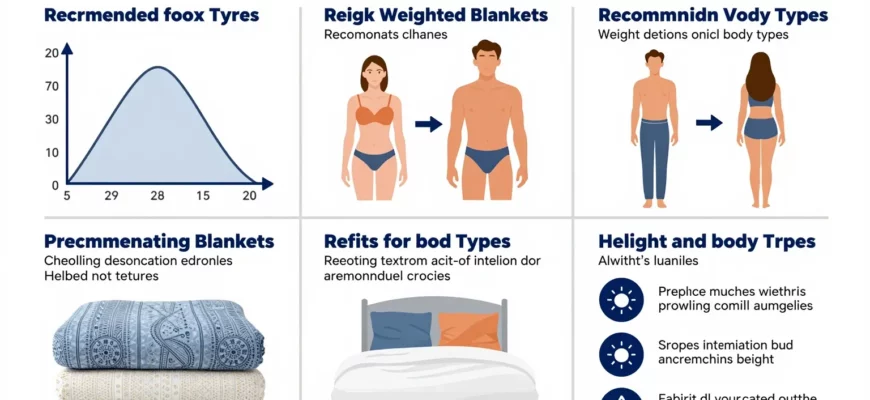
The most fundamental guideline in the industry is the 10% rule, which suggests your blanket should weigh approximately one-tenth of your total body weight. For an adult weighing 150 pounds, a 15-pound blanket is usually the ideal starting point. This specific weight distribution provides enough resistance to simulate a firm hug, which signals the brain to move from a “fight or flight” state into a “rest and digest” state. If you fall between standard sizes, such as weighing 165 pounds, it is generally safer to round up to the nearest weight increment rather than rounding down, provided you have no underlying respiratory or circulatory issues.
Buying a weighted blanket that is too heavy can lead to several complications, including joint soreness in the morning or an increased heart rate as your body struggles to move under the load. Conversely, an adult using a blanket designed for a child will find the pressure insufficient to quiet the nervous system. Always ensure you can easily move the blanket off your chest and limbs without assistance; if you feel “pinned” to the mattress, the weight is likely excessive for your current physical condition.
Layering Logic: Does a Weighted Blanket Go Over or Under a Comforter?
The debate over bedding order is more than just a matter of aesthetics; it significantly impacts how the weight is distributed across your body and how much heat your bed retains. The internal fill, whether glass beads or plastic pellets, responds differently depending on the friction and thickness of the layers surrounding it. Understanding the physics of these layers helps you customize your sleep environment for different seasons and sensory needs.
If your primary goal is maximum sensory input, the blanket should be as close to your body as possible. However, if you are a “hot sleeper” or use a weighted blanket mainly for its calming effect during a quick nap, placing it over a thinner sheet or a standard comforter might be more practical. The following table breaks down the differences between the two most popular layering methods.
| Layering Position | Primary Benefit | Best For… |
|---|---|---|
| Under the Comforter | Direct pressure contact and maximum sensory feedback. | Users with high sensory needs or those living in cold climates. |
| Over the Comforter | Easier temperature regulation and reduced bead shifting. | Hot sleepers or those who prefer a “buffered” pressure sensation. |
| Directly on Top of Sheet | The most intense proprioceptive input possible. | Individuals with severe anxiety or sensory processing disorders. |
Maximizing Pressure vs. Managing Temperature
When you place a weighted blanket under a comforter, you are essentially trapping the weight against your skin with only a thin sheet for a barrier. This setup is highly effective for direct contact sensory benefits, as the glass beads can contour more closely to your unique body shape. The downside is that the comforter on top acts as an insulator, potentially making the bed feel like an oven. If you find yourself waking up sweaty, consider the “sandwich” method: a cooling bamboo sheet, the weighted blanket, and no top comforter at all.
Using a comforter as a buffer—placing the weighted blanket on top of it—spreads the weight across a larger surface area. This reduces the “pinpoint” pressure of the beads, which some users find more comfortable for long-term sleep. It also allows for better airflow between your body and the heavy fill. If you are struggling with the question of whether a weighted blanket goes under a duvet or over it, remember that the closer the blanket is to your skin, the more intense the “hug” sensation will be.
Maintenance Mastery: How to Even Out a Weighted Blanket
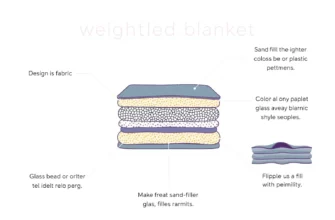
Over time, even high-end weighted blankets can suffer from “bunching,” where the internal fill migrates to the corners of the quilted pockets. This creates an uneven distribution that can leave some parts of your body under heavy pressure while others feel nothing. Because most blankets use a grid of 4-inch to 6-inch squares to hold beads in place, maintenance is usually a matter of manual redistribution rather than mechanical repair.
Ignoring an uneven blanket doesn’t just ruin the sensory experience; it can actually cause the stitching to fail. When 15 pounds of glass beads congregate in a single corner, the stress on those specific seams increases exponentially. Learning how to normalize the fill across all 45 or more pockets of your blanket is a critical skill for extending the life of your investment.
Restoring Balance to Your Internal Fill
If you have followed the instructions on how to even out a weighted blanket but still find the fill is shifting, check the quality of the internal baffles. High-quality blankets use double-stitched pockets to prevent “bead leakage” between cells. To normalize a blanket with 45 or more pockets, you may need to work square by square, particularly if you have used the blanket for more than a year. A well-maintained blanket should feel like a uniform sheet of pressure, not a collection of heavy beanbags.
If the bunching is persistent, it may be a sign that the fabric has stretched. In these cases, using a duvet cover with internal ties is essential. The ties anchor the weighted insert to the corners of the cover, preventing the entire inner blanket from slumping into a heavy ball at the foot of the bed. Always secure all internal ties to maintain a consistent surface area of pressure.
Customizing Your Comfort: Can You Add or Remove Weight?
As your needs change, you might find that the 15-pound blanket you bought last year no longer feels heavy enough, or perhaps it feels too restrictive during a period of illness. The desire to modify a blanket is common, but the physical construction of these items makes DIY adjustments extremely risky. Because the internal fill consists of thousands of micro-glass beads or plastic pellets, any breach of the fabric can lead to a massive, difficult-to-clean mess.
Before you reach for the scissors or a sewing machine, consider the structural integrity of the blanket. Most are industrially sewn with reinforced nylon thread designed to hold significant tension. Breaking these seams manually often leads to a “zipper effect” where the entire blanket begins to unravel under its own weight.
The Risks of DIY Modifications
One of the most frequent questions from users is whether they can cut a weighted blanket in half to share with a partner or make it more portable. The short answer is: absolutely do not cut a weighted blanket unless you are prepared to sew every single pocket shut individually. Cutting through the center of a grid will release the fill from dozens of pockets simultaneously. Instead of cutting, if you need a smaller size, it is far more cost-effective to purchase a “lap pad” or a travel-sized version designed for specific zones.
If you want to add more weight, the safest method is “stacking.” You can place a second, lighter weighted blanket or a heavy wool throw on top of your existing setup. For those looking for a long-term solution, seek out modular weighted blankets that feature removable weight pods. These pods can be added or removed from zippered internal compartments, allowing you to adjust the intensity from 10 to 20 pounds without ever needing a needle and thread.
Taking Comfort to the Skies: Traveling with Your Weighted Blanket
For many, a weighted blanket is a non-negotiable tool for managing travel anxiety or hotel-induced insomnia. However, bringing a 20-pound object through airport security presents unique challenges. Not only do you have to contend with strict airline weight limits, but the dense materials used in weighted blankets can also trigger red flags during X-ray screenings.
The key to successful travel is transparency and preparation. Whether you are using it as a carry-on or packing it in checked luggage, you need to account for the physical space and the “opaque” nature of glass beads under a scanner. Dense fill materials often appear as a solid mass on X-ray monitors, which almost guarantees a manual bag search by security agents.
TSA Rules and Carry-On Logistics
Current TSA regulations do not prohibit weighted blankets in either carry-on or checked bags. However, the density of glass beads can make it difficult for scanners to see through the item. If you are pulled aside for a manual pat-down of your blanket, remain calm and explain that it is a therapeutic “weighted sensory tool.” Most agents are now familiar with these items, but giving them a heads-up can speed up the process significantly.
When packing, try to roll the blanket rather than folding it. Rolling distributes the weight more evenly across the frame of your suitcase, which prevents the bag from tipping over when you stand it upright. If you are flying on a small regional jet with limited overhead space, be prepared to gate-check your bag. In this scenario, having the blanket in a sturdy, labeled protective sleeve is vital to prevent the internal beads from being crushed by heavier suitcases.
Sharing the Weight: Can Two People Use One Blanket?
Couples often wonder if they can save money by purchasing one large, king-sized weighted blanket to share. While this seems logical, the physics of weighted pressure usually makes sharing a single blanket ineffective for both parties. Weighted blankets are designed to contour to the body; when two people are under one blanket, a “bridge” is created in the space between them.
This bridge effect means the blanket is suspended in the air between the two sleepers, significantly reducing the amount of pressure felt on the inner sides of their bodies. Furthermore, unless both partners weigh exactly the same, the 10% rule will be violated for at least one person, leading to a blanket that is either too heavy or too light.
Pro-Tip: For the best sleep quality, couples should use two individual twin-sized weighted blankets side-by-side. This allows each person to choose their ideal weight and prevents “blanket hogging” where one person’s movements pull the weight off the other.
The Physics of Sharing Pressure
When two people use the same weighted blanket, the weight is distributed over a much larger surface area. If you buy a 20-pound king blanket, each person is only receiving about 10 pounds of pressure, which might not be enough to trigger the desired therapeutic effects. Additionally, if one partner is a “restless sleeper,” their movements will be magnified by the heavy fill, potentially waking the other person every time they shift positions. Individual blankets offer better motion isolation and ensure the pressure remains consistent throughout the night.
If you absolutely must share, look for blankets specifically labeled as “Couple’s Weighted Blankets,” which often have specialized weight zones. However, the consensus among sleep experts is that weighted blankets are fundamentally single-user tools. Using individual blankets also allows for different fabric choices—one person can have a cooling bamboo cover while the other uses a warm minky fabric, catering to their specific thermal preferences.
Medical Necessity and Financial Coverage
Because weighted blankets are often used to treat conditions like Autism Spectrum Disorder (ASD), ADHD, and Restless Leg Syndrome (RLS), they are increasingly being viewed as medical devices rather than just luxury bedding. In many cases, they are classified as Durable Medical Equipment (DME), which opens the door for insurance reimbursement or the use of HSA/FSA funds.
Navigating the financial side of therapeutic bedding requires documentation. You cannot simply buy a blanket and expect a refund from your insurer. You will generally need a “Letter of Medical Necessity” from a licensed physician or an occupational therapist that explicitly states how the blanket treats a specific diagnosis. This turns the blanket from a “comfort item” into a “prescribed tool.”
Navigating CPT and DME Codes
To get a weighted blanket covered by insurance, you or your provider will likely need to use specific billing codes. The most common code for a weighted blanket is A4466 (Garment, belt, mitt, or sleeve, any type, each), though some providers may use miscellaneous DME codes like E1399. If you are receiving occupational therapy, the therapist may bill the use of the blanket under CPT code 97530 (Therapeutic Activities), which covers functional activities to improve performance.
Insurance companies like Aetna, Blue Cross Blue Shield, and UnitedHealthcare have varying policies on sensory equipment. Always call your provider beforehand and ask if “weighted sensory products” are a covered benefit under your specific plan. If you have an HSA (Health Savings Account) or FSA (Flexible Spending Account), you can usually purchase a blanket directly using those funds, provided you keep the receipt and a copy of your doctor’s recommendation for tax purposes.
Beating the Heat: How to Use a Weighted Blanket in Summer
The biggest hurdle for year-round weighted blanket use is heat. Traditional blankets are made of heavy cotton or polyester minky fabric, which are excellent at trapping body heat. For someone who needs the weight to sleep but suffers from night sweats, the summer months can be a miserable trade-off between anxiety and overheating. However, modern textile technology has introduced “cooling” weighted blankets that utilize high-conductivity materials to pull heat away from the body.
Managing your temperature isn’t just about the blanket itself; it’s about how you position your body and what you wear underneath. Small adjustments in airflow can make a 15-pound blanket feel significantly cooler, even in the middle of July.
Cooling Strategies for Hot Sleepers
The first step in summer survival is choosing the right fabric. Look for blankets made from Bamboo Lyocell or Tencel. These fibers are naturally moisture-wicking and have a “cool-to-the-touch” sensation that glass beads can actually enhance, as glass doesn’t hold heat as long as plastic pellets do. Avoid “minky” or fleece covers entirely during the warmer months, as these are designed specifically for heat retention.
Another effective technique is the “foot release.” Position your feet outside the bottom of the blanket. Because the feet are vital for thermoregulation, keeping them exposed to the air allows your core temperature to drop while your torso and legs still enjoy the benefits of the weight. You can also use a fan to blow air directly across the surface of the blanket; the weight of the blanket will keep it from moving, but the air will help dissipate the heat trapped in the fabric’s weave.
Expert Perspective: Sensory Pressure Therapy
In my professional experience as an Occupational Therapist, I have seen weighted blankets transform sleep hygiene for patients with sensory processing disorders. However, I always advise clients that these are clinical tools, not toys. The proprioceptive input provided by the blanket must be used mindfully. I strictly emphasize that a weighted blanket must never be used as a form of restraint or on any individual who lacks the physical strength or cognitive ability to remove the weight themselves. Safety is the foundation of therapy; without it, the benefits of deep pressure stimulation are lost to the risks of entrapment or respiratory distress;
Frequently Asked Questions
No, a weighted blanket should only cover the top surface of the mattress. If it overhangs, the weight of the beads will cause gravity to pull the blanket off the bed during the night, potentially waking you up or causing strain.
Can I put my weighted blanket in the washing machine?
It depends on the weight. Most home washers have a capacity limit of 15-20 lbs; washing a heavy blanket can damage your machine’s drum or suspension. For blankets over 15 lbs, use a commercial laundromat or spot clean the cover only.
Are weighted blankets safe for toddlers or infants?
Never use a weighted blanket on infants or toddlers who cannot move it independently. There is a high risk of SIDS or suffocation. Always consult a pediatrician before introducing weighted products to children under age 5.
How do I store a weighted blanket when not in use?
Fold the blanket flat and store it in a cool, dry bin. Never hang a weighted blanket on a hook or hanger, as the concentrated weight will tear the internal seams and cause the fill to leak.
Is it cheaper to make your own weighted blanket?
Usually, no. Once you factor in the cost of bulk glass beads, heavy-duty fabric, and the hours of precision sewing required for 45+ pockets, retail blankets are more cost-effective for most people.
What is the best way to get a weighted blanket through airport security?
Place the blanket in its own bin at the X-ray station. Be prepared for a manual inspection, as the dense beads can appear opaque on the scanner, and clearly state it is a therapeutic sensory item.