- Can You Dry a Weighted Blanket Safely at Home?
- Why Your Blanket’s Weight Matters for Your Dryer
- The Safe Way to Tumble Dry Your Weighted Blanket
- Setting the Right Temperature to Protect the Filler
- Mastering the Art: Can You Hang Dry a Weighted Blanket?
- Laying Flat vs. Vertical Hanging
- Material Matters: Glass Beads vs. Plastic Pellets
- The Heat Sensitivity of Poly Pellets
- Common Mistakes That Could Ruin Your Blanket
- Expert Perspective: Structural Integrity Maintenance
- Frequently Asked Questions
Can You Dry a Weighted Blanket Safely at Home?
The short answer is yes, most weighted blankets can be dried at home, but the “how” is far more important than the “can.” Before you toss that heavy mass into your machine, you must understand that these are not standard comforters; they are engineered therapeutic tools with specific thermal limits. Always prioritize the manufacturer’s care label, as it provides the definitive word on whether your specific filler and fabric combination can withstand mechanical heat.
Success depends on two primary factors: the total weight of the blanket and the material used for the weighted filling. If you ignore these variables, you risk not only ruining an expensive blanket but also causing a costly mechanical failure in your household appliances. Think of the drying process as a preservation effort rather than just a chore.
Why Your Blanket’s Weight Matters for Your Dryer
Most standard residential dryers are designed to handle loads between 15 and 18 pounds comfortably. When you introduce a 20-pound or 25-pound weighted blanket, you are pushing the machine to its absolute engineering limit. A heavy blanket that is saturated with water can easily double in weight, putting immense strain on the dryer’s drive belt and motor.
If your dryer capacity is on the smaller side, the blanket won’t have enough room to tumble freely. Instead of flipping and allowing air to circulate through the fibers, it will simply slide along the drum. This lack of movement leads to “hot spots” where the fabric stays in contact with the heating element for too long, increasing the risk of scorched fabric or melted internal pellets. If the blanket feels like a lead weight when wet, it is best to skip the home machine and head to a professional facility.
The Safe Way to Tumble Dry Your Weighted Blanket
If you have confirmed that your dryer can handle the load, the goal shifts to heat management. High heat is the sworn enemy of the technical fabrics and synthetic fillers found in many modern blankets. The safest approach is to use the lowest possible heat setting or, better yet, an “air fluff” cycle that uses no heat at all. While this takes significantly longer, it ensures the structural integrity of the blanket remains intact.
Consistency is the secret to a well-dried blanket. Because of the density of the filler, moisture tends to get trapped in the center of the weighted pockets. You must manually intervene every 20 to 30 minutes to shake the blanket out and reposition it. This prevents the filler from clumping and ensures that the inner layers are actually reaching the airflow.
- Clear the lint trap: Heavy blankets generate more friction and lint; a clear trap ensures maximum airflow and reduces fire risks.
- Select “Tumble Dry Low” or “Air Dry”: Never use the “heavy duty” or “high heat” settings, regardless of how long the cycle takes.
- Add clean tennis balls or dryer balls: These help to physically beat the blanket during the cycle, preventing the filler from settling and clumping in the corners of the baffles.
- The 30-Minute Check: Every half hour, pause the cycle, remove the blanket, and give it a vigorous shake to redistribute the weight.
- Final Air-Out: Once the blanket is roughly 90% dry, remove it from the machine and lay it flat to finish drying naturally.
Setting the Right Temperature to Protect the Filler
Temperature control isn’t just about the fabric; it’s about the chemistry of the filler inside. Most weighted blankets use either glass beads or plastic poly pellets. Plastic pellets have a relatively low melting point, and once they begin to soften, they can fuse together or even seep through the fabric weave. This creates hard, uncomfortable lumps that effectively ruin the therapeutic “grounding” effect of the blanket.
Even if you have glass beads, the outer shell is often made of polyester or “minky” fabric. These synthetic fibers are essentially plastic themselves. Excessive heat causes synthetic fibers to lose their softness and become “crunchy” or pilled. By sticking to a tumble dry low setting, you are protecting the tactile experience of the blanket just as much as its internal structure.
Mastering the Art: Can You Hang Dry a Weighted Blanket?
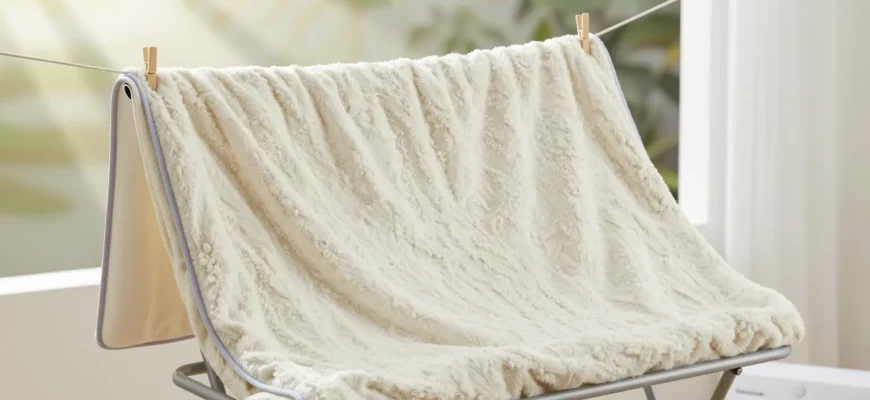
Air drying is often touted as the “safest” method for delicate laundry, but for a weighted blanket, the traditional clothesline is actually a recipe for disaster. The sheer force of gravity on a 15-pound wet blanket will stretch the fabric fibers to their breaking point. If you hang a weighted blanket vertically, the beads will naturally migrate to the bottom of each stitched pocket, putting immense pressure on the seams.
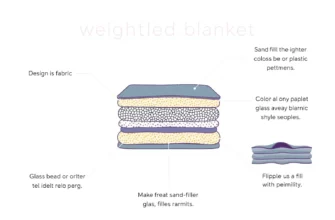
The only safe way to air dry a weighted blanket is to lay it flat. This preserves the “baffle box” construction—those square stitched pockets that keep the weight evenly distributed across your body. If the stitching in these pockets fails due to vertical hanging, the weight will shift permanently, leaving you with a blanket that is heavy in some spots and empty in others.
- DO: Lay the blanket flat across a clean, moisture-resistant surface like a large drying rack or a series of heavy-duty towels.
- DO: Use a floor fan to circulate air over and under the blanket to speed up evaporation.
- DO: Flip the blanket every two hours to ensure the underside doesn’t stay damp and develop a musty odor.
- DON’T: Drape the blanket over a single thin wire or clothesline, as this creates a “pressure point” that can tear the fabric.
- DON’T: Leave the blanket in direct, harsh sunlight for extended periods, as UV rays can degrade the strength of the thread used in the internal baffles.
Laying Flat vs. Vertical Hanging
When you lay a blanket flat, you are supporting the weight across the entire surface area of the fabric. This is essential for maintaining the integrity of the stitching. Internal leaks are the most common reason weighted blankets are discarded, and these leaks almost always start at the corner of the weight pockets where the stress is highest. By avoiding vertical hanging, you ensure that the “safe to dry” status of your blanket actually translates to a long lifespan.
Think of air drying as a slow-motion process. Because weighted blankets are so dense, they can hold moisture in their core for 24 to 48 hours. If you do not use a fan or dehumidifier in the room, you risk mold or mildew growth inside the filler. Always ensure the blanket is bone-dry before putting it back on your bed.
Material Matters: Glass Beads vs. Plastic Pellets
The type of filler inside your blanket dictates your margin for error. Glass beads are high-quality, eco-friendly, and much denser than plastic, meaning the blanket can be thinner while maintaining the same weight. Crucially, glass beads are virtually unaffected by the temperatures found in a household dryer. They won’t melt, off-gas, or clump due to heat.
Plastic poly pellets are a different story. While they are a more affordable option, they are highly sensitive to thermal changes. Polypropylene pellets can start to warp at temperatures as low as 120°F, which is a common “medium” setting on many dryers. If you aren’t 100% sure what is inside your blanket, always assume it is plastic and treat it with extreme caution.
| Feature | Glass Micro-Beads | Plastic Poly Pellets |
|---|---|---|
| Heat Resistance | High (Dryer Safe) | Low (Melting Risk) |
| Moisture Retention | Very Low | Moderate |
| Recommended Setting | Low Heat | Air Fluff Only |
| Durability | Excellent | Moderate |
The Heat Sensitivity of Poly Pellets
The danger of plastic pellets isn’t just that they might melt; it’s the “softening” phase. When plastic pellets get warm, they become tacky. If they cool down while they are pressed together, they will bond into a singular, hard brick of plastic. This completely destroys the fluid, “sand-like” feel that makes weighted blankets comfortable. Glass bead filler remains granular and free-flowing regardless of the temperature, making it the superior choice for those who plan on frequent machine washing and drying.
Common Mistakes That Could Ruin Your Blanket
Even if you get the temperature right, other factors can compromise your blanket. One of the most frequent errors is the use of fabric softeners or dryer sheets. Softener chemicals leave a waxy coating on the fibers that can trap moisture inside the blanket and reduce the breathability of the fabric. Over time, this buildup makes the blanket feel heavy and “greasy” rather than soft.
Another mistake is ignoring the capacity of your home equipment. If you feel the dryer vibrating excessively or hear the belt squealing, stop the cycle immediately. The cost of a $5 trip to the laundromat is significantly less than the $500 cost of a new dryer motor. Commercial dryers at laundromats have much larger drums, which allows for better tumbling and more efficient moisture removal.
- Using High Heat: This is the fastest way to melt pellets or scorch delicate “cool-touch” bamboo fabrics.
- Neglecting the Lint Trap: A clogged trap restricts airflow, causing the dryer to run hotter than the setting indicates.
- Drying with Other Clothes: The heavy blanket will tumble over smaller items, potentially crushing buttons or snagging zippers on your favorite garments.
- Over-drying: Leaving the blanket in the dryer after it is already dry can lead to unnecessary friction and fabric wear.
- Forgetting the Duvet Cover: If your blanket has a removable cover, always dry the cover and the weighted insert separately to ensure both are thoroughly cleaned and dried.
Expert Perspective: Structural Integrity Maintenance
In my professional experience, the most overlooked aspect of weighted blanket care is the health of the internal baffles. These are the stitched pockets that keep the weight from shifting. I have seen hundreds of blankets ruined because the owner used a “heavy duty” cycle; the aggressive agitation combined with the weight of the beads literally rips the internal seams. I always advise clients to use a high-quality duvet cover. By washing and drying only the cover every week and the weighted insert only once or twice a year, you significantly extend the life of the internal stitching and prevent “bead leakage,” which is nearly impossible to repair once it starts.
Frequently Asked Questions
Due to the density of the filler and the volume of fabric, it typically takes 2 to 4 hours on a low-heat setting to reach full dryness. Using a high-speed spin cycle during the wash phase can help reduce this time by removing excess water before drying begins.
Can I use dryer sheets with my weighted blanket?
It is best to avoid them. The chemicals in dryer sheets can break down the technical coatings on cooling weighted blankets (like those made of Lyocell or Bamboo) and can gum up the fibers of minky fabrics, reducing their softness over time.
What if my weighted blanket is too heavy for my home dryer?
If your blanket exceeds 20 lbs, take it to a laundromat and use an industrial-sized dryer. These machines are built with heavy-duty motors and larger drums that can handle the weight without burning out the drive belt or causing hot spots.
Is it okay to dry a weighted blanket with other clothes?
No, you should always dry a weighted blanket alone. The concentrated weight can damage lighter clothing, and the bulk of the blanket will prevent other items from getting enough airflow to dry properly, leading to damp spots in your laundry.
How do I know if the filler inside is melting?
Early warning signs include a faint smell of burnt plastic, the blanket feeling unusually stiff in certain sections, or the appearance of hard, pea-sized clumps that cannot be broken apart by hand. If you notice these, stop using heat immediately.