- What Weight is Bernat Blanket Yarn? Understanding the Basics
- Bernat Baby Blanket Yarn Weight vs. Standard Blanket Yarn
- Yardage Requirements: How Many Yards of 6 Weight Yarn for a Blanket?
- Estimating Skeins for Large Projects
- Comparing Blanket Yarn Weights: From Sport to Jumbo
- When to Use Weight 4 or Weight 7 Yarn
- The Substitution Guide: Using Worsted Weight for a Blanket
- How Much Worsted Weight Yarn for a Blanket?
- The Best Yarn Weight for Crochet Baby Blankets
- Why Weight 3 and 4 Are Classic Choices
- Common Mistakes When Mixing Different Yarn Weights
- Managing Tension with Multiple Yarn Weights
- Expert Perspective: Working with Super Bulky Yarn
- Frequently Asked Questions
What Weight is Bernat Blanket Yarn? Understanding the Basics
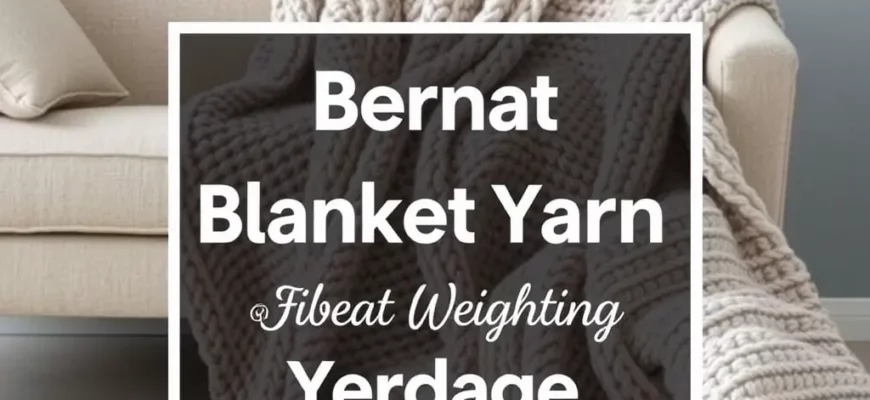
When you start a new home decor project, the first technical specification you need to identify is the yarn category. Bernat Blanket yarn is officially classified as a Category 6 Super Bulky weight yarn. This classification, established by the Craft Yarn Council, means the yarn is significantly thicker than your standard knitting or crochet supplies, allowing for incredibly fast progress on large-scale items like afghans and floor poufs.
The popularity of this specific line stems from its unique chenille-style construction. Unlike traditional plied wool or acrylic, this yarn features a core thread with soft, fuzzy fibers sticking out, creating a velvet-like texture. Because it is a 100% polyester fiber, it provides immense warmth without the heavy weight of natural fibers, making it the gold standard for cozy, oversized blankets that don’t feel like a lead vest.
Makers often choose this super bulky option because it bridges the gap between traditional craft yarns and the extreme jumbo yarns used for arm knitting. It is thick enough to hide minor stitch inconsistencies but manageable enough to use with standard (albeit large) crochet hooks and knitting needles. Understanding this weight is the first step in ensuring your finished project matches the dimensions specified in your pattern.
Bernat Baby Blanket Yarn Weight vs. Standard Blanket Yarn
A common point of confusion among beginners is whether the “Baby” version of this line differs in thickness. To be clear, Bernat Baby Blanket yarn is also a Category 6 Super Bulky weight. If you are looking at a pattern that calls for the standard line, you can substitute the baby version without changing your hook size or stitch count, as the weight and gauge are identical.
The primary difference between the two lies in the safety standards and color palettes. The baby line is Oeko-Tex Standard 100 certified, which means it has been rigorously tested for over 300 harmful substances. This is a critical factor for items that will be in direct contact with an infant’s sensitive skin. While the standard line offers deep jewel tones and modern neutrals, the baby line focuses on softer pastels and variegated “self-striping” shades designed to complement nursery decor.
Yardage Requirements: How Many Yards of 6 Weight Yarn for a Blanket?
Calculating the exact amount of yarn needed is the most stressful part of project planning. Because weight 6 yarn is so dense, a single skein often contains fewer yards than a skein of thinner yarn. To avoid the dreaded “yarn chicken”—running out of yarn with only three rows left—you must calculate your requirements based on total yardage rather than just the number of skeins.
| Blanket Type | Typical Dimensions (Inches) | Estimated Yardage (Weight 6) | Estimated 10.5oz Skeins |
|---|---|---|---|
| Baby Blanket | 30″ x 36″ | 440 ― 600 yards | 2 ― 3 skeins |
| Lapghan / Small Throw | 40″ x 48″ | 700 ⎻ 900 yards | 4 ― 5 skeins |
| Standard Throw | 50″ x 60″ | 1,100 ― 1,300 yards | 5 ― 7 skeins |
| Twin Bed Spread | 66″ x 90″ | 2,200 ⎻ 2,500 yards | 10 ⎻ 12 skeins |
| Queen/King Afghan | 90″ x 100″+ | 3,500 ⎻ 4,200 yards | 16 ⎻ 20 skeins |
Estimating Skeins for Large Projects
Bernat Blanket yarn typically comes in two common sizes: the 10.5 oz (300g) “Big Ball” which contains approximately 220 yards, and the larger 21.2 oz (600g) skeins. When you are estimating for a full-sized throw, always calculate based on the yardage listed on the specific label, as different colorways or limited editions can occasionally vary in length despite having the same weight.
One of the biggest advantages of using 6 weight yarn is the speed of completion. Because the stitches are so large, a standard single crochet or double crochet stitch covers significantly more surface area than a worsted weight equivalent. This means that while you may need 10 skeins for a blanket, the actual number of hours spent crafting will be roughly 70% less than if you were using a thinner yarn. For those looking for instant gratification or last-minute gifts, this yardage-to-speed ratio is unbeatable.
Comparing Blanket Yarn Weights: From Sport to Jumbo
While the Category 6 Super Bulky is the most famous, the “blanket yarn” category has expanded significantly. Choosing the wrong weight can result in a blanket that is either too flimsy for winter or too heavy to actually use; As a general rule, the thinner the yarn, the more yardage you will need to cover the same square footage, but the finished product will have much better drape and stitch definition.
| Yarn Category | Common Name | Best Use Case | Yardage for Throw |
|---|---|---|---|
| Weight 3 | DK / Light Worsted | Lightweight baby heirlooms | 2,500 ⎻ 3,000 yards |
| Weight 4 | Worsted / Aran | Detailed textures and cables | 2,000 ― 2,400 yards |
| Weight 5 | Bulky / Chunky | Quick garments and scarves | 1,500 ⎻ 1,800 yards |
| Weight 6 | Super Bulky | Standard plush blankets | 1,100 ⎻ 1,300 yards |
| Weight 7 | Jumbo | Arm knitting / Extreme decor | 600 ― 800 yards |
When to Use Weight 4 or Weight 7 Yarn
Weight 4 (Worsted) yarn is the “all-purpose” choice. Use this when you want a blanket that can be folded compactly or when you are working on a pattern with intricate lace or cabling that would be lost in the fluff of a chenille yarn. It is also the preferred choice for summer blankets because the thinner strands allow for better airflow. Expect to use between 2,000 and 4,000 yards of worsted weight yarn for a full-sized adult blanket.
On the opposite end of the spectrum is Weight 7 (Jumbo), such as the Bernat Blanket Extra or Blanket Big lines. This yarn is essentially a thick roving or a stuffed fabric tube. It is designed for maximum visual impact and extreme warmth. However, be aware that Weight 7 blankets can become incredibly heavy; a king-sized bedspread made from jumbo yarn can easily weigh 15 to 20 pounds, which may be difficult to wash in a standard home machine.
The Substitution Guide: Using Worsted Weight for a Blanket
It is a common scenario: you found a perfect pattern written for Bernat Blanket yarn, but you have a massive stash of worsted weight acrylic you want to use instead. Or perhaps you want the specific color range only available in thinner yarns. Substitution is entirely possible, but it requires a bit of “yarn math” to ensure your finished project doesn’t end up half the size it’s supposed to be.
To mimic the thickness of a Super Bulky yarn using worsted weight, you should hold two or three strands of the thinner yarn together while you work. Generally, holding two strands of weight 4 yarn will get you close to a weight 5 (Bulky), while holding three strands together will yield a thickness very similar to weight 6 (Super Bulky). This technique, known as “multi-strand” crafting, creates a variegated, marled look if you use different colors, or a solid, dense fabric if you use the same shade.
How Much Worsted Weight Yarn for a Blanket?
When substituting, the yardage calculation is where most makers go wrong. If a pattern calls for 1,000 yards of weight 6 yarn and you decide to hold three strands of weight 4 yarn together, you will need 3,000 total yards of the worsted weight yarn. You are consuming three yards of yarn for every one yard of the pattern’s “length.”
Furthermore, you must adjust your hook or needle size. When holding three strands of worsted weight, a 9mm or 10mm hook is usually necessary to maintain a soft drape. If you use a hook that is too small, the resulting fabric will be stiff and board-like, which is undesirable for a cozy blanket. Always work a 4×4 inch gauge swatch first; if your swatch stands up on its own like a piece of cardboard, move up at least one full millimeter in hook size.
The Best Yarn Weight for Crochet Baby Blankets
Choosing the right weight for a baby blanket involves balancing three factors: safety, washability, and sensory comfort. While super bulky yarn is popular for its softness, it isn’t always the “best” choice for every infant or every climate. You must consider how the yarn weight interacts with the stitches to create the final fabric.
| Yarn Weight | Pros | Cons |
|---|---|---|
| Weight 3 (DK) | Breathable, lightweight, perfect for summer babies, shows off delicate stitches. | Takes a long time to finish, requires many skeins. |
| Weight 4 (Worsted) | Extremely durable, easy to wash, massive color selection, very affordable. | Can be slightly scratchy depending on fiber; middle-of-the-road speed. |
| Weight 6 (Super Bulky) | Incredibly soft (sensory friendly), finishes in a weekend, very warm for winter. | Can be too heavy for newborns; stitches can be hard to see. |
Why Weight 3 and 4 Are Classic Choices
Many traditionalists prefer Weight 3 or 4 for baby items because they allow for smaller, tighter stitches. This is a safety consideration: large gaps in super bulky projects can sometimes catch tiny fingers or toes. A worsted weight yarn allows you to create a solid fabric that is still flexible. These weights are also much easier to “double-strand” if you want to create a gradient effect or add strength to the blanket.
For a standard baby blanket using weight 3 yarn, you will likely need approximately 1,200 to 1,500 yards. While this sounds like a lot, the result is a lightweight heirloom that can be easily tucked into a diaper bag or used as a stroller cover without adding unnecessary bulk. For a summer baby, a weight 3 cotton-blend yarn is arguably the superior choice for temperature regulation.
Common Mistakes When Mixing Different Yarn Weights
In the quest for creativity, you might be tempted to mix different yarn weights in a single blanket—for example, using a Weight 6 yarn for the main body and a Weight 4 yarn for a decorative lace border. While this sounds good in theory, it is technically challenging. Because the stitch height and width differ drastically between weights, your border will likely “pull” or “pucker,” causing the blanket to lose its rectangular shape.
Critical Warning: Never mix different yarn weights in the same row without significantly adjusting your stitch count. A single crochet in weight 6 is twice as wide as one in weight 4; failing to account for this will result in a distorted, wavy edge that cannot be fixed by blocking.
Managing Tension with Multiple Yarn Weights
If you must combine weights, the secret is in the math. To make a weight 4 border lay flat against a weight 6 body, you usually need to work two or three stitches into every single stitch of the bulky yarn. This compensates for the lack of width in the thinner yarn. However, this often results in a “ruffled” look which may not be what you intended.
The best way to manage tension when using two different weights is to swatch the transition. Practice joining the thinner yarn to the thicker yarn and see how many stitches are required to keep the edge straight. In most cases, I recommend avoiding this altogether and instead using multiple strands of the thinner yarn to match the thickness of the heavier one. This ensures the structural integrity of the blanket remains consistent throughout its lifespan.
Expert Perspective: Working with Super Bulky Yarn
In my professional experience, the biggest hurdle with Bernat Blanket yarn isn’t the weight itself, but the lack of stitch visibility. The fuzzy chenille texture swallows the “V” at the top of your stitches, making it very easy to accidentally skip a stitch or add an extra one at the end of a row. I always advise my students to use large, colorful stitch markers on the first and last stitch of every single row.
Additionally, do not underestimate the physical toll of weight 6 yarn. Because the yarn is heavy, it creates more friction on your hook. Use an ergonomic hook with a rubberized grip and take breaks every 30 minutes to stretch your wrists. Finally, yardage is always an estimate. Because your personal tension might be tighter or looser than the pattern designer’s, always buy one extra “insurance” skein from the same dye lot to avoid slight color shifts later on.
Frequently Asked Questions
Bernat Blanket yarn is officially classified as a Category 6 Super Bulky weight yarn by the Craft Yarn Council.
How many yards of 6 weight yarn do I need for a throw blanket?
A standard 50″ x 60″ throw blanket typically requires between 1,100 and 1,300 yards of weight 6 yarn, which is roughly 5 to 7 “Big Ball” (10.5oz) skeins.
Can I substitute weight 4 yarn for Bernat Blanket yarn?
Yes, you can substitute weight 4 yarn by holding three strands together to mimic the thickness of weight 6, but you must triple your total yardage requirements.
How many skeins of Bernat Blanket yarn for a baby blanket?
For a standard 30″ x 36″ baby blanket, you will generally need 2 to 3 large (10.5 oz) skeins, totaling about 440 to 660 yards.
Is Bernat Blanket Extra the same weight as the original?
No, Bernat Blanket Extra is a Category 7 Jumbo yarn, which is significantly thicker and heavier than the standard weight 6 version.
What size crochet hook is best for weight 6 blanket yarn?
For the best drape and comfort, an 8mm (L/11) to 10mm (N/P-15) hook is recommended for most Bernat Blanket projects.