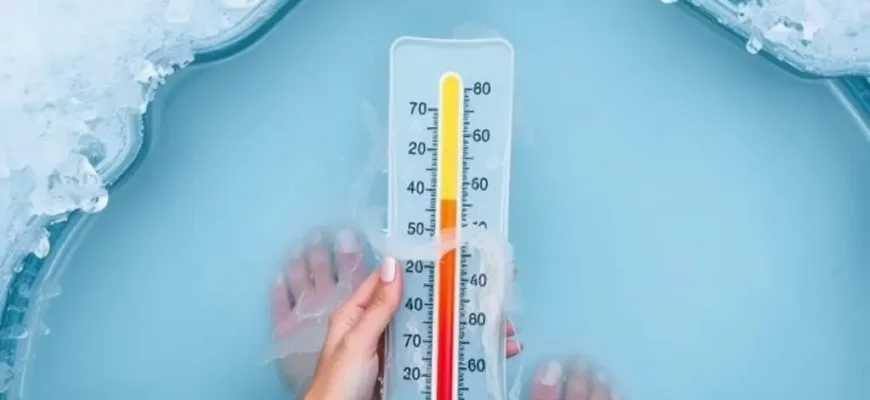
- What is the Best Cold Plunge Temperature for Beginners and Pros?
- The Standard Cold Plunge Temperature Range for Daily Use
- Visual Reference: Cold Plunge Temperature Chart and Benefits
- Converting Cold Plunge Degrees: Fahrenheit to Celsius Reference
- Can You Lose Weight? The Truth About Cold Plunge Calories Burned
- Maximizing Your Cold Water Plunge Calorie Burn
- Safety First: Minimum Temperatures and Staying Within Safe Limits
- Is There a Minimum Temperature for Mitochondrial Health?
- Learning from the Pros: Othership Cold Plunge Temperature Standards
- The Othership Method: Balancing Hot and Cold Plunge Temps
- Planning Your Setup: Cold Plunge Size‚ Weight‚ and Logistics
- Does Size Affect Water Temperature Stability?
- Common Mistakes: Why Your Cold Plunge Might Not Be Working
- Why Chasing the Lowest Temperature Isn’t Always Best
- Expert Perspective: Mastering Cold Stress Adaptation
- Frequently Asked Questions
What is the Best Cold Plunge Temperature for Beginners and Pros?
Determining the ideal cold plunge temperature is a personal journey that depends heavily on your metabolic health‚ previous exposure‚ and specific recovery goals. There is no universal “magic number” that works for everyone; instead‚ the most effective temperature is the one that challenges your nervous system without triggering a dangerous panic response.
For a seasoned athlete‚ 40°F might feel like a standard Tuesday‚ while a beginner may find 60°F to be an overwhelming shock to the system. The goal of cold water immersion is to trigger a hormetic stress response—a controlled dose of stress that makes the body more resilient—rather than simply testing your threshold for pain.
The Standard Cold Plunge Temperature Range for Daily Use
Most practitioners find that a cold plunge temperature range of 50°F to 59°F (10°C to 15°C) provides the best balance between therapeutic benefits and safety. This range is cold enough to trigger significant vasoconstriction and the release of norepinephrine‚ yet manageable enough to allow for a 3-to-5-minute session without the immediate risk of hypothermia.
Starting at the higher end of this range‚ such as a cold plunge starting temp of 58°F‚ is a strategic move for long-term consistency. If the water is so cold that you dread the experience‚ you are unlikely to stick with the habit long enough to see structural changes in your metabolic rate or mitochondrial efficiency. A safe temperature is one where you can maintain controlled‚ rhythmic breathing throughout the entire duration of the soak.
Visual Reference: Cold Plunge Temperature Chart and Benefits
Understanding how different temperature tiers affect your physiology is key to optimizing your routine. The following data highlights how your body reacts as the mercury drops‚ helping you choose a setting that aligns with your specific health objectives.
| Temperature Range (°F/°C) | Physiological Impact | Recommended Duration |
|---|---|---|
| 55°F ⎼ 60°F (13°C ─ 15°C) | Beginner tier; excellent for reducing systemic inflammation and improving mood via mild dopamine release. | 5 ⎼ 10 Minutes |
| 50°F ─ 54°F (10°C ─ 12°C) | Standard therapeutic window; triggers significant brown fat activation and metabolic signaling. | 3 ⎼ 5 Minutes |
| 40°F ⎼ 49°F (4°C ─ 9°C) | Advanced recovery; intense vasoconstriction helps flush lactic acid and provides a massive central nervous system “reset.” | 2 ⎼ 3 Minutes |
| 34°F ─ 39°F (1°C ⎼ 3°C) | Extreme cold shock; primarily used for mental resilience and maximum norepinephrine spikes. High risk of afterdrop. | Under 2 Minutes |
Converting Cold Plunge Degrees: Fahrenheit to Celsius Reference
When discussing cold plunge temperature celsius vs Fahrenheit‚ it is important to remember that water density and thermal conductivity do not change‚ but our perception of the “numbers” can be confusing. For global users‚ a quick benchmark is that 10°C is roughly 50°F‚ which is the point where most people begin to experience a true cold shock response.
The physiological difference between 35°F and 50°F is monumental. While 50°F is uncomfortable‚ 35-degree water is roughly 25 times more thermally conductive than air of the same temperature‚ meaning it strips heat from your core at an alarming rate. If you are tracking cold plunge temperature and time fahrenheit‚ remember that as the temperature decreases‚ your time in the water must decrease exponentially to prevent the “afterdrop” effect‚ where your core temperature continues to plummet even after you exit the tub.
Can You Lose Weight? The Truth About Cold Plunge Calories Burned
The relationship between cold exposure and weight loss is rooted in the body’s desperate attempt to maintain a core temperature of 98.6°F. When you submerge yourself in chilly water‚ your internal thermostat goes into overdrive. This process‚ known as thermogenesis‚ requires a significant amount of energy‚ leading to an increase in your basal metabolic rate.
While many people hope for a “shortcut” to fat loss‚ it is more accurate to view cold plunging as a metabolic primer. It isn’t just about the calories you burn while you are shivering in the tank; it is about how the cold exposure rewires your body to handle energy moving forward.
Maximizing Your Cold Water Plunge Calorie Burn
To maximize cold plunge calories burned‚ you must understand the role of brown adipose tissue (BAT)‚ often called “brown fat.” Unlike white fat‚ which stores energy‚ brown fat is packed with mitochondria and burns energy to produce heat. Regular exposure to a cold water plunge “recruits” more brown fat‚ making your body more efficient at burning glucose and lipids.
To see significant metabolic results‚ you don’t necessarily need to stay in until you are numb. Research suggests that reaching the shivering threshold is the key. Shivering releases a hormone called irisin‚ which further stimulates brown fat activity. Aiming for a cold water plunge calorie burn session of 11 minutes per week‚ divided into several short bouts‚ has been shown to be the “sweet spot” for improving insulin sensitivity and increasing metabolic output.
Safety First: Minimum Temperatures and Staying Within Safe Limits
Pushing your limits can be rewarding‚ but the “more is better” mentality can be dangerous in sub-50-degree water. The primary risk of extreme cold is not just the initial shock‚ but the subsequent cardiovascular strain. Your heart rate and blood pressure spike instantly upon immersion‚ which can be problematic for those with underlying conditions.
Furthermore‚ there is a point of diminishing returns. If you go too cold too fast‚ you may bypass the therapeutic window and enter a state of high oxidative stress‚ which can actually hinder recovery rather than help it.
- DO start with temperatures around 60°F if you are new to the practice.
- DO focus on long‚ slow exhales to manage the initial cold shock response.
- DO keep your hands and feet tucked if the pain becomes unbearable‚ as extremities lose heat fastest.
- DON’T plunge alone when experimenting with temperatures below 45°F.
- DON’T use a cold plunge immediately after a heavy hypertrophy (muscle growth) workout‚ as it can blunt the inflammatory signals needed for muscle building.
- DON’T stay in the water if you begin to feel confused or lose manual dexterity‚ as these are early signs of hypothermia.
Is There a Minimum Temperature for Mitochondrial Health?
There is no strict cold plunge minimum temperature for cellular benefits‚ but there is a “Goldilocks zone.” For supporting mitochondrial health‚ the goal is mitohormesis—a beneficial biological response to low-dose stressors. If the water is too warm (above 64°F)‚ the stressor is too weak to trigger mitochondrial biogenesis. If it is too cold for too long‚ you risk cellular damage.
To maintain a cold plunge safe temperature that supports your cells‚ aim for a range that induces a strong gasp reflex but allows for steady breathing within 30 seconds. Excessive exposure to near-freezing water can lead to mitochondrial decline if the body is forced into a chronic state of “survival mode” without adequate time for rewarming and recovery.
Learning from the Pros: Othership Cold Plunge Temperature Standards
Othership‚ a leader in the modern “social wellness” movement‚ has standardized high-performance protocols that many home users try to replicate. They often emphasize the psychological aspect of the plunge as much as the physical. Their approach typically involves a guided transition between extreme heat and extreme cold to maximize the “vagus nerve” toning effect.
By looking at their methods‚ we see that the intensity of the cold is often balanced by the duration and the preparation. They don’t just throw people into ice; they curate an environment where the body is primed to handle the thermal stress.
The Othership Method: Balancing Hot and Cold Plunge Temps
The othership cold plunge temperature standard often hovers around 35°F to 40°F for their advanced classes. This is significantly colder than what is recommended for daily home use. The reason they use cold plunge in 35 degree water is to create an undeniable mental challenge that forces the participant into a meditative state.
In their contrast therapy sessions‚ they often pair these near-freezing temperatures with saunas set to 180°F or higher. This cold plunge hot plunge temps cycle causes rapid vasodilation and vasoconstriction‚ acting as a “gymnastic workout” for your blood vessels. This intense cycling is what provides the profound “post-plunge glow” and mental clarity that many enthusiasts crave.
Planning Your Setup: Cold Plunge Size‚ Weight‚ and Logistics
When transitioning from a commercial spa to a home setup‚ the physical logistics of the tub become a major factor in temperature management. A smaller tub may be easier to chill‚ but it can struggle with temperature stability once a warm human body enters the water.
Conversely‚ a larger volume of water provides more “thermal mass‚” meaning the temperature won’t jump up 5 degrees the moment you sit down. However‚ this extra volume comes with significant weight and space requirements that must be addressed before installation.
| Tub Type/Size | Average Weight (Filled) | Temperature Stability | Best Use Case |
|---|---|---|---|
| Compact Inflatable (75 Gallons) | ~650 lbs | Moderate; requires frequent chilling or ice. | Small balconies or temporary setups. |
| Standard Rigid Tub (100 Gallons) | ~850 lbs | High; holds temperature well with basic insulation. | Garage or dedicated gym space. |
| Large XL Tank (150 Gallons) | ~1‚300 lbs | Excellent; massive thermal mass prevents “body warming;” | Permanent outdoor installations with reinforced decking. |
Does Size Affect Water Temperature Stability?
The cold plunge size is directly related to how effectively the unit can maintain its set point. In a small tub‚ your body heat can actually raise the water temperature significantly during a 5-minute soak. This is why high-end units often feature powerful chillers that constantly circulate and cool the water.
When calculating the cold plunge weight‚ you must consider the structural integrity of your floor. A 100-gallon cold plunge bath temp setup weighs nearly half a ton when filled. If you are placing this on a wooden deck or an upper floor‚ you must consult a structural engineer to ensure the joists can handle the concentrated “dead load” of the water and the “live load” of the person inside.
Common Mistakes: Why Your Cold Plunge Might Not Be Working
If you aren’t seeing the results you expected—whether that’s improved recovery or increased energy—your temperature or timing might be off. One of the most frequent errors is staying in the water for too long at a temperature that isn’t cold enough. If you can sit comfortably in the water for 15 minutes while scrolling on your phone‚ you aren’t achieving the hormetic stress required for a physiological change.
Another mistake is “chasing the bottom.” People often assume that if 50°F is good‚ 33°F must be better. This isn’t always true. If the water is so cold that your body stays in a “fight or flight” state for hours after the plunge‚ you are overtaxing your adrenals.
- Mistake: Staying in too long. Aim for consistency over duration; 2 minutes at 50°F daily is better than 20 minutes once a week.
- Mistake: Using the plunge as a “punishment.” Approach the cold with a calm mindset to train your nervous system to stay relaxed under stress.
- Mistake: Neglecting the rewarming process. Allow your body to warm up naturally (the Søberg Principle) rather than jumping straight into a hot shower to maximize the metabolic burn.
- Mistake: Inaccurate thermometers. Invest in a high-quality digital probe because the built-in sensors on cheap chillers are often off by 3-5 degrees.
Why Chasing the Lowest Temperature Isn’t Always Best
Finding the cold plunge effective temperature is about finding the “minimum effective dose.” If you can achieve the desired dopamine spike and anti-inflammatory benefits at 52°F‚ there is very little reason to push to 38°F‚ which carries a higher risk of heart palpitations and skin irritation.
The best cold plunge recommendations focus on the “shiver response.” If you exit the tub and find yourself shivering naturally for 10-15 minutes‚ you have hit the target. This indicates that your body is working to generate its own heat‚ which is the primary driver of the metabolic and cellular benefits associated with cold therapy.
Expert Perspective: Mastering Cold Stress Adaptation
In my professional experience‚ the most common error I see is people focusing on the thermometer rather than their own biology. I always advise clients that the “right” temperature is the one that makes you want to gasp and jump out immediately‚ but is manageable enough that you can override that instinct with your breath. If you are no longer shivering after your sessions‚ it is a sign that you have adapted and may need to drop the temperature by 2-3 degrees. However‚ never prioritize a lower number over the quality of your breathing. The moment your breath becomes jagged and uncontrollable‚ you have exceeded your current capacity for cold stress adaptation.
Frequently Asked Questions
For those new to the practice‚ a range of 55°F to 60°F is ideal. This provides the necessary cold shock to trigger benefits like norepinephrine release while minimizing the risk of a dangerous cardiovascular response or panic.
How many calories can you burn in a cold plunge?
While results vary based on body composition‚ a cold plunge can significantly boost metabolic rate. The shivering response and brown fat activation can burn calories at a rate similar to a brisk walk‚ with the metabolic “afterburn” lasting for several hours.
Is there an age limit for cold plunging?
There is no hard age limit‚ but seniors and children should consult a physician first. The intense vasoconstriction and immediate rise in blood pressure can be taxing on the cardiovascular system for those with underlying heart conditions.
How long should I stay in a 35-degree cold plunge?
In water this close to freezing‚ durations should be very short—typically under 2 minutes. Staying in longer significantly increases the risk of hypothermia and a severe “afterdrop” where your core temperature continues to fall after exiting.
Can cold plunging help with mitochondrial decline?
Yes‚ through the process of mitohormesis. Controlled cold stress signals the body to repair damaged mitochondria and produce new‚ more efficient ones‚ which is a key component of cellular longevity and energy production.
What is the best temperature for muscle recovery?
The sweet spot for muscle recovery is generally 50°F to 55°F for 10 minutes. This helps reduce acute inflammation and soreness without being so cold that it completely shuts down the protein synthesis needed for muscle repair.